REVIEW · LONDON
Natural History Museum London Guided Tour Semi-Private 8ppl Max
Book on Viator →Operated by Babylon Tours London · Bookable on Viator
Dinosaurs make a museum make sense.
I like how this semi-private Natural History Museum tour (max 8) keeps the experience human-sized, and I also like the guide-led route that pushes you straight to big-hitters without getting lost in the crowd maze. When I read what people loved, the names Matilda and Ivo came up a lot for a reason: they help connect the dots between specimens that can feel random on your own. One drawback to plan for: two hours moves fast, and if a specific area has a long line, you might not see every wing in depth.
The payoff is simple. You get a professional guide and a structured walk through some of the museum’s most famous and unusual objects, from the earliest Earth stories to the day humans show up in the timeline. The museum is huge, so a guide is what turns a building full of stuff into an actual experience.
If you’re hoping for a slow, do-everything visit, this format may feel like a sprint. It’s also not a full museum ticket for temporary exhibitions, and the tour doesn’t include hotel pickup or drop-off. Bring your energy, wear decent shoes, and treat it like a curated walk through the museum’s greatest hits.
In This Review
- Key things to know before you go
- Why this Natural History Museum format beats a solo visit
- Meeting at Cromwell Road Stop H: easy, but arrive on time
- Inside the museum in 2 hours: what you can realistically expect
- A practical heads-up on bags and security
- Your guide’s story route: from Earth origins to human beginnings
- The Archaeopteryx moment: the fossil that explains the birds part
- Sophie the Stegosaurus and the Dodo: star specimens with context
- Pompeii casts and the skull-cup detail you didn’t expect
- Giant Sequoia slice, mining sections, and the meteor wow factor
- Are you really getting the main highlights? Yes, but treat it like priorities
- Who should book this semi-private museum tour
- Price and value: what $108.21 buys you
- Small details that can change your day
- Should you book this Natural History Museum guided tour?
- FAQ
- What is included in the Natural History Museum guided tour?
- How many people are in the group?
- Where do I meet, and where does the tour end?
- Are temporary exhibitions included?
- Are large bags allowed inside the museum?
- What is the latest time to cancel for a full refund?
Key things to know before you go
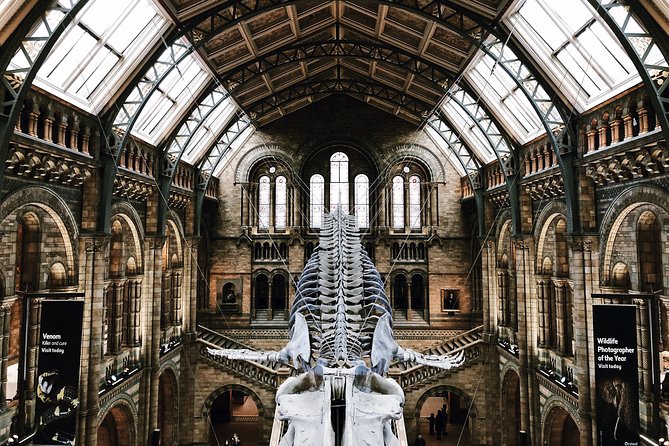
- Up to 8 people means less jostling and more time for questions than typical big group tours
- 2 hours is the sweet spot for seeing major highlights without burning your whole day
- Rare fossils and famous specimens like the Archaeopteryx, Sophie the Stegosaurus, and the Dodo skeleton are part of the route
- You’ll get the why behind odd finds, including Pompeii casts and how some ancient cultures used human skulls as drinking vessels
- Security and bag rules matter: no large bags inside, only small allowed carry-ons
- You follow your guide through crowds so you don’t waste time hunting for the next “must see”
Why this Natural History Museum format beats a solo visit
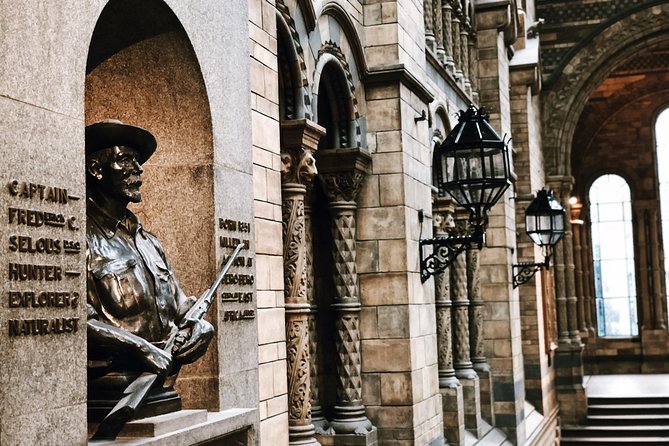
The Natural History Museum is one of those places where you can easily spend hours and still feel like you only scratched the surface. The semi-private size is the real deal here. With a maximum of 8 people, the guide can steer the group and keep the visit moving at a pace that actually matches the sights.
This tour also focuses on story, not just surfaces. You’re not meant to wander randomly through thousands of objects. Instead, the route ties exhibits together as part of a timeline: early Earth events, mass extinctions, and then humankind’s arrival.
Guides on this kind of tour tend to bring strong expertise across different topics, and the names that showed up include Matilda, Ivo, Tony, and Anthony Matthews. Even if your guide isn’t one of those people, the point is the same: you’re paying for someone to translate what you’re looking at.
You can also read our reviews of more guided tours in London


Meeting at Cromwell Road Stop H: easy, but arrive on time
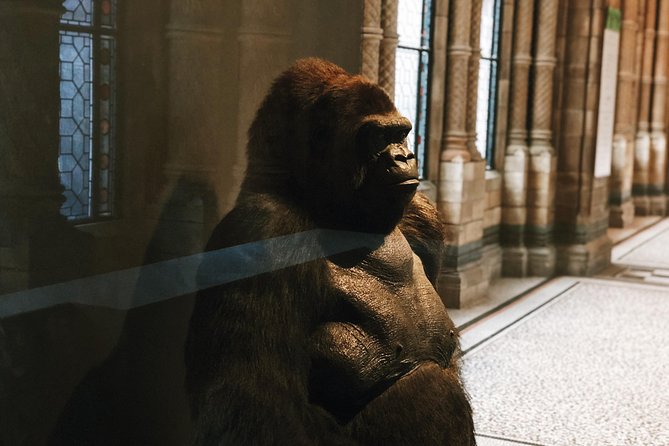
You meet at the Natural History Museum at Cromwell Road (Stop H), South Kensington (SW7 2DH). It’s a straightforward starting location in a transport-friendly area, and the tour ends back at the meeting point.
No hotel pickup is included, so plan your own route to South Kensington. If you’re coming by transit, aim to arrive a bit early so you’re not scrambling through museum security with everyone else.
The tour runs about 2 hours, so being late can cut straight into the highlights you paid to see.
Inside the museum in 2 hours: what you can realistically expect
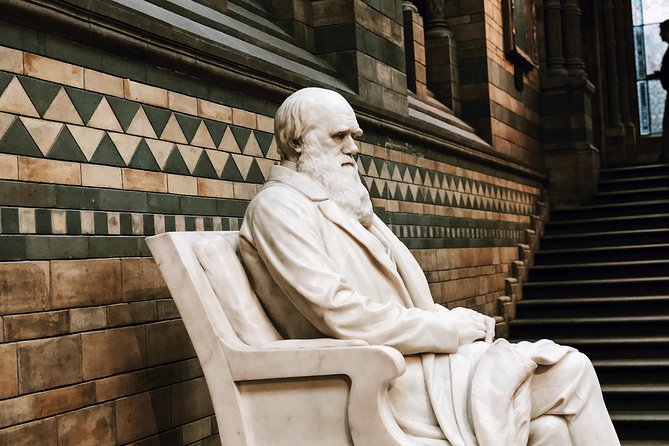
The Natural History Museum is massive. That scale is exactly why “guided” matters. In this time window, you’re getting targeted stops rather than a museum-wide checklist.
That also means you won’t see everything. One person noted they understood why the dinosaur section can be hard to fully catch if the queues are extensive. I’d treat this as a visit where you’ll see the most important pieces, but not every single room.
Moderate physical fitness is required. You’ll be doing a fair bit of walking and standing while your guide moves the group from one high-demand zone to the next.
A practical heads-up on bags and security
This tour operates within normal museum security rules. No large bags or suitcases are allowed inside—only handbags or small thin bag packs through security. So if you’re traveling light, you’re already winning.
Also note that some rooms have quiet or restricted rules where speaking is limited. Your guide will flag that before you enter, which is helpful, because you won’t have to figure it out on the spot.
Your guide’s story route: from Earth origins to human beginnings
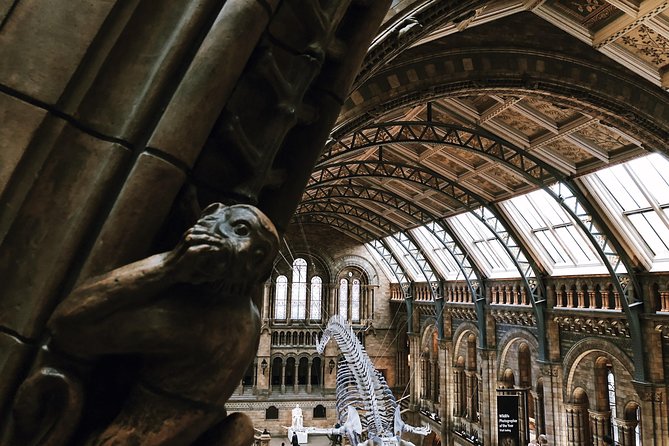
The tour’s opening is built around the planet’s big backstory. You start with Earth’s earliest origins and move through dramatic forces—volcanic disasters, extinctions, and then the dawn of humankind.
That approach matters because it prevents the museum from feeling like disconnected rooms of specimens. When you know what question you’re following, each display becomes an answer.
Even in a short visit, the guide’s job is to keep you oriented. That means fewer dead ends, less retracing your steps, and more time with the objects that actually deserve your attention.
You can also read our reviews of more private tours in London




The Archaeopteryx moment: the fossil that explains the birds part
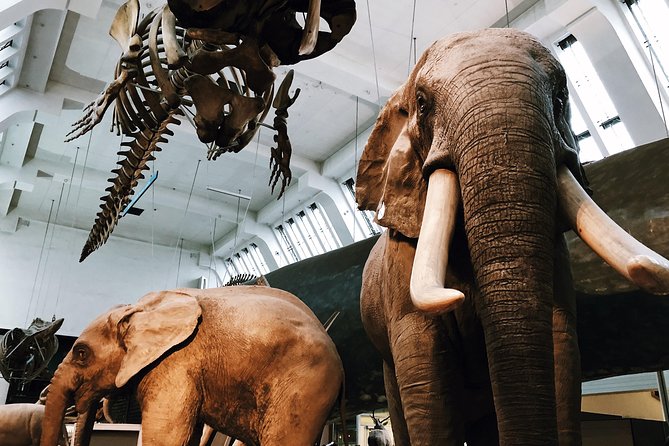
One of the stated “face-to-face” highlights is the Archaeopteryx, described as the missing link between dinosaurs and birds. This is the kind of exhibit that can be easy to gloss over if you don’t know what you’re looking for.
In a guided setting, you’ll learn the significance instead of just admiring the specimen. The guide’s narration is what turns Archaeopteryx from a cool name into a clear scientific story.
This is also where the value of a guide shows up fast. On your own, you might stand there for a few seconds, read a plaque, and move on. With a guide, you’re more likely to understand why paleontologists care about this “in-between” form.
Sophie the Stegosaurus and the Dodo: star specimens with context
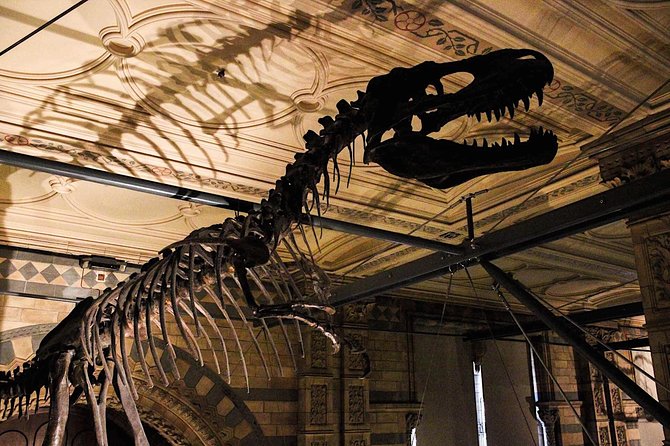
Dinosaurs are usually the obvious magnet. But the tour doesn’t treat them as just a photo stop. You’ll see Sophie the Stegosaurus and also the skeleton of the Dodo, a long-gone bird.
What’s useful about covering dinosaur and non-dinosaur species in the same route is the mix of themes: extinction, survival, and how scientists build knowledge from the evidence that remains. The guide helps you connect what feels like totally different stories.
There’s also a practical angle. If dinosaur areas get crowded, you might not get every viewing angle. Still, having a guide point you to the most important views tends to make the time count.
Pompeii casts and the skull-cup detail you didn’t expect
One stop is dedicated to casts from Pompeii victims. It’s heavy subject matter, but in a museum context it’s also one of the most human parts of the collection. Seeing casts like these with a guide’s explanations can help you understand what you’re observing beyond the first glance.
Then there’s the oddity that’s hard to forget: some civilizations used human skulls as drinking vessels. That’s not the kind of detail most people would stumble into on their own, and it changes how you think about how objects move through culture and time.
This is the sort of content that makes a guided tour worth it. The museum has enough information to bury you. A guide helps you grab the most memorable threads without needing to read every sign.
Giant Sequoia slice, mining sections, and the meteor wow factor
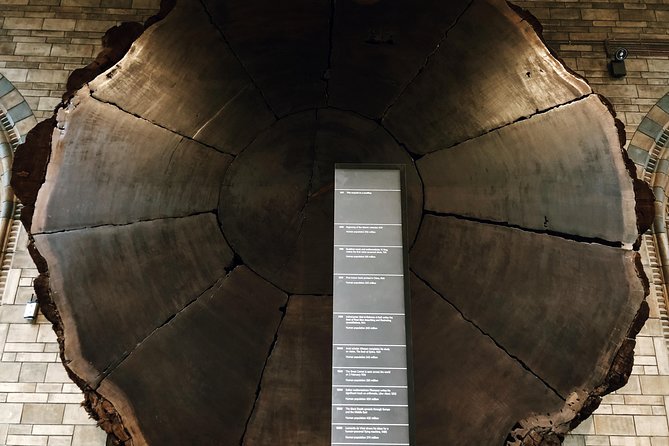
The tour includes time with an enormous slice of a Giant Sequoia, plus explanations tied to why that specimen is significant. A sequoia cross-section isn’t just a botanical showpiece. With the right context, it becomes a window into age, growth, and what specimens can reveal.
People also mention enjoying the mining section and the mineral side of the museum experience, including a meteor described as surreal. That matters because it broadens the tour beyond fossils. You’re seeing Earth’s story not only through animals and plants, but also through rocks and materials.
And if you’re the type who likes “science but make it visual,” this portion tends to land well. You get giant objects you can’t easily appreciate without someone framing what makes them special.
Are you really getting the main highlights? Yes, but treat it like priorities
In a museum this large, the question isn’t whether you’ll see highlights. You will. The tour is built around major named specimens and memorable categories: geology and planetary origins, fossils tied to evolution, Pompeii casts, and big dramatic displays like the sequoia slice.
The real test is what you personally consider a highlight. If your top priority is dinosaurs above all else, know that queues and time limits can affect how deeply you see the dinosaur area. One visitor specifically noted they couldn’t access that section as much as hoped due to how extensive the queue was, even though the rest of the tour was still strong.
So I’d book this with the expectation that you’ll get the museum’s best-known ideas and displays within 2 hours. If you want a slower, deeper museum day, plan to return after.
Who should book this semi-private museum tour
This is a strong fit if you want structure and you enjoy learning while you look. It also works well if you’re traveling with teens or mixed ages, since the tour includes famous fossils and “how do we know” explanations that keep attention.
It’s also a good choice when you like science but don’t want to spend your whole day researching floor plans. This is the kind of guided route that helps you get your bearings fast and then enjoy the exhibits more.
One caution: if you are the kind of visitor who wants to roam freely and linger in every room, you may find a two-hour route too tight. For that style, DIY time in the museum can be better.
Price and value: what $108.21 buys you
At $108.21 per person, this isn’t a budget add-on. The value comes from three things: a professional guide, a structured path through a huge museum, and the fact that admission is covered for this visit (the tour notes admission ticket is free).
What’s not covered is temporary exhibitions. So you’re paying mainly for the core museum highlights plus the guide’s explanations, not extra ticketed rooms that change season to season.
There’s also demand. This tour is often booked about 40 days in advance, which is a hint that spots go early. If you have fixed dates, don’t wait until the last minute.
Overall, I’d call this a good value if you care about seeing the best specimens without spending hours figuring out what to prioritize.
Small details that can change your day
A few practical issues can affect how smooth your tour feels:
- Timing and queues: security lines can form even with special access in some cases, so expect some waiting
- Quiet rules in some rooms: the guide will handle this before you enter, but it’s good to know you may need to keep your voice down
- Appropriate dress: required for entry into some sites, so avoid anything that feels too bare or off-theme
- Museum closures: the museum and other London attractions may have occasional closures, and if delays run long, you may get an alternative rather than a refund
- Tour can be canceled if minimum numbers aren’t met: if there aren’t enough participants to run the tour, you’ll be offered an alternative or a full refund
These aren’t dealbreakers, but they’re real-world factors. When you’re booking a structured experience in a major museum, a little flexibility helps.
Should you book this Natural History Museum guided tour?
If your goal is a high-impact, well-guided highlights visit to the Natural History Museum, I think this is an easy yes. The semi-private size and 2-hour structure make it practical, and the chosen stops hit the kinds of exhibits that usually get your attention even if you’re not a hardcore science nerd.
Book it if you want:
- a guide to point out what matters (especially fossils like Archaeopteryx, Sophie the Stegosaurus, and the Dodo)
- memorable stories tied to Pompeii casts and unusual historical details
- a time-efficient museum visit without getting lost
Skip it (or consider a different plan) if you want to roam slowly for most of the day or if temporary exhibitions are your main target.
FAQ
What is included in the Natural History Museum guided tour?
The tour includes a guided museum experience with a professional tour guide. The information provided also indicates admission for this visit is free, while temporary exhibitions are not included.
How many people are in the group?
This is a semi-private tour with a maximum of 8 travelers.
Where do I meet, and where does the tour end?
You meet at Natural History Museum / Cromwell Road (Stop H), South Kensington, London SW7 2DH, UK. The tour ends back at the meeting point.
Are temporary exhibitions included?
No. Temporary exhibitions are not included in this tour.
Are large bags allowed inside the museum?
No. Large bags and suitcases are not allowed inside the museum. Only handbags or small thin bag packs are allowed through security.
What is the latest time to cancel for a full refund?
You can cancel up to 24 hours in advance of the experience for a full refund. Cancellation cut-off times are based on local time.