REVIEW · LONDON
British Museum Highlights Private Tour in London including the Rosetta Stone
Book on Viator →Operated by City Wonders UK · Bookable on Viator
The Rosetta Stone lands differently with a guide. This private British Museum highlights tour is built for people who want answers fast, with time saved by going straight to the big-name objects without getting lost.
You’ll also love the built-in chance to ask as many questions as you want, because you’re not stuck listening to a script while other people shuffle past.
Second, the route is compact enough that you still leave with a real sense of how the collection fits together: Greek sculpture, Egyptian beliefs, and Anglo-Saxon Britain, all in one focused outing. A guide meets you on Montague Place at the north entrance, then steers you through key rooms like the Egyptian Rooms while explaining what you’re looking at.
One possible drawback: this kind of meet-up lives or dies by simple details. One experience in the feedback had trouble spotting the guide and said the sign wasn’t where expected. If the instructions feel vague, arrive early and be ready to use your phone to confirm you’ve got the right person.
In This Review
- Quick takeaways before you go
- Why a private British Museum tour beats the free-for-all
- Getting started: Montague Place meeting point and the north entrance
- The core route: Rosetta Stone and the Parthenon Frieze
- Rosetta Stone: more than a history-class icon
- Parthenon Frieze: the scale hits fast
- Egyptian Rooms and mummies: why the afterlife mattered
- Anglo-Saxon Britain: Sutton Hoo’s ship-burial story
- After the highlights: how to spend the rest of your museum time
- Price and value: what you’re paying for in a free-entry museum
- What it feels like in real time (and how to make it work)
- Who should book this private British Museum highlights tour
- Bottom line: should you book this Rosetta Stone highlights tour?
- FAQ
- How long is the British Museum Highlights Private Tour?
- Is this tour private?
- Where is the meeting point?
- What are the main highlights included?
- Is admission included?
- What’s included in the price?
- Are food and drinks included?
- Do I need a mobile ticket?
- Is the tour in English?
- Can I cancel for a full refund?
- Are baby strollers allowed?
Quick takeaways before you go
- Private, question-first guiding: you can slow down for what you care about
- A fast hits-the-major-sights plan: Rosetta Stone, Parthenon Frieze, Egyptian Rooms, Sutton Hoo links
- Expert context, not just descriptions: you’ll learn why objects matter, especially in Egypt
- Efficient use of your half-day: ideal when you can’t spend days inside
- Watch for meet-up clarity: check your meeting instructions and plan to arrive a bit early
Why a private British Museum tour beats the free-for-all
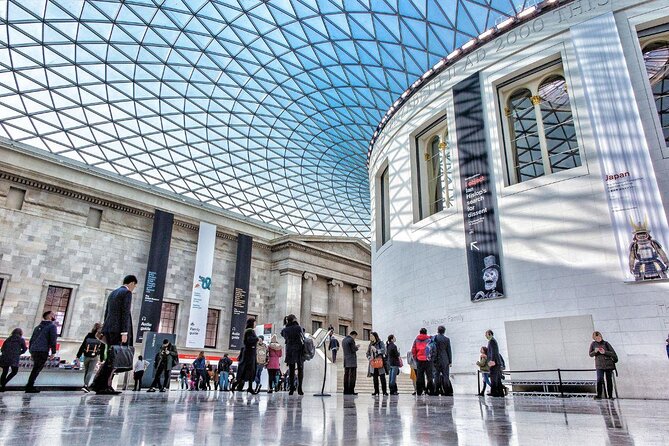
The British Museum can feel like a free maze. Eight million pieces of history across 70-plus galleries sounds inspiring. It’s also the fastest way to end up tired, directionless, and strangely underwhelmed by the stuff you did see.
This private highlights tour fixes that problem with one simple idea: you get a guide who knows how to move you through the museum’s hardest-to-navigate areas. You’re not starting from a blank map. You’re starting with a route designed to hit the objects most people come for, then connect the dots so the visit makes sense.
I like that it’s private in the real sense. It’s only your group. That means you’re not constantly negotiating pace with strangers, and you can ask follow-ups when something grabs you. If Egyptian beliefs and mummies pull you in, you can spend more time there. If the Greek sculptures are your thing, the guide can point you toward what to notice in the Parthenon Frieze before you drift off on your own.
And because it’s a highlights approach (not a full marathon), you’re more likely to leave feeling informed rather than drained.
You can also read our reviews of more private tours in London
Getting started: Montague Place meeting point and the north entrance
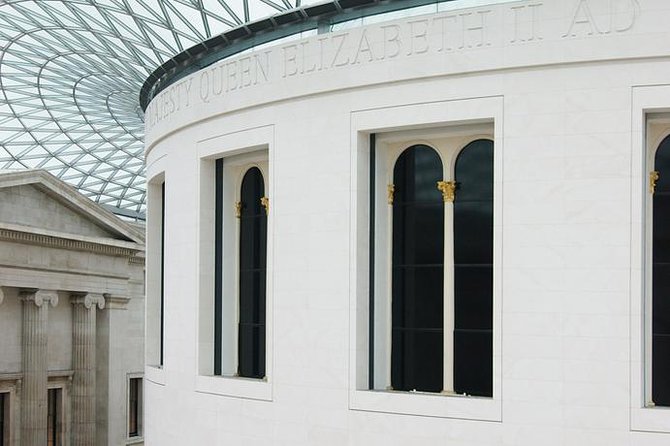
Meet-up is at Montague Place by the north entrance of the British Museum, near the stone lions at the doorway. The guide is meant to be holding a sign, which is a small detail that matters a lot when the museum frontage is crowded and everyone looks like they’re heading toward the same door.
Here’s how to make this part smoother:
- Go early enough to slow down and actually find the lions and the north entrance.
- Before you walk in, check your confirmation for any extra landmark details tied to Montague Place.
- If you’re coming on a busy day (and London loves busy days), give yourself a buffer. Crowds can add stress even when everything else is fine.
Once you’re with the guide, the advantage is immediate. You’re not wandering around checking which hall is where. You’re pointed to what matters next, and that keeps the pacing realistic.
The core route: Rosetta Stone and the Parthenon Frieze
This is the part most people think of first: the Rosetta Stone and the grand Greek sculpture presence. The tour is structured around these touchpoints so you feel like you’re seeing the most important anchors of the collection, not just random rooms.
Rosetta Stone: more than a history-class icon
The Rosetta Stone is famous because it helped crack Egyptian hieroglyphs. On this tour, you’ll learn how that works in plain language: it’s not just a stone with symbols. It’s a key that allowed scholars to read a writing system that had been inaccessible for a long time.
Standing in front of it changes the experience. In text and documentaries, it can feel abstract. Here, you can look directly at the artifact and understand why it’s so influential.
Parthenon Frieze: the scale hits fast
Next up is a major stop involving the Parthenon Frieze, which once stood on the Acropolis in Athens. The tour highlights its huge surviving length—just over three feet high and 525 feet long when it was part of the original structure.
The value of this stop isn’t only seeing the object. It’s learning what the frieze represents and why classical Greece still shows up everywhere in Western art and architecture. Even if you’ve visited other museums, this one helps you connect the dots between what you see in London and the larger story across Europe and the Mediterranean.
You can also read our reviews of more museum experiences in London



Egyptian Rooms and mummies: why the afterlife mattered
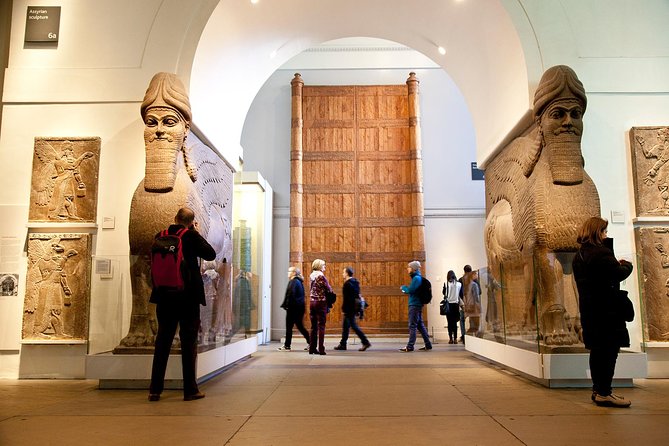
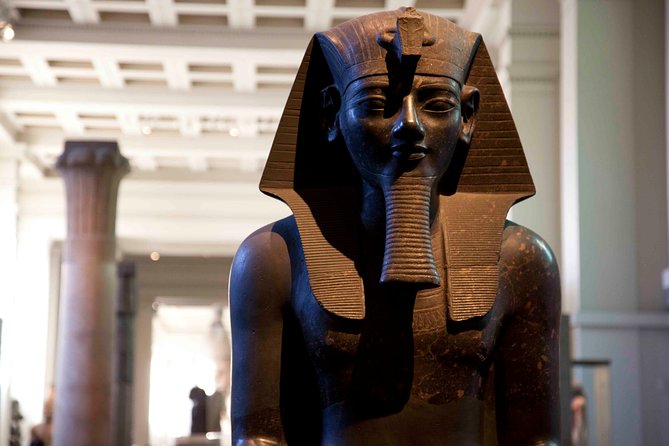
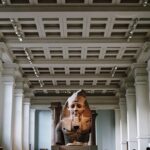
If you want one section of the British Museum to feel human and specific, it’s Egypt. The tour focuses on the Egyptian Rooms and uses them as a lens for understanding beliefs about death and the afterlife.
This is where the “private guide” approach really earns its keep. Mummies and Egyptian funerary objects can feel like spooky showpieces if you treat them like curiosities. But when someone explains the cultural logic behind the practices—what people believed would happen, why certain objects were used—the room stops being a collection and becomes a worldview.
You’ll get to see the Egyptian Rooms as part of the guided route, and the guide will set the meaning of what you’re looking at before you’re left to wander afterward.
Practical tip: this is also a good time to ask questions. If you’ve ever wondered why Egypt looks so different from Rome or Greece, this is the section where you can get the clearest comparisons.
Anglo-Saxon Britain: Sutton Hoo’s ship-burial story
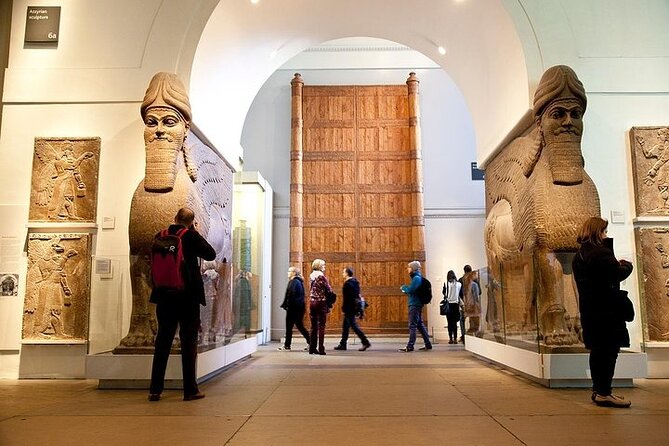
Most British Museum highlights tours rush past the “British bits.” This one doesn’t. It includes artifacts tied to Anglo-Saxon culture, including the story connected to the ship burial of Sutton Hoo.
That’s a strong choice because it makes the museum feel less like a suitcase of other civilizations and more like a place that also holds the history of Britain itself. Sutton Hoo’s tale is dramatic and unusual, and it helps explain how some objects survive long periods—despite the risks of time, decay, and even grave robbing.
Even if you don’t know much about Anglo-Saxon England, you’ll leave with a clearer mental picture of how people lived, what mattered enough to bury in such a scale, and why the findings are so significant.
After the highlights: how to spend the rest of your museum time
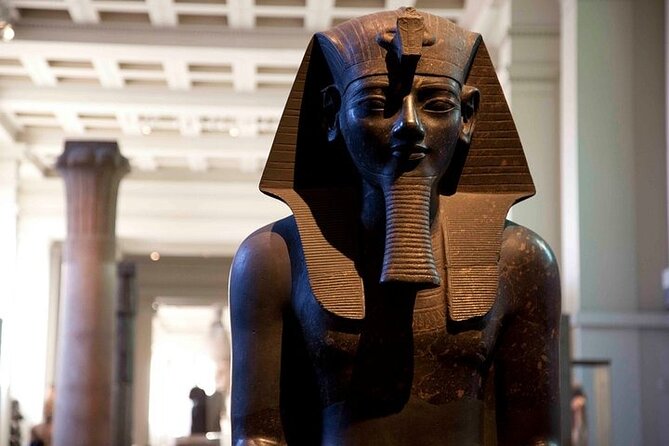
One reason I like this tour style is what happens next: once the guided portion ends, you can explore on your own. That’s ideal because the British Museum is too big to see everything in one go, but it’s not too big to continue in a smarter way.
Use the tour as your orientation. Afterward, you’ll generally understand:
- where major rooms are in relation to each other,
- what the big objects connect to,
- and which sections deserve more time.
If you’re the type who likes to return to one area and go deeper—Egypt one more time, Greek sculpture again, or British archaeology for a longer look—you’ll be able to do that without wasting your first hours figuring out where to start.
If you’re only in London for a short window, this kind of “guided hits first, wandering after” plan is one of the best ways to get value from a half-day.
Price and value: what you’re paying for in a free-entry museum
The tour costs $141.56 per person and runs for about 2 hours 30 minutes (with 1 hour 30 minutes of guided time noted as part of the experience). At first glance, that can feel steep for a museum that’s known for free entry.
Here’s the value logic: you’re not really paying for admission. You’re paying for:
- a professional guide,
- time efficiency in a huge museum,
- and an expert narrative you can ask questions about.
That matters at the British Museum because self-guided time can turn into time lost. The difference between “I saw a few rooms” and “I understood what I saw” is often just routing plus interpretation.
If your priorities are the Rosetta Stone, Parthenon Frieze, and Egypt’s Egyptian Rooms, this private format can be a smart use of money because it protects your limited time. If you’d rather browse slowly for hours and don’t care about context, you might do just fine with free entry and a museum map.
What it feels like in real time (and how to make it work)
From the positive feedback, the common theme is that the guide does more than point. People describe guides who were early at the meeting point, highly organized in showing the “must see” items, and excellent at keeping the pace workable even when the museum is crowded.
There’s also a strong thread about guides adding the right amount of background. Instead of reciting every label, guides helped people understand why the objects are important—like how the Rosetta Stone connects to reading hieroglyphs, or how Egyptian practices shape what you notice in the funerary context.
But keep expectations realistic. Even a highlights tour can feel packed inside a massive museum. One caution from the feedback was that the museum can be very crowded, and a short tour can only cover a small slice. That’s not a flaw. It’s the nature of “highlights.”
Your best move: come with a shortlist. Decide what you must see—Rosetta Stone, Parthenon Frieze, Egyptian Rooms/mummies, and Anglo-Saxon connections like Sutton Hoo—so the guide can tailor the order and emphasis toward your interests.
Who should book this private British Museum highlights tour
I’d book this if:
- you have limited time and want a focused plan,
- you like asking questions and getting direct explanations,
- you care about the big anchors (Rosetta Stone, Parthenon Frieze, Egyptian Rooms, Sutton Hoo ties),
- and you want to leave oriented enough to explore more afterward.
I’d skip it if:
- you want a slow, wandering museum day with minimal structure,
- you don’t need historical context,
- or you already have a personal “must-see” route and you’re comfortable building it yourself.
Bottom line: should you book this Rosetta Stone highlights tour?
If your goal is a smart, efficient British Museum highlights private tour with a guide who can explain what you’re seeing—especially around the Rosetta Stone and Egyptian beliefs—this is a solid pick. The price makes sense when you treat it as paid interpretation and routing, not just “a ticket.”
Just don’t ignore the meet-up basics. Show up a little early, confirm you’re at the right north entrance spot near the stone lions, and keep your phone handy in case locating the sign isn’t instant on a busy day.
FAQ
How long is the British Museum Highlights Private Tour?
The tour runs for about 2 hours 30 minutes, with guided time listed as 1 hour 30 minutes.
Is this tour private?
Yes. It is a private tour/activity, and only your group participates.
Where is the meeting point?
Meet your guide at Montague Place by the north entrance of the British Museum, near the stone lions by the doorway.
What are the main highlights included?
The tour focuses on top British Museum highlights, including the Rosetta Stone, the Parthenon Frieze, Egyptian Rooms and mummies, and Anglo-Saxon artifacts connected to Sutton Hoo.
Is admission included?
Yes. An admission ticket is included as part of the experience.
What’s included in the price?
The price includes a professional English guide and all fees and taxes.
Are food and drinks included?
No. Food and drinks are not included.
Do I need a mobile ticket?
Yes. The tour offers a mobile ticket.
Is the tour in English?
Yes, the tour is offered in English with a professional English guide.
Can I cancel for a full refund?
Yes, you can cancel up to 24 hours in advance for a full refund.
Are baby strollers allowed?
No. Baby strollers are not permitted on the tour.