REVIEW · LONDON
Official tickets: Moco Modern & Contemporary Art Museum
Book on Viator →Operated by Moco Museum · Bookable on Viator
Modern art, without the stuffiness.
Moco Museum London packs major names into a single visit, from Moco Masters like Andy Warhol and Jean-Michel Basquiat to contemporary favorites such as Tracey Emin and Banksy. I like that you can go at your own pace, and the mix of pop culture, street art, and serious big-idea artists keeps things moving. One heads-up: if you’re chasing only one artist (especially Banksy), the amount you see can vary with the day’s displays.
The whole experience is built for an easy 1 hour 30 minutes, with an audio guide and personal lockers included. You’ll also find a digital artworks area downstairs, plus a museum guide you can take home. If you want a deep, guided lecture, this is more self-guided exploration than a talk-heavy tour.
In This Review
- Key highlights you’ll care about
- Why Moco Museum London is a smart ticket
- Tickets, timing, and how to plan 1 hour 30 minutes
- Entering Moco: the Moco Masters room (Andy Warhol to Damien Hirst)
- Contemporary Masters: street art, big names, and modern voices
- Downstairs digital artworks: a change of pace you’ll feel
- Robbie Williams at Moco: pop fame meets mental health themes
- The included audio guide, lockers, and take-home museum guide
- What the art flow feels like (and what to watch for)
- Who should book Moco Museum London tickets
- Should you book? My practical call
- FAQ
- How long does the Moco Museum London ticket experience take?
- Is a mobile ticket offered?
- What languages are available for the audio guide?
- Are lockers available during the visit?
- Is the museum near public transportation?
- What art and artists can I expect to see?
- Can I cancel for free?
Key highlights you’ll care about
- Prebooking matters: you secure admission in advance, which saves time and stress.
- A big-name lineup in one place: Warhol, Basquiat, Kusama, Haring, Koons, and more.
- Modern meets street art: expect works tied to KAWS, Banksy, and other contemporary voices.
- Digital artworks downstairs: a separate section that changes the pace from wall-to-wall paintings.
- Included extras that reduce friction: lockers, an audio guide in 6 languages, and a guide to keep.
- Casual, family-friendly feel: it doesn’t require an art-history degree to enjoy.
Why Moco Museum London is a smart ticket
Moco Museum London works because it’s not trying to be one narrow style. You get pop art, provocations, street-art energy, and contemporary art all in the same building—without forcing you into a formal “museum robot” flow. The ticket is also priced reasonably for London, especially since you’re getting admission plus extras (lockers and an audio guide), not just a piece of paper.
The other big reason I like it for visitors: you can spend your energy choosing what to look at, not waiting for a group to move on. With an experience time around 1 hour 30 minutes, you can hit the key galleries and still have time to linger where something clicks.
The main caution is expectations. This is modern and contemporary art, not a timeline course. If you’re coming only for one specific artist, be flexible about what you’ll actually see.
A few more London tours and experiences worth a look



Tickets, timing, and how to plan 1 hour 30 minutes
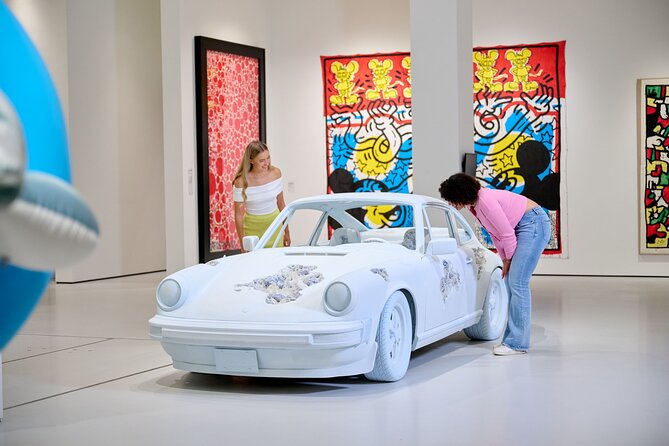
This is a straightforward visit: pick a time, arrive, and walk through at your pace. The experience is listed at about 1 hour 30 minutes, which is just enough to cover the main galleries without feeling rushed.
Here’s how I’d plan it:
- If you like comparing artists, arrive right as your timeslot starts. That gives you breathing room for slower sections.
- If you’re with kids or you prefer shorter stops, you can skim faster and still get the full “big picture” of the museum.
- If you want to focus on one or two artists, plan to spend extra time in those rooms and accept you’ll move briskly elsewhere.
The museum is near public transportation, so you can fit it into a day that’s already heavy on walking and sights. And because your admission is prebooked, you’re not standing around hoping for entry.
Entering Moco: the Moco Masters room (Andy Warhol to Damien Hirst)
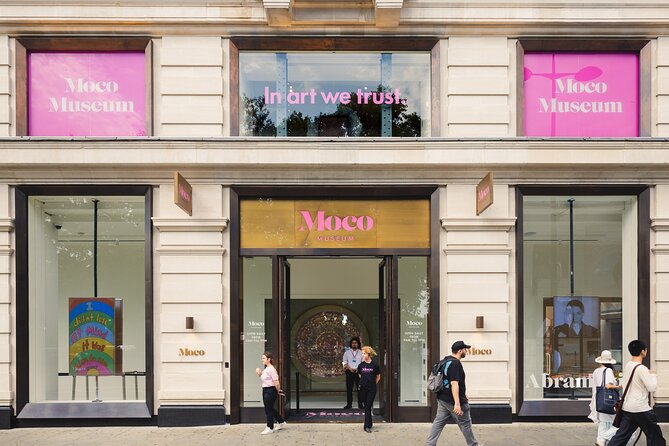
The museum’s main draw starts with the Moco Masters grouping—think world-famous modern artists alongside artists known for pushing boundaries in their own ways. This is where you see a lineup that reads like a highlight reel of 20th- and 21st-century impact.
What makes this section work is the contrast. Andy Warhol’s pop culture lens can sit next to the raw urgency associated with Jean-Michel Basquiat. Then you’ll pivot again to artists like Yayoi Kusama, whose work has a very different kind of mind-space. You can feel how modern art kept changing—style, message, and even how viewers are supposed to react.
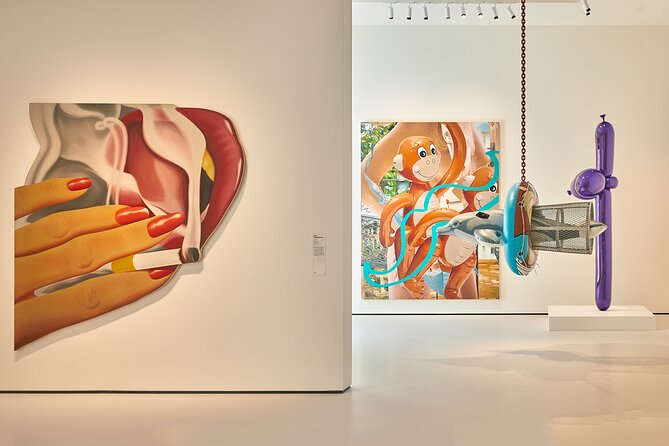
You’ll also find major names tied to bold spectacle and provocation, including Keith Haring, Damien Hirst, Jeff Koons, Tom Wesselman, and Pablo Picasso. That doesn’t mean you’ll like everything. It does mean you’ll have a lot of material to compare and decide what you respond to.
Practical tip: give yourself permission to not understand every piece instantly. The audio guide (included) helps you make sense of what inspired these works, and you can use it like a tool—turn it on when you want context, then switch it off when you’d rather just look.
Contemporary Masters: street art, big names, and modern voices
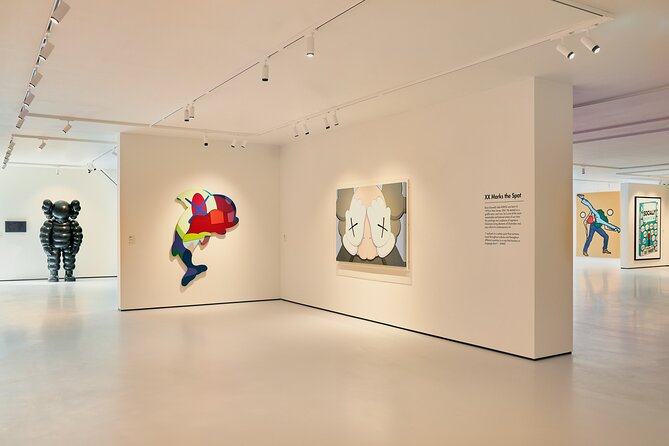
After the classics and legacy figures, the museum shifts into Moco Contemporary Masters, which is where the experience feels more personal and present-day. This section spans everything from artist-driven statements to street-art style impact.
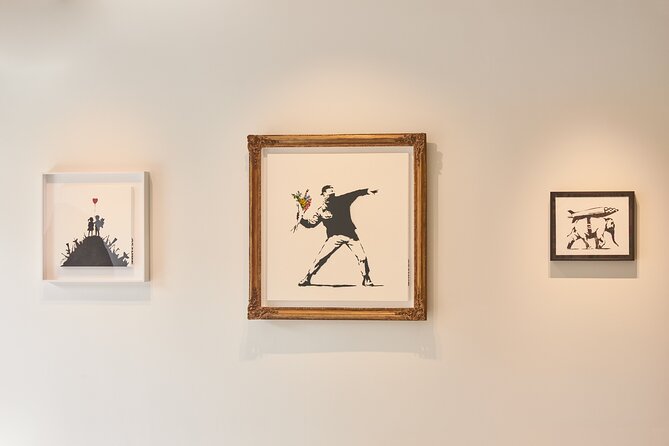
Expect a mix that includes Tracey Emin, KAWS, Banksy, plus British photographer Chris Levine, and contemporary artists like Julian Opie, JR, Takashi Murakami, and Hayden Kays. That’s a wide spread, and it’s part of the value: you can see how contemporary art can look completely different while still asking similar questions—identity, power, fame, politics, and mental health.
One thing to keep in mind: Banksy fans sometimes hope for a lot, and the amount you see may not match the hype. Even when the Banksy portion feels smaller, the surrounding street-art and contemporary work can still make the section feel satisfying. If your plan is Banksy-only, adjust it. If your plan is to experience street-art energy in a broader context, you’ll likely leave happy.
Downstairs digital artworks: a change of pace you’ll feel
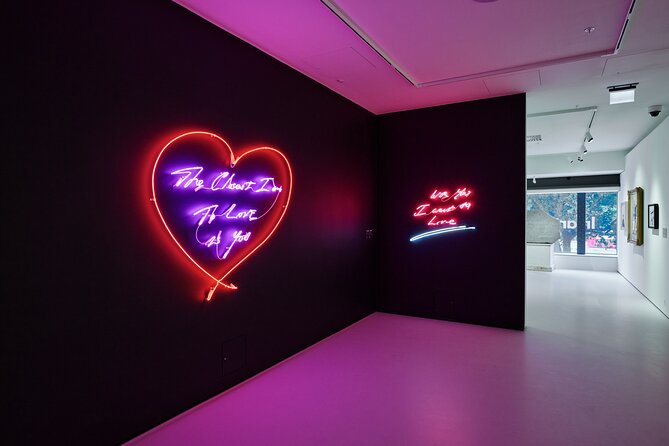
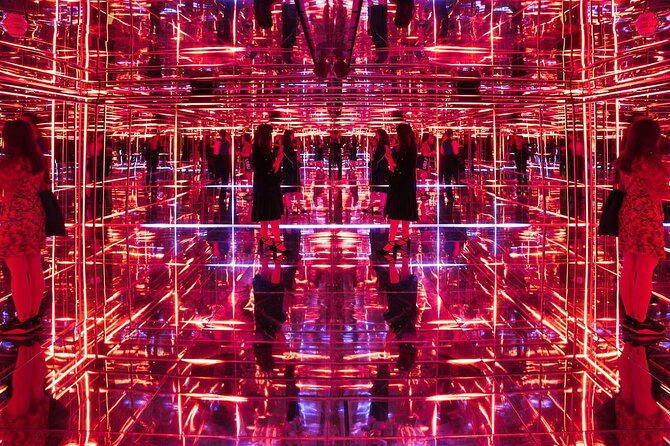
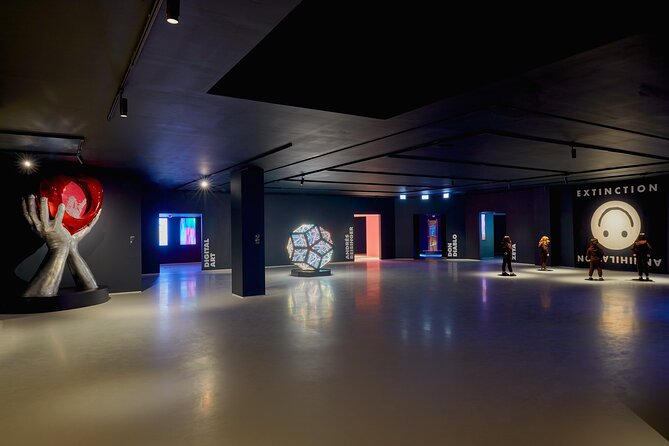
On the lower ground floor, you’ll find a dedicated area for digital artworks. This section matters because it breaks the “same rhythm” effect of walking room to room. If your eyes start to glaze over after a while, digital work gives you a reset—often faster, more immediate, and easier to approach even if you don’t consider yourself an art person.
I’d treat this part like a breather. Don’t rush it just to say you saw it. Spend long enough to actually watch and read what you can. The museum’s setup plus the audio guide support you here, so you don’t need to guess what you’re looking at.
If you’re traveling with someone who gets impatient with traditional galleries, this is also where you can win them over. Digital art can feel less intimidating, and it makes the visit feel more modern in a real, noticeable way.
You can also read our reviews of more museum experiences in London





Robbie Williams at Moco: pop fame meets mental health themes
One of the more interesting “why is this here?” moments is the collection connected to Robbie Williams, tied to his recently released set called Pride and Self-Prejudice. It’s designed to reflect his personal journey with mental health, and it includes works that have never been shown in the UK before.
This matters because it turns a museum day into something more than just style spotting. You’re not only moving through famous names; you’re also encountering art as a personal statement—one that comes from an unexpected source: a music icon.
I’d recommend spending at least a few minutes with this section even if you’re not a pop-culture superfan. The themes can give your brain an anchor: you start reading other contemporary works with a slightly broader understanding of intention.
The included audio guide, lockers, and take-home museum guide
This museum is set up to reduce friction, and those small add-ons make a real difference.
You get:
- Complimentary personal lockers, which is huge if you’re carrying shopping bags, a jacket, or an oversized daypack.
- A complimentary audio guide in 6 languages, so you can follow along without feeling lost.
- A museum guide to keep, which helps you remember what you saw after you leave.
Why this is good for you: modern art can be easier when you have one or two context points. With the audio guide, you’re not forced to rely on luck or guesswork. You can also “choose your level.” Want the quick explanation? Listen briefly. Want more time? Stay on a piece until it clicks.
What the art flow feels like (and what to watch for)
The experience works best when you lean into the museum’s pacing. The displays are set up so you don’t feel stuck in one mood. You can start with the big historical names, shift into contemporary statement pieces, then end with digital work and the more personal Robbie Williams-themed material.
If you like modern art, you’ll appreciate the variety. If you’re new to it, you’ll appreciate that the museum doesn’t assume you already know what everything means. You’re supported without being slowed down.
One practical consideration: the museum’s “Banksy factor” can be unpredictable. Don’t build your entire day around a single artist checklist. Instead, make it a day of comparisons—how different artists treat identity, culture, and shock value.
Who should book Moco Museum London tickets
You’ll likely enjoy Moco Museum London if:
- You want modern and contemporary art in one timed visit.
- You like pop art and street art, but you also want “serious” names in the mix.
- You’re traveling with a family member or friend who needs a museum day that still feels relaxed.
- You value included extras like lockers and an audio guide in multiple languages.
You might be less satisfied if:
- You only care about one artist and need a large focused collection.
- You’re looking for a lecture-style guided tour rather than self-paced exploration.
Should you book? My practical call
Yes, I’d book Moco Museum London tickets if you want an art stop that’s efficient, well-supported, and packed with familiar names. The value is strong for London because you’re not paying just for entry—you get lockers and an audio guide, plus you can structure the visit around what interests you.
The main decision point is your expectation. If you’re coming for a one-stop modern art sampler—classic masters, contemporary voices, and a digital section—you’re in the right place. If you’re coming for a single artist showdown, set softer expectations and plan to enjoy the broader mix instead.
FAQ
How long does the Moco Museum London ticket experience take?
The experience is listed at about 1 hour 30 minutes.
Is a mobile ticket offered?
Yes, the ticket is mobile.
What languages are available for the audio guide?
The audio guide is available in 6 languages.
Are lockers available during the visit?
Yes, complimentary personal lockers are included.
Is the museum near public transportation?
Yes, it’s near public transportation.
What art and artists can I expect to see?
You can expect modern and contemporary art by artists including Andy Warhol, Jean-Michel Basquiat, Yayoi Kusama, Keith Haring, Damien Hirst, Jeff Koons, Tom Wesselman, Pablo Picasso, Tracey Emin, KAWS, Banksy, Chris Levine, Julian Opie, JR, Takashi Murakami, Hayden Kays, and a collection connected to Robbie Williams.
Can I cancel for free?
Yes. You can cancel up to 24 hours in advance for a full refund.