REVIEW · LONDON
London: Paradox Museum Entry Ticket
Book on GetYourGuide →Operated by Paradox Museum London · Bookable on GetYourGuide
Three things can happen in 90 minutes: you laugh, you pose, you question your eyes.
Paradox Museum London turns your body into the control panel. You walk into rooms built around visual and tactile tricks, then trade ordinary movement for weird, photo-ready moments. It is a playful, locally inspired twist on science—hands-on, fast-moving, and designed for groups.
What I like most is the 50+ interactive exhibits spread across clear mini-adventures, plus the way the experience pushes you to use all your senses instead of just reading labels. One watch-out: some features can be closed or you may hit queuing, and the big-ticket add-on called Zero Gravity is not included in the entry price.
In This Review
- What you will remember from Paradox Museum
- 1) Location and what the 1.5-hour slot really feels like
- 2) First impressions: exit reality, then start testing yourself
- 3) Camouflage Room: the disguise game that makes you slow down
- 4) Castle Room: tricky hallways and the Paradox Sofa
- 5) Throne Room: become the monarch of a weird perspective
- 6) Tube-station illusions: ceiling gravity and the walking-physics test
- 7) The Zero Gravity Room: optional, and not always the one you expect
- 8) Staff help matters more than you think
- 9) Crowds, queues, and how to avoid the frustrating minutes
- 10) Price and value: is $36 a good deal?
- Who should book this museum (and who might not)
- Should you book Paradox Museum London?
- FAQ
- How long does the Paradox Museum London ticket last?
- What’s included in the entry ticket price?
- Is the Zero Gravity Room included?
- Where is the museum located?
- Is Paradox Museum wheelchair accessible?
- Can I cancel my booking?
What you will remember from Paradox Museum
- More than 50 interactive exhibits that reward curiosity, not just standing and looking
- Camouflage Room and other disguise-style spaces where you test what you think you see
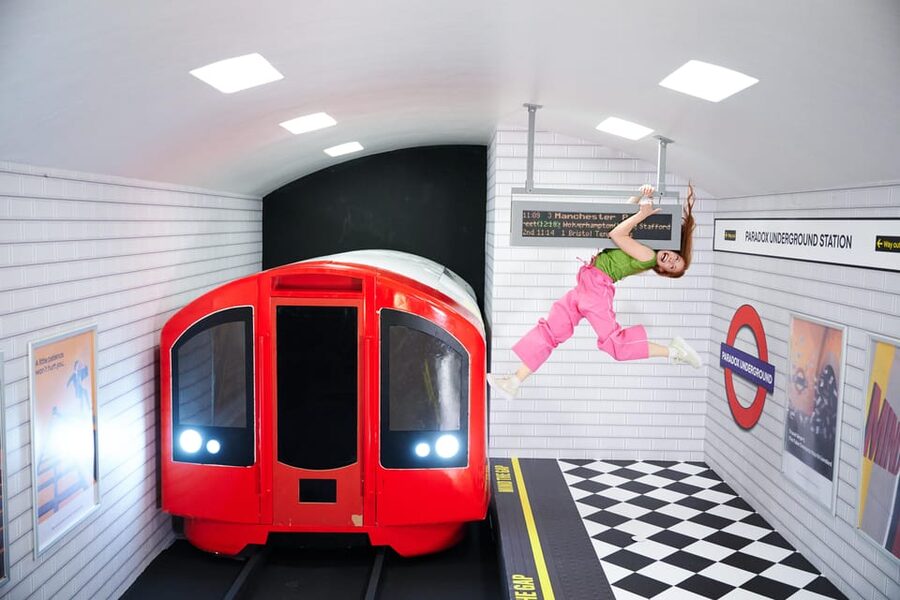
- Photo moments built into the layout, including gravity-defying scenes tied to a tube station theme
- Multi-sense design so you are using touch, sight, and movement as part of the puzzle
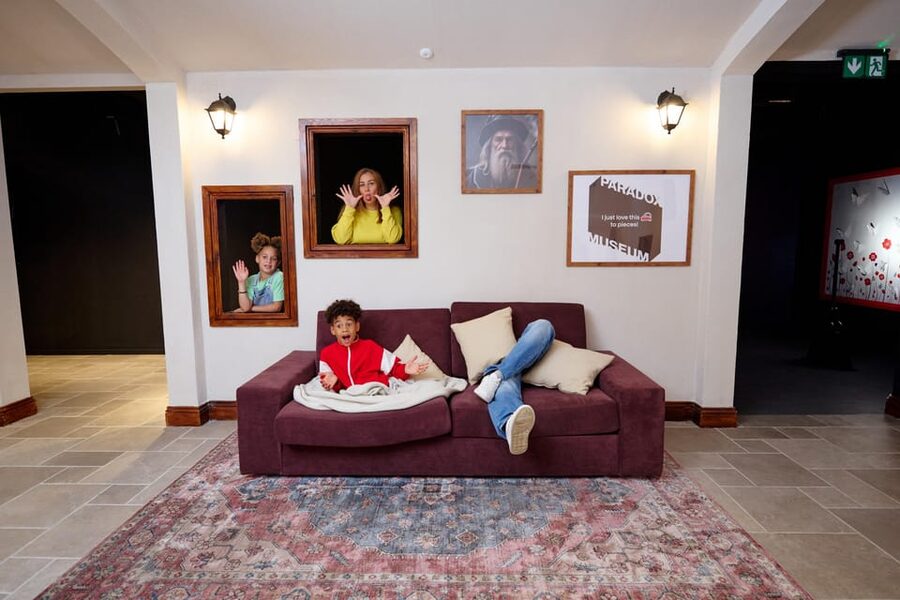
- Castle Room with tricky hallways plus the paradox-focused Paradox Sofa
- Time feels short for most people, with many visits clocking in closer to 40–60 minutes
1) Location and what the 1.5-hour slot really feels like
Paradox Museum sits at 90 Brompton Road, Knightsbridge, right opposite Harrods. That matters because it is easy to tuck into a day that already includes West End shows, Knightsbridge shopping, or a Harrods stop.
Your ticket lists 1.5 hours, but the rhythm inside is quick. The museum is built as a sequence of small challenges rather than one long guided circuit. In practice, many visitors move through faster—so if you are the type who enjoys lingering, plan a little extra time at the end to re-do the photo spots you like best.
If you are traveling with kids, this fast pacing is usually a win. If you are hoping for a slow, museum-gallery crawl, you might feel it is more like an attraction than a traditional exhibit.
A few more London tours and experiences worth a look



2) First impressions: exit reality, then start testing yourself
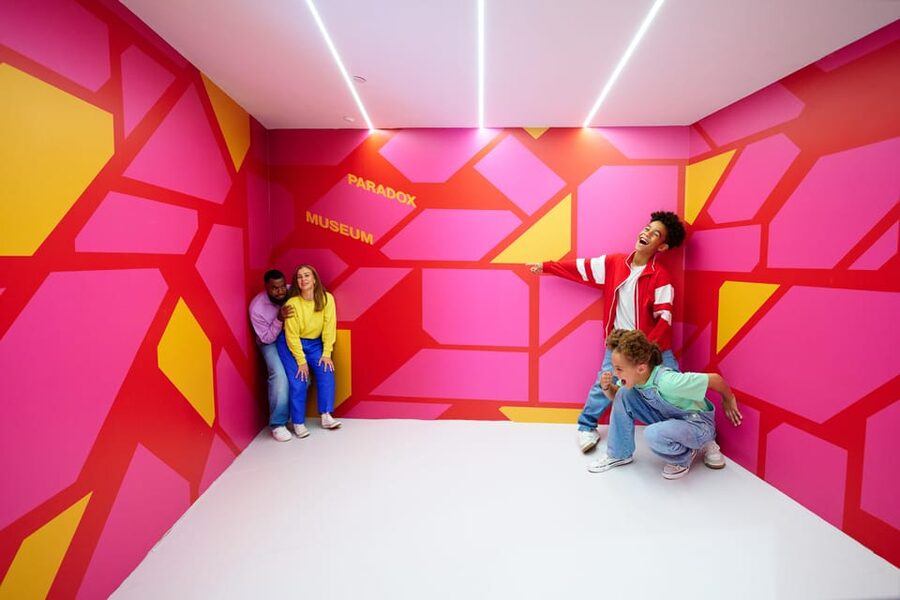
The vibe is simple: you walk in, get the rules of the game, and then start interacting immediately. Paradox Museum does not ask you to be an expert. It asks you to notice what your brain does when it is given conflicting information.
That is the point of the place. You are not just looking at illusions; you are experiencing how your senses can be tricked by visual and tactile stimuli. Expect rooms where you have to commit physically—moving your body, changing your stance, or reaching out—because that is when the “wait, that can’t be right” moments hit.
If you like hands-on learning, this format works well. If you prefer quiet, low-stimulation spaces, it can feel busy, especially around the most popular illusion stations.
3) Camouflage Room: the disguise game that makes you slow down
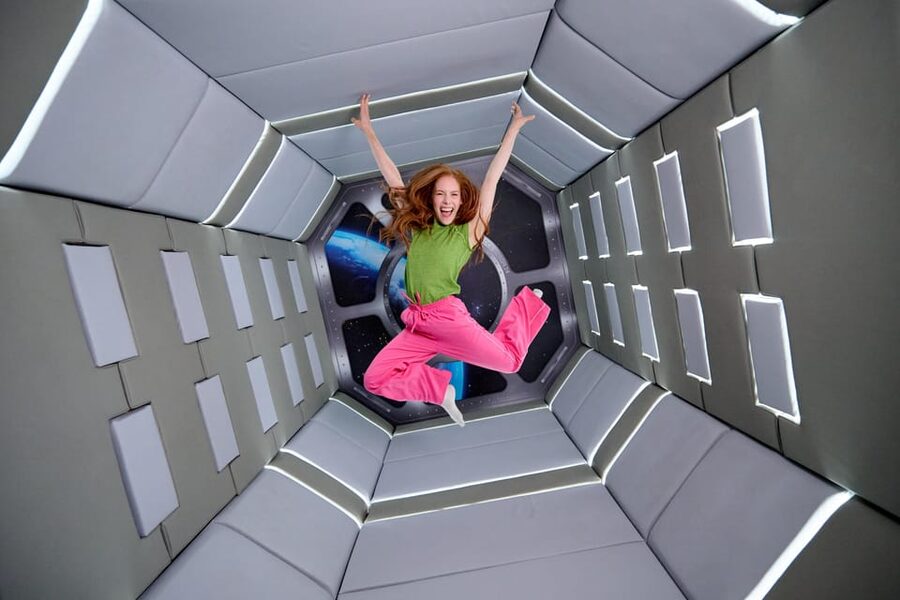
One of the signature stops is the Camouflage Room. The concept is straightforward: you get challenged to find or blend in based on how your eyes interpret patterns, edges, and contrast.
Why it is worth your time: this kind of exhibit turns observation into a skill. You end up paying attention to small visual cues instead of relying on general shapes. It is also a fun “team” activity—people naturally compare what they think they see and who spots things first.
Practical tip: if you are visiting as a group, don’t rush this room. It plays better when you pause, switch positions, and let your eyes adjust—otherwise you miss the core trick.
4) Castle Room: tricky hallways and the Paradox Sofa
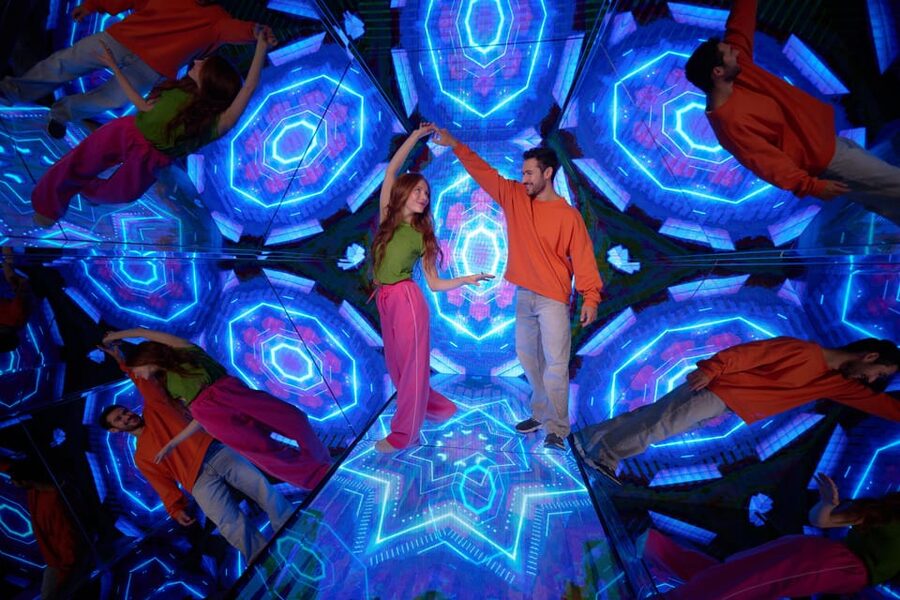
Next up is the Castle Room, which leans into disorientation in a playful, photo-friendly way. The hallways are described as tricky, and the room includes the Paradox Sofa, designed around a mismatch between how you feel space and how space appears.
This is where you start noticing patterns in how the museum is built. The illusions are not random. They tend to push one weak point at a time—depth perception, perspective, or how your brain estimates distance while you move.
What to expect here:
- You will probably take more pictures than you planned.
- You may feel a little turned around, even if you know it is an illusion.
- The space invites short tries: adjust your angle, sit/pose, then try again.
Possible drawback: if there is a line, this is one of the spots where people hesitate and reset, which can add to wait time. If your group hates queues, aim for this room earlier in your visit.
5) Throne Room: become the monarch of a weird perspective
The Throne Room is another highlight. The museum uses scale and positioning to make you feel larger-than-life—like you are sitting above the normal rules.
This is not just a photo op. The room is a classic example of how “context” changes perception. Place your body against a designed background and suddenly your brain recalibrates what size and height should feel like.
If you are traveling with families, this is usually where the energy peaks. Everyone wants a turn. Everyone wants the funny angle. And you get that satisfying moment when you realize the illusion works because of your position, not because the room is doing anything magical to you.
You can also read our reviews of more museum experiences in London



6) Tube-station illusions: ceiling gravity and the walking-physics test
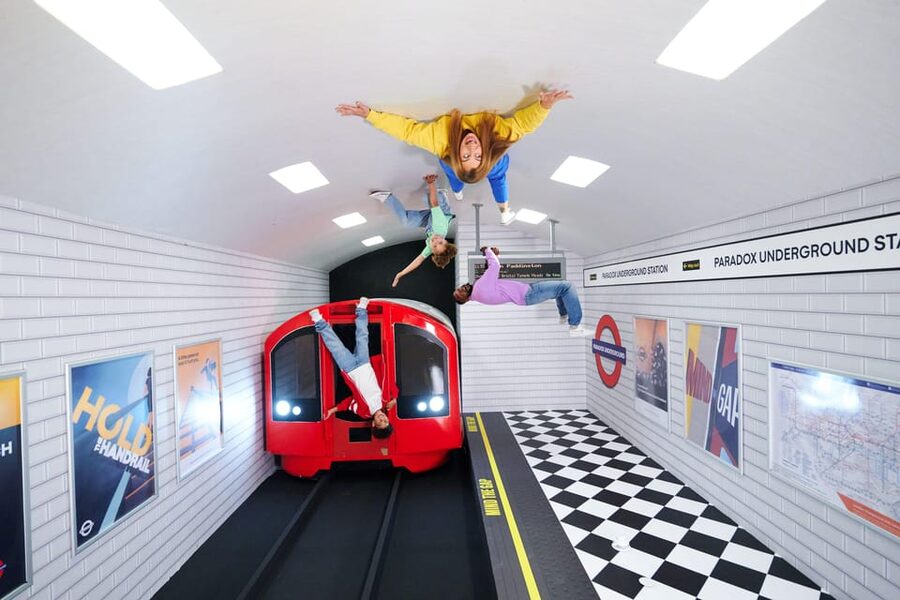
If you like the quirky London flavor, pay attention to the tube-themed photo moments. The museum includes experiences where you can create gravity-defying photos connected to a tube station ceiling idea. There is also a tube tunnel-style setup that makes walking straight impossible—at least in the way your brain expects.
Why this works so well: it uses movement. Your body tries to correct. Your balance argues with what your eyes are telling you. That mismatch creates the laughs and the memorable shots.
Practical advice:
- Wear shoes you can comfortably stand and move in.
- If you are with kids, take a second to explain that it is okay to be “wrong” here. The fun is in trying.
If you are prone to motion discomfort, take it slow in any movement-based illusions. You can still enjoy the rest even if one station is not your thing.
7) The Zero Gravity Room: optional, and not always the one you expect
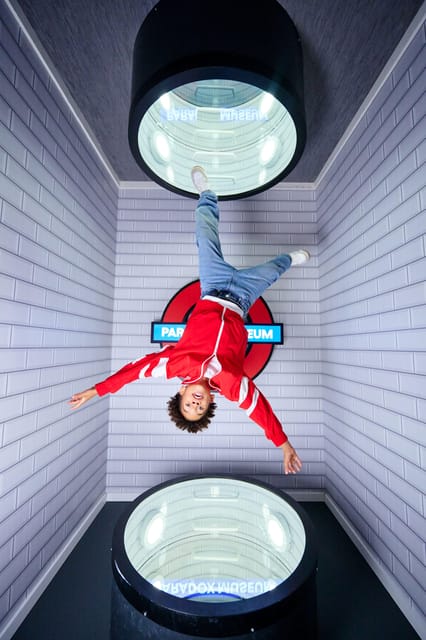
The Zero Gravity Room is listed as an optional add-on on site, not included in the entry ticket. Some visitors also say it costs extra (mentioned as an additional £3.50).
Two important considerations:
- If Zero Gravity is the main reason you booked, have a plan for whether you can access it that day. If it is full, you might be disappointed.
- Because it is an add-on, your total cost can be a little higher than the ticket price suggests.
In terms of value, I think it depends on your group. For some families, it becomes the star moment. For others, the core ticket already delivers plenty of hands-on surprises. Either way, check on it early once you arrive so you are not deciding at the end with limited time.
8) Staff help matters more than you think

A theme you will notice from real experiences is that the museum staff can make or break the day. When you are standing in a tricky illusion, you often need a quick nudge: where to stand, how to pose, when to switch angles.
The good news: there are friendly greeters who help with instructions, and staff support can be attentive in unexpected moments (including first aid when needed). That kind of care adds confidence, especially when you are there with children.
One note to keep expectations realistic: if some exhibits are closed for refurbishment, the overall flow can change. That can shorten your route, lengthen your wait around working stations, or shift which rooms feel like the “main event.”
9) Crowds, queues, and how to avoid the frustrating minutes

This is an interactive attraction, and that means you can hit over-crowding and queuing at the illusion stations where people need a turn. The museum is designed so you circulate, but popular exhibits can bottleneck.
How to reduce friction:
- Start with the most “must-do” room first so you are not hunting for turns later.
- Move as soon as a spot opens. Waiting for everyone to line up can turn a 3-minute pause into a 15-minute delay.
- If you are with a group, choose a photographer and a player. One person figures out angles while the other does the test. It keeps your pace up.
If you are visiting during peak times, build in patience. The museum is fun, but it is also busy.
10) Price and value: is $36 a good deal?
At $36 per person, Paradox Museum is not a bargain, but it also is not priced like a full-day museum outing. The value comes from two things: interactivity and variety.
You get a lot of “different kinds” of tricks: camouflage-style observation, perspective games, furniture-based paradox effects, and tube-themed movement illusions. That variety is what prevents the experience from feeling repetitive.
Where the value can dip:
- If multiple exhibits are temporarily closed, your effective time decreases.
- If Zero Gravity is a priority for you, remember it is an extra add-on, and you may pay more on top of the entry ticket.
- If you want long-form explanation, you might feel you need more guidance at certain exhibits. The museum does not include a guide with the entry ticket.
Still, for many people, the visit is memorable because the rooms are built for photos and repeat tries. It is the kind of place you leave with proof you had fun—and with a story you actually want to tell.
Who should book this museum (and who might not)
I think Paradox Museum is a great fit if:
- You want a high-energy, hands-on activity in London that works for families and mixed groups.
- You enjoy learning by doing, especially when it involves cameras, pose opportunities, and body-based illusions.
- You like experiences that are easy to share on the spot.
You might be less thrilled if:
- You prefer a quieter, slower museum style with lots of reading and minimal waiting.
- You are sensitive to disorientation or movement-based illusions.
- You only want one specific room (like Zero Gravity) and the add-on details could be stressful if it is busy.
Should you book Paradox Museum London?
Book it if you want an easy win in Knightsbridge: a 1.5-hour interactive outing with 50+ exhibits, built-in photo moments, and rooms that get you moving. It is one of those experiences where adults and kids both end up laughing at the same illusion—and that is hard to fake.
Skip or plan carefully if Zero Gravity is your only goal, or if you dislike crowds and queues. In that case, budget extra time for the popular stations and be ready for temporary closures.
If you go in with the right mindset—curious, flexible, ready to try again from a new angle—you will probably walk out thinking, I didn’t know my eyes could be this unreliable.
FAQ
How long does the Paradox Museum London ticket last?
The entry is planned for about 1.5 hours, with starting times depending on availability.
What’s included in the entry ticket price?
Your ticket includes entry to the Paradox Museum London. A guide is not included.
Is the Zero Gravity Room included?
No. The Zero Gravity Room is an optional add-on on site.
Where is the museum located?
Paradox Museum is at 90 Brompton Road, Knightsbridge London, opposite Harrods.
Is Paradox Museum wheelchair accessible?
Yes, it is listed as wheelchair accessible.
Can I cancel my booking?
You can cancel up to 24 hours in advance for a full refund.