REVIEW · LONDON
London: Jack the Ripper Museum Tickets
Book on GetYourGuide →Operated by Golden Tours - Gray Line London · Bookable on GetYourGuide
If dark history grabs you, this museum goes all in. The Jack the Ripper Museum lays out the 1888 Whitechapel story across six floors, mixing realistic set pieces with audio that makes each room feel like a scene.
What I like most is the clear focus on the victims and the way the museum slows you down, not just for spectacle but for context. The second big win is the morgue section, where you can study actual autopsy photos and the written reports tied to the murders. One drawback to keep in mind: it’s small, so you may finish faster than you expect, and the content can feel very grim.
In This Review
- Key things I’d plan for at the Jack the Ripper Museum
- Where the Jack the Ripper Museum is, and why the address matters
- Tickets, time, and how long to give yourself
- The museum layout: what six floors feels like in practice
- Mitre Square: the first scene that sets the tone
- Jack the Ripper’s sitting room: memorabilia, maps, and the suspect’s world
- Whitechapel Police Station: evidence boards, letters, and real-feeling details
- Mary Jane Kelly’s bedroom in the attic: victims’ lives, not just murders
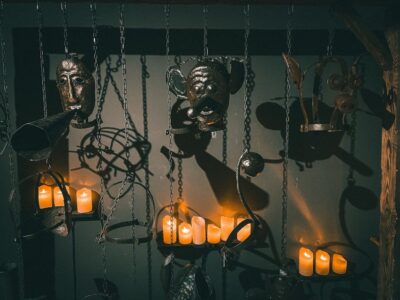
- Audio and atmosphere: when sound design adds to the story
- Basement mannequins and the role of staged fear
- The morgue: autopsy photos and reports you should treat carefully
- Is it worth $18.86? How to judge the value
- Who should book, and who should think twice
- Should you book the Jack the Ripper Museum tickets?
- FAQ
- What does the Jack the Ripper Museum ticket include?
- How much are tickets for the Jack the Ripper Museum?
- How long is the ticket valid?
- Where is the museum located?
- Which stations are closest?
- What are the main highlights inside the museum?
- Will I be able to see the letters and police evidence?
- When is the museum closed?
- Do disabled visitors get any special access?
- How graphic is the morgue section?
Key things I’d plan for at the Jack the Ripper Museum
- Six floors of recreated locations, not just photos and text
- Audio in the rooms, including standout eerie moments in the attic
- Whitechapel Police Station evidence boards, plus famous letters
- Mitre Square waxwork, featuring P. C. Watkins and Catherine Eddowes
- Victim-focused displays, including domestic details in Mary Jane Kelly’s room
- Morgue exhibits with autopsy photos, which you may want to skip if you’re sensitive
Where the Jack the Ripper Museum is, and why the address matters
The museum is at 12 Cable Street, London E1 8JG, in the Whitechapel area of Greater London. This location isn’t just a pin on the map. It helps the experience feel grounded in the same London neighborhood where the story’s set.
Getting there is straightforward with nearby underground and rail options, especially Tower Gateway, Tower Hill, and Aldgate East. When you’re on a timed ticket, that kind of transit flexibility matters. You can build your day around the museum without stressing over one fragile connection.
A few more London tours and experiences worth a look


Tickets, time, and how long to give yourself
Your ticket covers museum admission for a 1-day visit. Starting times depend on availability, so it’s smart to check the schedule before you lock in the rest of your day. The duration isn’t a multi-hour tour with a fixed endpoint. Instead, you’re set up to walk through the museum at your own pace.
From the way the museum is built and paced, I’d plan for about 45 minutes to around 1.5 hours. If you’re the type who reads every caption and pauses for the scenes, lean toward the longer end. If you want the major rooms and photos first, you can move quicker. Either way, the ticket is one admission, so you’re not forced into a rushed loop.
The museum layout: what six floors feels like in practice
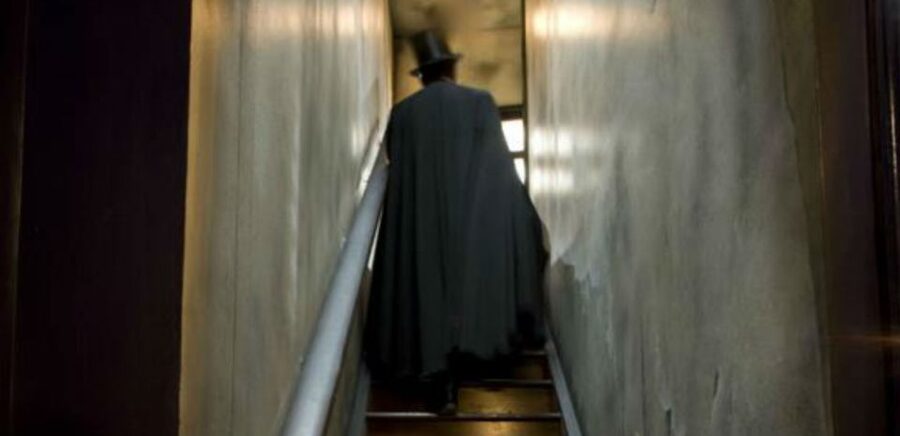
This isn’t a huge complex. It’s a compact museum that uses room-by-room storytelling. That design choice is part of the appeal: you go from one set piece to the next without losing time walking between far-flung galleries.
You’ll encounter themed spaces such as a Mitre Square crime-scene recreation, a Whitechapel Police Station recreation, Mary Jane Kelly’s bedroom scene, and a morgue section. Reviews also point out details like the museum’s walls tying the experience together, and the basement area featuring creepy mannequins. In other words, it’s built to keep you thinking, not just looking.
Mitre Square: the first scene that sets the tone
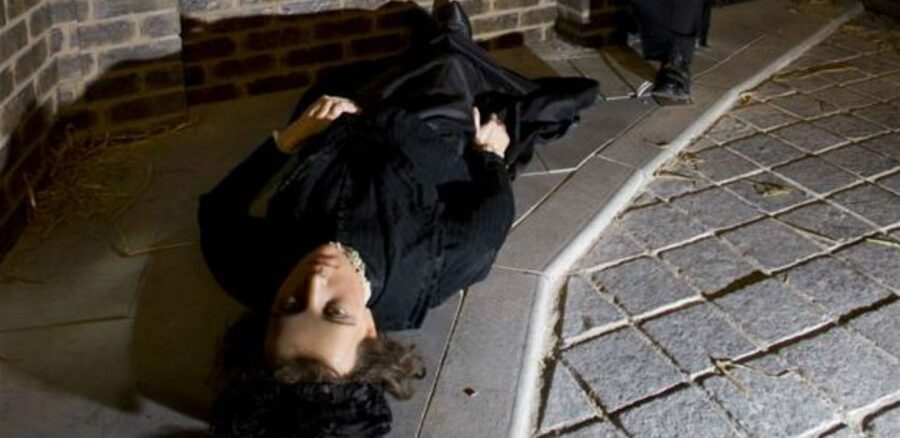
One of the first stops that shapes the whole visit is Mitre Square, where you’ll see a realistic waxwork recreation connected to P. C. Watkins discovering the body of Catherine Eddowes. It’s not presented like a movie set. The scene is staged to feel like an actual moment on the street.
Why this matters for your experience: it primes you to interpret everything that comes later. After Mitre Square, you’re not just learning names—you’re seeing why police response, evidence, and witness details mattered.
This is also where the museum’s mood starts doing its job. If you’re sensitive to dark themes, treat this as a warning sign that the content ramps up as you go.
Jack the Ripper’s sitting room: memorabilia, maps, and the suspect’s world
From the street to the study. The museum includes Jack the Ripper’s sitting room, and it’s packed with the kind of objects that make the story feel historical rather than abstract: medical instruments, books, maps, letters, and Victorian Ripper memorabilia.
A standout item here is an original drawing attributed to prime suspect Walter Sickert, showing a depiction of the body on a metal bed and signed in red ink. That sort of specific artifact pulls you closer to the era and the investigation mindset.
Practical tip: take a slow lap through this room before you jump ahead. It’s the section where you’ll likely understand how the museum wants you to connect the clues, the letters, and the police actions. If you just rush, some of that “how they built the case” logic gets lost.
You can also read our reviews of more museum experiences in London




Whitechapel Police Station: evidence boards, letters, and real-feeling details
Then you hit the Whitechapel Police Station recreation, presented as the hub of the investigation. This is where the museum leans hard into procedure: evidence boards, artifacts, and the kind of visual organization police work depends on.
You can inspect details such as:
- From Hell and Dear Boss letters
- original newspapers and police artifacts
- a recreated display of evidence presented from the crime scene
There’s also specific gear tied to P. C. Watkins, including the whistle he blew to call for help, plus a notebook, handcuffs, and truncheon shown to the public for the first time (as the museum describes it).
Why this room is worth your attention: it turns the story from myth into detective work. Even if you know the headlines, you’ll likely appreciate the way physical items and evidence display boards create a “case file” feeling.
Mary Jane Kelly’s bedroom in the attic: victims’ lives, not just murders
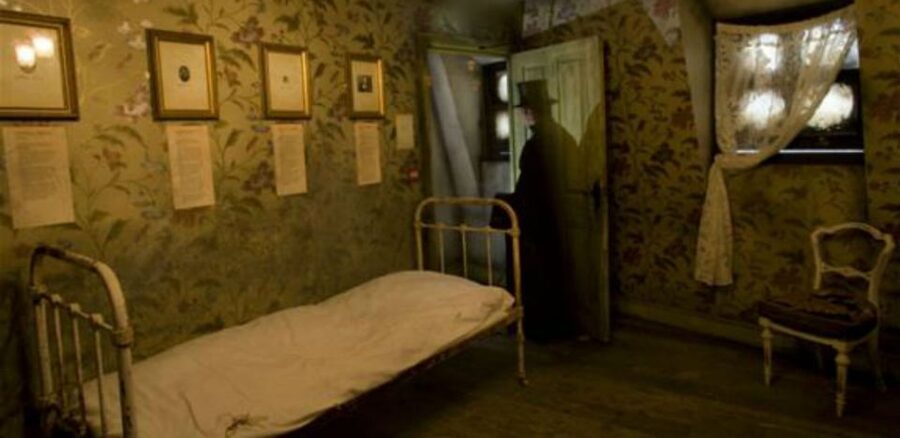
In the attic, the museum presents a recreation of Mary Jane Kelly’s bedroom, described as the scene of the most horrific murder. But the emotional weight comes partly from the details that surround her life.
You’ll see domestic imagery and personal possessions such as photographs of her and her family, boots and bonnets, and a metal-framed bed with a straw mattress, plus the modest possessions associated with poor Victorian East End women.
The room is also staged to make the women feel real, not just names in a grim timeline. This victim-focused approach is one of the most praised parts of the visit, and it’s the reason people leave with a more reflective mood instead of just a scare.
One practical note: this section is likely the most emotionally intense after Mitre Square. If you’re going with friends who want a lighter day, agree in advance where you’ll pause or how you’ll handle the morgue content later.
Audio and atmosphere: when sound design adds to the story
The museum uses audio in each room, which makes a difference in a place like this. Reading can only take you so far; sound helps create a sense of place.
One especially memorable moment described involves a singer’s voice through speakers in the attic room. It’s the kind of sound effect that doesn’t feel like background noise. It feels like the space is speaking back at you.
If you’re the type who usually skips audio on museum visits, don’t. Here, it’s part of the pacing. Use it as a cue to slow down and read the next display.
Basement mannequins and the role of staged fear
There’s also a basement area with mannequins, described as super creepy. This is not just jump-scare staging. It supports the museum’s goal of showing how physical spaces and bodies were treated within the story.
This matters because it adds a layer of “what it would have felt like” beyond text explanations. If you prefer museums that feel clinical and calm, the basement may not be your favorite stop. But if you like your true crime with atmosphere, it’s likely a highlight.
The morgue: autopsy photos and reports you should treat carefully
At the end (or near the end), you’ll find the morgue. This is where you can study actual autopsy photos and read reports describing the mutilation and murder of the nine women presented as victims in the museum’s accounts.
This section is the clearest point where the museum stops being educational-only and becomes graphic and emotionally heavy. I’d treat it as optional even if you bought a ticket. If you’re sensitive, you can choose to skip looking closely at the photos and just read the general context.
For me, the value is in the restraint: the museum gives you primary-source style visuals and reports rather than turning it into entertainment. Still, it’s dark material. Plan your day so you’re not immediately rushing off to something cheerful right after.
Is it worth $18.86? How to judge the value
At about $18.86 per person, the ticket price lands in the middle for London attractions, especially given what’s included: museum admission plus multiple floors of staged rooms, audio, and a morgue section with autopsy photos.
The value equation looks strong if you:
- like interactive museum layouts with themed set pieces
- want evidence-focused display areas (letters, police artifacts)
- don’t mind a slow, reflective visit through victim-centered storytelling
It may be less of a value match if you:
- want a long, fully guided experience that runs for hours
- dislike graphic displays and want a lighter museum experience
- are shopping strictly for a “big attraction” size-wise
One more smart angle: because the museum is compact, you can fit it into a tight schedule without sacrificing too much time. That’s real-world value in London, where travel and planning often do the heavy lifting.
Who should book, and who should think twice
I’d book this if you’re into true crime history with a strong historical presentation, and if you like museums that use room staging and audio to pace your attention.
It’s also a solid pick for people who want to learn the story through artifacts and evidence boards, not just famous names. The Whitechapel Police Station recreation is built for that.
I’d think twice if:
- you’re easily disturbed by graphic content or autopsy photos
- you’re traveling with someone who wants an upbeat day out
- you’re looking for a huge museum you could spend half a day in
Still, if you’re emotionally ready and you’re coming for the story and the artifacts, this museum delivers a lot for its size.
Should you book the Jack the Ripper Museum tickets?
Yes, if you want a focused, artifact-driven museum visit that turns an unsolved historical case into visible, organized rooms. The combination of Mitre Square, the police station evidence displays, and the morgue section makes it more than a quick fright stop.
Book it with one expectation set: this is a compact museum. You’ll likely finish in under two hours, and the ending section can be heavy. If you can handle that trade-off, you’ll probably come away feeling like you learned something real about how the story was documented—and why it’s still debated.
FAQ
What does the Jack the Ripper Museum ticket include?
Your ticket includes museum admission. You enter the museum and explore the six-floor experience at your own pace.
How much are tickets for the Jack the Ripper Museum?
The price is $18.86 per person.
How long is the ticket valid?
Your ticket is valid for 1 day. Starting times depend on availability.
Where is the museum located?
The museum is at 12 Cable Street, London E1 8JG.
Which stations are closest?
The nearest underground and train stations listed are Tower Gateway, Tower Hill, and Aldgate East.
What are the main highlights inside the museum?
You can see recreations of crime scenes and the Whitechapel Police Station, plus the morgue where you can study actual autopsy photos. The museum also includes waxwork scenes and a recreated sitting room with Victorian memorabilia.
Will I be able to see the letters and police evidence?
Yes. The Whitechapel Police Station recreation includes the From Hell and Dear Boss letters, and it also displays police artifacts connected to P. C. Watkins.
When is the museum closed?
The museum is closed on Christmas Day.
Do disabled visitors get any special access?
The person accompanying a disabled person receives free entrance.
How graphic is the morgue section?
The morgue includes autopsy photos and reports describing the mutilation and murder of the women presented as victims. If you’re sensitive, it’s wise to approach that section with care.