REVIEW · LONDON
London: British Museum Tour with Archaeologist Guide
Book on GetYourGuide →Operated by Spirit of Discovery Tours · Bookable on GetYourGuide
One museum, many centuries, one smart guide. This British Museum tour with archaeologist Rossa (Ross Minogue) uses an archaeologist guide who ties artifacts to real people, not just labels, and the skip-the-line entrance helps you get moving instead of stuck in queues.
You’ll get a high-impact mix: Egyptian giants, Greek masterworks, Viking-era objects, and the Sutton Hoo treasure hoard in one efficient 2.5-hour route.
The main trade-off is time and punctuality. The group departs promptly at 9.45am to keep your museum entry slot, so late arrivals can miss the start. And yes, galleries can be busy, so plan to stay focused even when it’s crowded.
I also love how Rossa explains with energy and clarity. Several reviews call out his storytelling style and strong voice that carries in noisy rooms, plus his ability to keep both adults and kids (ages 12–14) interested.
In This Review
- Key things that make this tour worth your time
- Why an archaeologist guide changes the British Museum game
- Russell Square start: the fastest way to get into the museum rhythm
- Egypt you can understand in 2.5 hours: Rosetta Stone and Ramses II
- Assyria, Aztecs, and the way the tour links distant civilizations
- Greek Parthenon Marbles: seeing the masterpieces and the controversy
- Vikings you can point to: Lewis Chessmen and why they spark questions
- Sutton Hoo and King Raedwald: the Dark Ages stop that feels strangely immediate
- Beyond the big names: how Moai and other objects widen your museum view
- What $58 buys you (and why it’s not just “entry”)
- Tour style and group energy: what to expect in the room
- Who should book this British Museum archaeologist tour
- Should you book? My practical call
- FAQ
- FAQ
- Where do I meet the tour?
- How long is the British Museum tour?
- Is the British Museum ticket included?
- Does this tour help you avoid lines?
- What language is the live guide?
- What should I bring?
- Is food and drink included?
- What if I’m late for the 9.45am departure?
- Is the tour wheelchair accessible?
- Can I cancel or change plans?
Key things that make this tour worth your time
- A real archaeologist’s way of looking: you’re not just seeing objects; you’re learning what questions archaeologists ask about them.
- Skip-the-line museum entry: you save time right at the moment London crowds usually win.
- Rosetta Stone to hieroglyphs: you’ll connect the famous stone to how Egyptian writing became readable.
- Lewis Chessmen + Sutton Hoo: the Vikings and the Dark Ages show up in one tight storyline, not scattered across the museum.
- Big-name highlights with human context: Parthenon Marbles aren’t treated like trophies; you hear the people-and-discovery story around them.
- Tour pacing that leaves you options: you’ll finish with recommendations for what to see next on your own.
Why an archaeologist guide changes the British Museum game
The British Museum can feel like drinking from a firehose. The building is huge, the galleries are dense, and the labels only tell part of the story. A good guide turns the chaos into a sequence: who made the object, what problem it solved in its time, and why we care now.
With this tour, the archaeologist focus matters because archaeology is about evidence and context. You’ll hear how objects were found, what scholars think they meant, and why some mysteries still don’t have clean answers. That approach makes the museum feel less like a warehouse of treasures and more like a chain of clues.
Rossa’s storytelling style seems to be a big reason reviews consistently give top marks. People highlight his ability to keep explanations engaging in busy rooms, and his strong voice helps you actually follow along when there are lots of other visitors talking.
You can also read our reviews of more guided tours in London

Russell Square start: the fastest way to get into the museum rhythm
You meet at the entrance of Russell Square Station. The guide holds a tablet showing Spirit of Discovery, so it’s usually easy to spot the group.
From there, it’s a short walk—about five minutes—to the British Museum. That matters because it keeps the tour from starting with a long commute or a slow regrouping period.
The biggest practical point: you leave promptly at 9.45am to make your entry slot. If you run late, you’ll need to call for direction to the group. I’d treat this like a train departure: be early, not “on time.”
Also plan for what this kind of museum visit demands. Wear comfortable shoes, bring water, and avoid carrying bulky luggage or anything that makes moving harder.
Egypt you can understand in 2.5 hours: Rosetta Stone and Ramses II
The tour is built around the idea that the British Museum’s most famous items become more meaningful when you understand what they were used for. The Egypt section is a great example.
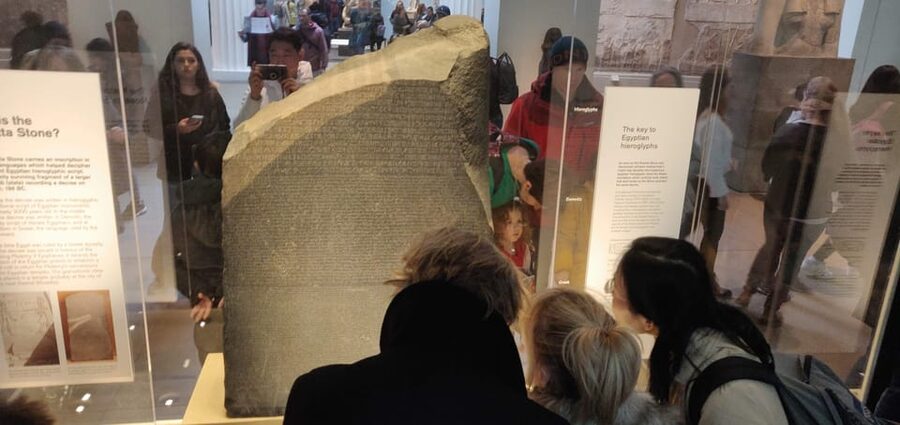
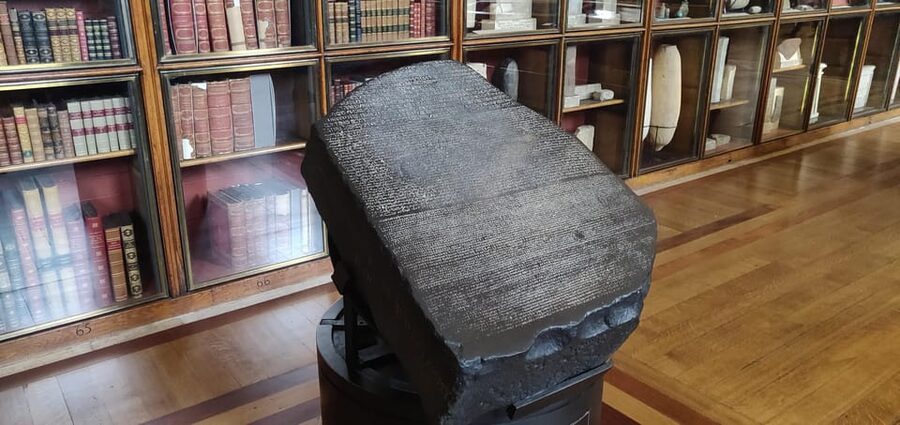
You stand before the Rosetta Stone and get the story of how it helped unlock understanding of Egyptian hieroglyphs. Even if you’ve seen photos of it a hundred times, you’ll come away with the logic of why it mattered: it’s not just an artifact, it’s a key that linked writing to meaning.
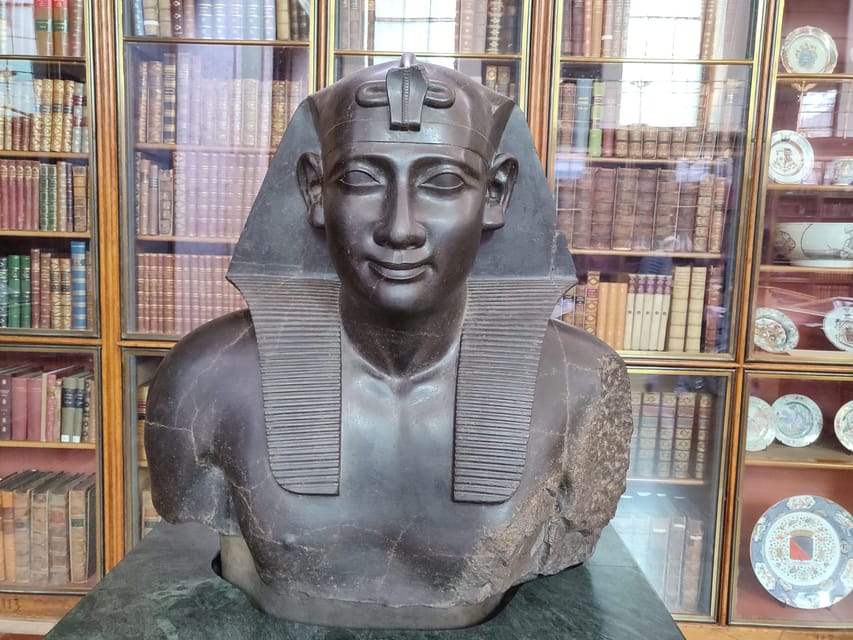
Then you move into the world of royal power, including a stop that spotlights Pharaoh Ramses II and his colossal presence. The point isn’t just scale. It’s what monuments like this were meant to communicate—authority, stability, and a state capable of mobilizing enormous effort.
This is one of the tour’s strengths for first-time museum visitors. Egypt is easy to get excited about, but the museum can make it feel disconnected. With a guide, the objects start to feel like parts of a single political and cultural system.
Assyria, Aztecs, and the way the tour links distant civilizations
One of the smartest things about this tour’s format is that it doesn’t lock you into one region for the whole visit. You get a sequence of civilizations—Egypt, Assyria, the Aztec Empire, and more—so you’re constantly refreshing your mental map.
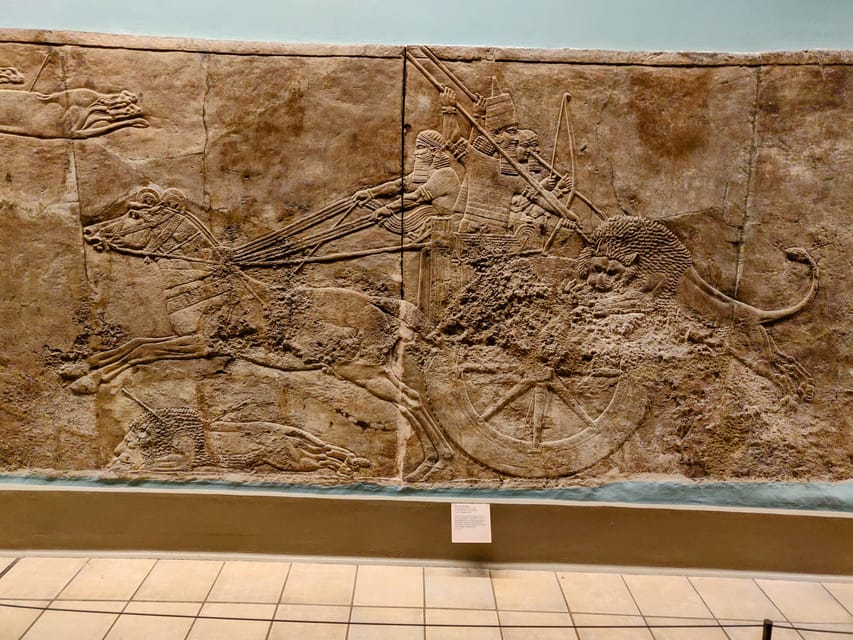
From Assyria, you’ll encounter towering palaces (and the empire’s big architectural presence). The takeaway isn’t only that Assyria was impressive—it’s how material culture works as propaganda. Monumental spaces and sculpted power were built to shape how people viewed rulers and the state.
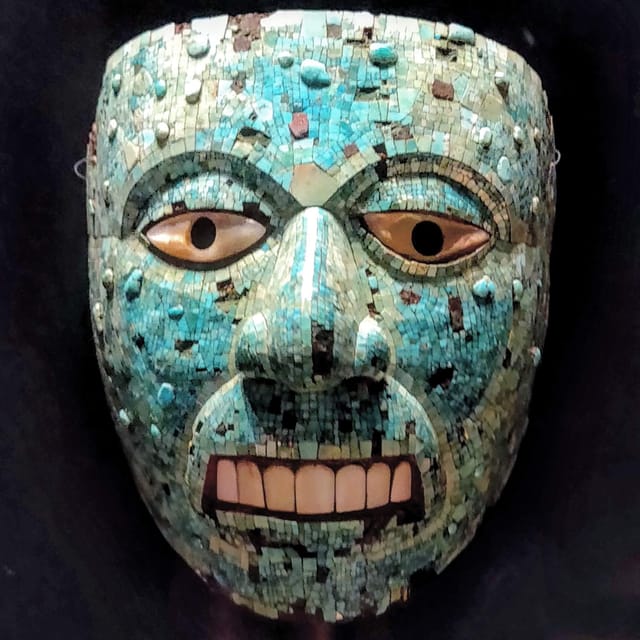
Then you shift outward again, including a look at crown jewels of the Aztec Empire. That kind of object can be difficult to understand from a quick glance because you’re used to thinking of “jewelry” as decoration. With context, it turns into a statement: rank, religious meaning, and identity tied to ceremonies and authority.
After that, the tour keeps expanding—bringing you to objects tied to places far beyond Europe. Hearing the stories next to the artifacts helps you avoid the common museum trap: treating each gallery as a separate universe you never truly connect.
Greek Parthenon Marbles: seeing the masterpieces and the controversy
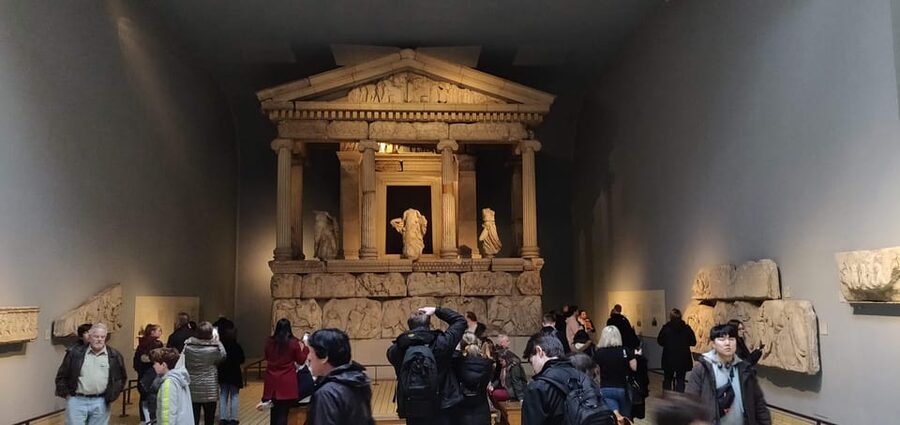
The Parthenon Marbles are the kind of object people expect to see once in London. The tour’s value is that you don’t just get the headline. You get the bigger context: why these pieces became part of the British Museum collection and what their discovery and recovery meant in real human terms.
That matters because the marbles are tied to a wider story about collecting, study, and changing attitudes over time. A focused guide helps you understand the artifacts as part of a historical chain—first created for their original civic and religious purpose, later moved into different hands and different narratives.
If you love art history, you’ll enjoy how the guide makes the sculptures feel like communications from the ancient world, not just museum highlights. If you’re newer to the subject, this is a good way to build a working framework quickly.
You can also read our reviews of more museum experiences in London






Vikings you can point to: Lewis Chessmen and why they spark questions
The Viking section is where the museum can suddenly feel less “ancient” and more strangely familiar. Objects from this era come with personality, craftsmanship, and a sense of everyday life mixed with status.
A standout stop is the Lewis Chessmen—astonishing Viking Age pieces that people often recognize from images, but rarely understand in depth. You’ll hear why they fascinate scholars and how objects like these raise practical questions: Who made them, who owned them, and what sort of world produced them.
Chessmen are a clever anchor for a Viking tour because they combine art and play. That means you can connect with them even if you don’t know the alphabet of Viking history. The guide’s job is to turn that connection into understanding, and the reviews suggest Rossa does it with strong storytelling and pacing that doesn’t drag.
Sutton Hoo and King Raedwald: the Dark Ages stop that feels strangely immediate
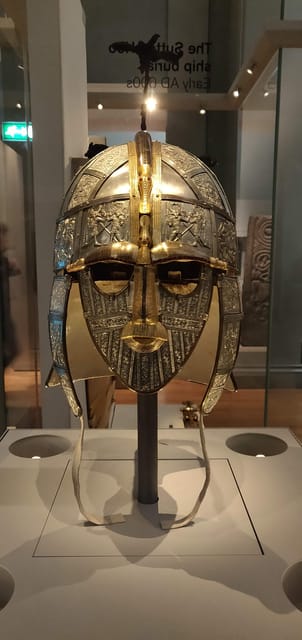
If you want one moment that gives you goosebumps in a “this is bigger than I thought” way, it’s the Sutton Hoo hoard.
You’ll see this treasure trove as a rare window into a world from the Dark Ages—specifically linked to King Raedwald. The hoard isn’t presented just as metal and artifacts. You’re guided to understand how such finds help historians reconstruct political power, trade connections, and belief systems when written sources get thin.
This stop is also where archaeology’s methods really matter to the visitor. You’ll come away with a clearer idea of what scholars can infer from burial practice and what they can’t, which is honestly one of the best lessons a museum can teach.
And since this tour is time-limited, it’s a big win that the most emotionally striking part of Anglo-Saxon history appears before you run out of steam.
Beyond the big names: how Moai and other objects widen your museum view
A museum tour can easily become a checklist. This one tries to do something better: use famous items to open doors to less expected angles.
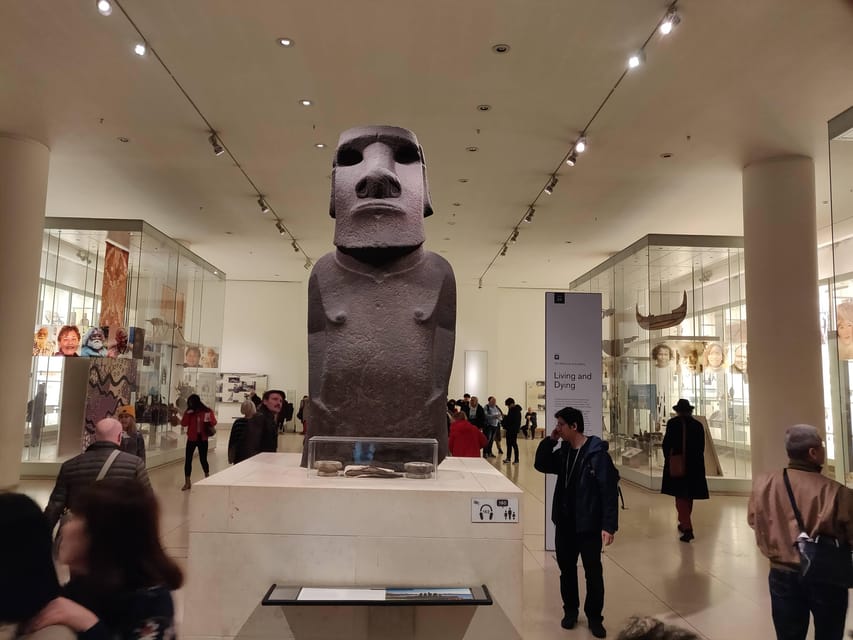
You’ll get mention of Moai statues from Easter Island—an intriguing inclusion because it pushes you to think about how cultural identities travel and how distant places show up in museum collections. You’ll also see how these objects can mean different things depending on what questions you bring to them.
Even when you don’t leave with every detail, you’ll leave with a better habit: looking at objects and asking what they did in their original setting—socially, religiously, politically.
That habit is what turns the British Museum from overwhelming into genuinely navigable.
What $58 buys you (and why it’s not just “entry”)
At $58 per person for a 2.5-hour experience, you’re paying for more than the museum ticket. Your price includes entry, the British Museum tour, and an archaeologist guide, plus skip-the-line entry through a separate entrance.
Here’s the practical value: you’re buying time and interpretation. The British Museum is easy to visit poorly if you just wander. A guided route helps you hit the top pieces while also getting context that would take you hours to piece together alone from scattered signage.
It’s also a good deal for people who only have part of a day. One reason reviews feel so positive is pacing: the tour focuses on major exhibits and a few personal favorites, so you don’t feel like you missed everything important when you walk out.
One caution on value: because the tour is only 2.5 hours, you won’t see the whole museum. This is a highlights-with-meaning approach. If you want a slow, gallery-hopping day, you might prefer a longer independent plan.
Tour style and group energy: what to expect in the room
This is a live, English-language guided tour. The guide also uses a very prepared approach, including historical notes on an iPad-style setup that review readers describe as professor-level organized.
What you’ll feel in practice is a strong “listen and look” rhythm. Rossa keeps the group moving and uses clear explanations that work even in crowded galleries. One review specifically mentions a deep, loud voice that helps when the museum is noisy—exactly what you want when you’re standing shoulder-to-shoulder.
Group size seems to stay small. One review notes a group of seven, which is ideal for hearing the guide without losing people in the shuffle.
And since food isn’t included, you’ll want to plan a snack before or after. The tour is short enough that you can manage without food, but long enough that water helps.
Who should book this British Museum archaeologist tour
This fits best if you:
- have limited time in London and want a structured hit list with context
- care about how objects connect to real people and historical questions
- like storytelling and clear explanations more than reading plaques for hours
- want a family-friendly experience that can hold attention (reviews mention teens enjoyed it)
If you’re an extreme museum power-walker who wants to pick every room yourself, the time limit may feel restrictive. But if you want the museum to make sense quickly, this tour is a smart first move.
You’re also covered for wheelchair access, so it’s easier to plan if mobility needs are part of your packing list.
Should you book? My practical call
I’d book this if you want British Museum highlights with an archaeologist’s way of explaining evidence and context. The combination of skip-the-line entry, a strong guide, and a tight 2.5-hour route is exactly how you turn a giant museum into an experience you remember.
Skip it only if you’re determined to wander freely for hours and don’t want anyone setting the pace. Also, commit to being on time—leaving at 9.45am is part of how the tour stays smooth.
FAQ
FAQ
Where do I meet the tour?
Meet at the entrance of Russell Square Station. The guide will be holding a tablet with Spirit of Discovery displayed on it.
How long is the British Museum tour?
The guided portion lasts 2.5 hours.
Is the British Museum ticket included?
Yes. Entry to the British Museum is included in the tour price.
Does this tour help you avoid lines?
Yes. It includes skip-the-line entry through a separate entrance.
What language is the live guide?
The live tour guide is in English.
What should I bring?
Bring comfortable shoes and water.
Is food and drink included?
No. Food and drinks are not included.
What if I’m late for the 9.45am departure?
The group leaves promptly at 9.45am to make the museum entry slot. If you’re running late, call to be directed to the group.
Is the tour wheelchair accessible?
Yes, the tour is wheelchair accessible.
Can I cancel or change plans?
Free cancellation is available up to 24 hours in advance for a full refund, and you can reserve now and pay later.