REVIEW · LONDON
London: British Museum Guided Tour with Entrance Tickets
Book on GetYourGuide →Operated by BEST TOURS LONDON LTD · Bookable on GetYourGuide
Two hours at the British Museum feels short until you have the right route. I especially like the priority timeslots that help you get moving, and the Great Court glass roof stop that turns a big museum into something you can understand fast. One thing to consider: with only 2 hours, the focus is on key masterpieces, so you may finish wanting more from other areas.
This guided format is built for clarity. You’ll get a guided highlight circuit that touches ancient Egypt, classical Greece, the Enlightenment Room, plus Asian and early medieval treasures like Sutton Hoo. Headsets are an option too, which is handy in a museum where noise can spike.
Logistics are straightforward as long as you show up on time. The meeting point is inside the museum, on the right side of the information desk near a column, and your guide will be there 5–10 minutes early holding a YELLOW FLAG.
In This Review
- Key highlights to look forward to
- Why the British Museum works best with a guide in 2 hours
- Meeting inside: find the yellow flag quickly
- Great Court glass roof: the best first “reset” stop
- Parthenon Sculptures (Elgin Marbles): how to look beyond the marble
- Ancient Egypt highlights: mummies, the Book of the Dead, and Ramesses II
- Rosetta Stone: the moment writing becomes a story
- Enlightenment Room: science and curiosity in a museum setting
- Asian collections: Chinese and Southeast Asia craftsmanship
- Anglo-Saxon England and Sutton Hoo’s ship-burial treasures
- Your guide makes the tour: clear pacing and story-driven explanations
- Price and value: is $39 for 2 hours worth it?
- Timing tips: crowds, noise, and how to not feel rushed
- Who this tour suits best
- Should you book this British Museum guided highlight tour?
- FAQ
- What is the duration of the British Museum guided tour?
- How much does it cost?
- Does the tour include entrance tickets?
- Where do I meet my guide?
- What languages are available for the live guide?
- Are headsets available?
- What is included in the tour price?
- Is food or transportation included?
Key highlights to look forward to
- Priority timeslots and skip-the-line entry through a separate entrance
- Great Court glass roof used as a quick orientation point
- Parthenon Sculptures (Elgin Marbles) framed with myth and meaning
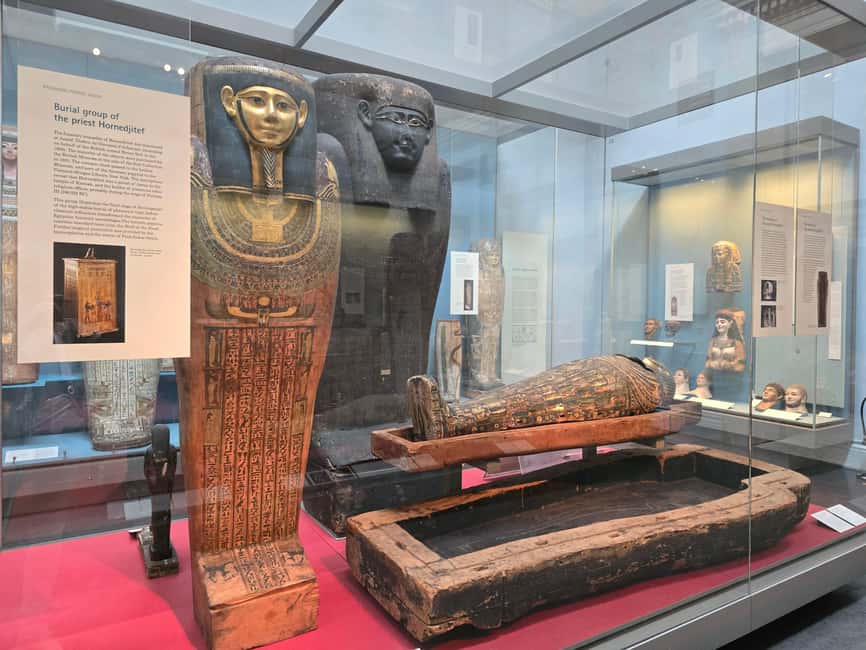
- Egyptian core picks: mummies, the Book of the Dead, and Ramesses II
- Sutton Hoo ship-burial objects like the helmet and shield
- Small-group feel with private or small groups available
Why the British Museum works best with a guide in 2 hours
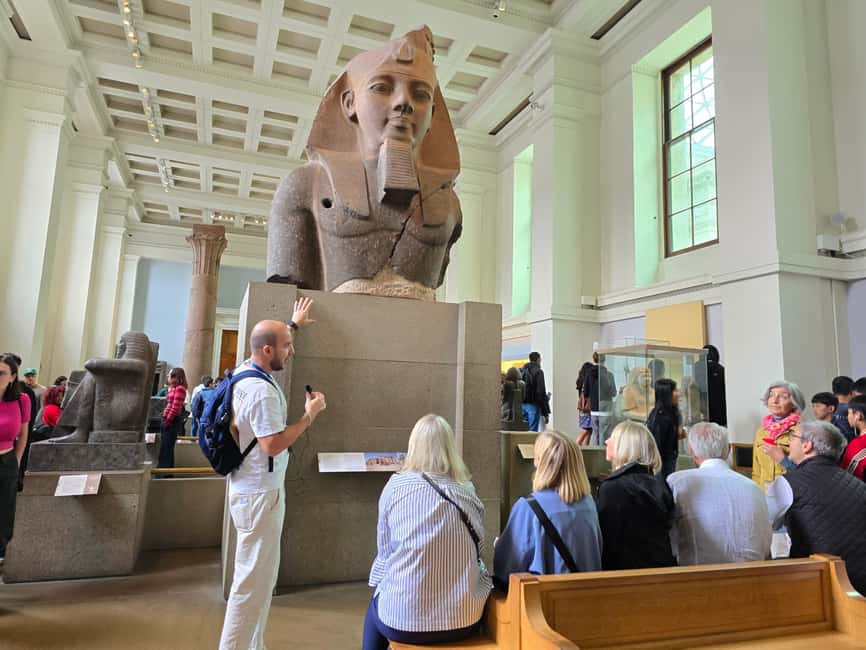
The British Museum is huge on purpose. The museum has millions of artifacts and spreads them across dozens of galleries, so a self-guided visit can turn into random wandering. A timed, guided approach solves that problem by choosing the most compelling “you have to see this” moments and explaining what they mean.
I like this style because it’s not trying to cover everything. Instead, you get a guided path that helps you connect dots: why a Greek sculpture matters, what Egyptian writing was used for, and why an Anglo-Saxon helmet can feel so personal. In a museum this big, the real value is learning how to look.
A few more London tours and experiences worth a look



Meeting inside: find the yellow flag quickly
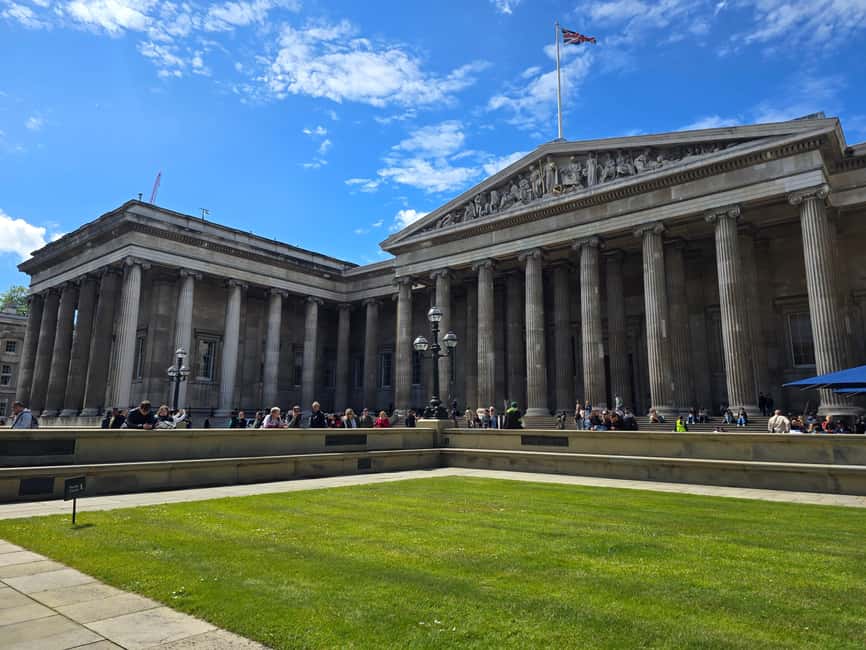
This tour is simple to start, but you still need a little patience. You meet inside the British Museum, on the right side of the information desk next to a column. Your guide waits 5–10 minutes before the tour begins and will be holding a YELLOW FLAG.
My practical tip: arrive early and scan the info desk area first. Once you’re inside, don’t rush to the first gallery on your own. Staying with the group at the start helps you avoid the common problem of losing time right when you need it most.
Great Court glass roof: the best first “reset” stop
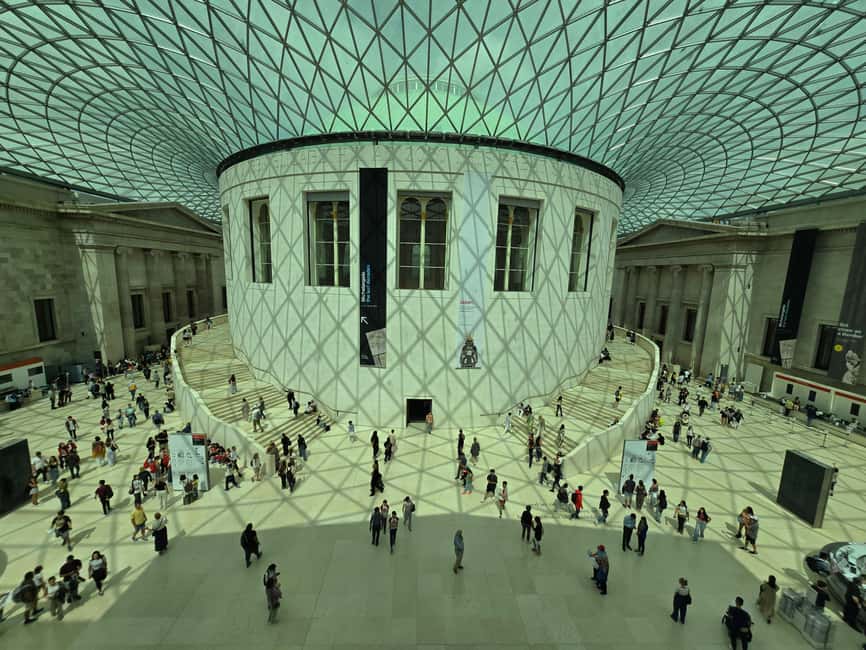
The tour makes a smart move by starting with the museum’s core architectural moment: the Great Court and its dramatic glass roof. Even if you’ve seen photos, the scale lands differently in person, and it helps you get your bearings instantly.
Think of it as a visual orientation tool. When you understand how the space is laid out, the rest of the museum feels less like a maze and more like connected neighborhoods. It’s also a great place for a guide to set the tone, because the roof itself is a story about design, light, and how people experience the collection.
Parthenon Sculptures (Elgin Marbles): how to look beyond the marble
The Parthenon Sculptures, also called the Elgin Marbles, are famous for a reason. But fame can flatten your attention into a quick photo and move on. With a guide, you’re more likely to slow down and notice the details: figures, poses, and the feeling of narrative that comes from sculpture meant to be part of a larger architectural program.
This stop is valuable because it links art to myth and culture. The guide doesn’t just point; they explain what you’re seeing and why these pieces became so central to how the world talks about ancient Greece.
Ancient Egypt highlights: mummies, the Book of the Dead, and Ramesses II
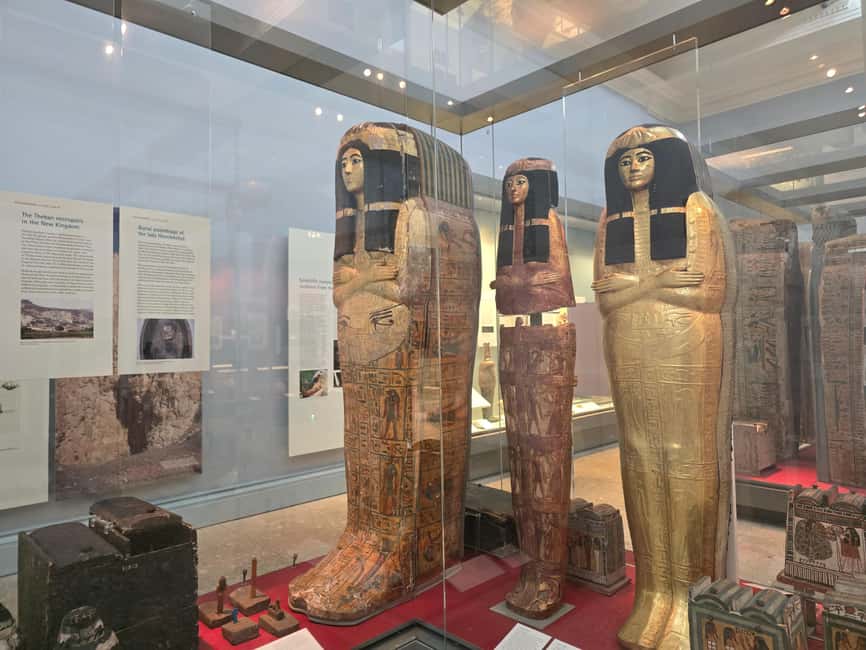
Egypt can feel like a wall of images until someone gives you a handle to grab. This tour focuses on some of the most compelling ways Egypt is presented in the British Museum, including Egyptian mummies and objects tied to burial and the afterlife.
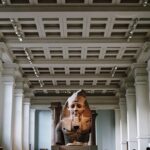
You’ll also spend time with the Book of the Dead and an awe-inspiring bust of Ramesses II. This is where the museum becomes less about distant history and more about human beliefs. Burial practices aren’t just “strange rituals.” They reflect the logic of the culture: how people hoped the next life would work, and what kinds of words and images mattered.
One practical consideration: Egyptian galleries can have crowds. If the group is moving fast, use the headset option if it’s available. It keeps the explanations clear even when foot traffic is heavy.
You can also read our reviews of more guided tours in London



Rosetta Stone: the moment writing becomes a story
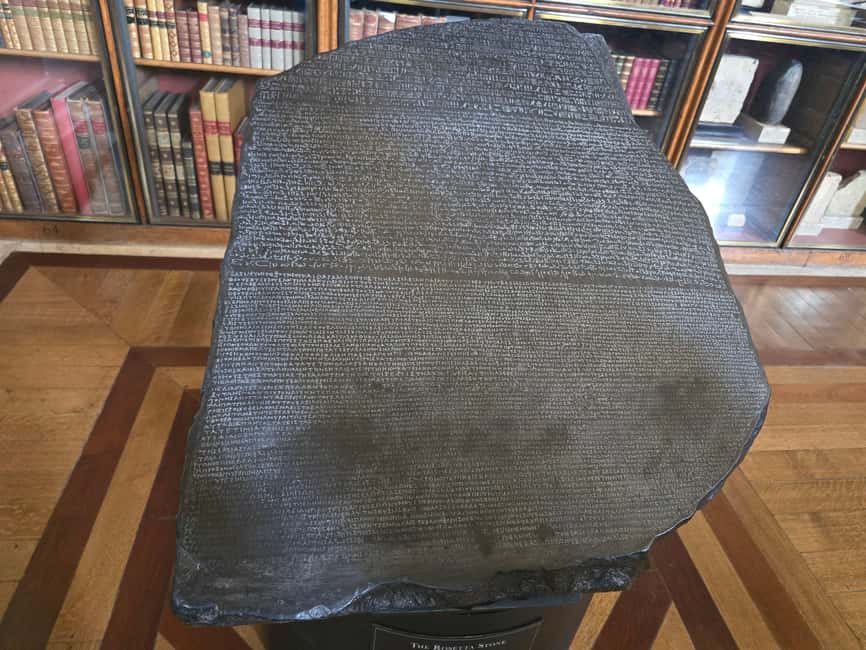
The Rosetta Stone is one of those objects that makes people think, oh right, language has a key. A guided explanation matters here because it connects the artifact to the big idea of decipherment—how we learned to read Egyptian writing again.
This stop is also a good example of why a guide is useful beyond “fun facts.” It turns a famous object into an anchor point you can use to understand other items in the Egyptian collection. If you walk away thinking about how knowledge got unlocked, you’ll enjoy the rest of the museum more.
Enlightenment Room: science and curiosity in a museum setting
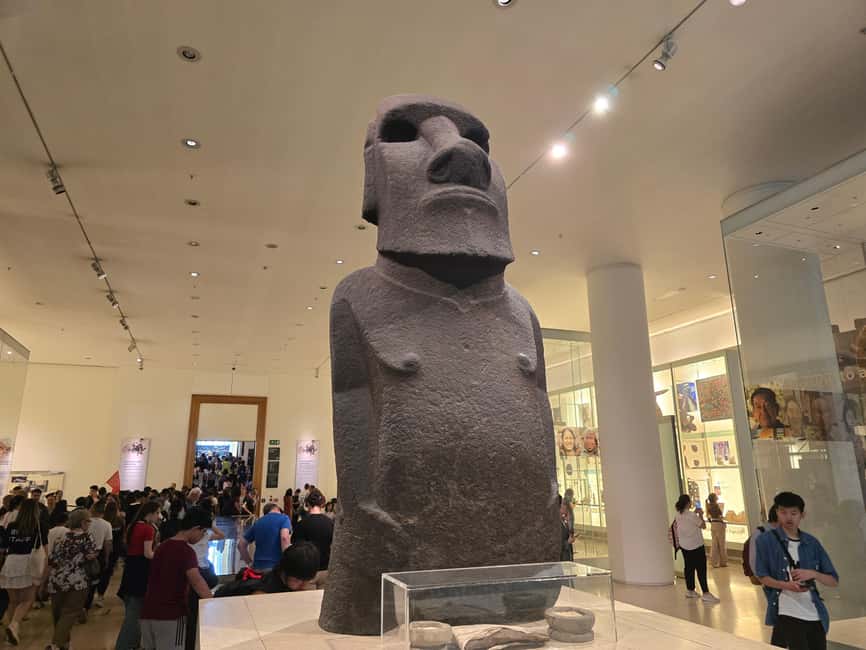
Not all museums do this well, but the British Museum’s Enlightenment Room helps you see the collection through a different lens. Instead of focusing only on ancient civilizations, you get a sense of 18th-century intellectual energy—how people gathered artifacts, asked questions, and turned observations into science.
This is one of the stops that often surprises first-time visitors. It gives you context for the museum itself and for the era when collecting, studying, and categorizing became serious work. It’s a reminder that the museum is not only about the past. It’s also about how the modern world built pathways to that past.
Asian collections: Chinese and Southeast Asia craftsmanship
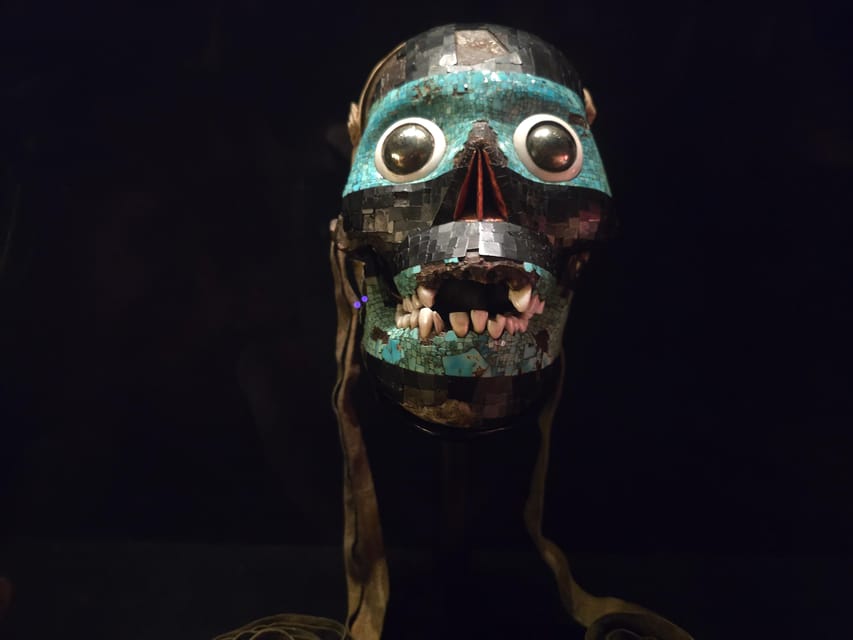
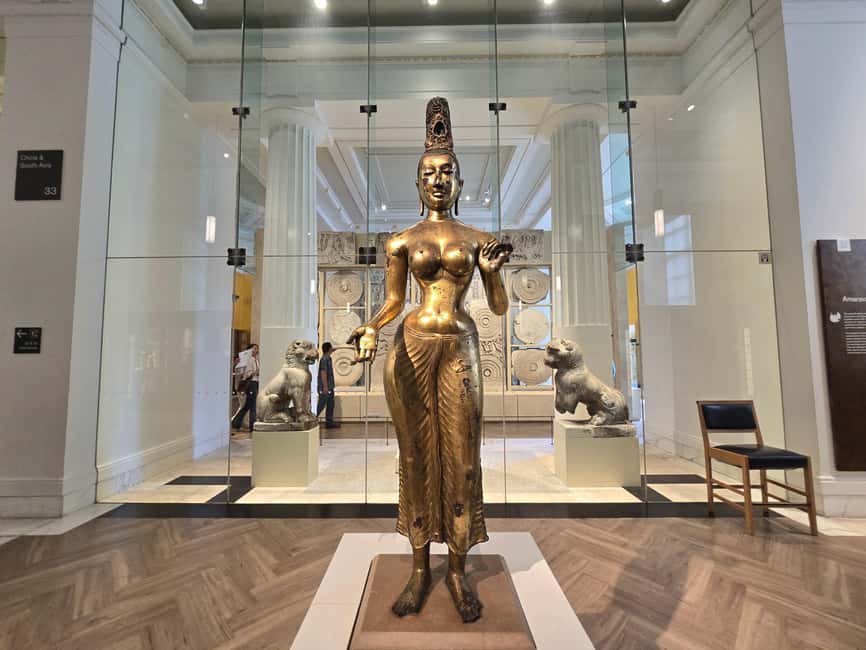
The tour includes highlights from Chinese collections and beautifully crafted objects from Southeast Asia. This is a strong inclusion because it avoids a one-direction visit. You’re not stuck only in the ancient Mediterranean story.
In practical terms, a guide helps you notice craft choices—how materials, patterns, and forms communicate identity and function. Even if you’re not a “museum person,” this section can click quickly because design speaks clearly without needing advanced background.
Anglo-Saxon England and Sutton Hoo’s ship-burial treasures
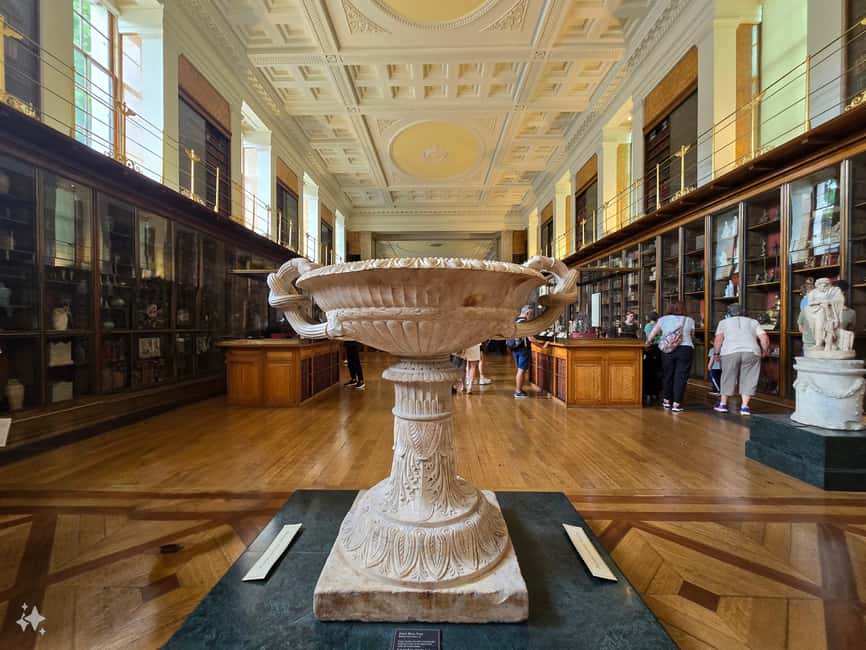
The Sutton Hoo ship burial section is a standout because it brings early medieval England down to earth. Instead of reading about history in textbooks, you see the objects and the craftsmanship: the helmet, the shield, and other items that suggest the scale of ceremony and status.
This part of the tour works especially well if you like human stories—because it turns an archaeological find into a picture of people. You start to imagine the event, the technology, and the symbolism behind what was placed there.
Your guide makes the tour: clear pacing and story-driven explanations
The strongest praise in the experience is about the guides and how they teach. Names that pop up include Giovanni, Daniel, Joey, Tony, James, and Tara, and the theme is consistent: guides explain clearly, keep the tour moving at a pace that feels doable, and make tough topics feel understandable.
Here’s what I think you should look for when you pick a departure. You want a guide who doesn’t overload you with every fact at once. Several guides are praised for choosing key areas and then giving enough history to make each artifact feel alive, rather than just listing details.
Also, if you hear the guide using storytelling (and not just lecture style), you’ll likely enjoy the two hours more. This tour is short. The right guide helps you make the time count.
Price and value: is $39 for 2 hours worth it?
At about $39 per person for a 2-hour guided highlight tour with entrance tickets, the value depends on one thing: how easily you get bogged down in big museums.
If you’ve ever lost 30 minutes just trying to figure out where to go next, the priority timeslots and skip-the-line entry are a big deal. They reduce friction. Instead of spending your precious museum time waiting and wandering, you’re using it for guided stops that include the Great Court, major classical pieces, and Egyptian and Anglo-Saxon highlights.
You also get commentary in multiple languages, and headset support is available. That matters because crowded museums make it harder to catch explanations, so being able to hear clearly is part of the value, not a bonus.
Food and drinks aren’t included, so plan to handle your own breaks outside the tour window. But for a focused introduction, this price-to-time ratio is strong.
Timing tips: crowds, noise, and how to not feel rushed
The British Museum can be busy, and this tour happens in real time with real lines and foot traffic. A guide can navigate you through the museum efficiently, but you should still plan your morning or afternoon with a buffer.
A helpful rule of thumb: give yourself extra time to get inside before the tour starts. One smart piece of advice from recent visitors is to plan for around 20 minutes to account for getting in when the museum is crowded. You’ll enjoy the tour more if you’re not sprinting to catch up.
If headsets are offered on your departure, use them. They can make explanations easier to follow when multiple groups and visitors create noise.
Who this tour suits best
This tour fits you if:
- You’re visiting the British Museum for the first time and want the biggest, most meaningful objects with context
- You don’t want to spend hours choosing what to see
- You like story-led explanations, especially for Egypt and classical Greece
- You want an easy meeting point and a guided plan that keeps you moving
You might consider another option if:
- You want long, slow gallery time in one theme (like a deep dive into one region)
- You’re hoping for a more even survey of every major area, including sections not emphasized in this highlight route
- You’re traveling with very young kids who may need more breaks than a 2-hour pace allows
Should you book this British Museum guided highlight tour?
If you want a high-impact first visit, I’d book it. This experience is built around the museum’s most famous anchor points—Great Court orientation, Parthenon Sculptures, Egyptian burial and writing highlights, Enlightenment context, Asian craftsmanship, and Sutton Hoo. The guide-driven storytelling and clear pacing are what make the two hours feel “enough,” even though the British Museum is anything but small.
Book it especially if you appreciate practical help: priority timeslots, a separate entrance approach, and a guide who helps you see what matters instead of what’s closest. If you’re the type who loves wandering forever, you’ll still want extra time afterward for your own exploration. But as a guided introduction, this is a strong way to start.
FAQ
What is the duration of the British Museum guided tour?
The tour lasts 2 hours.
How much does it cost?
The price is listed as $39 per person.
Does the tour include entrance tickets?
Yes. Entrance tickets to the British Museum for the main entrance are included, with priority timeslots, plus skip-the-line access through a separate entrance.
Where do I meet my guide?
You meet inside the museum, on the right side of the information desk next to a column. Your guide will be there 5–10 minutes early holding a YELLOW FLAG.
What languages are available for the live guide?
The tour is offered with live guides in English, Italian, Greek, and Chinese (with English/Italian specifically noted for the commentary).
Are headsets available?
Yes, headsets are available as an option.
What is included in the tour price?
Included are the guided tour with commentary, entrance tickets with priority timeslots, and the option for headsets.
Is food or transportation included?
No. Transportation and food and drinks are not included.