REVIEW · LONDON
Explore Biblical Artifacts at the British Museum
Book on Viator →Bookable on Viator
Biblical people, carved in stone. This small-group tour at the British Museum turns Bible reading into something you can point at, from giant Assyrian lamassu to Roman objects tied to Jesus and Paul. I like that you get a Google Doc of study notes and matching Bible verses before you start. I also like how David connects what you’re seeing to a clear Bible timeline, not just a list of facts.
One catch: it runs about 3 to 4 hours, so the museum floor can be tough if you’re not ready to stand. If you’re coming straight from a long-haul flight, it’s also not recommended for people who are very jet-lagged.
In This Review
- Key highlights to know before you go
- A Half-Day Bible Timeline Through the British Museum
- Meeting David: Study Notes, Bible Apps, and a Smooth Start
- Ground Floor Highlights: Assyria, Egypt, and Greek Threads
- Assyria: lamassu and prophetic-era context
- Egypt: pharaoh-era imagery tied to Joseph and Moses
- Greece: the Paul connection begins
- A practical note about pace
- Upstairs Roman Galleries: Jesus and Paul in the Same Visual World
- Optional Persia and Babylon Stops When Time and Interest Match
- What You Get for $77.50: Value Beyond Admission
- Practical Planning: Tickets, Seating, and Your London Day After
- Who This Tour Suits Best (and Who Might Not)
- Should You Book Explore Biblical Artifacts at the British Museum?
- FAQ
- How long is the Explore Biblical Artifacts tour?
- Where does the tour start and end?
- Is the tour in English?
- How big is the group?
- Is there study material included?
- Do I need internet to read Bible verses during the tour?
- Are there places to sit during the tour?
- Is British Museum admission free for this experience?
- FAQ
- Can I cancel for a full refund?
- Is the tour suitable right after flying in?
- Are service animals allowed?
- Is the British Museum tour accessible for most people?
- Do I need to install any apps?
- Is there a fee besides the tour price?
Key highlights to know before you go
- A guide who links artifacts to a Bible timeline so names and events stick fast
- Google Doc study notes and verse references to keep up without getting lost
- 40-ton Assyrian lamassu and major gallery anchors that make the Old Testament feel real
- Roman galleries with direct Jesus and Paul connections for the New Testament thread
- Optional folding stools at the museum if standing for a half day is an issue
- Maximum 10 people, which keeps questions flowing and the pace humane
A Half-Day Bible Timeline Through the British Museum
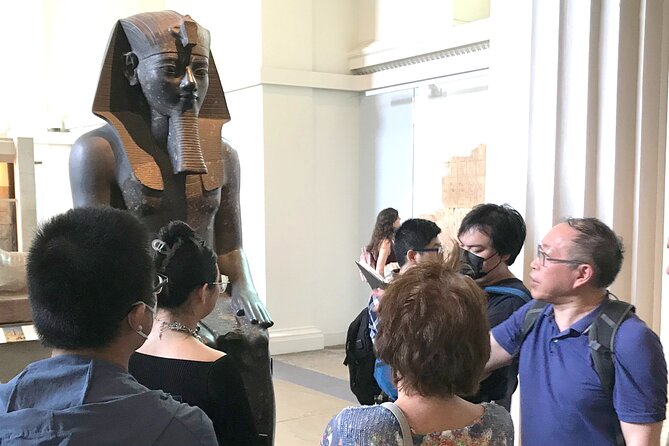
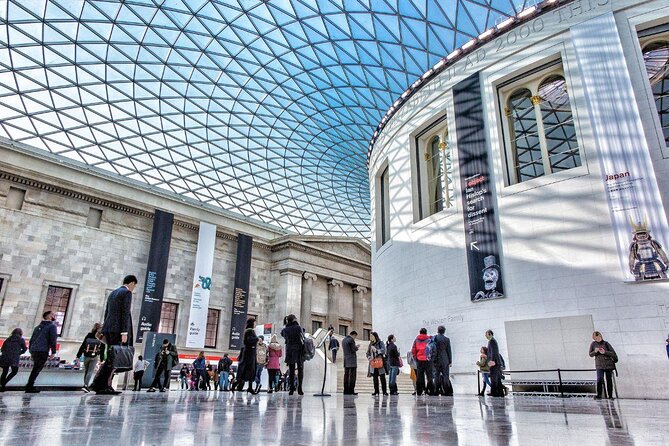
The British Museum is huge, and most people feel it the moment they walk in: you can drift for hours without making sense of anything. This tour gives you a route with a purpose. Instead of collecting random highlights, you’re moving through galleries in the order that matches the Bible timeline David is building.
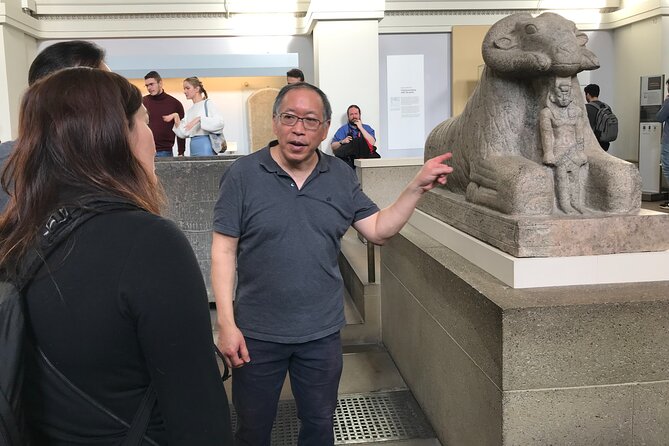
Expect a guided run through major collections: Assyrian, Egyptian, and Greek on the ground floor, then Roman upstairs. David uses the artifacts as “anchors” for biblical names and events, including figures like Joseph, Moses, Jonah, Ahab, Hezekiah, Jesus, and Paul. That approach changes the museum from sightseeing into study you can walk through with your feet.
The time window is also practical. Plan on a half day (about 3 to 4 hours), then you’ve got the rest of your London day free for other hits.
You can also read our reviews of more museum experiences in London



Meeting David: Study Notes, Bible Apps, and a Smooth Start
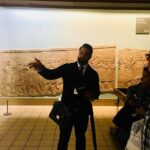
The tour is offered in English and keeps the group size small, with a maximum of 10. That matters because it makes the experience interactive. David is the kind of guide who doesn’t just talk at you. He builds context and then checks in as you go, so you’re not left guessing what you should be looking for.
Before you even start walking galleries, you get support for Bible reading during the tour. You’ll have access to a Google Doc full of study notes and related Bible verses, and David also helps with getting your Bible app ready. If you want something that works in airplane mode, YouVersion is specifically suggested and is an easy way to keep verses available without worrying about signal.
David’s start also helps you get oriented fast. The museum can feel like maze-level confusion, even if you like museums. With a plan and verse support, you spend less time asking where to look and more time understanding why an artifact connects to scripture.
Ground Floor Highlights: Assyria, Egypt, and Greek Threads
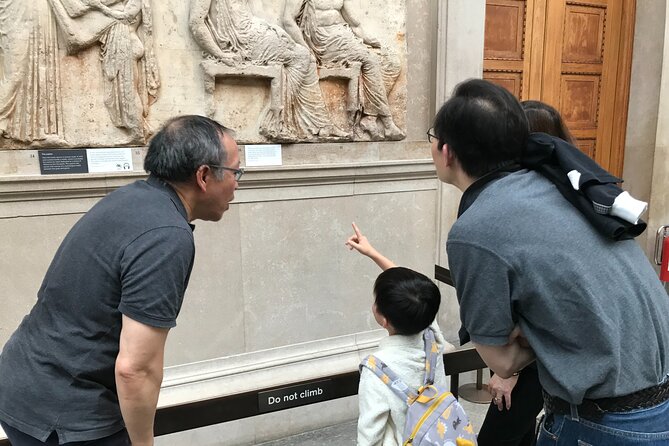
You begin on the ground floor, where the tour focuses on Assyrian, Egyptian, and Greek displays. This is where the Old Testament names and themes get their visual “faces.”
Assyria: lamassu and prophetic-era context
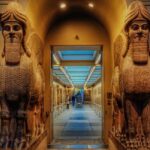
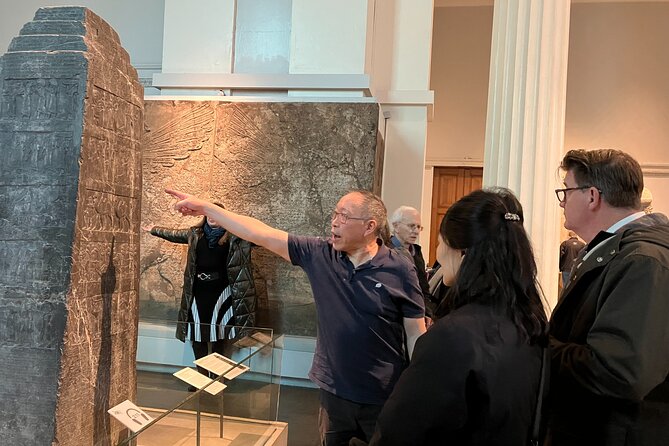
One of the tour’s biggest draws is the chance to see 40-ton Assyrian lamassu beasts. These aren’t small statues you can glance at and move on. They’re monumental, and they naturally push your brain into ancient-world mode. David uses sights like these to connect to biblical stories linked to Assyria, including Jonah and also figures associated with the larger Assyrian period in scripture like Hezekiah.
Egypt: pharaoh-era imagery tied to Joseph and Moses
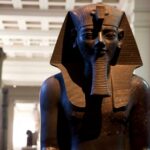
Next comes Egypt, with famous pharaoh statues as part of what you’ll see. David connects Egyptian settings to biblical figures like Joseph and Moses, making the “where did this happen?” question much easier to answer than when you’re reading on your own.
If you’re the kind of person who likes to notice the small stuff, David also points out details that most visitors skip. One example that shows up in the tour style: paying attention to things like the reading direction of cartouche, so the inscriptions become more than decoration.




Greece: the Paul connection begins
Then you move into Greek territory, and David ties this section to Paul. That matters because it sets up the New Testament thread before you ever reach the Roman galleries. The result is a smoother shift later when Jesus and Paul come forward as the main focus.
A practical note about pace
This ground-floor portion is the foundation. The galleries are active, and some people find the museum overwhelming if they try to do it all solo. Here, you’re guided room to room, with clear stops so you always know what to look for and why it matters.
Upstairs Roman Galleries: Jesus and Paul in the Same Visual World
After a break, you head upstairs for the Roman galleries. This is where the tour leans harder into the New Testament.
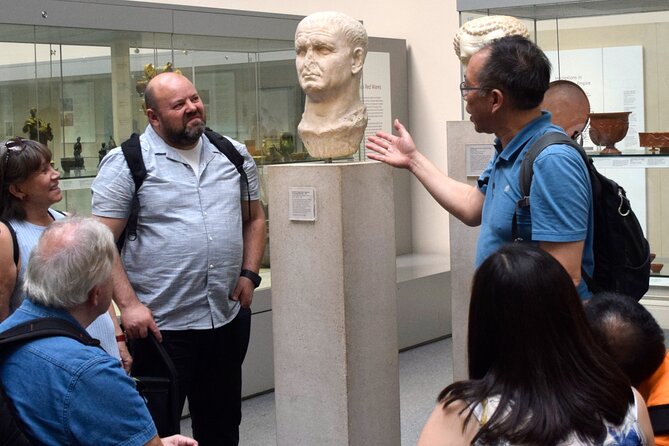
You’ll look at Roman emperor-related displays and objects that David relates directly to Jesus and Paul. The tone shifts from Old Testament names and empires to the world that shaped the later Christian message. In other words: you’re seeing the political and cultural “stage” that scripture unfolds in.
David also does something that’s rare in museum tours: he ties what you’re seeing to actual biblical names, not just general background. That means you’re not leaving with a stack of interesting facts. You’re leaving with a Bible narrative that feels more grounded in a historical setting.
One extra detail you might catch in this section: coins. Coins show up as tangible evidence of everyday economic life in the time period, and David highlights examples tied to the era around Jesus.
Optional Persia and Babylon Stops When Time and Interest Match
Your main route includes the core galleries, but there are optional choices depending on time and what fits your interests. David may include additional sections like Persia and Babylon.
These optional stops add two benefits:
- They help explain why certain Old Testament stories played out under specific empires.
- They give you more context for the rise and fall patterns that scripture references across generations.
If you’re the kind of Bible reader who likes history-with-details, this is the part you’ll likely appreciate most. You can use your time here to lean into whichever thread you want most.
What You Get for $77.50: Value Beyond Admission
Let’s talk money, because this is not a free activity even though museum admission is free for the tour stop itself.
You pay $77.50 per person for the guide, the structured route, and the Bible-verse study support (the Google Doc notes and the app help). The admission ticket itself is free for this experience, so your cost is basically buying time-saving guidance and context.
That’s why the group size matters. With a maximum of 10 people, you’re not stuck in a giant herd. You can ask questions, and David can steer you toward the specific artifacts that match specific biblical references.
Is it worth it? For the right person, yes. If you want to treat the British Museum like a normal museum and just enjoy the art and artifacts, you can do that without a tour. But if your goal is to connect scripture to objects you can actually see—this route does that job efficiently.
Duration helps too. A half-day price is easier to justify than anything that eats a full day of London plans.
Practical Planning: Tickets, Seating, and Your London Day After
This experience uses a mobile ticket. Before you go, keep an eye on the app and email inbox for important messages.
If standing for 3 to 4 hours is a concern, plan ahead. Folding stools are available at the museum to take along on tour. That small option can make a big difference in comfort and stamina.
You should also bring your own reading setup:
- A Bible app that works offline (YouVersion is suggested)
- Your phone charged
- The mindset that you’ll be looking carefully, not just snapping photos
As for London after the tour: treat this as your morning or early afternoon “anchor.” Once you’re done, you can shift into flexible sightseeing without feeling like the British Museum swallowed your whole day.
Who This Tour Suits Best (and Who Might Not)
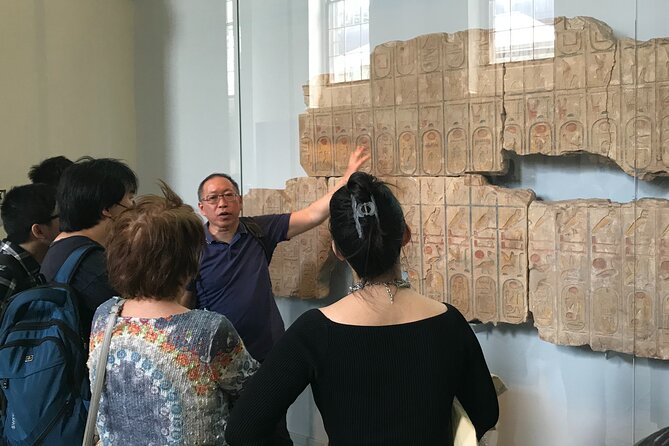
This tour is a strong match if you want:
- Bible-themed museum time with clear connections between scripture and artifacts
- A guided route through the British Museum that prevents wandering
- A guide who explains the why, not just the what
It’s also a good fit if you like the idea of a study element. The Google Doc notes and verse references give you a way to keep up and review later.
It may be less ideal if:
- You’re very jet-lagged after a long haul flight (the tour is not recommended for that)
- You want a totally secular museum experience with no Bible framing
Should You Book Explore Biblical Artifacts at the British Museum?
Book it if you’re coming to the British Museum with a Bible in mind, and you want the museum to serve the reading rather than compete with it. The best part is the structure: you’re shown major ancient-world artifacts and then guided to connect them to biblical people and themes David brings forward. Add in the Google Doc study notes and offline-friendly Bible app support, and you get something more focused than a standard tour.
Skip it only if you want a casual, do-whatever-you-want museum wander. This isn’t that kind of experience. It’s a half-day Bible timeline through specific galleries, paced for understanding.
FAQ
How long is the Explore Biblical Artifacts tour?
It runs about 3 to 4 hours.
Where does the tour start and end?
It starts at the British Museum, Great Russell St, London WC1B 3DG, UK, and ends back at the meeting point.
Is the tour in English?
Yes, it’s offered in English.
How big is the group?
The maximum group size is 10 travelers.
Is there study material included?
Yes. You get access to a Google Doc full of study notes and related Bible verses.
Do I need internet to read Bible verses during the tour?
The tour suggests using a Bible app that works in airplane mode, with YouVersion listed as a good option.
Are there places to sit during the tour?
Folding stools are available at the museum to take along if you like.
Is British Museum admission free for this experience?
Admission is described as free for the experience (the tour price is separate).
FAQ
Can I cancel for a full refund?
Yes. You can cancel up to 24 hours in advance for a full refund.
Is the tour suitable right after flying in?
It’s not recommended for people who are very jet-lagged after a long haul flight.
Are service animals allowed?
Yes, service animals are allowed.
Is the British Museum tour accessible for most people?
Most people can participate.
Do I need to install any apps?
It’s suggested to install the Viator and Tripadvisor apps to receive and view important messages.
Is there a fee besides the tour price?
The price listed is $77.50 per person, and the experience notes that the museum admission ticket is free.
If you’d like, tell me when you’re visiting London and what else you want to do that day (West End, churches, markets, parks). I’ll help you pair this tour with a tight, realistic itinerary.