REVIEW · CAIRO
Grand Egyptian Museum, Grand staircase, New Galleries, and lunch.
Book on Viator →Operated by Egypt in Tours · Bookable on Viator
Cairo’s newest giant museum has one big problem: too many people miss what matters. This private Grand Egyptian Museum tour keeps you moving at a human pace, with an Egyptologist guide and time for the spaces that make GEM feel like a whole story, not a pile of objects. You’ll hit the Grand Staircase for major Giza views and then spend time in the new galleries that just opened.
Two things I like a lot: the guide attention (with Ali as the name I saw again and again, plus a fun sense of humor) and the fact that your ticket time includes real access inside GEM areas that most folks rush through. One consideration: the main museum halls are presently closed, so you’ll focus on the courtyard/open areas, the staircase, and the newly opened galleries rather than a complete, end-to-end museum walk.
In This Review
- Key highlights if you want the best parts
- Price and what you actually get for $65
- Hotel pickup, private pace, and why it matters in Cairo
- Stop 1: Grand Egyptian Museum courtyard sights before the main halls
- Stop 2: Grand Staircase and the panoramic Giza moment
- Stop 3: The newly opened 18-hall galleries with 8,000+ artifacts
- Stop 4: Lunch with real Egyptian comfort food
- Who this tour fits best (and who should rethink it)
- What makes the guide part a real advantage
- Should you book this Grand Egyptian Museum day?
- FAQ
- What is the duration of the tour?
- Do you pick up and drop off from my hotel?
- Is the Grand Egyptian Museum fully open during this experience?
- Is lunch included, and what can I eat?
- Do I need to buy tickets for the GEM areas?
- Is the King Tut special exhibition included?
- Is free cancellation available?
Key highlights if you want the best parts
- Skip-the-line help so you start seeing things faster
- Grand Staircase panoramic view that ties GEM to the Giza landscape
- New galleries in 18 halls with thousands of newly showcased artifacts
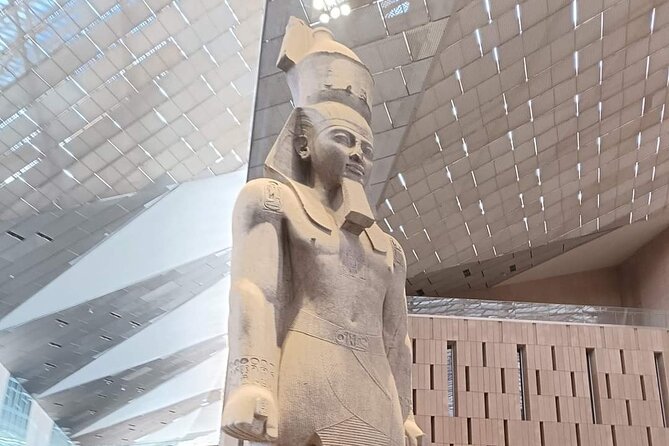
- King Ramses II courtyard sights and giant red-granite statuary
- Egyptian lunch option like koshary, shawerma, falafel, and baba ganoush
- Friendly, question-friendly guide style that slows down when you want details
Price and what you actually get for $65
$65 per person for a ~4-hour private experience can feel either cheap or expensive, depending on what’s included. Here, the value comes from the mix: round-trip hotel pickup and drop-off, an Egyptologist guide, skip-the-line support, multiple paid entry points inside GEM, lunch, and bottled water.
If you’re the type who hates wasting half a day on ticket counters, this kind of package makes sense. You’re paying partly for time saved and partly for guide-led context. And because it’s a private setup (your group only), you’re not stuck listening to a big loud cluster while you try to read labels or ask questions.
You can also read our reviews of more museum experiences in Cairo


Hotel pickup, private pace, and why it matters in Cairo
This is built for a low-stress day in Cairo. You get air-conditioned transportation from your hotel or residence in Cairo and Giza, plus drop-off at the end. That might sound routine, but it changes how you experience GEM.
When you’re not bouncing around between taxis, you can arrive calmer and start with the right mindset: eyes open, camera ready, and time to take in scale. That’s crucial at GEM because the building and outdoor courtyard feel like part of the exhibition, not just a backdrop.
Also, it’s private, so you can control your pace. If you’re the slow-walker type, this helps. If you’re the you-ask-a-lot type, this helps too. The guide style described in the feedback I saw matches that: people repeatedly highlighted how Ali answered questions clearly and kept things fun rather than lecturing.
Stop 1: Grand Egyptian Museum courtyard sights before the main halls
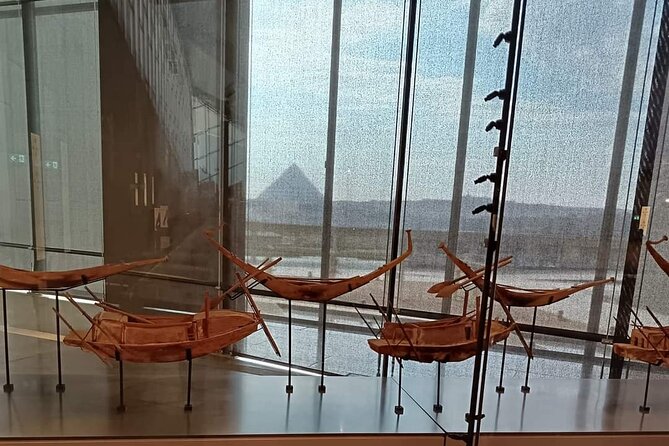
Your day starts at the Grand Egyptian Museum with a focus on what’s open now. Even though the main museum is presently closed, you still get major highlights in the open areas.
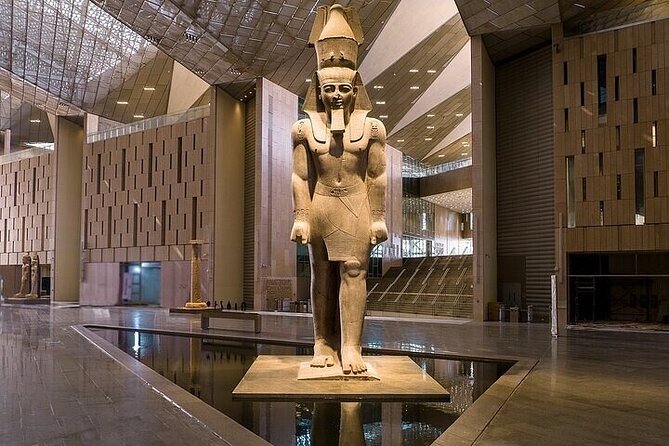
You begin in the grand open court, where you’ll see the first hanging obelisk in the world belonging to King Ramses II. From there, you move into the museum courtyard for big, sculptural moments—especially the Ramses II statue that appears to curve out of one giant piece of red granite.
A key practical advantage here: courtyard items give you a sense of the museum’s design language. Before you move to the staircase and the new indoor halls, you’re already learning what the museum is trying to do—make kingship, power, and religious symbolism feel physical.
Two more small benefits you’ll feel on the ground:
- You’ll have time for the museum’s official store, plus nearby local restaurants and coffee shops if you want a quick snack before lunch.
- Starting here helps you get oriented fast, so later gallery rooms feel more connected instead of random.
Potential drawback: because the main halls are closed, your day may feel more outdoor-and-transition focused than a full museum marathon. If your dream is an end-to-end indoor circuit, set expectations and lean into the courtyard plus the new galleries.
Stop 2: Grand Staircase and the panoramic Giza moment
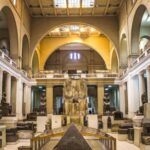
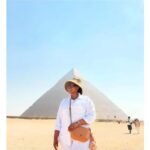
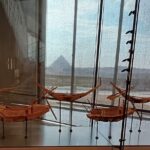
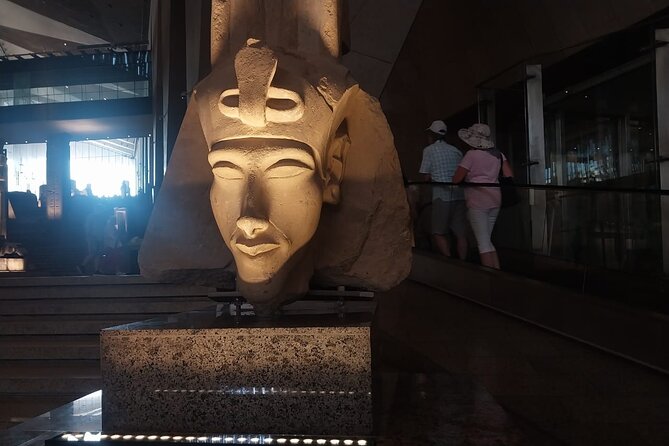
The Grand Staircase is where GEM stops being a museum and starts being a viewpoint. You travel up between levels using a mix of steps, travellators, and elevators, ending with a panoramic view of the Giza Pyramids.
This part matters because it anchors the museum in the landscape. You’re not just looking at artifacts in isolation. You’re getting the visual “why here” connection: the pyramids are the horizon your eyes keep returning to.
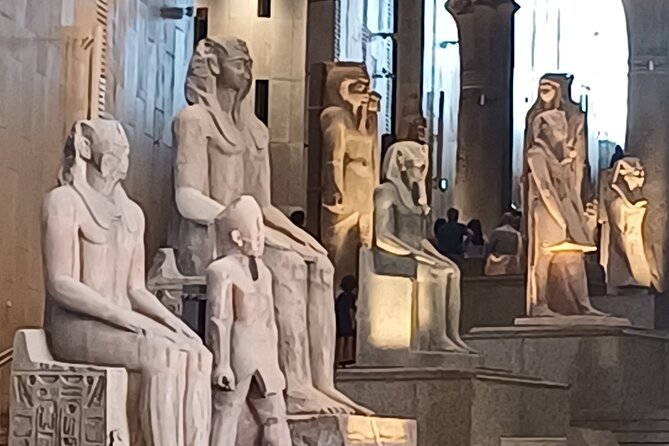
Along the way, you’ll see huge representations and architectural scale. The route includes large statues and objects tied to kingship, plus standout pieces such as:
- the red granite colossus of King Seti I
- Queen Hatshepsut
- pillars and columns and the tops of obelisks dedicated to different royal figures
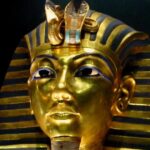
There’s also a chance to see the King Tut special exhibition if it’s available during your visit. The tour notes that it could end by 30 May 2024 if it’s running then, and if you decide to go inside, the guide won’t rush you.
One practical tip: this is a stair-and-levels environment. Even with elevators and travellators, you should expect some walking time. If you have mobility limits, it’s worth asking how long you’ll spend on stairs versus moving systems before you go.
Stop 3: The newly opened 18-hall galleries with 8,000+ artifacts
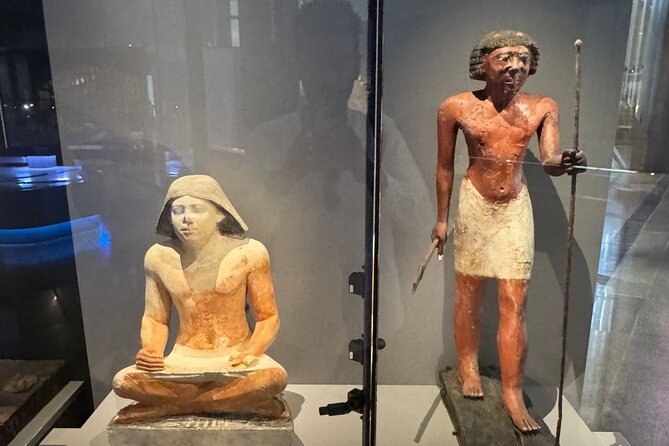
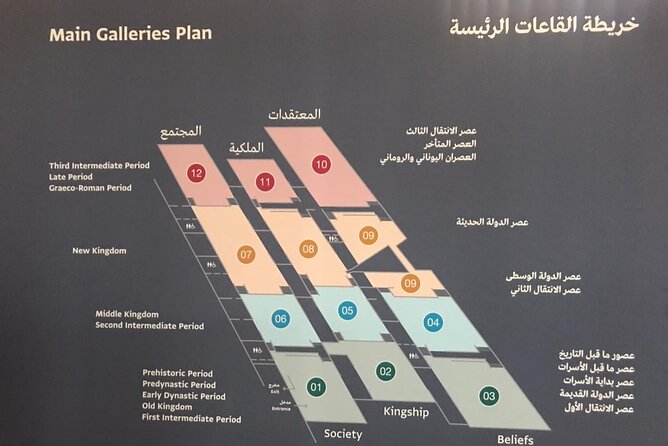
The next stop is the part most people picture when they imagine GEM: the new galleries. Here you get an amazing area laid out across 18 halls and presenting over 8,000 newly showcased artifacts from the Ancient Egyptian and Greco-Roman periods.
This is where you’ll shift from “big ceremonial courtyard pieces” to “objects in context.” You’ll spend time with statues of kings—again, kingship themes show up—but now you also see everyday tools and materials that connect history to normal human life.
What impressed me in the description of the contents:
- tools used for makeup
- everyday work related to farming
- items tied to fishing and hunting
- tools connected to warfare
That mix is the value. It helps you notice that ancient Egypt wasn’t only monuments and tombs. It was also daily routine, crafts, and practical technology.
Another angle: because this is newly displayed, the experience feels fresher than old-style museum viewing. The halls are designed to keep you moving and noticing details, and the guide’s job is to slow you down at the right points so you actually understand what you’re seeing.
A few more Cairo tours and experiences worth a look

Stop 4: Lunch with real Egyptian comfort food
By the time lunch arrives, you’ll be ready for something grounding. The tour builds lunch into the schedule and gives you choices. You can go with:
- Koshary: rice, noodles, chickpeas, black lentils, fried onions, and tomato sauce
- Shawerma: spit-roasted layers of lamb, beef, or other meat, sliced and served in pita or wrapped
- Falafel sandwiches (chickpeas and/or fava beans)
- Baba ganoush sandwiches (eggplant blended with tahini, garlic, lemon juice, and salt)
I like this setup because it’s not just a generic “you get food somewhere.” It’s a chance to try flavors that feel distinctly local and filling after hours of walking, viewing, and questions.
Also, bottled mineral water is included. In Cairo, that matters. You don’t want your day to turn into a constant hunt for hydration.
Who this tour fits best (and who should rethink it)
This tour is a strong fit if you:
- want a private, guide-led day at GEM rather than a self-guided wander
- care about context (not just what something looks like)
- like the idea of a museum day that also includes a major viewpoint for Giza
- want lunch included so you don’t lose time searching in the city
It’s less ideal if you:
- came specifically for a full, uninterrupted indoor museum circuit (the main museum halls are presently closed)
- need a totally minimal-steps plan (the staircase portion includes moving between levels)
- are hoping for a longer day at GEM than ~4 hours
If you’re traveling with kids, the tour can work well because the guide approach described in feedback sounds lively and question-friendly. If you’re traveling as a couple or small group, the private pace makes it feel more tailored.
What makes the guide part a real advantage
The strongest theme from the experience notes tied to this tour is the guide style. The name Ali shows up repeatedly, along with praise for:
- answering questions clearly without turning it into a long lecture
- using a sense of humor to keep the day fun
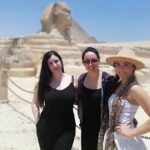
- taking time for the important objects, including time for photos
- making it feel intimate, not rushed
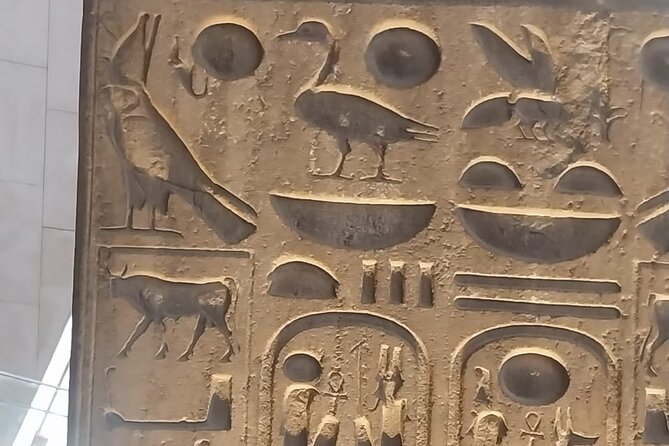
That matters at a museum like GEM because you’re staring at a lot of carved stone and symbolic design. Without context, it can feel overwhelming. With a guide who gives you story threads—kingship, religious symbolism, daily life—you start noticing patterns quickly.
Should you book this Grand Egyptian Museum day?
I’d book it if your goal is a smart, time-efficient GEM experience with real guide context and a view that connects the museum to Giza. The package value is strong because you’re not only paying for admission—you’re paying for skip-the-line support, transport, multiple GEM entry points, and lunch.
I’d think twice only if you’re expecting the main museum to be fully open end-to-end. Since the main halls are presently closed, your experience will lean toward courtyard highlights, the Grand Staircase, and the newly opened galleries. If that still sounds like your kind of day, you’ll likely be happy you went.
FAQ
What is the duration of the tour?
The tour runs for about 4 hours, including travel time.
Do you pick up and drop off from my hotel?
Yes. Pickup and drop-off are included from your hotel or residence in Cairo and Giza, using an air-conditioned vehicle.
Is the Grand Egyptian Museum fully open during this experience?
The main museum is presently closed, but you’ll still visit open areas like the grand open court and courtyard, plus the Grand Staircase and the newly opened galleries.
Is lunch included, and what can I eat?
Lunch is included and you can choose among koshary, shawerma, falafel sandwiches, and baba ganoush sandwiches. Bottled water is also provided.
Do I need to buy tickets for the GEM areas?
Your tour includes admission tickets for the Grand Egyptian Museum and the Grand Staircase, plus entry fees to the new galleries within the GEM.
Is the King Tut special exhibition included?
The schedule notes that if the King Tut special exhibition is available, you can go inside. It also notes the guide will not rush you if you decide to enter.
Is free cancellation available?
Yes. You can cancel up to 24 hours in advance for a full refund. If you cancel less than 24 hours before the start time, the amount paid is not refunded.