This museum preview beats the usual Cairo rush. You get a guided look at the Grand Egyptian Museum before it’s fully open, with a personal Egyptologist and direct hotel transfers, so you spend less time figuring out what to see and more time seeing it.
I especially like how the tour mixes big wow objects with practical context: Ramses-era monuments outside and a smart route through the museum’s courtyard. One thing to plan for: the main museum is presently closed, so you’re seeing key areas and galleries rather than the whole building at once—and you’ll still walk.
In This Review
- Key Things to Know Before You Go
- Why the Grand Egyptian Museum Preview Feels Like a Smart Flex
- Price and Time: What You’re Really Paying For
- From Your Hotel to the GEM: The Day Starts with Less Stress
- Grand Open Court: Ramses II, Obelisks, and Red Granite Power
- Climbing the Grand Staircase: Giant Statues and a Pyramids View
- The New Galleries: 18 Halls and 8,000 Artifacts in One Route
- Lunch at Zooba: Real Choices and a Mint Tea Reset
- Who This Private GEM Tour Works Best For
- My Booking Advice: Do You Book This One?
- FAQ
- How long is the Grand Egyptian Museum tour?
- What is the price per person?
- Is hotel pickup and drop-off included?
- Is lunch included, and what can I eat?
- Is this a private tour?
- Is tipping included in the price?
Key Things to Know Before You Go
- Hotel-to-museum transfers that save you from Cairo traffic stress
- Grand open court highlights tied to Ramses II and other royal names
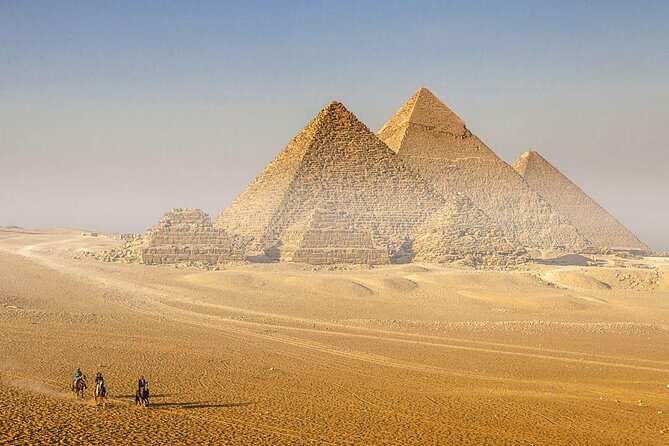
- Grand Staircase panoramic views ending at the Giza Pyramids outlook
- New galleries with 18 halls and 8,000 artifacts across Ancient Egyptian and Greco-Roman periods
- Lunch at Zooba with real Egyptian choices plus mint tea
- Private format with your group only, so questions don’t get rushed
Why the Grand Egyptian Museum Preview Feels Like a Smart Flex
The Grand Egyptian Museum is the big new cultural magnet in Cairo. Even before full opening, it already functions like a careful “greatest hits” intro to Egypt’s royal eras—because the building itself is part of the story. You’re not only looking at artifacts; you’re also walking through a designed space that frames scale, power, and time.
I like that this tour is built for focus. In about 3 to 4 hours (with travel time), you hit the signature outdoor court moments, then rise through the Grand Staircase for those famous Giza views, then shift into the newer 18-hall gallery section. It’s a lot to fit in, but it doesn’t feel random. Your Egyptologist keeps the route coherent, so you’re not just collecting photos—you’re getting meaning.
One more plus: it’s private, meaning your group’s pace controls the day. If you want slower questions about kingship, everyday tools, or how the museum organizes eras, you’ll feel it. Guides with names like Mina Wasfy, Ayoub, Moses, Maran, and Manar are specifically called out in strong reviews, and the pattern is consistent: they guide you through what matters instead of letting you wander.
You can also read our reviews of more museum experiences in Cairo


Price and Time: What You’re Really Paying For
At $85.50 per person for a private, Egyptologist-led tour, you’re paying for three things that usually cost extra in Egypt: time, translation-level guidance, and logistics.
First, the timing. The duration is listed as 3 to 4 hours, and travel time is included. That’s important in Cairo because the city’s driving can eat half a day fast. Second, the guide. With an Egyptologist, you get explanations at the right depth for a small group. You’ll still look at the objects, but you’ll know what you’re seeing and why it was made.
Third, the transfers. Pickup and drop-off are offered from Cairo or Giza hotels, using an air-conditioned vehicle. That’s not a small detail. It turns the museum from a project into an easy plan.
One watch-out: the schedule includes a real lunch break, and the museum portion still involves walking and steps/travellators/elevators along the Grand Staircase route. If you’re the type who hates moving from room to room, pick your shoes carefully.
From Your Hotel to the GEM: The Day Starts with Less Stress
You’re collected from your hotel in Cairo or Giza and returned at the end. That matters because the GEM area isn’t the sort of place you want to solve via trial-and-error directions after you’ve already been awake and jostled by traffic.
The tour also runs with a mobile ticket, which is the kind of small convenience that avoids last-minute desk searches. And because it’s private, you don’t have to align with a large group’s pace.
In short: you’re buying the chance to show up, get oriented quickly, and start seeing the museum right away.
Grand Open Court: Ramses II, Obelisks, and Red Granite Power
The first museum stop focuses on the court and key outdoor monumental pieces. Since the main museum halls are currently closed, this is exactly where you should begin: you get the biggest visual statements up front.
In the Grand open court, you’ll look at two standout elements tied to King Ramses II:
- the first hanging obelisk in the world connected to Ramses II
- the curved-out-of-one-piece red granite statue of Ramses II
That curved silhouette from a single block is the kind of detail that sounds technical until you see it. Up close, it explains how ancient Egyptian craftsmanship worked at scale—and why royal monuments weren’t shy about taking up space.
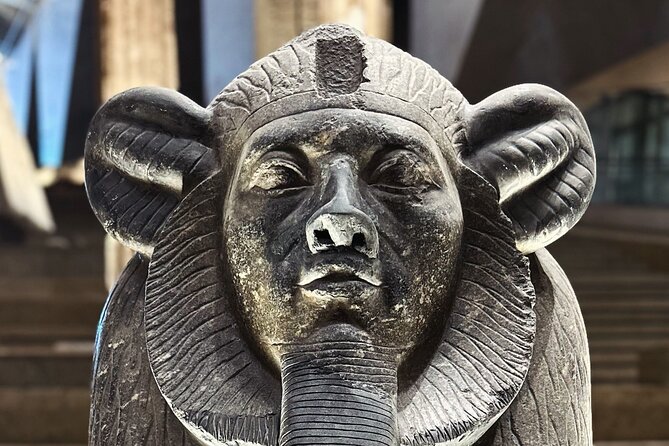
You’ll also move through other colossal statues positioned throughout the courtyard. This is where your Egyptologist earns their keep. They connect the names and eras to what you’re physically standing next to, instead of leaving you with a vague sense of “cool stone stuff.”
Practical note: after the main highlights, you’ll also have time around the official store and nearby local coffee shops and restaurants. It’s a nice buffer if you want a quick drink or a moment to reset before the next section.
Climbing the Grand Staircase: Giant Statues and a Pyramids View
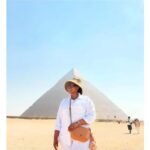
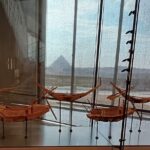
Next comes the Grand Staircase, a vertical museum route designed to build drama. You move between floors using steps, travellators, and elevators, ending with a panoramic viewpoint over the Giza Pyramids area.
This is one of those spaces where your photos can’t fully explain the effect. As you climb, you’re surrounded by royal symbolism at scale: statues and objects connected to kingship, plus architectural pieces like pillars and columns and top sections of obelisks dedicated to ancient Egyptian royalties.
Expect to see major named figures called out in the tour:
- a red granite colossus of King Seti I
- Queen Hatshepsut represented among the monumental displays
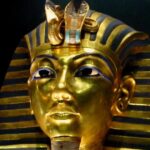
- and King Tut via a special exhibition if it’s available (the tour notes this show could be offered and that it was planned to end by 30 May 2024)
The best part of this section is the pacing. You get the stairs-as-story feeling first, then the view reward at the end. For many visitors, that final panorama is the “okay, Egypt is real” moment—especially because the museum location keeps the pyramids in your visual frame.
The drawback is simple: you’ll do walking and moving between levels. If you want to keep it easy, wear shoes you can stand in for a while.
A few more Cairo tours and experiences worth a look

The New Galleries: 18 Halls and 8,000 Artifacts in One Route
After the staircase, you enter the newly opened galleries. This part is about the museum’s big promise: telling the story of Ancient Egyptian and Greco-Roman periods with a huge number of objects.
Here’s what stands out in the tour description:
- 18 halls
- over 8,000 newly showcased artifacts
- a mix of royal statues and daily-life tools and items
You’ll encounter statues of Egyptian kings, but you’ll also see items tied to how people lived—tools for makeup, farming, fishing, hunting, and warfare. That daily-life angle matters. It prevents the museum from becoming only about tombs and kings. You start to understand that power and ritual existed, but so did practical work, crafts, and routines.
In a short window, you won’t see every object. That’s where a guide makes the difference. A good Egyptologist points you toward the most meaningful examples and helps you connect what you’re seeing across halls—so you don’t leave with a random scatter of sights.
Also, because the museum main areas are not fully open, the newer galleries are a key target. This tour structure gives you access to a concentrated portion of what’s new right now.
Lunch at Zooba: Real Choices and a Mint Tea Reset
The last major block is food. The tour includes an Egyptian traditional lunch at the museum’s Zooba restaurant, plus a glass of mint tea.
You can choose from several common Egyptian favorites, including:
- Koshary (rice, noodles, chickpeas, black lentils, fried onions, and tomato sauce)
- Shawerma (spit-roasted meat, commonly lamb or beef, served with pita)
- Falafel sandwich
- Baba Ghanog (eggplant blended with tahini, garlic, lemon juice, and salt)
I like that lunch is included and placed inside the museum day itself. You don’t lose time hunting food nearby, and the mint tea is a practical palate reset after walking around stone and corridors.
One small consideration: the lunch time is built into the schedule, so if you’re the type who likes long, slow meals, you might feel slightly time-compressed. Still, it’s a good way to finish without turning your day into a travel marathon.
Who This Private GEM Tour Works Best For
This tour is a strong fit if you want:
- a guided route that reduces decision fatigue
- the ability to ask questions without juggling a big group
- a mix of monumental outdoor pieces, a major internal staircase view, and newer gallery halls
- a plan that avoids extra time in traffic
It’s also ideal for first-timers to GEM or to Egypt’s museum world. The highlights are the kinds of objects you’ve probably seen in photos, but your guide adds the “how it fits” layer—why these royal names matter, and what daily tools reveal about real people.
If you hate walking, go in with eyes open. The Grand Staircase route and the museum courtyard layout require movement. And since the main museum is currently closed, you’ll want to be comfortable with a “best available sections now” mindset rather than expecting a full building tour.
My Booking Advice: Do You Book This One?
Book it if you want a focused, high-value introduction to GEM without the Cairo logistics headaches. At $85.50, you’re paying for guided context plus hotel transfers plus lunch—all within a tight 3 to 4 hour window. That combination usually costs more if you piece it together on your own.
Skip it (or consider another format) if your priority is seeing every single hall in the museum. Because the main museum is presently closed, this tour is intentionally selective. Think of it as a guided preview with the key monuments, the Grand Staircase experience, and the newer galleries—then a solid lunch at Zooba.
FAQ
How long is the Grand Egyptian Museum tour?
The tour runs about 3 to 4 hours, including travel time.
What is the price per person?
The price is $85.50 per person.
Is hotel pickup and drop-off included?
Yes. Pickup and drop-off from hotels in Cairo and Giza are included, using an air-conditioned vehicle.
Is lunch included, and what can I eat?
Yes. Lunch at Zooba inside the museum is included with mint tea. You can choose Koshary, Shawerma, Falafel sandwich, and Baba Ghanog (eggplant with tahini, garlic, lemon juice, and salt).
Is this a private tour?
Yes. It’s private, meaning only your group participates.
Is tipping included in the price?
No. Tipping is not included.
If you want, tell me your travel dates and where you’re staying (Cairo or Giza). I can help you plan the best time of day to enjoy the pyramids view and avoid the worst crowds.