REVIEW · CAIRO
Private Day Tour Egyptian Museum, Citadel ,Mohamed Ali Mosque and Coptic Cairo
Book on Viator →Operated by GEM Explore Egypt · Bookable on Viator
One day, three Cairo worlds. This private route strings together Egypt’s ancient highlights, Islamic Cairo at the Citadel, and the older Christian sites of Coptic Cairo, starting with the Egyptian Museum and ending around the Hanging Church area. I like that it keeps the day logical: you get the big-name artifacts first, then the skyline and mosques, then the quieter, deeply atmospheric churches.
Two things I really like are the guide-led pacing and the breadth of coverage. In the feedback I saw, guide Ola stood out for clear, accurate explanations across ancient Egypt, Islamic monuments, and the Coptic sites, with answers that stayed grounded in what you’re seeing. The other win is hassle-free transfers, with pickup and drop-off from Cairo and Giza hotels included in the base offering.
The main consideration is time and planning. Expect a 7 to 8 hour day with multiple major stops, and if you want entry tickets and lunch included, you’ll need to choose the upgrade option. Also, the itinerary lists admission as free at each stop, but the package description says entry fees are included only with the option you pick, so you should double-check what’s covered for your exact booking.
In This Review
- Key things that make this tour worth your time
- How this private route connects ancient, Islamic, and Coptic Cairo
- Egyptian Museum: Tutankhamun, the golden mask, and 120,000 artifacts
- Saladin Citadel and Muhammad Ali Mosque in one go
- Coptic Cairo after lunch: Fort Babylon and the church network
- The Hanging Church: Roman fort ruins above, and a church built over
- St. Sergius and Bacchus: the Cavern Church and patriarch elections
- Ben Ezra Synagogue in Fustat: Moses folklore and the geniza manuscripts
- Price and what you get: $60 plus the right upgrades
- Practical tips for a smooth 7 to 8 hour Cairo day
- Should you book this tour?
- FAQ
- What time does the tour start, and how long is it?
- What’s included in the base price?
- Are hotel transfers included?
- Which main stops are part of the itinerary?
- Is this a private tour?
- Do I need to buy tickets separately?
- What’s the cancellation policy?
Key things that make this tour worth your time
- Ola-style guide approach: clear, on-the-ground explanations that connect ancient, Islamic, and Coptic history
- A full Cairo arc in one day: Egyptian Museum → Citadel & Muhammad Ali Mosque → Fort Babylon area churches
- Iconic buildings with real details: Saladin Citadel context and the Alabaster Mosque’s standout design
- Hanging Church focus: you don’t just pass by Old Cairo landmarks—you get the background
- Private group comfort: only your group participates, with pickup and drop-off from your hotel
How this private route connects ancient, Islamic, and Coptic Cairo
Cairo works best when you don’t treat it like a random checklist. This tour does the opposite. It starts with the Egyptian Museum for the big ancient anchors, then moves to the Citadel area for Islamic Cairo’s power and design, and finally heads into Coptic Cairo to see the churches around Fort Babylon.
That order matters. The museum gives you names and symbols for what you’ll later hear about in other contexts (like royal iconography and material culture). Then you shift to architecture—massive walls, towers, domes, and minarets—where the story becomes political and artistic. Finally, the Coptic section brings you to places tied to long Christian tradition in Egypt, where the tone changes from monument-scale to layered, lived-in sacred spaces.
You’ll be on the move, but the stops are spaced in a way that feels like a journey, not a marathon of bus rides.
You can also read our reviews of more private tours in Cairo

Egyptian Museum: Tutankhamun, the golden mask, and 120,000 artifacts

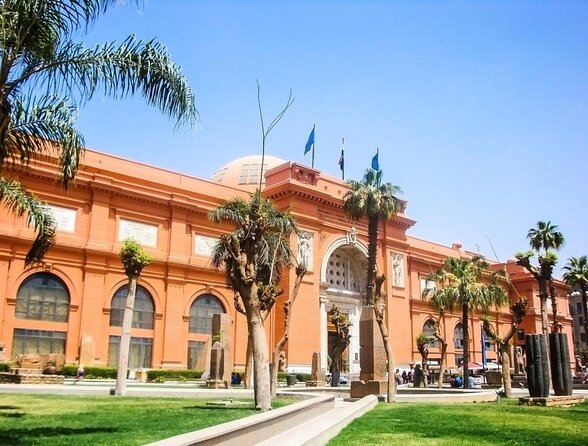
The day starts at the Museum of Egyptian Antiquities, with a window of about 2 hours 30 minutes. The museum is described as home to 120,000 ancient Egyptian items, with pieces reaching back up to around 6,000 years. For many first-time visitors, this is the quickest way to get oriented in what ancient Egypt actually left behind—objects, materials, and craftsmanship, not just statues in isolation.
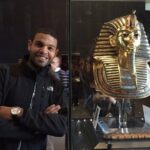
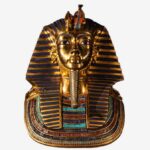
The star moment in the itinerary is the Tutankhamun exhibit, including the golden mask and jewelry. You don’t need special Egypt-nerd status to appreciate why that matters: it’s the kind of display that turns “ancient history” into something tangible and visually specific.
One practical note: museum time can evaporate fast if you’re trying to read every label. With a guide, you can spend your energy looking at the strongest pieces and asking questions when something grabs you. In the feedback, the guides’ explanations were praised for being clear and accurate—use that. If you’re curious about a theme (royalty, burial traditions, or everyday artifacts), ask early rather than saving it for the end of the visit.
Saladin Citadel and Muhammad Ali Mosque in one go
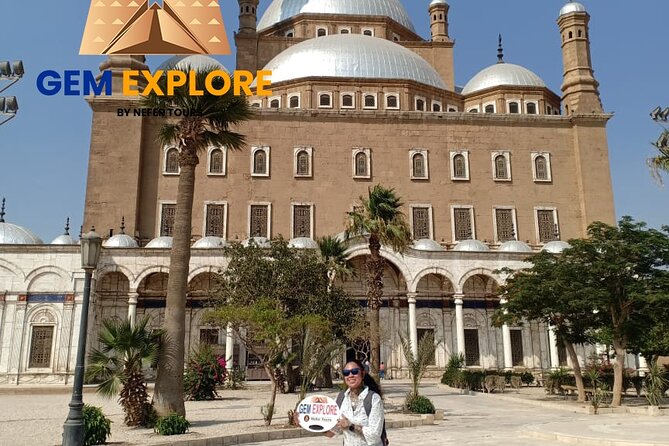
Next comes the Cairo Citadel, often associated with Saladin. The itinerary frames it as the largest Islamic monument in the Middle East, dating to the 11th century and built by Saladin and his minister. It also adds context that the citadel was a seat of government and residence for rulers for more than 700 years.
If you’re wondering why you should care about towers and walls—here’s the useful answer. Fortifications tell you how power worked. When you’re standing in the citadel complex, you can feel why architecture was part defense and part messaging. The tour notes 13 fortified towers and 7 mosques inside the broader area, so it’s not just one building. It’s a fortified city within a city.
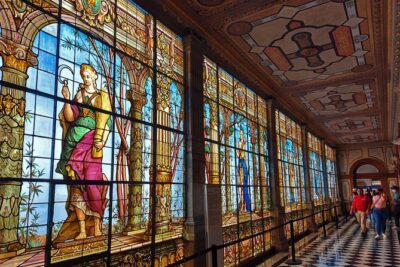
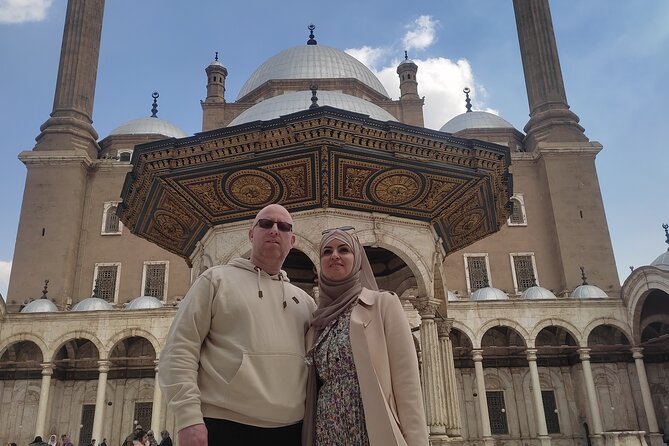
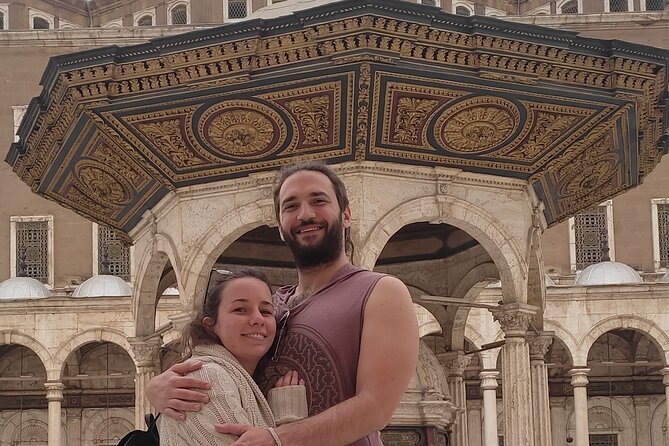
Then you visit the Mosque of Muhammad Ali, also called the Alabaster Mosque. This stop is the kind of sight you can’t fake in photos. The itinerary calls out the dramatic details: minarets that are described as unique and tall at 86 meters, gold-plated domes inside, and alabaster for both exterior and interior surfaces. It was completed in 1848 AD.
That’s the big takeaway: you’re seeing not only religion but also materials and scale. If you’re the sort of traveler who enjoys architecture, this is a high-return hour.
Coptic Cairo after lunch: Fort Babylon and the church network
After lunch (included only if you choose that option), you head into Coptic Cairo, presented as a distinct area from Old Cairo. The focus is around Fort Babylon and the oldest Christian sites in the region, including the Hanging Church and nearby church complexes.
The itinerary describes Coptic Cairo as including the Pabylon Fortress, the Hanging Church, the Greek Church of St. George, and the Church of Saints Sergius and Bacchus, plus other Coptic churches. It also points to a Christian tradition that connects the Holy Family to the area—particularly linked with the Saints Sergius and Bacchus church and the idea of hiding or resting while moving through Egypt.
This section lasts about 30 minutes at the Coptic Cairo stop, which might sound short on paper. But think of it like orientation time. You’re not trying to memorize a floor plan of Old Cairo’s churches. You’re getting the map in your head—where you are, why it matters, and what you’ll see next.
The Hanging Church: Roman fort ruins above, and a church built over
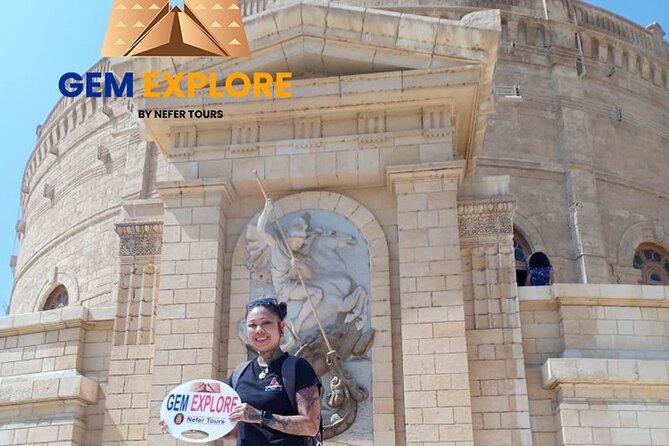
Now you get the named highlight: the Hanging Church. The tour places it around Fort Babylon and says this area contains Egyptian Christians’ oldest churches. It also notes the site’s mix of pilgrimage and shared religious importance, plus the physical reminder of earlier Roman fortifications and towers.
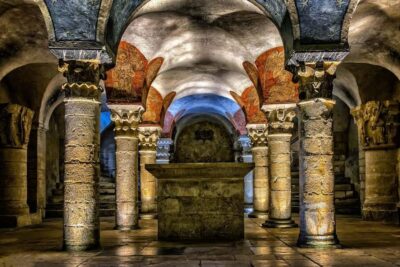
The key idea here is layered time. You’re standing somewhere with Roman-era remains below, then a church built over that structure. That’s why people call it hanging: it’s not just a name; it’s tied to how the church relates spatially to the earlier fort ruins.
Your time is about 45 minutes, which is enough to slow down a little without feeling stuck. If you want photos, focus on the angles where the setting makes sense. If you want to understand it, spend your time listening and looking at the parts your guide points out—this is exactly where a good guide earns their keep.
You can also read our reviews of more museum experiences in Cairo




St. Sergius and Bacchus: the Cavern Church and patriarch elections
After the Hanging Church area, the tour continues to Church of St. Sergius and Bacchus, also called the Cavern Church. This stop also lasts about 45 minutes.
The itinerary explains the tradition behind it: the Holy Family—Joseph, Mary, and the infant Jesus—rested at the site at the end of their journey into Egypt. It also describes the idea that they may have lived there while Joseph worked at the fortress, tying the church’s story directly to the location around Fort Babylon.
There’s another detail that makes this site more than a devotional stop. The itinerary notes that it was where many patriarchs of the Coptic Church were elected. That gives you a sense of institutional importance, not just legend.
If you’re short on time in Cairo, this is one of those moments you’ll remember because it connects architecture, tradition, and governance in one place.
Ben Ezra Synagogue in Fustat: Moses folklore and the geniza manuscripts
To round out the Coptic and Old Cairo theme, you’ll visit Ben Ezra Synagogue in the Fustat part of Old Cairo. The stop is about 30 minutes.
The itinerary includes two memorable story threads. First is local folklore placing the synagogue at the site where baby Moses prayed. Second is the historical-literary twist: the synagogue’s geniza was found in the 19th century to contain a treasure of stored Hebrew, Aramaic, and Judeo-Arabic manuscripts—both secular and sacred.
This is a useful stop because it broadens the day beyond only churches. It also reminds you that Old Cairo held multiple faith communities that left records and traditions behind.
Price and what you get: $60 plus the right upgrades
The base price is $60.00 per person, and this is described as a private tour with a guide and pickup and drop-off from Cairo or Giza accommodations. The average booking window is about 30 days in advance, which is a good sign if you prefer planning rather than scrambling.
Here’s where value really lives: the inclusions say you get an expert tour guide, two-way transfers, and bottled water. You also get entrance fees and lunch only if you pick the option that includes them. So if you’re comparing packages, don’t just compare the headline price—check what’s rolled into your specific choice.
The itinerary also lists admission ticket free for each stop, which can be confusing at first glance. Given the package wording about options, the safest way to protect your budget is to confirm what entrance fees are actually covered for your booking.
Extra pickup costs are listed too:
- $15 per head if you’re picked up from the airport, New Cairo, Nasr City, or 6 of October
- $20 per head if you’re picked up from the New Administrative Capital
If you’re staying in central Cairo or Giza, the base plan usually feels like a clean deal: you pay for guide time and transportation, and you don’t waste your day figuring out transit between museum, citadel, and Fort Babylon.
Practical tips for a smooth 7 to 8 hour Cairo day
This is a long-but-manageable day. It starts with pickup at 8 AM and runs roughly 7 to 8 hours, covering major sites that are spread across different Cairo neighborhoods.
A few practical moves I’d recommend:
- If you care about museums, treat your first hour like your prime time. The Egyptian Museum stop is the most label-heavy part.
- Build your questions around what you’re seeing in front of you. In the feedback, the guide explanations were praised as accurate and responsive, including beyond the stated itinerary.
- Choose the lunch/entry-fee upgrade if you want a true all-in-day experience with less back-and-forth.
Also, your booking includes a mobile ticket, which is handy for a day where you’ll be moving between several sites and don’t want to track paper.
Should you book this tour?
Book it if you want one day that balances the famous stuff with the places that feel quietly important—ancient Egypt at the Egyptian Museum, iconic Islamic architecture at the Citadel and Muhammad Ali Mosque, then the older Christian sites around Fort Babylon.
You’ll especially like this if you value strong guiding. The standout name in the feedback was Ola, noted for clear explanations across ancient, Islamic, and Coptic Cairo.
Skip it or reconsider if you dislike long days or if you’re the type who needs a fully self-directed schedule. With a tight 7–8 hour plan, you’ll need to go with the flow rather than stretch time in any one location.
If your goal is to see Cairo’s big story—ancient, Islamic, and Coptic—without turning the day into logistics homework, this private route is a solid fit.
FAQ
What time does the tour start, and how long is it?
Pickup starts at 8 AM, and the tour runs about 7 to 8 hours.
What’s included in the base price?
The base includes an expert tour guide, pick up & drop off from Cairo or Giza accommodations, bottled water, and an option where entry fees and lunch are included only if you select that package option.
Are hotel transfers included?
Yes. Pickup and drop-off are included from your accommodation in Cairo or Giza. There are extra fees for pickup from the airport/New Cairo/Nasr City/6 of October, and a higher extra fee from the New Administrative Capital.
Which main stops are part of the itinerary?
The day includes the Egyptian Museum, Cairo Citadel, Mosque of Muhammad Ali (Alabaster Mosque), Coptic Cairo area, the Hanging Church, Church of St. Sergius and Bacchus, and Ben Ezra Synagogue.
Is this a private tour?
Yes. It’s private, and only your group participates.
Do I need to buy tickets separately?
It depends on the option you choose. The package notes that entrance fees and lunch are included if you pick the option that includes them.
What’s the cancellation policy?
You can cancel for a full refund if you cancel at least 24 hours before the experience’s start time.