REVIEW · CAIRO
Full-Day Giza Pyramids and Egyptian Museum Private Tour
Book on Viator →Operated by Cairo Top Tours · Bookable on Viator
Giza feels personal on a private day. You’ll go with an English-speaking Egyptologist guide, starting at the Giza plateau and ending at the Egyptian Museum, with hotel pickup, air-conditioned transport, and bottled water along the way. I love that the day is structured around the biggest “must-sees” without leaving you to figure things out, and I love that admission tickets are included so you can spend less time queuing and more time looking. One thing to consider: there’s been a rare report of reservation confusion involving an organizer named Ramez, so I recommend confirming your details again right after booking.
The schedule runs about 8 hours in a morning time window, which is ideal for people who like a clear plan. If you prefer a super-long, unstructured museum wander, the museum stop can feel tight.
In This Review
- Key highlights at a glance
- What you’re really buying in an 8-hour private Cairo day
- Giza plateau: Great Pyramid, Sphinx, and the Valley Temple setup
- Egyptian Museum: seeing Tutankhamen and gold in a 2-hour window
- Why the right Egyptologist guide changes the whole day
- Transportation, admissions, and the real value of paying $75
- How to prepare so the day feels smooth, not stressful
- Should you book the Full-Day Giza Pyramids and Egyptian Museum Private Tour?
- FAQ
- How long is the private tour?
- What are the main stops during the day?
- Are admission tickets included for both stops?
- Does the tour include hotel pickup and transportation?
- What language is the guide?
- Is bottled water provided?
- Is this a private tour?
- What should I know about cancellation and weather?
Key highlights at a glance
- Hotel pickup in Cairo or Giza plus an AC vehicle for a smoother start
- Giza plateau tour with the Great Pyramid, Sphinx, and Valley Temple in one run
- Egyptian Museum entry included so you don’t have to buy anything on the spot
- 2 hours in the museum focused on major collections like Tutankhamen treasures
- Bottled water included to keep you comfortable on a full day
- Private format only for your group to ask questions and take photos at your pace
What you’re really buying in an 8-hour private Cairo day
At $75 per person, the headline value is not the sites alone—it’s what’s wrapped around them. You get round-trip hotel pickup from Cairo or Giza, an air-conditioned vehicle, an English-speaking Egyptologist guide, bottled water, and admission tickets for both the pyramids and the museum. That combination matters because Cairo can be unpredictable: traffic happens, walking adds up, and it’s easy to waste time figuring out logistics when you’re trying to hit two big anchors in one day.
This is also a private tour, meaning it’s built for your group rather than a big herd. That typically makes conversations easier and photo requests less of a hassle. If you’re traveling as a family, I especially like that setup—one guide named Mohammed got praised for joining a family of four when they were close to Giza, and that kind of flexibility can turn a stressful pickup moment into a smooth start.
The main trade-off is time. You’re looking at about 8 hours total, with 3 hours at Giza and 2 hours at the Egyptian Museum. For many people, that’s the sweet spot. For others, it can feel like you’re racing the clock—especially if you want to read every label in the museum.
You can also read our reviews of more private tours in Cairo

Giza plateau: Great Pyramid, Sphinx, and the Valley Temple setup
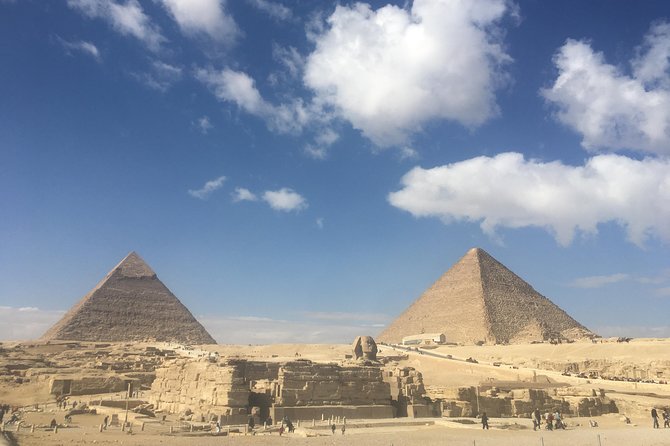
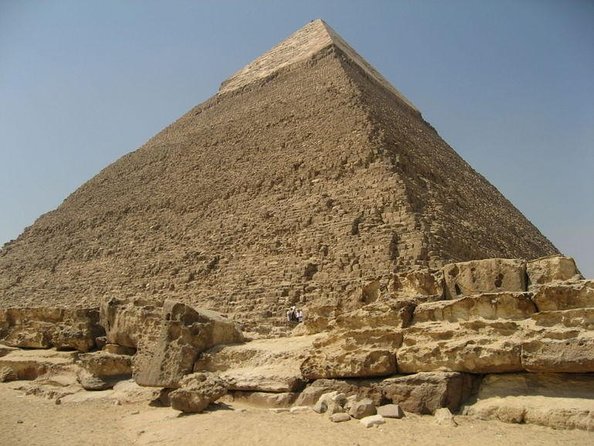
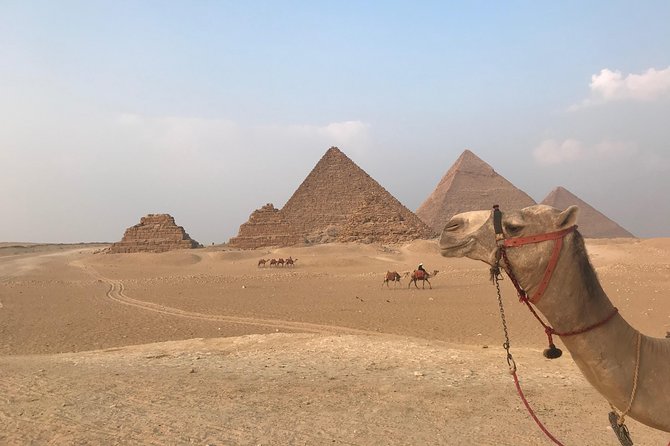
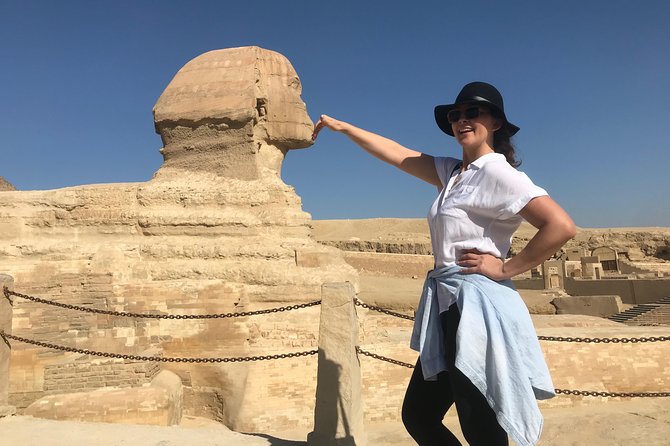
The Giza portion is built like a highlights tour, but it’s not just stop-and-stare. You’ll explore the plateau by visiting the Great Pyramid of Cheops, the pyramids of Chephren and Mykerinus, and then you’ll move on to the Great Sphinx—head of the pharaoh and body of a lion. After that, you’ll visit the Valley Temple of King Chephren, which is connected to the mummification of the pharaoh’s body.
The Great Pyramid is the big visual anchor, and having an Egyptologist guide makes it more than a photo opportunity. The guide’s role here is to give you the “why” as you’re looking at the “wow.” When you understand how these structures fit into royal funerary belief and how different pyramids relate to different rulers, the plateau starts to feel like one planned story instead of isolated monuments.
You’ll also see the Great Sphinx in this same block of time. It’s one of those places where details get lost fast if you’re just orbiting it for pictures. A good guide helps you notice the right things—like the symbolic pairing of the human head and lion body—so you’re not spending the entire visit trying to reconstruct history from memory.
The Valley Temple is a smart inclusion because it shifts the focus from architecture to ritual. It’s specifically tied to the mummification context for King Chephren, and even if you don’t go deep into terminology, the explanation tends to make the whole area feel more human. This is where you can start connecting the dots between the monuments and how the ancient Egyptians understood kingship and the afterlife.
A practical note: 3 hours at Giza goes quickly. You’ll see the main points, but you likely won’t have time for a slow, do-everything circuit. If that sounds like you, plan to use the guide’s pacing as your “best-of” route and save extra wandering for a separate visit.
Egyptian Museum: seeing Tutankhamen and gold in a 2-hour window
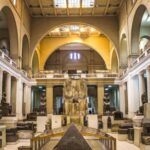
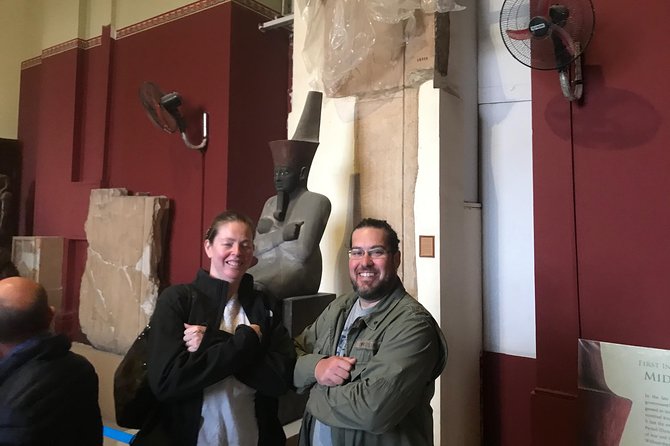
The Egyptian Museum stop is designed to help you make sense of an overwhelming collection. You’re going to a place with the largest and most precious collection of Egyptian antiquities in the world, spanning periods of Egyptian history going back more than 6,000 years. The tour notes mention 160,000 masterpieces on display, and that number alone is a reality check: you can’t see it all in two hours.
So the value here is that your guide helps you focus on what matters most in that limited time. The highlights include treasures associated with Tutankhamen, plus a huge collection of gold and jewelry that were hidden under sand for over 35 centuries until the tomb was discovered in 1922 and then displayed in the museum. Even without going into every exhibit title, you can walk away with a much clearer sense of why these objects made such a global splash when they surfaced.
The “2 hours” constraint can be either perfect or frustrating, depending on your style. If you want a guided hit of the museum’s best-known artifacts and context, it’s a good amount of time. If you’re the type who likes long, label-by-label reading, you might feel rushed and wish for another stop later.
My advice: treat the museum portion like a sprint with a strategy. Ask your guide what you should prioritize first, then give yourself permission to stop chasing every room. Two hours is enough to connect major themes—royal power, burial practices, and the visual language of ancient Egypt—if you’re not trying to see everything.
Why the right Egyptologist guide changes the whole day
This tour wins or loses on the guide, and the supplied guide feedback points to some real strengths. The tour is led by an English-speaking Egyptologist guide, and the difference shows up in how the sites feel in your head.
For example, a guide named Usama Younis was praised for being patient with a solo traveler and always willing to take photos when needed. That’s not just customer service—it’s practical. If you’re photographing pyramids against bright light, you’re going to want a second or two for framing, and you don’t want to feel like you’re holding everyone up.
Another guide named Ibrahim received praise specifically for knowing a lot of history. On this kind of day, “a lot of history” is useful only if it’s organized enough for your brain to keep up while you’re outside under heat and inside among artifacts.
And there’s also praise for Aswani as a best-of-day guide, with the general theme that the experience became easier to understand and more alive through explanation. Mohammed also came up in a positive family-day review, which points to a common win: guides who can match pace to your group size.
Still, a balanced warning: one low rating mentioned a reservation issue involving an organizer named Ramez. That doesn’t automatically mean your day will go wrong, but it does mean you should be proactive. Confirm pickup time and details in writing soon after booking, and keep your mobile ticket accessible so everyone is aligned before you leave the hotel.
Transportation, admissions, and the real value of paying $75
Let’s talk about money like adults. What you’re paying for here is not just the sites. You’re paying for admissions included at both Giza and the museum, air-conditioned private transport, hotel pickup, bottled water, and an Egyptologist guide.
That’s why the $75 per person feels reasonable when you add it up. If you were to piece this together yourself, you’d likely spend time managing transport and separate entry tickets, and that’s time you could spend actually looking at the Great Pyramid or standing in front of Tutankhamen treasures.
One more small but important detail: tipping is not included. If you’re budgeting, keep that in mind because in Egypt it’s common to tip your guide for a good day. If tipping is uncomfortable for you, you’ll want to set expectations before you go.
The other value piece is pacing control. Because it’s private, your guide can respond to your questions and your pace. You’re not always waiting for a group to regroup, and that matters when you have two major stops and a limited museum time.
Booking timing can matter too. This experience is typically booked about 77 days in advance, which suggests it’s popular. If you have a specific date in mind, I’d rather lock it in than gamble on finding something similar last minute.
You can also read our reviews of more museum experiences in Cairo





How to prepare so the day feels smooth, not stressful
Because this is a morning-window tour (listed as 7:00 AM to 11:00 AM, Monday through Sunday), you’ll want to treat it like an early start day. That usually helps with overall comfort, and it gives you the rest of your day back in the city afterward.
I also think it helps to prepare mentally for the “two different worlds” experience. Outside, you’re on the Giza plateau seeing monuments tied to burial beliefs and royal power. Inside, you’re in the Egyptian Museum facing an enormous collection that spans thousands of years. Your guide can connect those worlds, but you’ll still feel the switch—so don’t try to force yourself to absorb everything at maximum speed.
A few practical steps I’d take:
- Bring a hat and sunglasses for outside time.
- Wear comfortable walking shoes; Giza is not a sit-down day.
- Keep your mobile ticket ready on your phone.
- If you’re traveling with kids or want slower pacing, mention it early so the guide can adjust.
And one last “do this and sleep better” step: after booking, confirm the pickup details and make sure the reservation is firmly attached to your itinerary. The one serious complaint about reservation handling is exactly the kind of thing that a quick message can prevent.
Should you book the Full-Day Giza Pyramids and Egyptian Museum Private Tour?
I’d book it if you want a structured, high-value day that hits the main Giza sights and then brings you to the Egyptian Museum with context. It’s especially appealing if you like the idea of an Egyptologist guide, hotel pickup, admissions included, and a private setting where questions and photo stops don’t feel like friction.
I’d think twice if your ideal museum visit is hours of slow wandering through every room. Two hours is enough to see big-ticket highlights and learn the big themes, but it won’t satisfy someone who wants to read every label and compare every section.
If you’re okay with a full, well-paced morning and you want the day to feel guided rather than improvised, this is a strong way to structure your Cairo time.
FAQ
How long is the private tour?
The tour duration is listed as about 8 hours.
What are the main stops during the day?
You’ll visit the Giza plateau (including the Great Pyramid of Cheops, the pyramids of Chephren and Mykerinus, the Great Sphinx, and the Valley Temple of King Chephren). Then you’ll visit the Egyptian Museum.
Are admission tickets included for both stops?
Yes. Admission tickets for the Pyramids of Giza and the Egyptian Museum are included.
Does the tour include hotel pickup and transportation?
Yes. Round-trip pickup is offered from your hotel in Cairo or Giza, and the group travels in an air-conditioned vehicle.
What language is the guide?
The tour includes an English-speaking Egyptologist guide.
Is bottled water provided?
Yes. Bottled water is included during the tour.
Is this a private tour?
Yes. It’s private, so only your group participates.
What should I know about cancellation and weather?
Cancellation is free if you cancel up to 24 hours in advance. The experience requires good weather; if it’s canceled due to poor weather, you’ll be offered a different date or a full refund.
![Frida Kahlo VIP [Museum Tickets Included] Bike, Markets & Churros - Where You Meet and How the Timing Works (So You Don’t Stress)](https://cdn.museumtravelguide.com/wp-content/uploads/frida-kahlo-vip-museum-tickets-included-bike-markets-churros-400x300.jpg)