REVIEW · MADRID
Madrid: Reina Sofía Museum Guided Tour
Book on GetYourGuide →Operated by Amigo Tours Spain · Bookable on GetYourGuide
Modern art can feel like a test. This Reina Sofía guided tour turns it into a clear story, with Picasso’s Guernica at the center and a bilingual guide who explains what you’re seeing in plain language. You’ll also get a focused overview of 20th-century movements like Cubism and Surrealism instead of wandering for hours and hoping it clicks. One thing to consider: the tour is only about 75 minutes, so if you like to linger and stare, you may feel a bit of a pace push.
In This Review
- Where this tour works best in Madrid
- Key things to love before you go
- Reina Sofía in one sentence: start with Guernica, then make sense of the rest
- Meeting up inside the museum beat the usual Madrid time-crunch
- The 75-minute route: highlights without the overwhelm
- Guernica: what you’ll learn before you stare at it
- Picasso, Dalí, Miró, and the art language behind their styles
- The museum building: vaulted halls, former hospital vibes, and garden views
- How the bilingual guide helps you actually understand modern art
- After the tour: where you can spend extra time on what you loved
- Price and value: why $38 can be a smart buy (if you want structure)
- Practical tips: what to bring and what rules to expect
- Who should book this tour?
- Should you book the Reina Sofía guided tour?
- FAQ
- How long is the Reina Sofía guided tour?
- What’s included in the price?
- Do I get to explore the museum after the guided part?
- Is the tour wheelchair accessible?
- Can I take photos inside the museum?
- Are large bags or luggage allowed?
- Where do I meet the guide?
Where this tour works best in Madrid
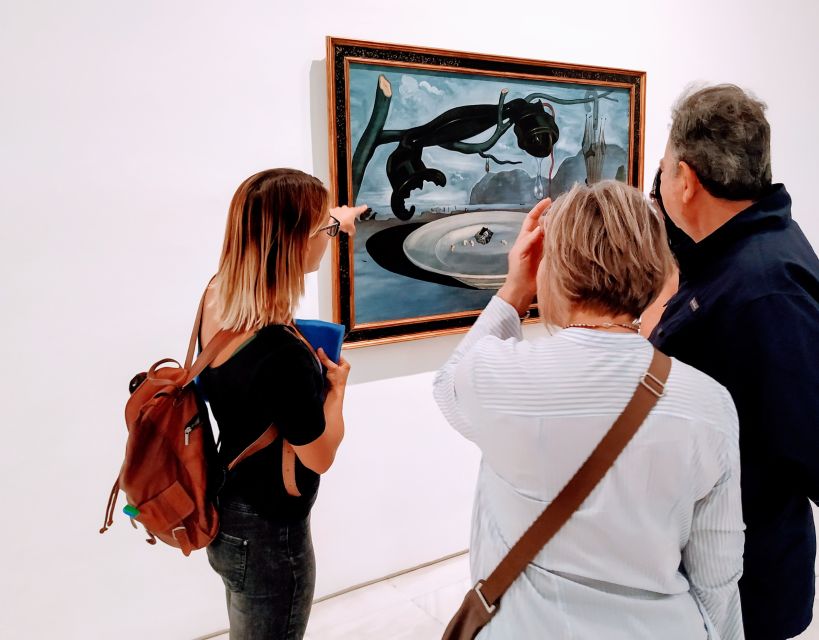
I like how the format balances structure with freedom: you get the highlights and the why behind them, then you can continue on your own right after. Meeting at the museum and skipping the ticket line also helps you start fast, which matters in a big museum like this. The main drawback is timing—some explanations move quickly through a lot of ground.
Key things to love before you go
- Guernica first-class focus: the mural-sized anti-war painting is treated as the climax, not a quick stop
- 20th-century art decoded: you’ll connect styles like Cubism and Surrealism to what the artists were doing
- Bilingual, same-time commentary: tours run in both English and Spanish, which is great for mixed-language groups
- A museum with real atmosphere: vaulted hallways and even the gardens help you understand the building
- You’re not trapped in a sprint: after the guided portion, you can stay and explore independently
- Security rules are strict: no flash, no selfie sticks/tripods, and some rooms may be off-limits for photos
You can also read our reviews of more guided tours in Madrid
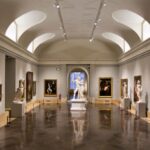

Reina Sofía in one sentence: start with Guernica, then make sense of the rest
If you’re going to Madrid for art, you eventually end up at Reina Sofía. It’s one of Spain’s most important modern and contemporary museums, and it’s famous for a reason: it houses major works from Picasso, Salvador Dalí, and Joan Miró—three heavyweights who changed what art could do in the 20th century.
What I appreciate about this guided format is that it doesn’t act like you must already “get” modern art. Instead, it builds a chain of ideas: movements first (Cubism, abstract directions, Surrealism, modernism), then artists’ methods, then the meaning behind key pieces. That’s a big value because modern art is easy to misunderstand when you’re just hunting for something familiar.
And yes, Guernica is the headline. But the best payoff is how the tour frames it: you learn how the symbolism and artistic technique work together, so when you stand in front of Picasso’s anti-war masterpiece, you can see more than the surface shock.
Meeting up inside the museum beat the usual Madrid time-crunch
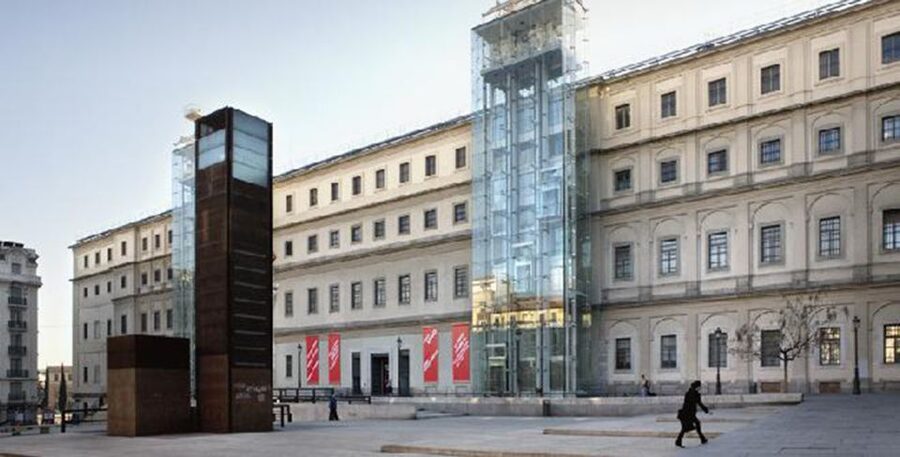
This tour keeps logistics simple. You meet at the Reina Sofía Museum, with the exact meeting point varying by the option you choose. The provided location option ties to C. de Sta. Isabel, 52, and from there you’re lined up to enter the museum and begin.
Two practical perks matter here:
- Skip the ticket line, which saves time and stress
- Short duration (about 75 minutes), which makes this an easy fit even on a packed day
The tour also gives you a clear structure so you don’t waste your energy trying to figure out where the “must-see” works are. In a museum this size, having a guide pick the right path is worth a lot.
The 75-minute route: highlights without the overwhelm
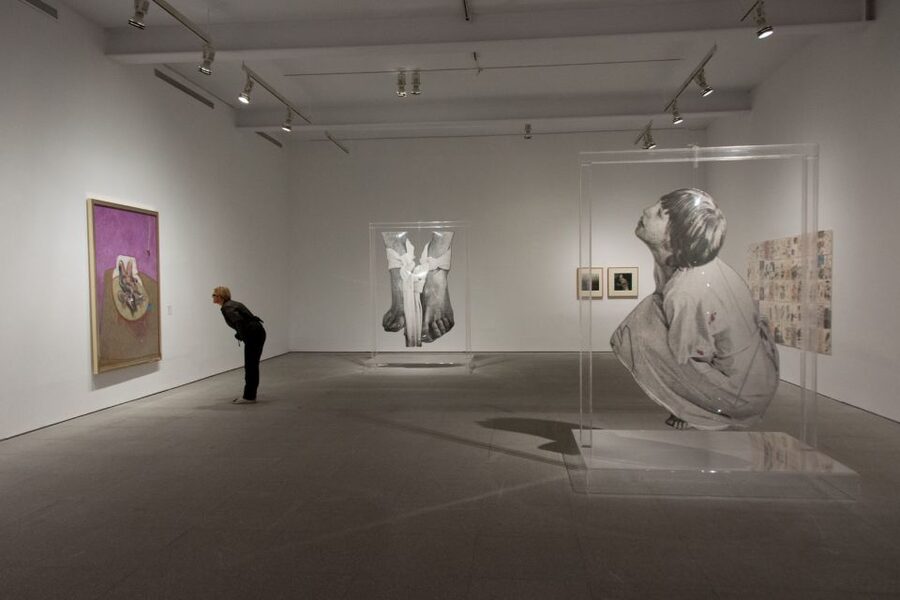
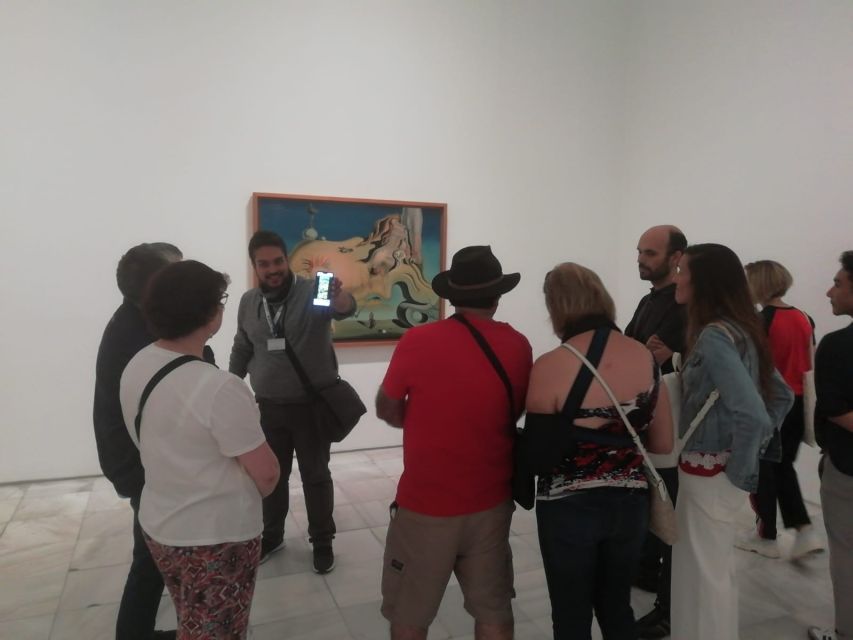
The heart of the tour is a tight, curated walk through the museum’s key modern art. In a bit more than an hour, you’ll cover a surprising amount—without trying to turn Reina Sofía into a full-day school lesson.
Here’s how that pacing feels when it’s done well:
- Context comes first: you get explanations of art movements and the kinds of ideas artists were reacting to.
- Techniques get explained: guides connect visual choices—distortion, fragmentation, symbolism—to how the artists built their work.
- Guernica closes the loop: Picasso’s anti-war painting becomes the emotionally heavy finale.
That’s why people often leave feeling they saw the “right” things. Instead of being overwhelmed, you’re guided into a handful of major works, with the logic of the story stitched together as you go.
Guernica: what you’ll learn before you stare at it
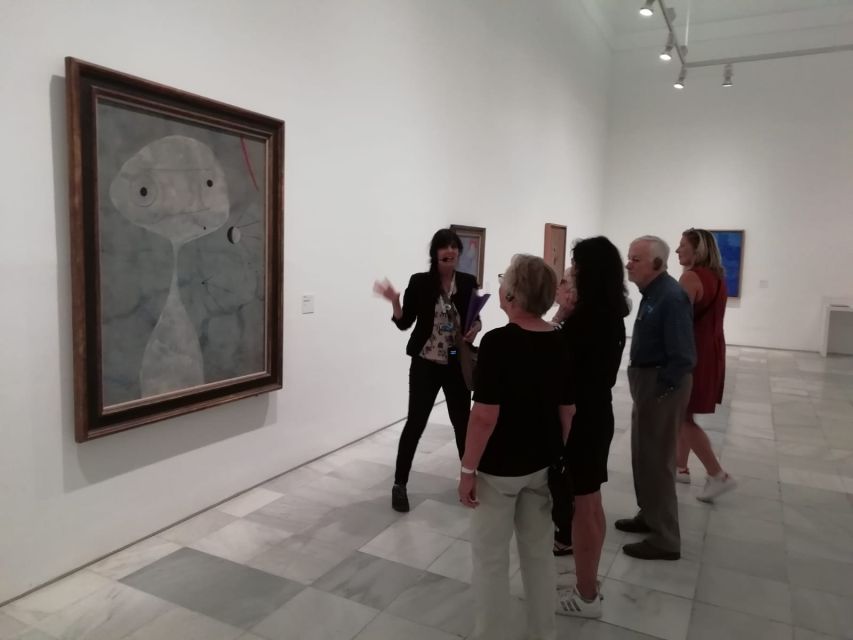
Picasso’s Guernica is one of those artworks that can overwhelm you fast—mostly because it looks like it’s demanding an immediate reaction. The tour helps you slow that reaction down into understanding.
The key promise here is not just seeing the painting. It’s learning:
- the symbolism inside the scenes
- the visual techniques Picasso used
- why the work became such a powerful anti-war statement
You’re also not just viewing it as a stand-alone painting. The guide’s broader talk about 20th-century art movements helps you understand how Picasso’s approach fits into the era’s major changes in style and meaning.
If Guernica is the reason you’re visiting Reina Sofía, this is the part that makes the guided format worth paying for. Going on your own is still excellent—this museum is impressive—but a guide can help you catch what you’d likely miss in a first pass.
You can also read our reviews of more museum experiences in Madrid



Picasso, Dalí, Miró, and the art language behind their styles
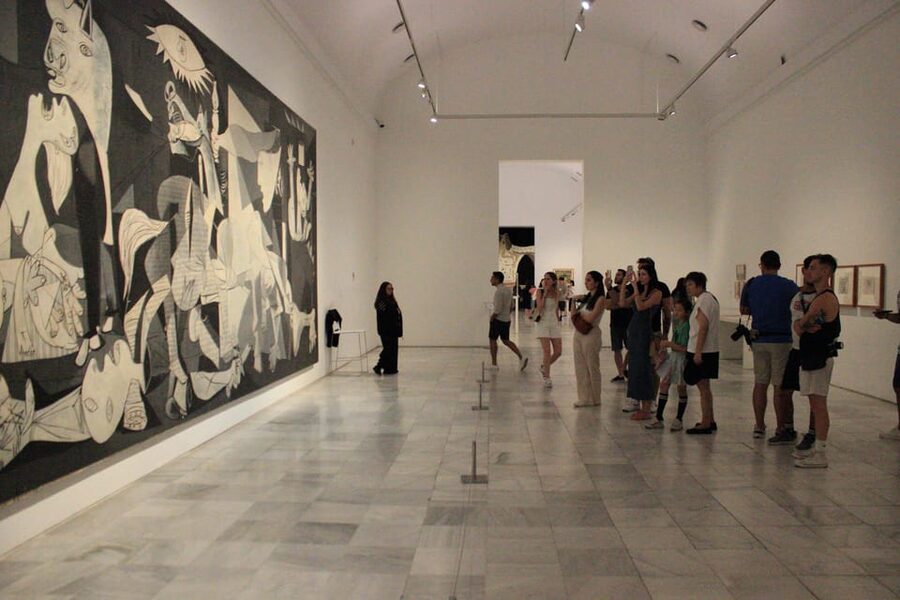
This tour doesn’t just drop names. It tries to teach you how to read modern art by comparing what’s happening across different artists and styles.
You’ll spend time on major works linked to:
- Pablo Picasso and the logic of fragmentation and modern expression
- Salvador Dalí and the ideas behind Surrealism
- Joan Miró and the look-and-feel of modern Spanish expression
The big benefit for you: the guide’s explanations translate “why does it look like that?” into a reasoned answer. Even if you don’t love every style, you leave with tools to recognize what each movement was trying to do.
Also, the tour runs simultaneously in English and Spanish, so if you’re traveling with someone who wants either language, it’s built into the experience. In practice, some departures may involve splitting into smaller language groups if needed, which can make following the talk easier.
The museum building: vaulted halls, former hospital vibes, and garden views
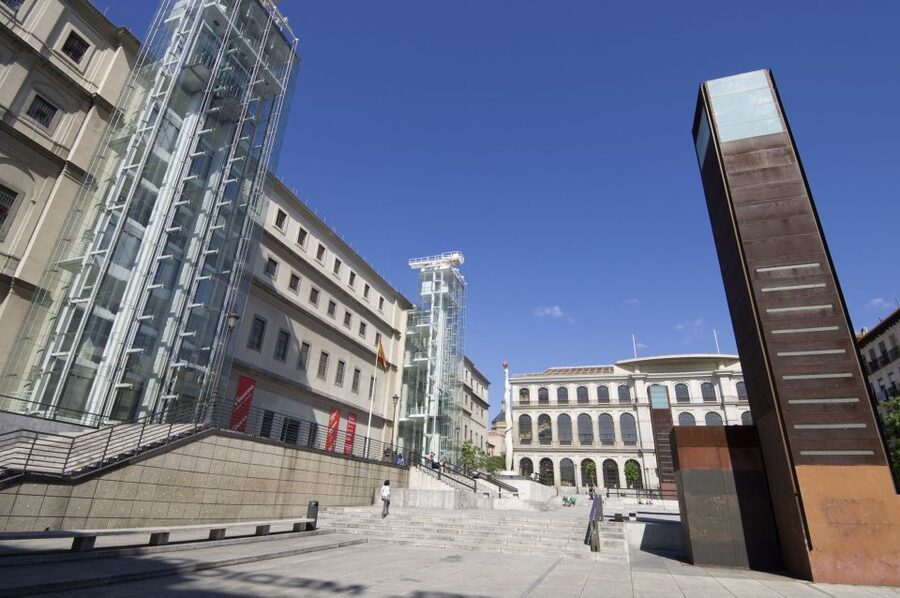
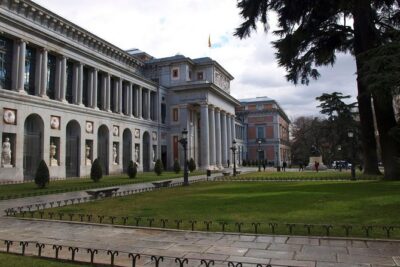
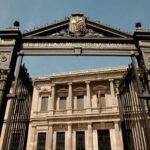
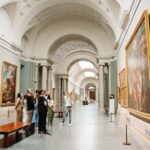
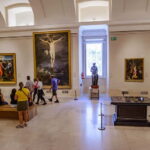
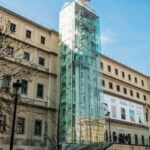
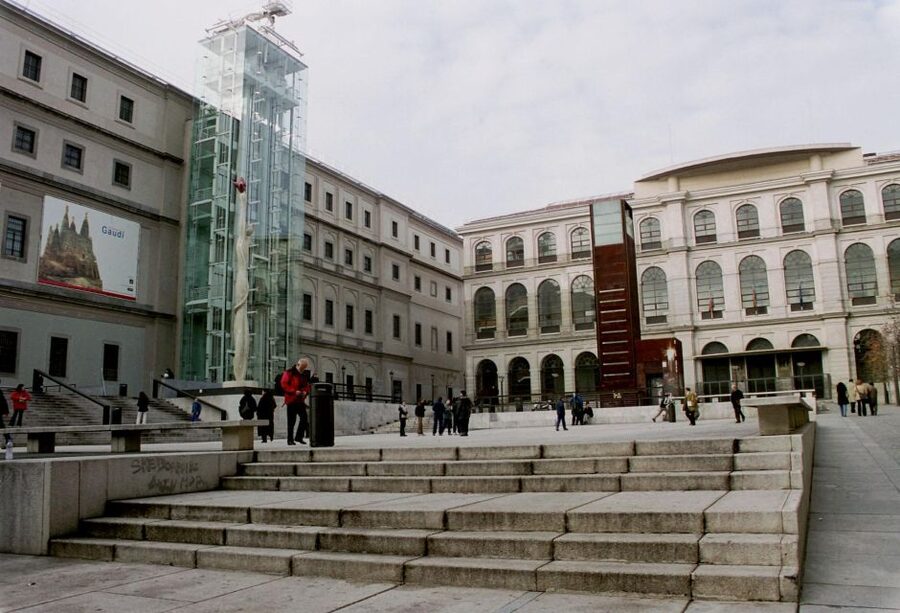
Reina Sofía isn’t only about what’s on the walls. It’s housed in a building with strong character—formerly an elegant hospital. That matters because the architecture changes how the art “lands” in your mind.
On this tour, you’ll notice:
- vaulted hallways that shape the rhythm of your walk
- a chance to see the building from outside by walking through the gardens
It’s a small stop, but it’s useful. You’re not just trapped indoors staring at frames. You get a quick reset that helps you return to the galleries with fresher eyes.
If you’re the type who likes to connect architecture to atmosphere, this tour gives you a little of that without turning into a full building history lecture.
How the bilingual guide helps you actually understand modern art
A great guide can turn modern art from confusing to compelling. The good news here is that the tours are led by professionals who explain in both English and Spanish (live commentary). And the names you might recognize from past departures include guides such as Livia, Alex, Paula, Ali, Xavier, Helena, and Elena/Helena.
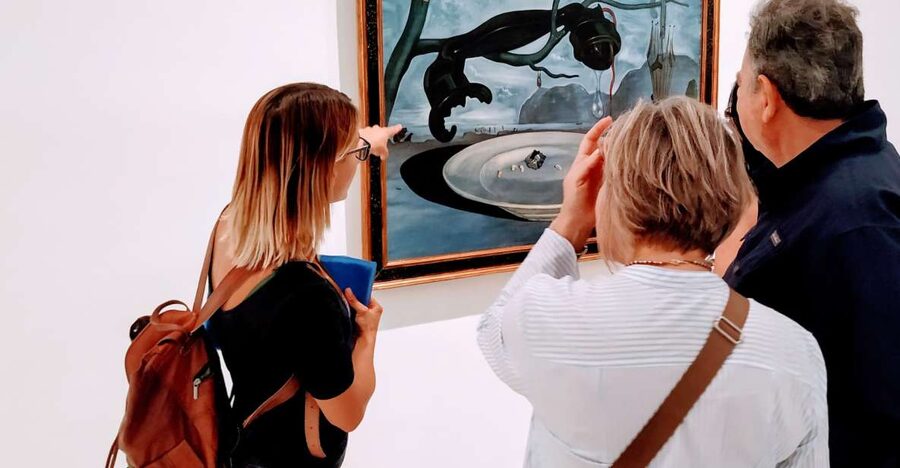
What I like about this setup is the teaching style. You’re not just being talked at. You get pauses to look, chances to ask questions, and prompts that help you describe what you’re seeing. In multiple departures, the tours are described as interactive and paced so people don’t feel completely swept along.
That said, there’s one practical caution: because the tour is short, not every piece gets equal “stare time.” Some visitors have felt certain sections move faster than they would like. If you’re the type who wants to slow down per artwork, treat this as your guided orientation—then use your free time afterward to revisit what grabbed you.
After the tour: where you can spend extra time on what you loved
Once the guided portion ends, you can stay inside the museum and explore on your own. This is an important part of the value.
Here’s how you can use that freedom:
- Return to Guernica and see it again with your new context
- Follow up with whatever artist or movement hooked you during the tour (instead of trying to guess what to prioritize)
- Use your own pace for smaller works or details the guide couldn’t linger on
This “tour first, explore second” approach is smart. It gives you direction early, then protects your attention later.
Also, Reina Sofía hosts temporary exhibitions by international artists in addition to its core collection. That means your independent time can include more than the classics the guide focused on.
Price and value: why $38 can be a smart buy (if you want structure)
At $38 per person for about 75 minutes, you’re paying for three things:
- Entrance to the museum
- A professional guide doing live commentary in both English and Spanish
- Skip-the-line convenience so you don’t lose time at the door
If you plan to spend your day hunting for the museum’s most important works, this tour is cheaper than it sounds because it compresses the decision-making time. You also get explanation of the symbolism and techniques tied to the major artists—Picasso, Dalí, and Miró—plus the big picture of major 20th-century movements.
If you already know modern art well and you’re happy mapping galleries yourself, the value may feel less obvious. But if you want a confident first visit—especially centered on Guernica—this is a solid use of time money.
Practical tips: what to bring and what rules to expect
Reina Sofía has clear rules, and they affect your comfort during the tour.
Bring:
- comfortable shoes (you’ll be moving through galleries and halls)
Don’t bring/use:
- luggage or large bags
- selfie sticks
- anything involving flash or stabilization gear for photos (like tripods)
Photography matters:
- Some rooms don’t allow photos.
- In rooms where photos are allowed, the rules include no flash and no stabilization (no selfie sticks/tripods).
If you care about photos, plan to take fewer images and look more. The real win here is learning what to notice—so your eyes do the “zooming in” for you.
Who should book this tour?
This guided visit makes the most sense if:
- You want Guernica to feel meaningful, not just impressive
- You’re new to 20th-century art and want a clear starting framework
- You’re short on time and still want the key works and the why behind them
- You’re traveling with mixed language needs (English and Spanish commentary is built in)
It’s also a good choice as a first Madrid art stop. After you get your bearings in Reina Sofía, you’ll enjoy other museums even more because you’ll have a better sense of the artistic “language” of the era.
If you’re a hardcore art marathoner who likes spending long stretches with every artwork, you might skip the tour and go freeform. But pairing a short guide with independent revisits is often the sweet spot.
Should you book the Reina Sofía guided tour?
I’d book it if your priority is understanding modern art quickly—especially Picasso’s Guernica—and if you want a guided path that prevents you from missing the museum’s core story. The 75-minute format is efficient, and the bilingual live commentary helps you stay focused without losing the meaning.
I wouldn’t book it if you’re planning to spend your whole day in the museum at a slow, reflective pace and you already know exactly where you want to go. In that case, you can still do Reina Sofía extremely well on your own. But for most visitors, this tour is a smart primer that turns a famous museum into a coherent experience.
FAQ
How long is the Reina Sofía guided tour?
The tour lasts about 75 minutes.
What’s included in the price?
You get entrance to the Reina Sofía Museum, a professional guide, the guided tour itself, and live commentary in English and Spanish.
Do I get to explore the museum after the guided part?
Yes. After the tour ends, you can stay inside and continue exploring the museum independently.
Is the tour wheelchair accessible?
Yes, the museum and tour experience are wheelchair accessible.
Can I take photos inside the museum?
Photography is restricted. Some rooms don’t permit photos, and in rooms where photos are allowed you must avoid flash and avoid using any camera stabilization such as selfie sticks or tripods.
Are large bags or luggage allowed?
No. Luggage or large bags aren’t allowed.
Where do I meet the guide?
The meeting point may vary depending on the option booked, but one listed meeting/drop-off area is C. de Sta. Isabel, 52.