REVIEW · MADRID
Prado Museum Masterpieces – 3 hours Full tour – Small group
Book on Viator →Operated by Madrid with Delfi · Bookable on Viator
A 3-hour Prado plan beats wandering. This small-group tour led by Delfi turns Madrid’s giant art collection into a clear story from the XV to the XIX century, with admission included and a smart route that helps you make sense of what you’re seeing.
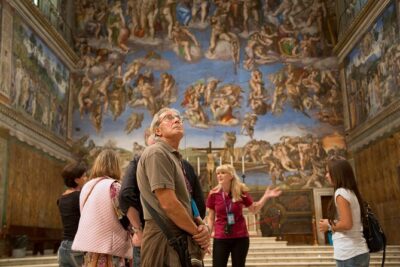
I like the way the tour keeps moving while still giving you real context—how artworks connect, how Spanish politics and patronage shaped artists, and how the museum layout matters. I also like the small group size, because the guide can actually pace the route and answer questions without steamrolling your attention.
One possible drawback: you won’t see everything in the Prado in 3 hours. Think of this as the best possible strategy for hitting major masterpieces and understanding the big links, not a full museum day.
In This Review
- Key highlights
- Why this 3-hour Prado strategy works
- Meeting at Goya’s monument and finding your bearings fast
- The Prado walkthrough: XV–XIX, with Spanish power behind it
- What each era feels like as you move
- Delfi’s approach: art history plus restoration eyes
- End in the Goya Black Paintings hall
- Inside-the-museum practicalities that actually matter
- Price and value: what $80.28 buys you
- Who should book (and who might not)
- Should you book Prado Museum Masterpieces?
- FAQ
- How long is the Prado Museum Masterpieces tour?
- Is the Prado admission ticket included?
- What language is the tour offered in?
- How large is the group?
- Where do we meet, and where does the tour end?
- Is photography allowed at the Prado?
- What’s the cancellation policy?
Key highlights
- Max 7 travelers for a more human pace inside a busy museum
- Chronological route (XV–XIX) focused on artists tied to Spain and the Spanish Monarchy
- Delfi’s art-historian and restoration perspective, so you notice more than images-in-a-frame
- Audio devices that work well when multiple groups are in the same rooms
- End at Goya’s Black Paintings hall, a strong closer for the whole sweep of Spanish art
- Links to images after the tour so you can review what you saw
Why this 3-hour Prado strategy works
The Prado is famous for a reason: one building holds more “you have to see this” paintings than most museums can manage in a week. But the bad news is the same for everyone—if you arrive with no plan, you end up doing a frantic loop and remembering almost nothing.
This tour solves that problem with time pressure you can handle. You get a guided walk through the museum’s key eras, so the collection stops feeling like a random set of masterpieces and starts feeling like a story. That matters because art in the Prado is rarely just art; it’s also religion, royal power, and artistic competition across centuries.
The other reason it works is the group size. With a maximum of 7, you’re not just waiting for a guide to catch up to you. You move at a steady pace, and the guide can adjust when a room is packed or when someone needs an extra moment.
You can also read our reviews of more museum experiences in Madrid


Meeting at Goya’s monument and finding your bearings fast
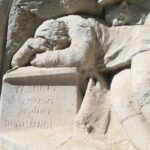
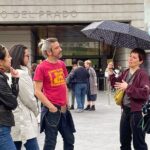
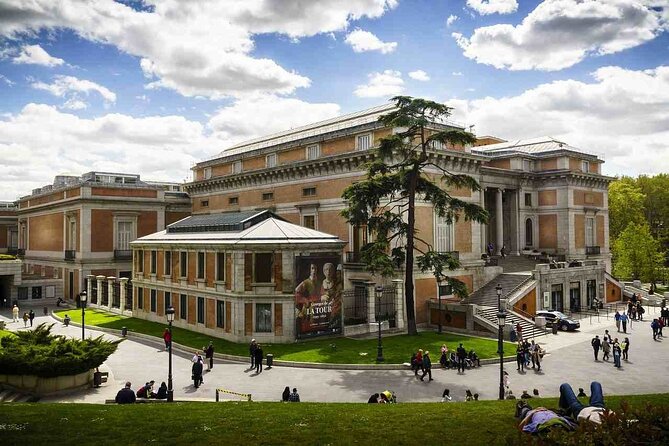
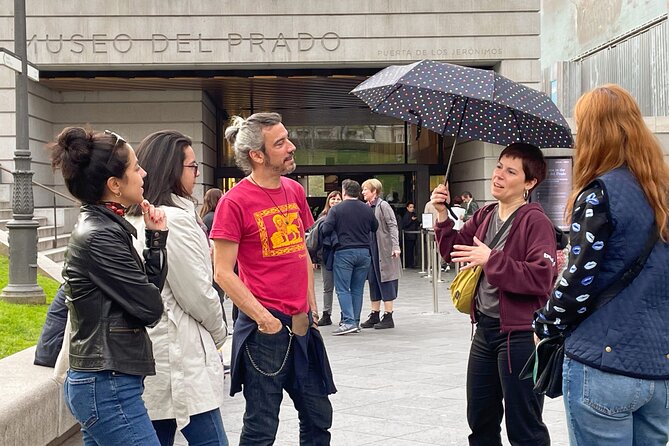
You meet at the Monument to Goya (C. de Felipe IV, s/n, Retiro, 28014 Madrid) starting 10:00 am. The address is right in the Retiro area, and it’s near public transport, which helps a lot on a busy Madrid day.
Starting near Goya is a smart psychological trick. Even before you enter the museum, your brain begins to expect drama, mood, and Spanish intensity. That sets you up for the tour’s ending in the hall where Goya’s Black Paintings are located.
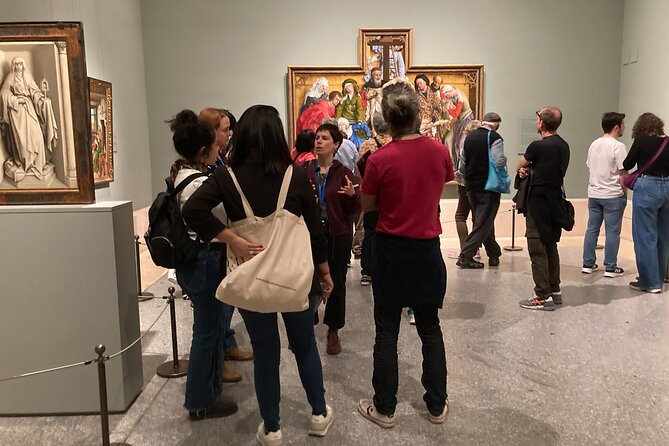
Once you’re inside, you’ll have a clearer sense of where you are in the museum. A good first impression in the Prado is about orientation, not selfies. The guide approach here is practical: you learn how to see, where to look, and what to compare as you move room to room.
The Prado walkthrough: XV–XIX, with Spanish power behind it
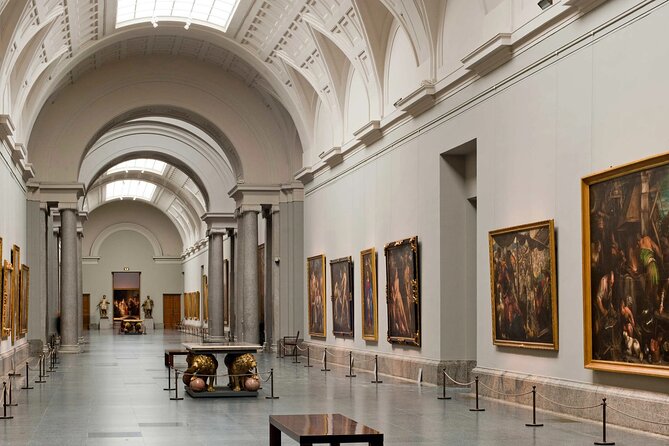
The tour’s heart is a chronological journey through XV to XIX centuries, with special attention to artists connected to Spain or working for the Spanish Monarchy. That time-based structure is useful because it stops the “favorite-painting guessing game.” You aren’t trying to decide what matters most; you’re being shown what changed, when it changed, and why.
You begin by learning about:
- The building’s origin
- The origins of the collections
- How the museum’s organization affects what you experience first
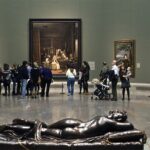
Then the route follows the centuries, placing major artists in order—Titian, El Greco, Rubens, Velázquez, and Goya (among others). Seeing these names in sequence is more than a checklist. It helps you notice shifts in style and subject matter as Spanish culture changes around them.
What each era feels like as you move
In the earlier centuries, your job is to recognize what art is trying to do—faith, authority, and a kind of crafted symbolism. The guide’s focus on context helps you understand why these paintings look the way they do and what they were expected to communicate.
As you move forward to the artists tied to Spain’s royal world, you start seeing how painting served power. Portraiture, religious works, and dramatic scenes aren’t separate categories in this museum. They’re related by patronage and the audience’s expectations.
By the time you reach the later periods, the tour emphasizes the emotional and technical range in Spanish art. The guide’s background as an art historian and restorer shows up here: you’re encouraged to look for details that make the work feel alive, not just old.
Delfi’s approach: art history plus restoration eyes
A big reason this tour earns a near-perfect score is Delfi’s way of explaining. The guide isn’t just pointing out famous names; she links artworks to their historic environment and to each other. That’s the difference between looking at paintings and actually understanding them.
Since Delfi works with an art-history and restoration lens, you’re more likely to notice what makes the paintings “work.” That can mean noticing how technique supports mood, or how a painter’s choices fit the era’s tastes. It also helps you compare influences—how artists learn from each other, and how Spanish artists absorb outside ideas and then adapt them.
One of the most memorable moments for many visitors is how the tour handles major artists like Velázquez and Goya without rushing them. You get a flavor of their contributions, their life and times, and how those connect to what came before.
Another smart touch: you don’t only get the most obvious crowd magnets. The tour includes works that broaden your understanding, including a surprising example from the workshop of Leonardo da Vinci that some people found shocking in the best way. That kind of detour is worth it because it reminds you the Prado isn’t just Spanish—Spain’s collection history pulled in big European talent too.
A few more Madrid tours and experiences worth a look
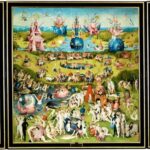
End in the Goya Black Paintings hall
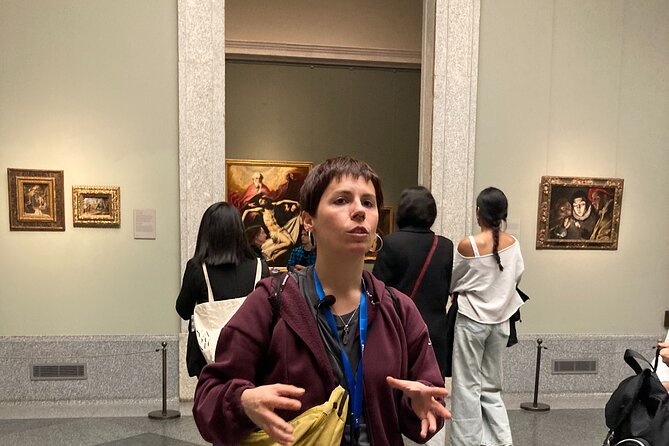
The tour ends in the museum hall where Goya’s Black Paintings are placed. Ending there works because it functions like a climax. After walking through centuries, you arrive at a set of works that feel raw, tense, and unmistakably late-career.
If you’re the type who worries you’ll miss the emotional impact of Goya, don’t. A well-paced guided tour makes it more likely you’ll stand still long enough to read the mood and the craft. You’re not just arriving at the end—you’re arriving with context.
It’s also a satisfying finish because it gives your Prado visit a clear arc: origins and collection-building, a chronological story, major Spanish artists, then the darker, more personal peak at the end.
Inside-the-museum practicalities that actually matter
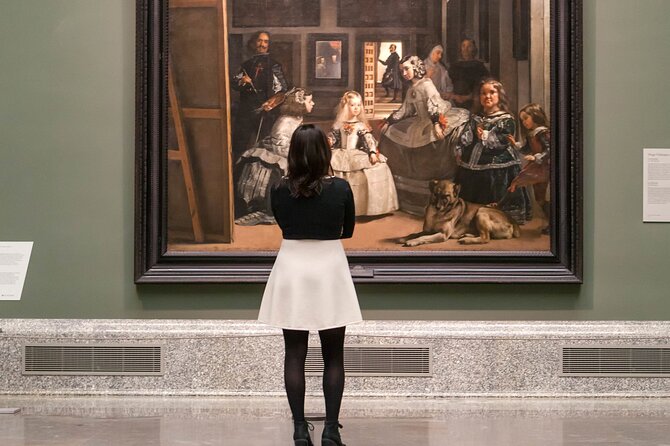
The tour includes Prado admission and a professional guide, and it runs for about 3 hours. For a museum of this size, that timing is realistic if you want structure and meaning rather than exhaustion.
A few practical notes that affect your comfort and attention:
Audio devices help a lot. The Prado is busy, and more than one tour group can be in the same rooms. These devices are meant to keep the guide’s explanations clear without you constantly leaning in or losing the thread when people shuffle around.
Breaks are part of the plan. You might find the guide considerate about short biological breaks, and there may be time for a quick coffee break at the café in the Prado area if the schedule allows. This is a small detail, but it changes the experience. A painting view improves when you don’t feel rushed or physically strained.
No photography in the Prado (at least inside the museum rules). One of the unexpected perks here is that it forces you to look, not record. And after the tour, Delfi reportedly shares links to images of the works covered, which gives you a digital souvenir for later studying—without needing to screen-record your whole visit.
Price and value: what $80.28 buys you
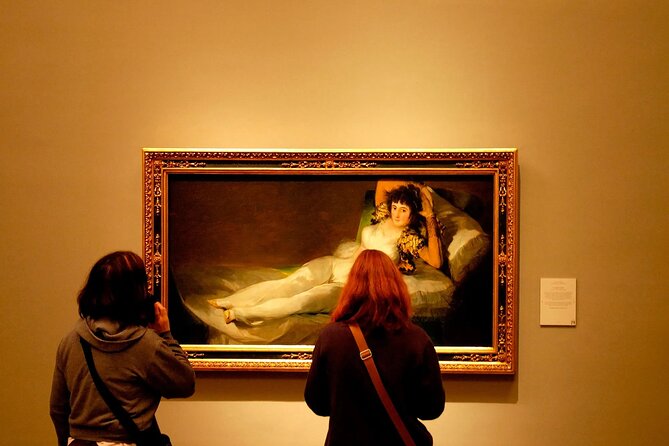
At $80.28 per person, this tour isn’t “cheap,” but it’s also not priced like a luxury retreat. You’re paying for two concrete things:
1) Prado admission
2) A guide for about 3 hours with a route through the museum’s key periods
What makes it feel like value is the small group size and the guided structure. The Prado is the kind of place where you can burn hours and still not understand the difference between artists’ eras or why the collection was assembled the way it was. Paying for the right route saves you time and turns the visit into something you can remember.
Also, if your Madrid schedule is tight, the payoff increases. You’re not trying to fit the Prado into leftover hours—you’re choosing the hour-block that’s designed for meaning.
Who should book (and who might not)
This is a strong fit if:
- You want a first-time Prado experience that still feels deep and organized
- You care about Spanish art from XV–XIX and how politics, religion, and patronage shape what gets painted
- You prefer small groups where your guide can actually keep pace with your questions
- You want a guide with an art-history and restoration perspective, not just a facts-on-posters approach
You might not love it if:
- You want to roam the Prado at your own speed for an entire day
- You’re collecting every single painting, not learning a few masterworks well
- You don’t like tours that move with a planned route (even a good one can feel “too structured”)
For most people, this tour is the best move when you have one Prado window and you want it to count.
Should you book Prado Museum Masterpieces?
If you’re heading to Madrid for a short trip and the Prado is a must, I’d book this. The biggest reason is simple: you get a coherent story through time, major Spanish artists, and an ending at Goya’s Black Paintings—without wasting hours lost in galleries that can overwhelm you.
Book it especially if you:
- Want context, not just name-dropping
- Appreciate clear explanations delivered in English
- Like the idea of audio support in a crowded museum
- Prefer a small group (max 7) over the chaos of large tours
If the Prado is your only real museum plan and you truly want “see everything,” then you might choose a self-guided approach. But if you want the Prado’s masterpieces with a clear route and stronger understanding, this is one of the most practical ways to do it in limited time.
FAQ
How long is the Prado Museum Masterpieces tour?
It’s about 3 hours.
Is the Prado admission ticket included?
Yes. Prado Museum admission is included in the tour price.
What language is the tour offered in?
It’s offered in English.
How large is the group?
The tour has a maximum of 7 travelers.
Where do we meet, and where does the tour end?
You start at the Monument to Goya (C. de Felipe IV, s/n, Retiro, 28014 Madrid). The tour ends in the hall where Goya’s Black Paintings are placed.
Is photography allowed at the Prado?
Photography is not permitted inside the Prado.
What’s the cancellation policy?
You can cancel for a full refund if you cancel at least 24 hours before the experience start time. Free cancellation is available.