REVIEW · WASHINGTON DC
Smithsonian Natural History + Air & Space Museum Tour 8ppl Max
Book on Viator →Operated by Babylon Tours DC · Bookable on Viator
That Henry the elephant greets you is a great start. In just 5.5 hours, you’ll cover two of Washington, DC’s biggest Smithsonian hits with skip-the-line help and a guide who keeps things moving. You’ll bounce from fossil bones and gems at Natural History to early aviation and real space artifacts at Air & Space, with a small group that makes it easier to ask questions.
I especially love how this is designed for first-timers who don’t want to waste time picking a route through two huge museums. The max 8-person setup means you get more attention from your guide, and the tour structure hits major galleries without turning it into a sprint. I also like that admission is free, so your money mostly pays for the guide, timing, and crowd navigation.
One drawback to consider: you’re seeing a lot in one day, so if you prefer to drift at your own pace, parts may feel a bit tightly scheduled. Also, museum security rules mean you’ll need to travel light with bags limited to small options.
In This Review
- Key things you’ll notice on this tour
- Why Two Smithsonian Icons Fit Into One 5.5-Hour Day
- The Small-Group Advantage: Less Herding, More Guidance
- Smithsonian National Museum of Natural History: Fossils, Henry the Elephant, and Hope Diamond Energy
- Natural History Logistics That Make or Break Your Experience
- Crossing the Mall: The Break That Helps You Keep Up
- National Air and Space Museum: From Wright Flyer to Space Hardware
- What 2 Hours in Air & Space Really Means
- When the Pace Feels Great (and When It Might Not)
- The Price: What $166.15 Buys When Museum Entry Is Free
- Who This Tour Suits Best
- Should You Book This Smithsonian Natural History + Air & Space Tour?
- FAQ
- What museums are included in this tour?
- How long is the tour?
- What is the group size limit?
- Is museum admission included?
- Where do we meet and where does it end?
- What should I know about cancellation?
Key things you’ll notice on this tour

- Max 8-person semi-private format keeps the experience personal and question-friendly
- Skip-the-line access helps with crowd flow at two of the most popular Smithsonian museums
- Natural History targets Fossil Hall highlights like Mastodon, T-Rex, and Diplodocus
- Air & Space packs Wright Flyer to space hardware in a tight 2-hour visit
- Guides bring the artifacts to life with stories, humor, and patience for big kids and little kids
Why Two Smithsonian Icons Fit Into One 5.5-Hour Day
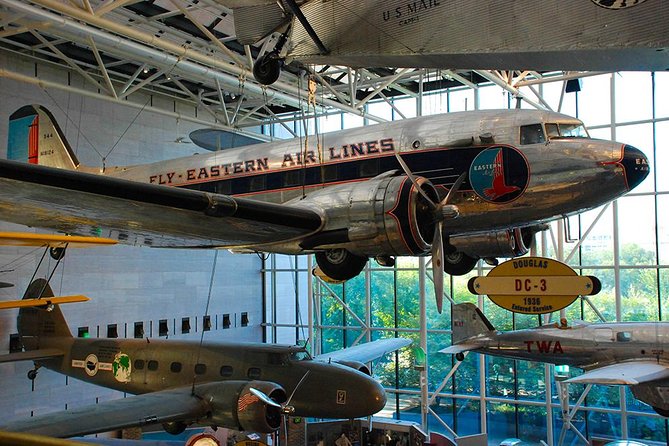
This tour is built for your one-day reality. Smithsonian museums are free, but they can feel like an endurance test. Here, you get a guided plan that covers what most people come for, without you spending your best morning figuring out where to start.
The schedule is simple: you spend 2 hours 30 minutes at Natural History, then you take a break and cross the National Mall to Air & Space for about 2 hours. You’re not trying to see every room in both museums. You’re getting the “big moments,” plus the context that makes them stick.
The value is also clearer when you think about it this way: you’re not paying for museum entry. You’re paying for a guide to cut through decision fatigue, reduce backtracking, and focus you on the most memorable galleries.
You can also read our reviews of more historical tours in Washington DC


The Small-Group Advantage: Less Herding, More Guidance
The tour caps at 8 travelers, and the operator calls it semi-private because the group size is never more than that. In practice, that matters. You get a real guide conversation instead of standing at the back hoping you can hear over the crowd.
It shows up in the kinds of skills guides bring. In the feedback for this tour, guides like Rachel, Ryan, Brenda, Rebecca, Tim, Amanda, and Christopher are repeatedly praised for patience and interactive explanations—especially with kids. That kind of guiding is useful even if you’re an adult. You’ll get answers to the weird questions you actually want to ask, like how a particular aircraft worked, or why a dinosaur display is arranged the way it is.
One more smart bit: because the group is small, your guide can shift pace if the crowd density changes. Big museums don’t stay consistent hour to hour, and this format gives your day a little flexibility.
Smithsonian National Museum of Natural History: Fossils, Henry the Elephant, and Hope Diamond Energy
Natural History is the museum that grabs you by the shirt collar. You start with its scale and personality. The tour description sets the tone immediately with Henry the elephant, a huge taxidermied presence that sounds like a photo-op but also works as a “welcome, pay attention” moment.
Here are the specific hits you can plan around during your guided time:
- You’ll see the museum’s legendary fossil and wildlife focus, including the recently renovated Fossil Hall with Mastodon, T-Rex, and Diplodocus looming over your route.
- You’ll cover one of the Smithsonian’s most famous objects: the Hope Diamond, described here as supposedly cursed. Even if you don’t buy the curse part, it’s a strong anchor for learning about gems, history, and display choices.
You’ll also get a “why it matters” layer. Natural History can be overwhelming if you walk in cold: you’re surrounded by categories, species, geologic time, and displays that feel like they run forever. A guide helps you connect the dots so you remember more than what you happened to photograph.
Dress and bag rules matter here. The museum has security screening, and large bags or suitcases aren’t allowed. Stick to a handbag or a small thin bag pack so you don’t waste time during the line.
Natural History Logistics That Make or Break Your Experience
This is a classic Smithsonian morning problem: you want to see highlights, but you also don’t want to spend your energy fighting the building. The skip-the-line portion is aimed at getting you moving through the busiest areas faster, and in some cases you may still see lines form because of security protocols.
A few practical tips for you:
- Wear shoes you can stand in for a while. You’ll move room to room at a guided rhythm.
- If you’re with kids, think about using bathroom breaks early. You’ll have a fixed day arc, so don’t wait until everyone is restless.
- Pay attention when your guide flags quieter areas. Some rooms have restricted or very quiet right-to-speak rules, and your guide will tell you where that applies before you enter.
A tour like this works best when you’re willing to be guided for a set chunk of time and then go freestyle later on your own.
Crossing the Mall: The Break That Helps You Keep Up
Between the two museums, you get a break. That’s not just “nice.” It’s necessary. Natural History and Air & Space are both popular, both full of people, and both physically demanding if you’re standing and walking constantly.
That pause helps you reset your attention so you can actually enjoy the second stop instead of zoning out halfway through. It also sets you up for the different vibe of Air & Space, which is more technical and story-driven around engineering milestones rather than natural-world specimens.
You can also read our reviews of more museum experiences in Washington DC






National Air and Space Museum: From Wright Flyer to Space Hardware
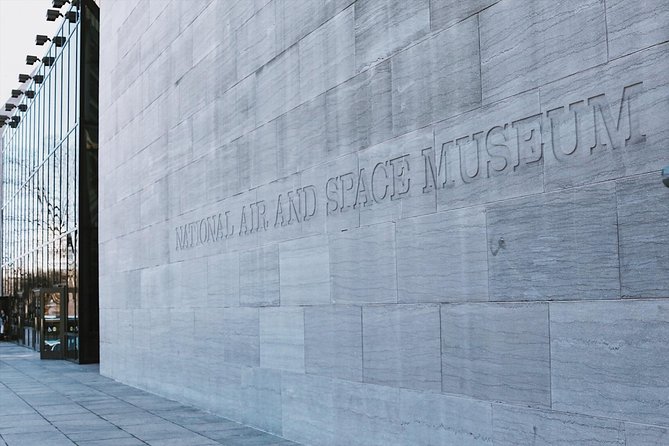
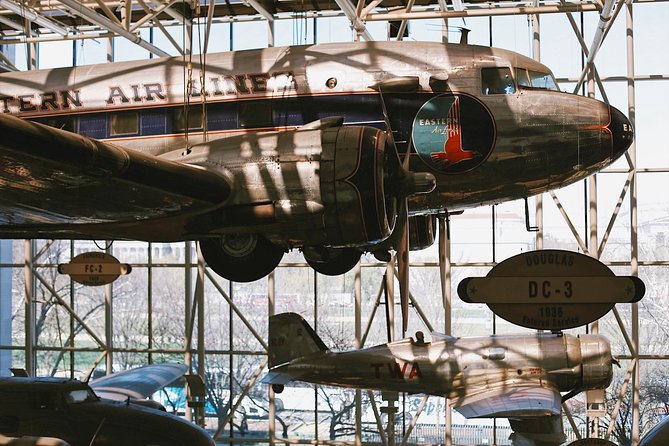
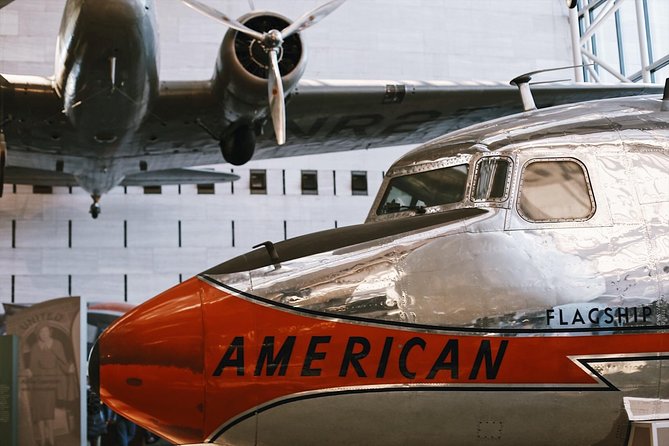
If Natural History is about discovering what’s on Earth, Air & Space is about challenging what’s possible.
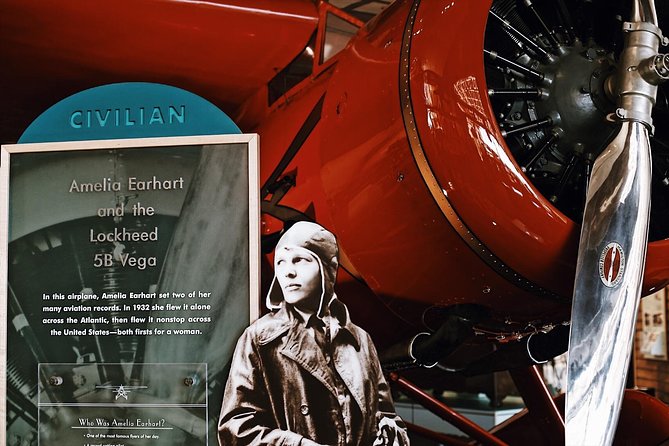
You’ll start with aviation history, including the Wright Brothers and the original Wright Flyer from 1903, which gets its own exhibition space in the tour narrative. Then you’ll move through the timeline toward later milestones—like the first military flyer in 1909 (also credited to the Wright Brothers in the tour description). The point is to show you how early experiments turned into real-world aviation confidence.
After that, the tone shifts into space:
- You’ll spend time looking at actual artifacts tied to the push to conquer the unknown.
- You’ll also connect the dots to the human side of exploration: the courage, the risk, and the idea that imagination drives big breakthroughs.
One of the best parts of doing a guided hit here is that guides often know how to point out what to look for. In the feedback for this tour, people specifically mentioned excitement around astronaut gear—like an example highlight of the Neil Armstrong outfit and the returning capsule—and even pop-culture touches such as Mr. Spock’s ears. Even if the exact objects you focus on vary by route and current gallery layouts, the guided approach helps you notice what you might otherwise skim.
What 2 Hours in Air & Space Really Means
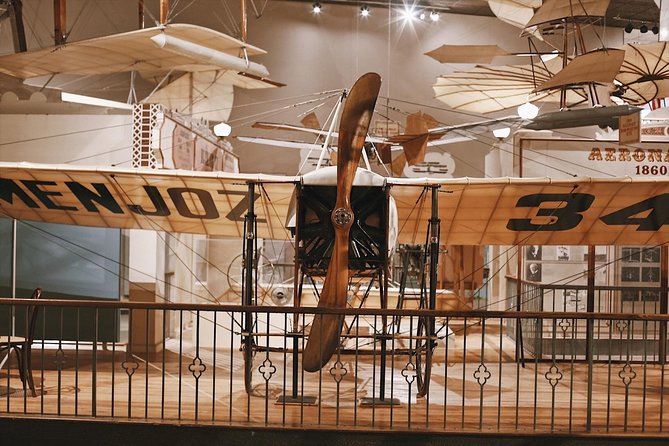
Air & Space is big. In only about 2 hours, you won’t see everything. That’s the tradeoff. But the guided plan prevents the most common mistake: wandering into a section that grabs you while missing the core exhibits you came for.
Think of this as your “greatest hits + context” block. You’ll likely leave wanting a return visit, especially if you’re an aviation nerd or a sci-fi fan. That’s not a failure of the tour—it’s a byproduct of choosing a day plan that fits in one half-day.
When the Pace Feels Great (and When It Might Not)
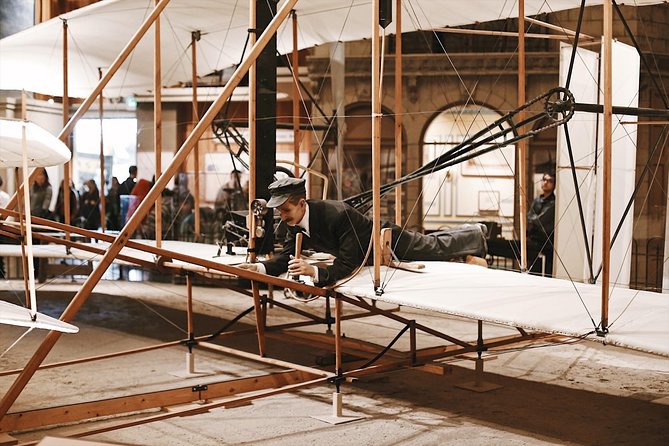
This tour runs about 5 hours 30 minutes, starting at 10:00 am. The structure is efficient: Natural History first, then Air & Space, with a break between.
It usually feels great if:
- You’re short on time in DC.
- You want the big highlights without researching for hours.
- You like having a guide translate what you see into plain language.
It might feel tight if:
- You hate being on a clock.
- You want to read every placard slowly.
- You’re the type who wants to stop to sketch, or you need lots of solo wandering time before you move on.
That’s why this is labeled semi-private and capped at 8. The goal is to keep the schedule firm enough to work, but flexible enough that you don’t feel like you’re herded like a school group.
The Price: What $166.15 Buys When Museum Entry Is Free
At $166.15 per person, this is not the cheapest way to do two free museums. Here’s the value logic that makes it make sense.
Museum entry at the Smithsonians is free. So your cost is mostly paying for:
- A guide who chooses a route that avoids wasting time,
- Skip-the-line access aimed at reducing peak-hour friction,
- A semi-private group cap so you can actually interact,
- A tight time plan that helps you cover both museums in one day.
If you were to do both museums on your own, you could save money. But you’d trade that for uncertainty: where to go first, how to handle crowds, and what to prioritize so you don’t accidentally miss the most meaningful exhibits.
So I’d frame it like this for you: if you have limited time and want maximum enjoyment with less stress, this tour can be worth it. If you have two days, love wandering, and don’t mind figuring it out, DIY might win.
Who This Tour Suits Best
This one fits well if you’re any of these:
- Families who want a guided tour that keeps kids engaged (the feedback praises guides for answering lots of questions with patience).
- First-time DC visitors who want both museums without a full itinerary planning day.
- Aviation and space fans who’ll enjoy moving from early Wright-era aircraft to space artifacts.
- Natural History fans who love dinosaurs, fossils, wildlife, and iconic objects like the Hope Diamond.
You might want to reconsider if you want total freedom. This is still a guided program with set time chunks. You can wander a little around the guided route, but you’ll be working inside the tour’s flow.
Should You Book This Smithsonian Natural History + Air & Space Tour?
I’d book it if you want a smart, guided way to experience two major Smithsonian museums in one shot, without spending your day lost in crowds. The biggest wins for you are the small group size and the guide-led storytelling that turns display rows into actual understanding. Henry the elephant, the Fossil Hall lineup, the Hope Diamond moment, the Wright Flyer context, and the space artifacts all feel like they land better with a guide than with a map and hope.
I would not book it if your priority is slow, solo pacing and you’re comfortable building your own route. Also, if you’re sensitive to standing and walking for long stretches, note that the tour is aimed at people with moderate physical fitness, and museum security/bag rules can add extra friction.
If you do book, do one thing to make your day easier: pack light and plan for standing. Then let your guide do the heavy lifting.
FAQ
What museums are included in this tour?
You’ll visit the Smithsonian National Museum of Natural History and the National Air and Space Museum.
How long is the tour?
The duration is about 5 hours 30 minutes.
What is the group size limit?
The tour is a semi-private format with a maximum group size of 8 travelers.
Is museum admission included?
Yes. Admission tickets are listed as free for both museums, and the tour includes skip-the-line semi-private access.
Where do we meet and where does it end?
You start at 1010 Madison Dr NW, Washington, DC 20004. The tour ends at Smithsonian’s National Air and Space Museum, 650 Jefferson Dr SW, Washington, DC 20024.
What should I know about cancellation?
Free cancellation is available up to 24 hours in advance for a full refund.