REVIEW · WASHINGTON DC
National Archives + American History Museum Tour 8ppl Max
Book on Viator →Operated by Babylon Tours DC · Bookable on Viator
Two museums, one smart history day. This small-group tour is built to help you cover the National Archives and the Smithsonian American History Museum in one smooth stretch of the National Mall. I like that it pairs real primary documents with stories that explain what they changed, and what they left unresolved.
Two things I really like: you get skip-the-line entry at the National Archives, and you also end with big, recognizable artifacts at the Smithsonian (from the Star-Spangled Banner story to Dorothy’s Ruby Red Slippers). The one drawback to keep in mind is mobility limits: the tour isn’t available for guests with walking disabilities or wheelchair users.
You’ll start in the National Archives Rotunda, facing the handwritten Charters of Freedom, then move into the Rubenstein Gallery for the Magna Carta and the evolving meaning of citizenship. The second half at the Smithsonian runs about 2.5 hours, so it’s focused rather than slow and leisurely—great if you like highlights, less so if you want to wander for hours.
In This Review
- Key Highlights You’ll Care About
- Skip-the-Line Power Move at the National Archives Rotunda
- Rubenstein Gallery: Magna Carta and the Meaning of Citizenship
- The Handoff to the Smithsonian: Lunch on Your Terms
- Smithsonian American History Museum: Big Icons and Unexpected Stories
- What the Small Group Size Changes (For the Better)
- Logistics That Can Make or Break Your Day
- Price and Value: What $166.15 Buys You
- Who Should Book This Tour (and Who Should Rethink It)
- Should You Book This National Archives + American History Tour?
- FAQ
- Where do I meet the guide, and where does the tour end?
- How long is the tour?
- Is admission included?
- How big is the group?
- Do I need hotel pickup or drop-off?
- What should I do about lunch?
- Is the tour wheelchair accessible?
- Do I get a full refund if I cancel?
Key Highlights You’ll Care About
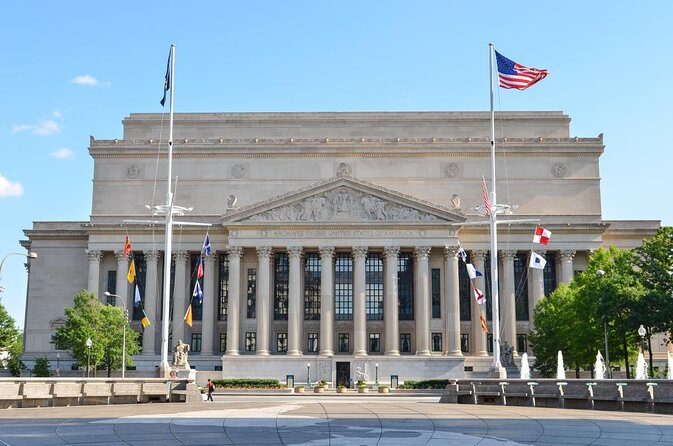
- Skip-the-line at the National Archives Museum so you can spend more time inside and less time stuck at security and entry
- Charters of Freedom in the Rotunda, with guide storytelling about how the United States took shape
- Rubenstein Gallery focus on Magna Carta and citizenship, including how ideas like equality evolved over time
- Top American icons plus pop culture, including the Greensboro lunch counter and Dorothy’s Ruby Red Slippers
- Max group size of 8, which keeps the pacing tighter and makes it easier to ask questions
Skip-the-Line Power Move at the National Archives Rotunda
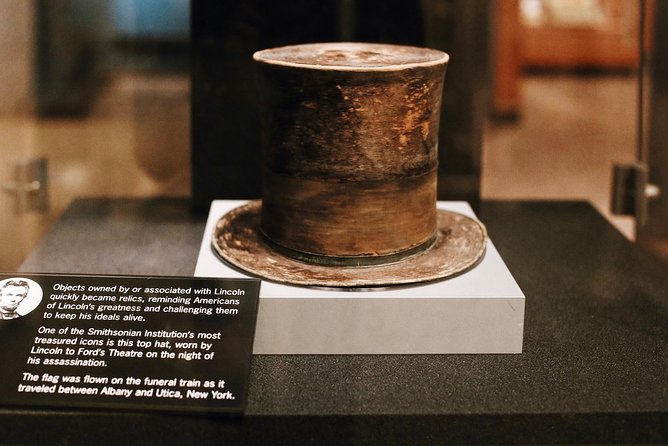
Your morning starts at the National Archives Museum on the National Mall, meeting your guide at 10:00 am. This is one of those tours that values time the way locals do: you go in faster, then you use that saved time to actually read, look closely, and listen.
The main draw is the Rotunda and the handwritten Charters of Freedom. If you’ve ever seen photos, it’s still different in person—the scale and the handwriting make the documents feel less like textbook facts and more like human work done under pressure. Your guide ties what you’re seeing to the political and philosophical choices that shaped the early United States.
This isn’t a museum lecture where you glaze over. The guide’s job is to turn the museum’s quiet grandeur into a storyline: why these documents mattered, how people argued, and what the new nation promised versus what it practiced in reality. That approach is what makes the Rotunda visit worth your full attention rather than a quick stop for a photo.
You can also read our reviews of more historical tours in Washington DC


Rubenstein Gallery: Magna Carta and the Meaning of Citizenship
After the Rotunda, you’ll move into the Rubenstein Gallery for a deeper philosophical thread. The tour highlights a 1297 copy of the Magna Carta, which is a smart pairing for American history because it helps you trace how legal ideas traveled and transformed.
This is where the tour leans into questions, not just dates. You’ll hear about citizenship as a changing concept—what it meant, who was counted, and how inclusion has shifted over time. It’s also a helpful reminder that even foundational ideals were argued over, not simply handed down.
If you like learning that has real-world consequences, this part connects well. Citizenship isn’t just a word you see on forms; it’s a social agreement backed by laws, and those laws have never been static. The guide encourages you to look at the documents as living frameworks, not sealed museum pieces.
The Handoff to the Smithsonian: Lunch on Your Terms
Once you’ve done the Archives portion, you’ll get a break for lunch, but it’s on your own. That matters because the National Mall area gives you options—quick bites nearby, or you can slow down and sit for a minute before you return to walking.
Plan for a little energy management. The total tour duration is about 5.5 hours, and that includes the lunch break, which means both museum segments have to stay efficient. If you arrive at Smithsonian hungry and rushed, you’ll feel it in your museum time.
Also keep in mind that Smithsonian security and museum rules can affect your flow. The tour notes that you may still see some lines, even with skip-the-line style access at other points, and you should avoid large bags or suitcases. Handbags or small, thin bag packs are allowed, which is the kind of detail that saves you stress.
Smithsonian American History Museum: Big Icons and Unexpected Stories
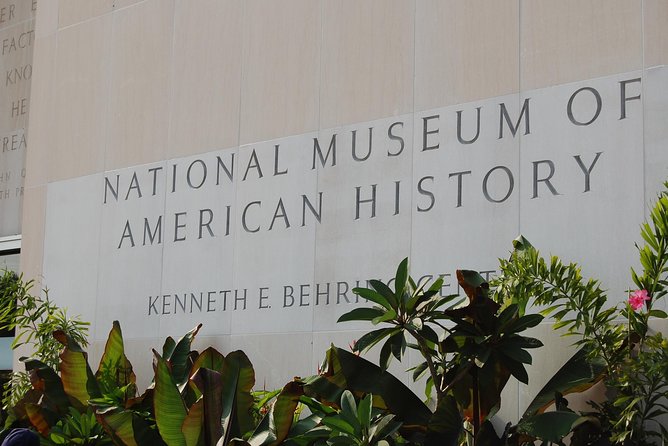
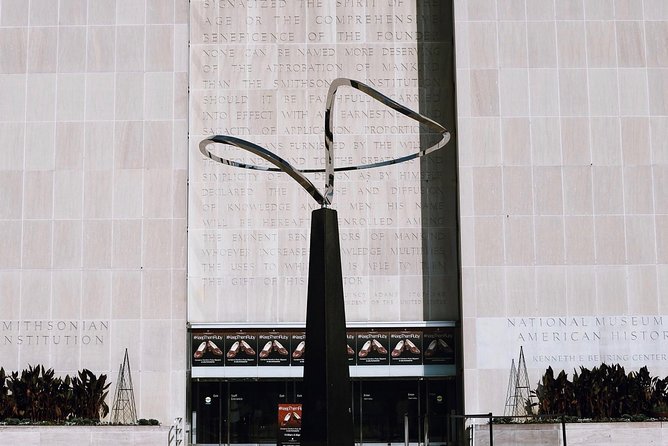
The second half is at the Smithsonian National Museum of American History, and the time on-site is about 2 hours 30 minutes. This section is the place where the tour balances serious U.S. milestones with objects people instantly recognize.
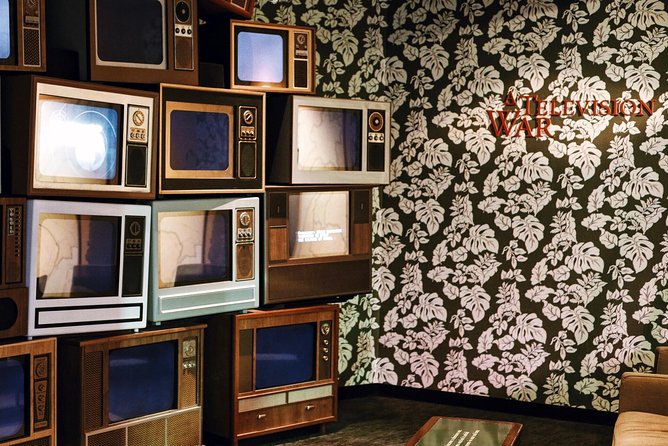
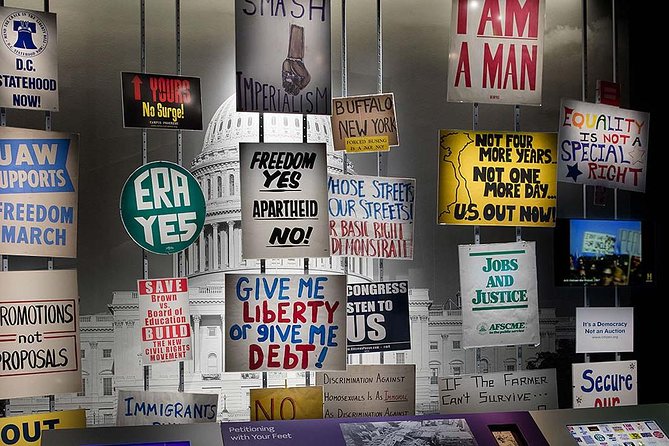
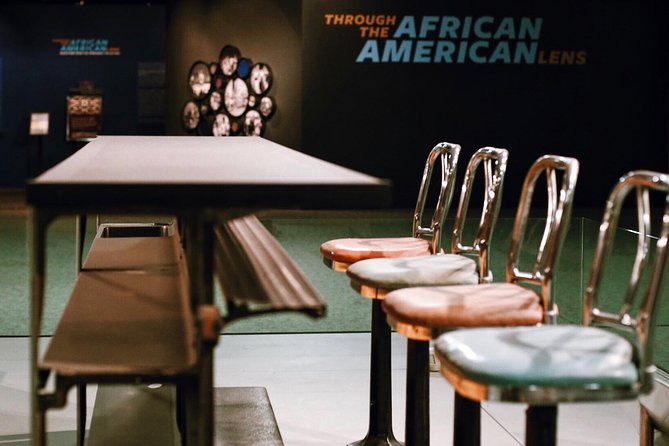
You’ll see highlights that anchor major moments: George Washington’s Revolutionary sword, the flag connected to the story that helped inspire the National Anthem, and items tied to the Civil Rights Movement like the Greensboro lunch counter. The way these are presented can help you understand history as a chain of events—political decisions, social pressure, and culture pushing back.
Then the Smithsonian flexes its fun side. The tour includes the First Ladies exhibit (including gowns) and the Hollywood connection with Dorothy’s Ruby Red Slippers from The Wizard of Oz. Seeing those objects in the same day as founding documents is exactly why this two-museum combo works—you get both ideology and imagination.
If you care about how museums decide what matters, this is also a useful lesson. The guide explains why certain artifacts, out of an enormous collection, become touchstones for national identity. That’s not just trivia; it changes how you look at the museum once you’re standing in front of something.
What the Small Group Size Changes (For the Better)
This tour caps at 8 people, and the operator states a guarantee of no more than 8. For a place like Washington, D.C., that small size is practical: you move together without feeling herded into a giant crowd, and you can actually hear the guide.
It also helps the guide keep pace with your group. In the best cases, the tour stays flexible about what you want to focus on most, without losing the main highlights. A couple of guide names showed up in the feedback you’ll hear in your mind before you go: Brenda and Christina are both associated with standout guiding and a friendly, engaging style.
That small group effect matters if you don’t want to spend your day playing museum dodgeball. You’ll get a clear structure—Archives first, Smithsonian second—without the feeling that you’re missing half the day because you got separated in line.
You can also read our reviews of more museum experiences in Washington DC






Logistics That Can Make or Break Your Day
Meeting point is straightforward: National Archives Museum, 701 Constitution Ave. NW, Washington, DC 20408, starting at 10:00 am. The tour ends at the Smithsonian National Museum of American History, 1300 Constitution Ave. NW, Washington, DC 20560, so you’ll want a plan for afterward near the Mall.
You should also know what’s not included. Hotel pickup and drop-off aren’t part of the price, so you’ll likely use taxi or rideshare to get there. For a 10:00 am start, that’s important—you don’t want to burn time figuring out transit when you could be walking into the Rotunda.
One admin detail that’s worth treating seriously: the provider says you must provide a mobile phone number (with country code). That’s usually for day-of updates and coordinating the shift between museums.
Finally, dress and speaking rules can affect your experience. The tour notes that appropriate dress is required for entry into some sites, and some areas can be quiet or restricted for speaking. Your guide will let you know before you enter those spots, which keeps you from accidentally breaking the museum etiquette.
Price and Value: What $166.15 Buys You
At $166.15 per person, this isn’t the cheapest way to see two major Washington institutions. But it does include what most self-guided trips don’t: a professional guide, structured timing across both museums, and admission for the National Archives portion.
On paper, Smithsonian National Museum of American History admission is free, so your money there mostly buys interpretation and selection. That’s the value angle: you’re paying to avoid the problem of wandering a huge museum and leaving with only a handful of photos and no clear storyline.
The National Archives part also includes an admission ticket, and the big selling point is fast entry so you can spend more time experiencing the collection. If you’d otherwise pay for a separate guide or lose time to lines, the package can start to look more reasonable.
There’s also a group discount element built in. With max group size at 8, you get more personal attention than you would with mass tours, and the tour is usually booked about 43 days in advance on average, which suggests solid demand.
Who Should Book This Tour (and Who Should Rethink It)
This is a great fit if you want American history that’s organized, specific, and anchored to famous objects. You’ll enjoy it if you like your museums with a narrative thread—how people argued, what they built, and how citizenship and civil rights shaped the story.
It’s also a strong choice if you’re short on time in D.C. The two-in-one structure helps you make progress without turning your day into a logistics marathon.
But don’t book it if mobility is a concern beyond the tour’s limits. The tour explicitly states it’s not available for walking disabilities or wheelchair users, so you’d need a different plan for accessibility.
It can still be useful for some guests with limited mobility who can manage the walking and museum movement, especially if a guide helps keep things comfortable. One guide, Brenda, was praised for going the extra mile for a blind guest and a partner with mobility issues, but that doesn’t override the tour’s stated policy—use that as a hopeful sign about guidance, not a guarantee.
Should You Book This National Archives + American History Tour?
Book it if you want the best “high-impact” day on the National Mall: Charters of Freedom in the Rotunda, Magna Carta and citizenship context, then Smithsonian American history with both serious artifacts and pop-culture icons. For $166.15, the value comes from guidance, tight timing, and the skip-the-line advantage at the Archives.
Skip it if you prefer museum wandering over structure, or if you need wheelchair access or support beyond what the tour offers. Also think twice if your schedule is so tight that even a small timing hiccup would stress you out—because the tour day depends on moving from one museum to the next.
If you’re aiming for a clear, memorable storyline in one day, this is the kind of guided combo that helps you leave knowing more than you walked in knowing.
FAQ
Where do I meet the guide, and where does the tour end?
You meet at the National Archives Museum, 701 Constitution Ave. NW, Washington, DC 20408, starting at 10:00 am. The tour ends at the Smithsonian National Museum of American History, 1300 Constitution Ave. NW, Washington, DC 20560.
How long is the tour?
The tour runs for about 5 hours 30 minutes, including a lunch break.
Is admission included?
Admission is included for the National Archives Museum. The National Museum of American History admission is free.
How big is the group?
The tour has a maximum of 8 travelers, with a guarantee of no more than 8 people in the group.
Do I need hotel pickup or drop-off?
No. Hotel pickup and drop-off are not included. The tour recommends using Uber or taxi.
What should I do about lunch?
Lunch is not included, so you’ll need to buy your own meal during the break.
Is the tour wheelchair accessible?
No. The tour is not available for wheelchair users or guests with walking disabilities.
Do I get a full refund if I cancel?
You can cancel up to 24 hours in advance for a full refund. If you cancel less than 24 hours before the experience starts, the amount paid is not refunded.