REVIEW · WASHINGTON DC
Smithsonian Air & Space Museum Guided Tour 8ppl Max
Book on GetYourGuide →Operated by Babylon Tours DC · Bookable on GetYourGuide
That first Apollo moment hits fast. This guided Smithsonian Air and Space Museum tour turns a huge, sometimes-chaotic museum into a clear route with big-ticket artifacts and scientist-level stories, all in about 150 minutes. I like that you get a local English-speaking guide who connects early flight to the Space Race without drowning you in plaques.
What I really like: you’re not just looking at history—you get to see the Apollo 11 Command Module, plus learn about Buzz Aldrin’s spacesuit and moon boots, and you’ll even touch real moon rock when it’s available in the rotation. Second, you’ll also hit cornerstone aviation stops like the Wright Brothers’ 1903 aircraft and the Spirit of St. Louis, so the tour feels like one connected story instead of random rooms.
One consideration: the museum is under major construction, so some exhibits may not be on display and your guide may adjust the route. If you’re coming during a heavy renovation phase, go in flexible and ready to follow the guide’s plan.
In This Review
- Key things that make this tour worth your time
- Entering the Air and Space Museum with a plan (not a maze)
- Where you meet (and how to prep so security doesn’t slow you down)
- The flight origins stop: Wright Brothers and Spirit of St. Louis
- Apollo 11 Command Module and the moon rock moment
- International Space Station model: seeing orbit as a system
- The museum is under construction: how that affects your day
- Skipping the line and traveling light for a smoother visit
- Price and value: is $95 per person a smart spend?
- Who should book this tour (and who might not love it)
- Should you book the Smithsonian Air and Space guided tour?
- FAQ
- How long is the Smithsonian Air and Space Museum guided tour?
- Where is the meeting point?
- What group size should I expect?
- Do I need to line up for tickets?
- What are the main highlights I should plan for?
- Is touching moon rock part of the tour?
- What ID and bag rules should I follow?
- Is the tour wheelchair accessible?
- What is the cancellation policy?
Key things that make this tour worth your time
- Max 8 people, small-group feel so you can actually hear the guide and ask questions without shouting over a crowd
- Apollo 11 Command Module plus moon rock touch for that rare hands-on, awe-with-context experience
- Wright Brothers Flyer and Spirit of St. Louis in one run so early aviation doesn’t get lost among the space stuff
- International Space Station model to help you picture what the museum calls mission reality, not just diagrams
- Storytelling from the guides (I especially like how guides such as Rebecca and Paul tend to bring reenactment-style context and memorable details)
- Freeze-dried ice cream option if you want a small, fun add-on to the space theme
Entering the Air and Space Museum with a plan (not a maze)
The Smithsonian National Air and Space Museum is big enough to feel like a whole city block system. Without guidance, you can spend your precious time walking, doubling back, and reading signs that don’t quite connect. This tour is built to stop that problem. You get a clear path through the biggest air-and-space milestones, at a pace that works even when you’re not a hardcore aviation nerd.
The best part is the way the guide ties eras together. You start with the roots—how flight became possible—then the story accelerates into the Space Race, and you end with what astronauts do today (in a way that makes the mission feel current, not dusty). I also like that you’ll hear a mix of historical and scientific explanations, so you get both the human drama and the engineering logic.
Because the experience is guided, you’re not stuck decoding every exhibit. Instead, you get pointed context: what matters, what changed, what people feared, and what worked anyway. It’s the difference between seeing a museum and actually understanding why it matters.
You can also read our reviews of more guided tours in Washington Dc


Where you meet (and how to prep so security doesn’t slow you down)
You meet your guide 10 minutes before the tour starts at the base of the sculpture in front of the Air & Space building entrance—specifically the entrance facing the lawn of the DC Mall. Show up early enough to settle your group and use the bathroom if you need it. Museums always seem to force that decision at the exact wrong moment.
Plan for security to be strict. You should bring a passport or ID. And keep your bag situation simple: luggage or large bags are not allowed, and only handbags or small thin bag packs can go through. That means you’ll want to travel light. If you bring a bulky backpack, you’ll probably spend time figuring out what to do with it instead of heading into the exhibits.
Dress matters too. Some sites on the tour require appropriate dress for entry, so if you’re wearing something casual-but-showy, it’s worth checking ahead. Also note that some rooms have rules about quiet or restricted speaking. Your guide will clue you in before you enter those areas, which helps you avoid accidental awkwardness.
The flight origins stop: Wright Brothers and Spirit of St. Louis
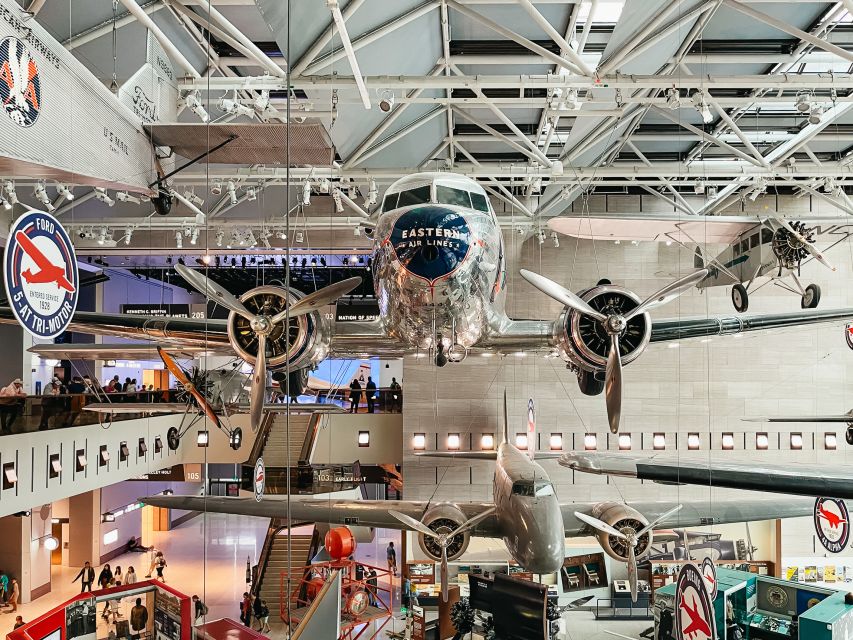
One of the smartest things about this tour is that it doesn’t treat early aviation like a warm-up act. It puts the Wright Brothers and the Spirit of St. Louis in the spotlight where they belong.
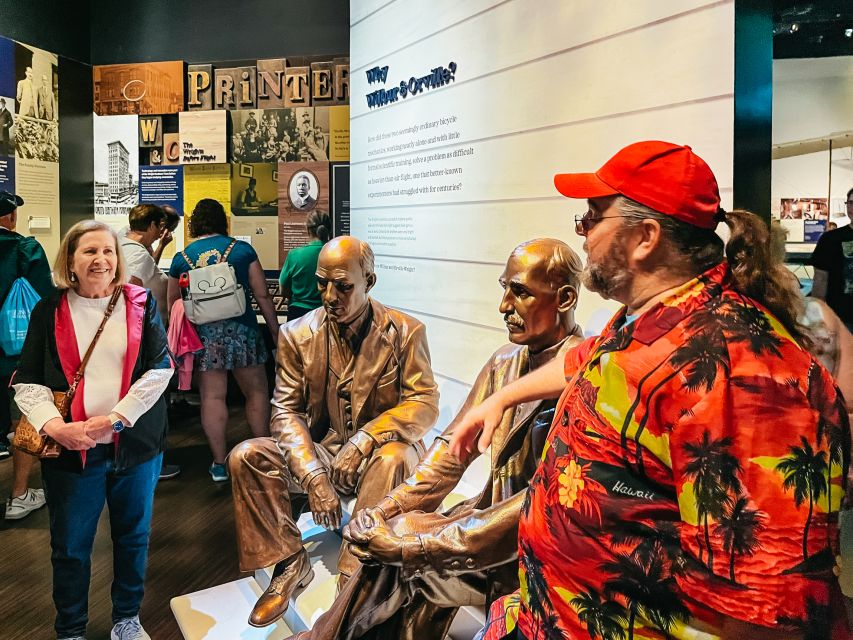
You’ll see the 1903 Wright Brothers aircraft, a landmark that still feels shocking when you picture what it took to make powered flight real. The guide’s job here is to connect the artifact to the problem it solved: control, stability, and the practical leap from idea to machine. Even if you think you know the basics, it’s easy to miss the deeper engineering story when you’re reading alone.
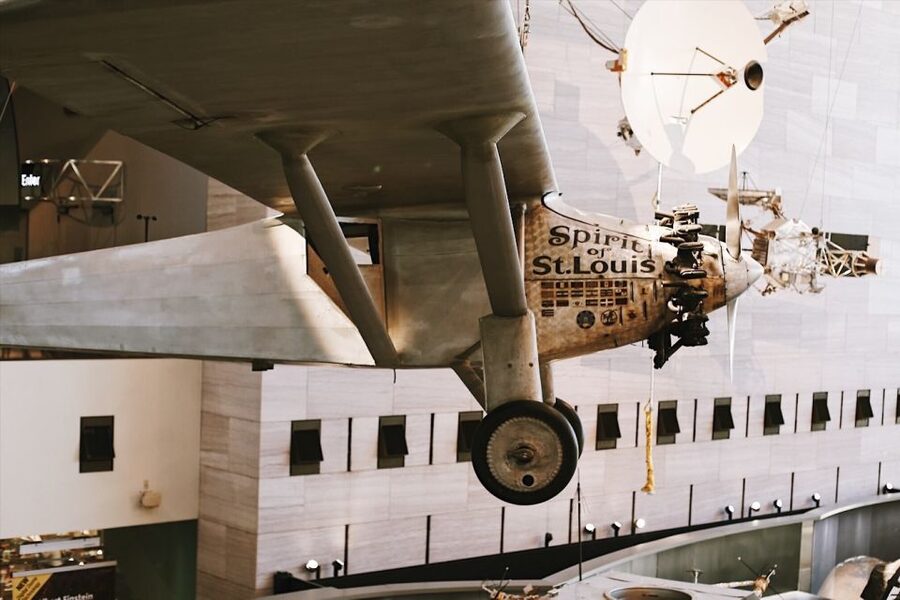
Then you’ll shift to the Spirit of St. Louis, which brings the “soaring dream” energy back into the room. This is where the tour can get extra fun because the guide can point out what makes that aircraft meaningful beyond its fame—how it represents risk, navigation, and the courage to push past limits.
In at least some guided runs, the tour experience leans into vivid storytelling. For example, Paul has been known to share reenactment-style videos on a tablet to help you picture the Wright Brothers’ flight in a way that feels more like history than a caption under glass. That kind of added context is exactly why a guided route is worth paying for, especially if you only have one museum visit.
If you’re traveling with kids, this part of the route is usually a winner because it’s visual and concrete: aircraft you can see, plus stories you can track without needing a science degree.
Apollo 11 Command Module and the moon rock moment
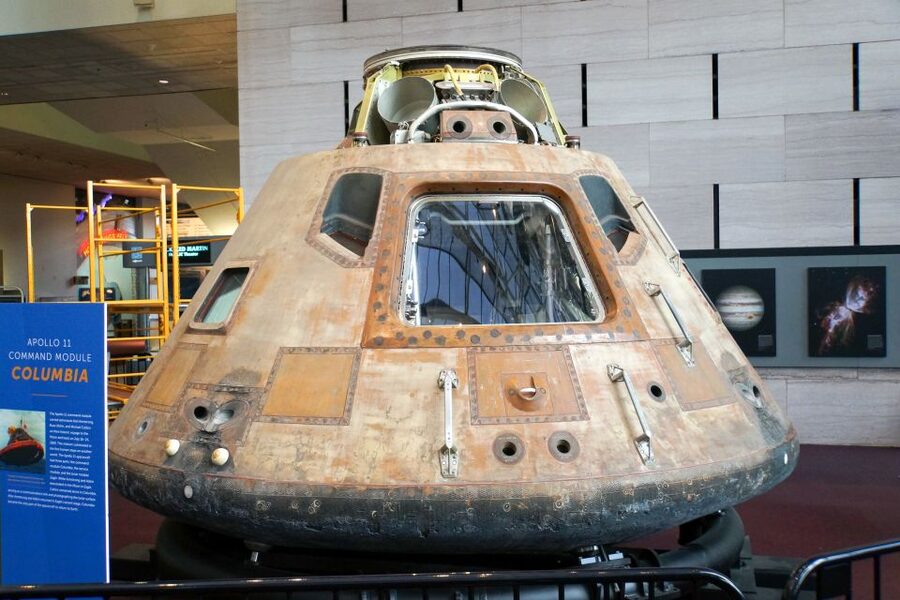
This is the heart of the museum for a lot of people, and the tour treats it like the big deal it is. You’ll see the Apollo 11 Command Module, one of the most recognizable spacecraft of the whole era, and the guide will frame what you’re looking at in human terms as well as technical ones.
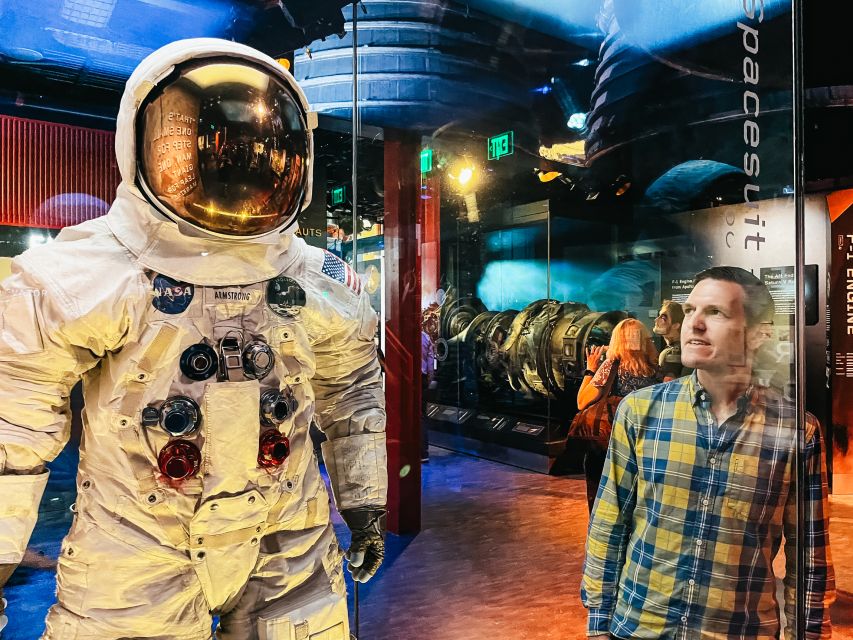
You should also expect a focus on the Moon-walk preparation details. You’ll learn about Buzz Aldrin’s spacesuit and moon boots, which helps you understand that the mission wasn’t just “land and walk.” It was clothing, mobility, temperature control, and the everyday gear choices that had to work perfectly in a place with no margin.
Then comes the hands-on highlight: the chance to touch real moon rock. That moment can feel small on paper, but in real life it changes the whole visit. Seeing samples behind glass is impressive. Touching even a controlled amount of authentic material turns it into a sensory memory instead of a photo you later scroll past.
A practical note: the museum’s ongoing construction can mean that some specifics depend on what’s available during your visit. Your guide will adjust based on what they can access in the renovation timeline, so keep expectations flexible. If moon rock access or specific Apollo items are not on display that day, you’ll still get the tour’s emphasis on the major milestones, just with a modified route.
International Space Station model: seeing orbit as a system
After the Moon landing focus, the tour shifts gears toward what life in space looks like now. You’ll explore a model of the International Space Station, which is one of those things that clicks only when you can see it at human scale.
This is a great stop if you want more than the “big speeches” version of space exploration. A station is a working environment: modules connected, systems interlinked, routine tasks turned into survival. The guide helps you interpret the model, so you’re not just staring at a complicated structure and hoping a plaque explains it fast enough.
You’ll also learn what it’s like to be an astronaut today. The way this tour frames that idea matters. It isn’t just romance and flags. You get a sense of training, logistics, and how mission life depends on procedures that feel dull until you remember what happens if they fail.
If you like science explanations, this is where the tour can feel especially satisfying. It’s not only history; it’s how engineers and operators think. And because the guide connects this stop to what came earlier in the tour, the station doesn’t feel like a random “next thing.” It feels like the logical extension of the same problem: building machines that can last and work where Earth can’t help.
You can also read our reviews of more museum experiences in Washington Dc






The museum is under construction: how that affects your day
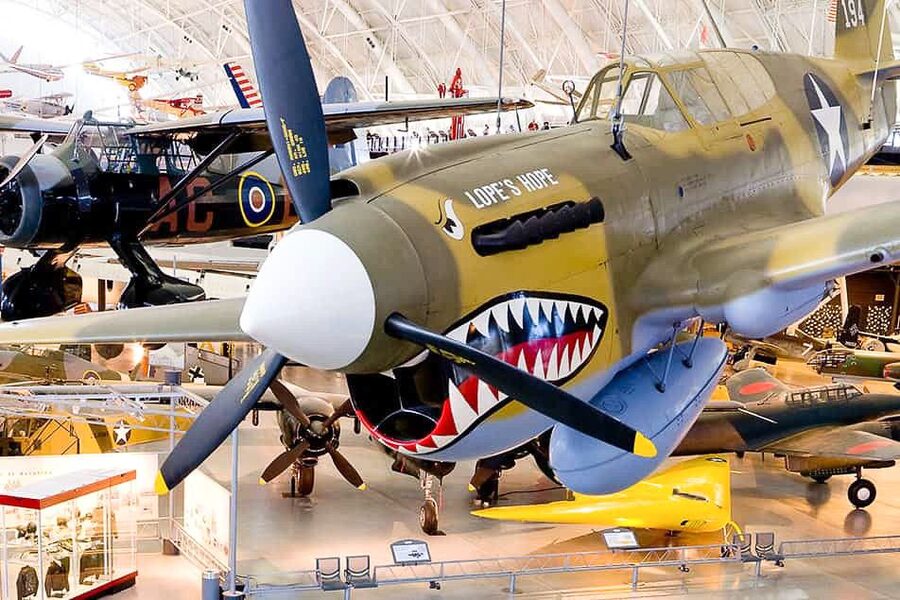
Here’s the honest part. The Smithsonian Air and Space Museum is currently under massive construction, and it will be that way for many years. That means your tour may not see every exhibit you’d normally expect, even if the tour is designed around famous objects.
Your guide adjusts the route based on what’s available during the renovation stages. Some described displays might be temporarily closed, or moved out of sight, or replaced with alternative exhibits. The tour is still meant to deliver the core story—early flight to the Space Race to modern space—but the exact rooms can shift.
This is also why you should check the museum’s current exhibit list before you go, especially if you’re coming during peak renovation changes. If you want one takeaway: don’t plan a trip around one single artifact being visible. Plan around the idea of an guided story through air and space, guided in real time by what the museum allows that day.
In a similar way, the museum can also face occasional closures. If that happens and delays exceed an hour from your start time, your group will be provided with an appropriate alternative. You won’t be guaranteed discounts or refunds in those cases, so the best approach is to treat your booking as part of a flexible DC day.
Skipping the line and traveling light for a smoother visit
This tour is set up to help you lose less time. It includes skipping the ticket line, which matters because the museum can be busy. Your experience depends on reaching exhibits without getting stuck in long entry slowdowns.
To protect that “time savings,” travel light. Only small allowed bags can pass security. If you’re the type who carries a camera bag, extra layers, and snacks, you may want to rethink your packing strategy for this visit. Also, keep any conversations respectful in quiet-rule rooms. The guide will warn you, but it’s smart to act like you’re in a library.
Duration is about 150 minutes. That’s long enough to get meaningful context, but short enough that you don’t feel like you need to power through the whole museum afterward. One of the best ways to use this tour is as your foundation visit. Then, if you have energy and daylight left, you can wander specific areas on your own where you want more photos or extra reading.
Price and value: is $95 per person a smart spend?
At $95 per person for roughly 2.5 hours, this isn’t a bargain. Still, I think it can be good value—mainly because the museum is so large that self-guided time can turn into wasted walking.
You’re paying for:
- a guide who manages a logical route through major milestones
- skip-the-line entry
- a small-group experience capped at a maximum of 8 people
- access to hands-on moments like the moon rock touch when available
- expert interpretation that turns objects into a connected story
If you only have one shot at this museum in DC, a guided tour helps you avoid the most common mistake: picking a few items, snapping photos, then realizing you missed the thread that explains everything. The price makes more sense if your time is limited and you want the “why” behind the “wow.”
If you’re going with family, especially kids who get restless, the guidance can also be worth it because it breaks the museum into digestible story beats. The guide can also answer questions in the moment, and some guides (like Leigh and Tim) have been praised for keeping the discussion engaging and moving at a steady pace.
If you have all day and you love reading every label, self-guided can still work. But for most people juggling DC schedules, $95 can be a sensible way to make your museum visit feel efficient without feeling rushed.
Who should book this tour (and who might not love it)

This tour is a strong fit if you:
- want the major highlights of air and space without spending half your day choosing where to go
- love big artifacts but also want the science and decision-making behind them
- are visiting DC with limited time
- want a guided explanation that includes memorable moments like touching moon rock
It may be less ideal if you:
- need wheelchair-friendly routing. The info includes wheelchair tours by request only, but it also lists the tour as not suitable for wheelchair users. If mobility access is your priority, you should confirm what your specific tour route would allow before booking.
- hate walking through museums with security rules and quiet-room behavior
- expect every single exhibit to be visible during construction. The route can adapt.
Should you book the Smithsonian Air and Space guided tour?
I’d book it if you want a high-impact Air and Space Museum visit with a clear story arc. This tour earns its cost by focusing you on the big artifacts—Wright Brothers, Spirit of St. Louis, Apollo 11 Command Module, and the ISS model—while your guide adds context and memorable details. The moon rock touch is the kind of moment you won’t replace with photos.
If your schedule is tight, or you’ve been to big museums before and felt like you left without really understanding what you saw, this is a smart way to turn confusion into clarity. Just go in expecting that construction may shuffle the exact exhibits on the day.
FAQ
How long is the Smithsonian Air and Space Museum guided tour?
The tour duration is 150 minutes.
Where is the meeting point?
Your guide meets you 10 minutes before the tour starts at the base of the sculpture in front of the Air & Space building entrance, facing the lawn of the DC Mall.
What group size should I expect?
Each tour allows a maximum of 8 people. Small group tours run with a minimum of 2 participants.
Do I need to line up for tickets?
No. The tour includes skipping the ticket line.
What are the main highlights I should plan for?
You’ll see the Wright Brothers Flyer and the Spirit of St. Louis, explore a model of the International Space Station, and visit the Apollo 11 Command Module. The tour also includes learning about Buzz Aldrin’s spacesuit and moon boots, plus touching moon rock when available.
Is touching moon rock part of the tour?
Yes. Touching real moon rocks is listed as one of the tour highlights.
What ID and bag rules should I follow?
Bring a passport or ID card. Luggage or large bags are not allowed, and only handbags or small thin bag packs are permitted through security.
Is the tour wheelchair accessible?
Wheelchair tours are available by request only, but the activity is also listed as not suitable for wheelchair users. If you need wheelchair access, you should request it and confirm what routing is possible for your tour.
What is the cancellation policy?
You can cancel up to 24 hours in advance for a full refund.