REVIEW · PARIS
Skip the Line Guided Tour of Louvre Museum Highlights
Book on GetYourGuide →Operated by Exploring Tours and Services · Bookable on GetYourGuide
The Louvre, minus the slog. This guided highlights tour uses a priority entrance with a licensed guide so you avoid the worst waiting and get straight to the big works. I love the Mona Lisa storytelling up close, plus the way the guide connects what you’re seeing to how the art was made and why it matters. The one drawback: on peak days, even the priority entrance can still have some waiting.
I also like the clear meet-up at the Arc de Triomphe du Carrousel, right in front of the Pyramid area, so you know exactly where to start. The pacing is built for real people too: about 150 minutes, enough time to hit the essentials without turning your feet into souvenirs.
If you came to wander every corridor at your own pace, this won’t feel that flexible. Think of it as a focused route through the Louvre’s top sights, then you can decide what to revisit afterward.
In This Review
- Key highlights at a glance
- Why the Louvre priority entrance changes everything
- Meeting at the Arc du Carrousel: get oriented fast
- Your 150-minute highlights route: how the tour feels in practice
- Mona Lisa: what to notice before you even get close
- Winged Victory of Samothrace: why it hits differently in marble
- Venus de Milo: the mystery that keeps the story going
- The painting stops: Italian masters and French powerhouses
- Italian paintings, with Da Vinci and Veronese in focus
- French paintings, including David and Delacroix
- What the best guides do: pacing, stories, and keeping it not exhausting
- Group size and your day plan: how to fit this into Paris
- What you need to bring (and what to skip)
- Price and value: is $57 worth it?
- Should you book this Louvre skip-the-line highlights tour?
- FAQ
- Where do I meet the guide?
- How long is the tour?
- What is included with the skip-the-line part?
- Which artworks are included on the highlights route?
- What languages are available?
- Can I book this tour privately?
- What should I bring?
- What items are not allowed during the tour?
- Do I get pickup or drop-off to my hotel?
- Will there still be lines on busy days?
Key highlights at a glance
- Certified, licensed guide who sets the tone and keeps things interesting
- Skip-the-line via a separate priority entrance so you lose less time
- Mona Lisa in the spotlight, with the stories behind that famous smile
- Ancient anchors: Winged Victory of Samothrace and Venus de Milo
- Two painting worlds: Italian masters (including Da Vinci and Veronese) and French painters (including David and Delacroix)
- 150 minutes that actually feels manageable for a first Louvre visit
Why the Louvre priority entrance changes everything
The Louvre is one of those places where the building is big, the crowds are real, and time disappears fast. Even if you have a ticket, the entrance queues can drain your energy before you even see a masterpiece.
This tour helps by using skip-the-line tickets and a priority entry through a separate entrance. What that means for you: you spend more of your visit looking at art and less of it standing around holding your phone like a luggage tag.
A practical note that matters: the tour uses timetabled tickets and priority access, but on busier days like school vacations, you can still run into waiting lines even at priority entrances. So it’s a strong time-saver, not a magic wand.
You can also read our reviews of more guided tours in Paris



Meeting at the Arc du Carrousel: get oriented fast
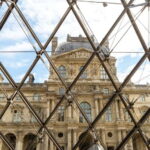
You meet the guide at the Arc de Triomphe du Carrousel, right in front of the Pyramid area. The guide holds a GetYourGuide sign, and you’ll want to arrive 15 minutes early.
I like this setup because it prevents the common start-of-tour headache: you’re not trying to guess which entrance group is yours. Also, being near the Pyramid area means you get your bearings quickly, which helps once you’re inside and walking through the museum’s maze-like layout.
Wear comfortable shoes. The Louvre is all about long walking, and even a highlights route still has plenty of pavement inside.
Your 150-minute highlights route: how the tour feels in practice
This tour runs about 2 hours to 150 minutes, built around the Louvre’s most famous works. It’s not a whole-museum sprint, and it’s not a loose “look at whatever you want” stroll either. It’s a guided route designed to hit key stops with context so you don’t leave with only vague impressions.
Here’s what you’ll see, and why each stop is worth your time:
Mona Lisa: what to notice before you even get close
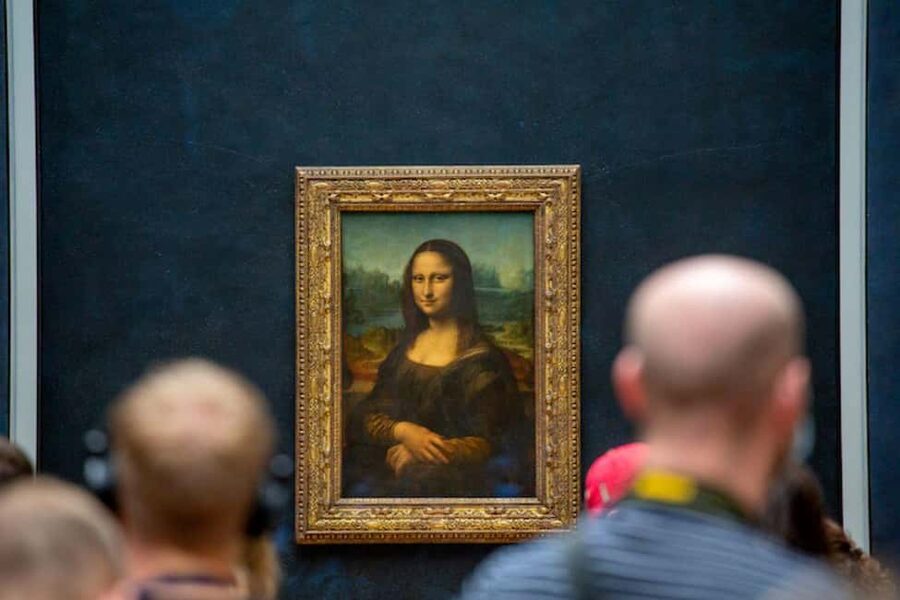
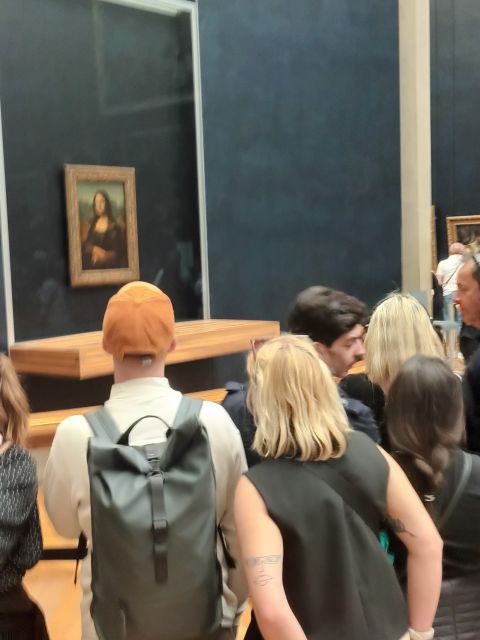
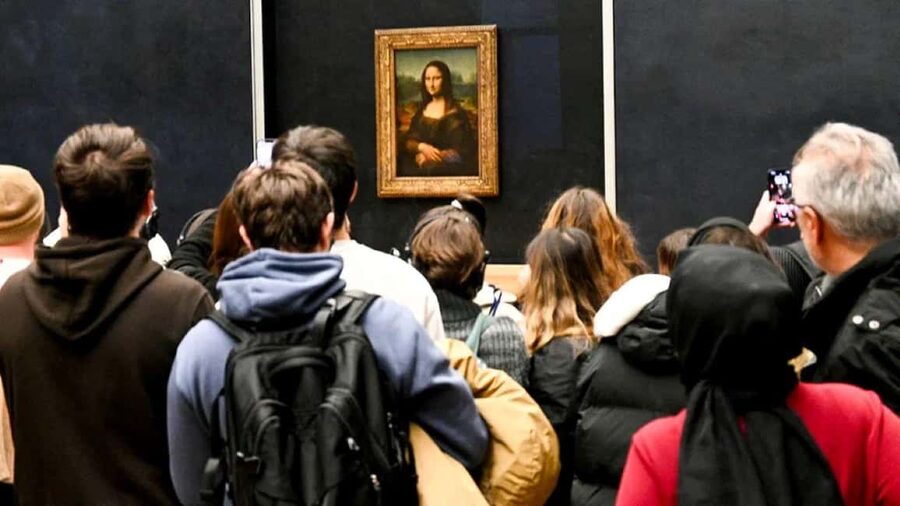
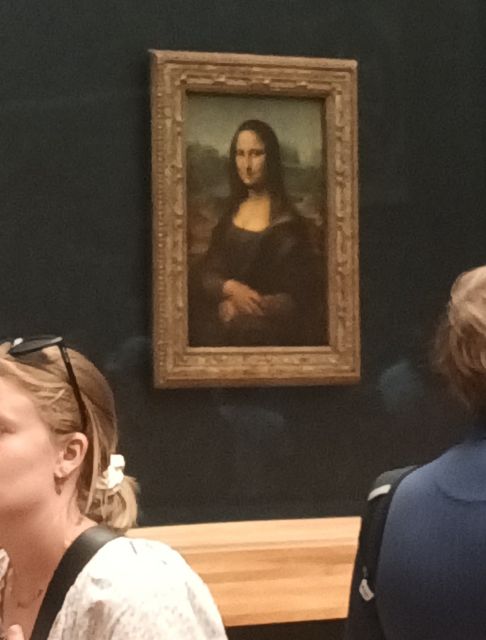
Yes, you’ll see the Mona Lisa. But the value here is how you experience her. Your guide will point you toward the right details and share intriguing stories behind her world-famous smile.
I find this type of guided approach especially useful with the Mona Lisa because she’s surrounded by hype. A good guide helps you focus on what your eyes can actually pick up in person—like her expression, the painting’s atmosphere, and how the work’s reputation shapes how people view it.
If you’re the kind of visitor who wants more than a quick photo, this stop is one of the best reasons to book this format.
Winged Victory of Samothrace: why it hits differently in marble
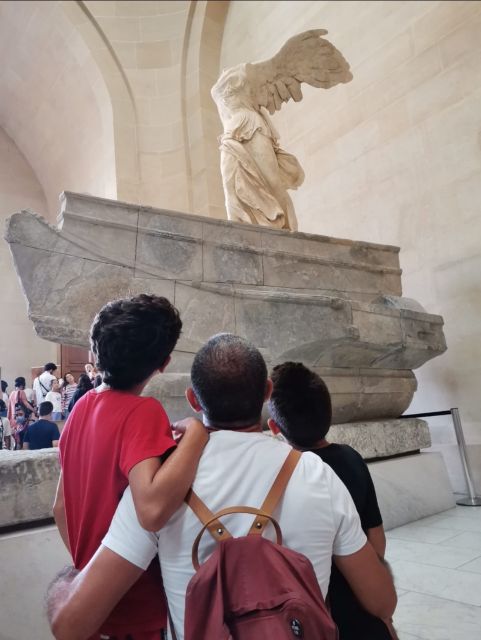
Next up is the Winged Victory of Samothrace—an ancient Greek sculpture that’s famous for a reason. Your guide will bring you the history and artistry behind it, which makes a difference because this piece can feel like just another museum object until someone explains what’s going on.
What I’d do with your eyes during this stop:
- Look for how the figure’s movement reads even when she’s frozen in stone
- Notice the sense of motion in the details
- Pay attention to how the sculpture’s presentation helps the illusion work
With a guide, you’re not just staring—you’re understanding what your brain is seeing.
You can also read our reviews of more museum experiences in Paris






Venus de Milo: the mystery that keeps the story going
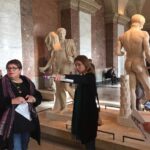
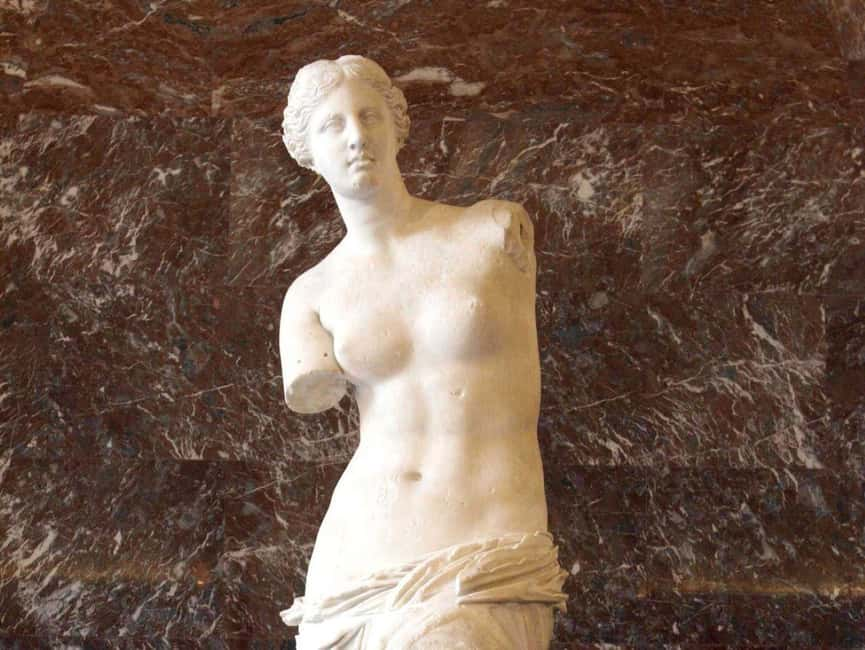
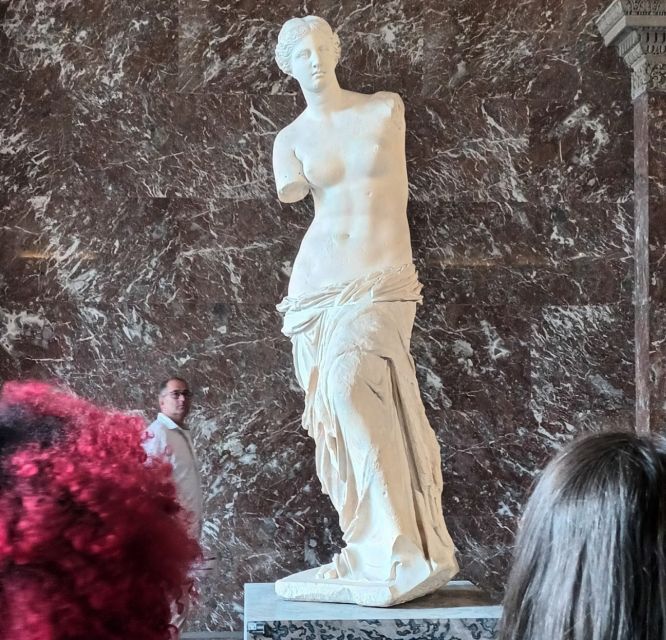
Then there’s Venus de Milo, another iconic work where mystery is part of the appeal. Your guide will cover the legacy of the piece and the ongoing questions people still talk about.
This is the kind of stop where a guide can turn a famous name into a more personal experience. Instead of thinking, I’ve heard of this, you start thinking, I get why this remains such a conversation piece.
If you like art that’s famous and a little unresolved, you’ll probably enjoy this one a lot.
The painting stops: Italian masters and French powerhouses
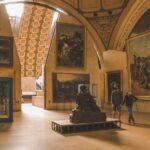
After the sculpture anchors, the tour shifts into paintings, including both Italian and French works. This is a smart mix because it gives you a broader sense of the Louvre’s role—not just a temple for one era, but a museum that spans styles and centuries.
Italian paintings, with Da Vinci and Veronese in focus
Your guide will take you through Italian paintings, including works by Da Vinci and Veronese. Even if you don’t feel like an art expert, a good guide helps you look at the differences that matter—how artists handled faces, movement, light, and storytelling.
This is also where you start to see the Louvre’s “network effect.” Once you learn how one artist is trying to achieve something, the next work makes more sense.
French paintings, including David and Delacroix
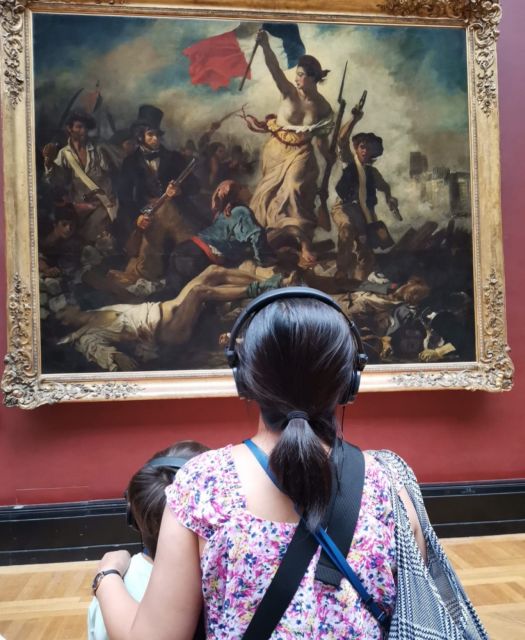
Then you’ll see French paintings featuring artists like David and Delacroix. This part is great if you want drama in your museum day. French painting can be intense, with bold ideas and strong emotional framing.
With a licensed guide, this doesn’t become a checklist of names. You get context that helps you understand why these artists left such a mark, and why their styles were so influential.
What the best guides do: pacing, stories, and keeping it not exhausting

The standout theme from the guide experiences is how well they keep the tour from becoming tiring or repetitive. In reviews connected to this tour, guides such as François are praised for sharing their love of the works and of art in general. Other named guides like Silvia are noted for making the experience interesting without dragging, and even for paying attention to family needs (like making the visit pleasant for a parent). And a guide named Romeo is highlighted for helping visitors feel like they traveled through roughly 2,500 years of history.
You can’t control who you’ll get, of course. But you can control one thing: you can book a format that’s designed around an actual guide-led storyline. That’s what keeps a Louvre day from turning into a pile of photos you don’t remember.
Group size and your day plan: how to fit this into Paris
This tour is available for private or small groups, and it’s designed to run for about 150 minutes. That matters because the Louvre is so huge that long unstructured time can lead to decision fatigue. A guided highlights plan gives your day a spine.
If you only have one Louvre visit in your trip, this is a strong way to start. You’ll leave with a mental map and recognizable “anchor points” so that if you return (or keep exploring on your own), you don’t feel lost.
If you’re in Paris for several days and can afford more than one museum stop, this tour works as a first-pass orientation. Afterward, you can pick what you want to linger on.
What you need to bring (and what to skip)
To keep your entry smooth, bring:
- Your passport or ID card
- Comfortable shoes
Leave behind anything that could slow down security or violate rules. The tour does not allow:
- Oversize luggage
- Food and drinks
- Luggage or large bags
- Drinks
- Alcohol and drugs
- Glass objects
This list is worth treating seriously. Louvre entry and museum rules can be strict, and the more prepared you are, the more smoothly the first part of your visit will go.
Price and value: is $57 worth it?
At $57 per person for a guided, skip-the-line Louvre highlights tour, the value depends on one thing: how much your time is worth.
Here’s the practical way I look at it:
- The Louvre’s queues can eat hours on busy days.
- This tour is designed specifically to reduce that wasted time using priority entry.
- You also get an experienced, licensed guide, and that context is what transforms famous artworks into a story you remember.
If you’re going solo and would otherwise spend much of your visit figuring things out on your own, the guide and priority access can be a clear win. If you already know the museum deeply and plan to spend a full day wandering, you might prefer buying tickets and roaming freely. But for many visitors, especially first-timers, this is an efficient way to see the big icons with actual meaning attached.
Should you book this Louvre skip-the-line highlights tour?
Book it if:
- You want Mona Lisa, Winged Victory, and Venus de Milo without spending half your trip in queues
- You’d rather have a guide connect the dots than rely on signage alone
- You like a structured visit that still includes stories and context
- You want a route that fits into a typical Paris day without burning out
Skip it (or add a free-time plan) if:
- You’re hoping for total freedom to wander every wing with no set stops
- You want to spend many hours on deep, slow looking rather than a highlights route
If you’re standing at the Pyramid thinking, I want to see the best and I want to get there fast, this tour is a very sensible choice. Priority access plus an actual storyline is the kind of combination that keeps your Louvre day from feeling like a photo quest.
FAQ
Where do I meet the guide?
You meet at the Arc de Triomphe du Carrousel, in front of the Pyramid area. The guide holds a GetYourGuide sign, and you should arrive about 15 minutes before the start time.
How long is the tour?
The duration is about 2 hours to 150 minutes.
What is included with the skip-the-line part?
You get skip-the-line tickets for the Louvre and priority entry using a separate entrance.
Which artworks are included on the highlights route?
The tour includes the Mona Lisa, the Winged Victory of Samothrace, Venus de Milo, and Italian and French painting highlights, including works by Da Vinci, Veronese, David, and Delacroix.
What languages are available?
The live guide is offered in French, English, Spanish, and Italian.
Can I book this tour privately?
Yes, private or small groups are available.
What should I bring?
Bring your passport or ID card and wear comfortable shoes.
What items are not allowed during the tour?
Oversize luggage, food and drinks, luggage or large bags, drinks, alcohol and drugs, and glass objects are not allowed.
Do I get pickup or drop-off to my hotel?
No pickup and drop-off to your hotel is not included.
Will there still be lines on busy days?
Priority entry helps, but on busier days such as school vacations, waiting lines can still happen even at priority entrances.