REVIEW · PARIS
Skip-the-Line Louvre Museum Tour with Artist
Book on GetYourGuide →Operated by That Time in Paris · Bookable on GetYourGuide
Art in the Louvre feels less random. This skip-the-line tour pairs reserved entry with a certified artist-guide for a tiny group of no more than 6.
I like the way the painterly perspective turns famous works into clues you can actually read. You focus on top pieces like Mona Lisa, Venus de Milo, and Nike, not just a checklist.
One catch: with only 2 hours, this is a highlights sprint, not a full museum stroll at your own pace.
In This Review
- Key things that make this Louvre tour work
- Meet at Le Kiosque des Noctambules, not by the Pyramid
- The skip-the-line part you’ll feel immediately
- The 2-hour flow: from Greek roots to Renaissance thinking
- The main highlights you’ll build around
- Why this format is worth it
- Why an artist-guide changes how you see paintings
- What technique talk actually looks like
- The best part: you interact, not just observe
- Small group pacing: fast enough to work, slow enough to breathe
- Where you’ll likely feel the constraints
- Price and value: why $246 can make sense here
- What to bring (and what will slow you down)
- Languages and guide styles that help different groups
- Who should book this Louvre artist-tour?
- Should you book this skip-the-line Louvre artist tour?
- FAQ
- What is the duration of the Louvre museum tour?
- Where do I meet for this tour?
- Does it include skip-the-line entry?
- What languages are available for the live guide?
- Is the tour suitable for wheelchair users?
- What should I bring, and what is not allowed?
Key things that make this Louvre tour work
- Reserved entry with a separate entrance helps you start inside fast instead of burning time in crowds
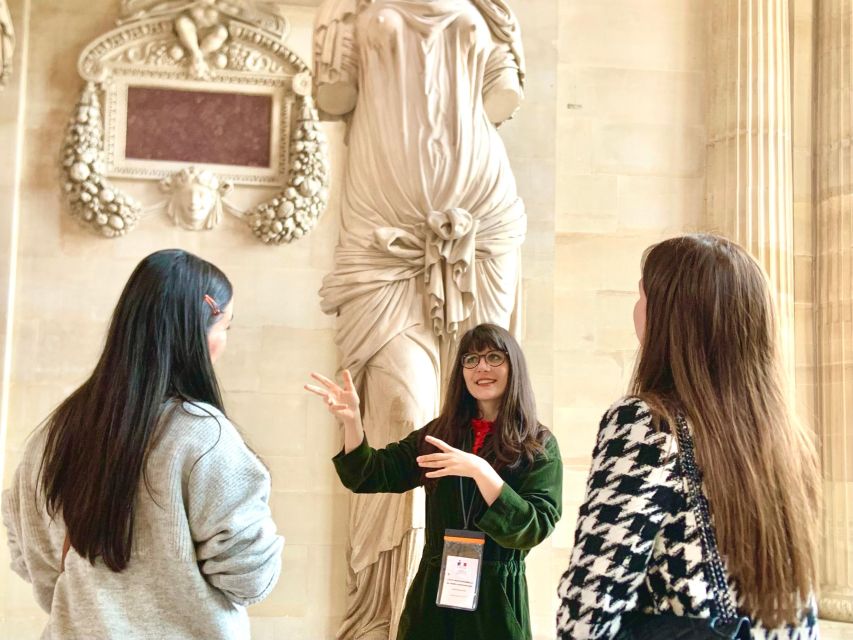
- Certified artist-guide (painter) explains technique, so you notice things you’d normally miss
- Up-close time with the big names includes Mona Lisa, Venus de Milo, and Nike
- Tiny group size (max 6) means you can ask questions and keep moving without feeling herded
- Audio headsets when available make the storytelling easier to follow in noisy galleries
- Story-driven pacing helps you stay oriented in a museum that can feel like a maze
Meet at Le Kiosque des Noctambules, not by the Pyramid
This tour does not start at the Louvre. You meet at Le Kiosque des Noctambules by Jean-Michel Othoniel, a Murano glass beads sculpture placed across from the Comédie Française. It’s a smart change of pace because it gets you gathered in a calmer spot before the museum crush.
For transit, use the Palais Royal – Musée du Louvre metro station and exit at Place Colette. Once you’re there, just follow local street flow to the sculpture—your guide will have the group and timing handled.
Practical tip: wear shoes you can walk in for a couple of concentrated hours. The Louvre has lots of stone underfoot, plus stairs and long corridors even on a short route.
You can also read our reviews of more museum experiences in Paris



The skip-the-line part you’ll feel immediately

The big benefit here is simple: you get reserved entry tickets and go in through a separate entrance. That matters because the Louvre can be a slow grind outside—security queues and crowding can eat up your best museum time.
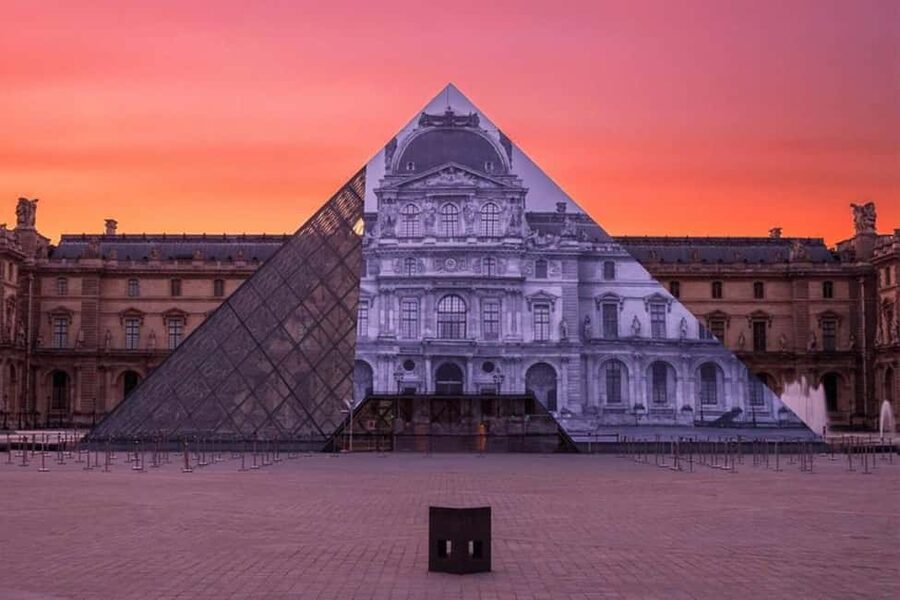
After you meet at Le Kiosque des Noctambules, the next stop is the Louvre Pyramid. From there, your guide leads you into the museum so the visit starts when you’re still fresh, not when you’re already tired from waiting.
One more reason the reserved timing helps: in a place with 35,000+ works, getting inside first reduces the feeling that you’ll never see what you care about. You still won’t see everything, but you’ll feel like you’re winning.
The 2-hour flow: from Greek roots to Renaissance thinking
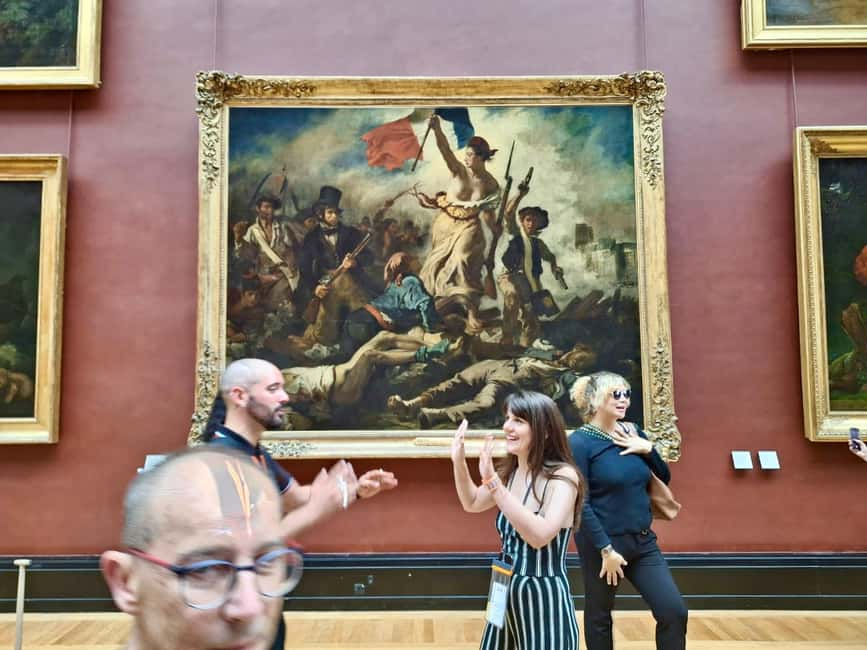
Inside, your guided portion is 2 hours. The tour is designed as a focused route through the Louvre’s Western-art arc, often tracing the look and ideas of art from Greek Antiquity to the Italian Renaissance.
Here’s the approach: instead of bouncing around randomly, you move along a story the guide is building as you go. That keeps you oriented even when the museum rooms start to blend together.
The main highlights you’ll build around
Your route includes close encounters with major pieces that most visitors recognize instantly:
- Mona Lisa: you don’t just look—you learn how to interpret what you’re seeing, including the mood and the visual language that makes it so famous
- Venus de Milo: you look closely at form and presentation, with help reading what makes it powerful even centuries later
- Nike: you focus on movement and detail, including the way the figure’s look creates energy
Your guide also brings in examples beyond those three. The point is that you’re not only collecting iconic images—you’re building a set of visual habits for understanding art in general.
Why this format is worth it
You’re paying for direction. The Louvre rewards self-navigation, but it also punishes aimless wandering. With a guided route, you’ll leave knowing why the highlights matter, not just that you stood in front of them.
A few more Paris tours and experiences worth a look



Why an artist-guide changes how you see paintings
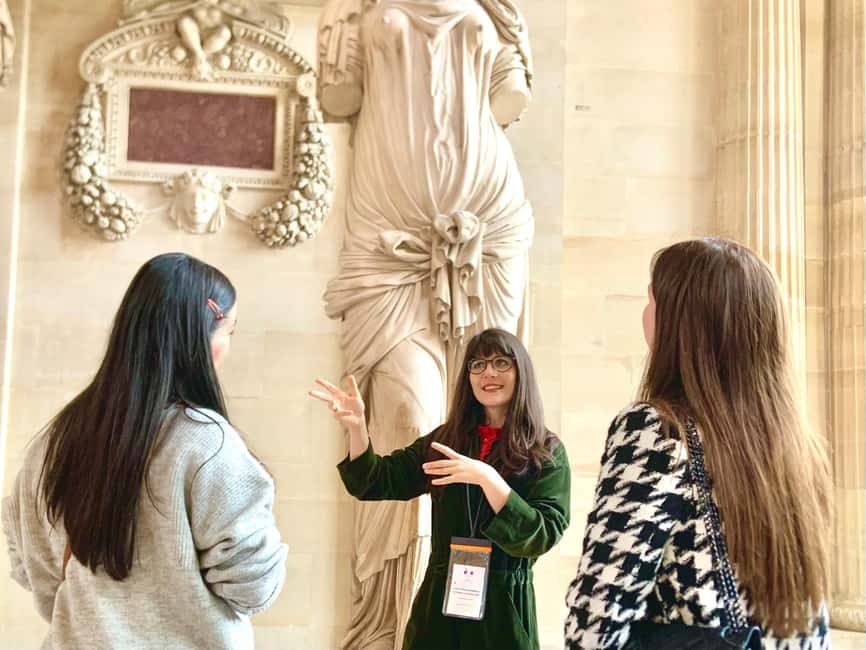
This tour’s standout ingredient is that the guide isn’t only a storyteller. It’s a certified artist-guide who is also a painter, so the explanations lean into technique—the stuff you’d normally miss.
You’ll get unique insight into how masters think and work, including references to artists like Da Vinci. More importantly, you’ll learn the basics of reading paint and composition in ways you can use on any canvas you see afterward.
What technique talk actually looks like
Expect explanations that translate art decisions into everyday language. Instead of only dates and names, you’ll hear how choices like light, shadow, color contrast, and figure movement shape what you feel.
This is also why you can ask questions during the walk. One strong theme from experiences with guides like Blerta is that you can zero in on a specific work and get a clear answer—often with a story that makes the painting feel less distant. Even with kids in the group, the explanations can stay meaningful without getting overly academic.
The best part: you interact, not just observe
You’re encouraged to interpret art history on a personal level. That doesn’t mean guessing randomly—it means learning a method: look closely, notice structure and technique, then connect it back to the era and purpose of the work.
Small group pacing: fast enough to work, slow enough to breathe
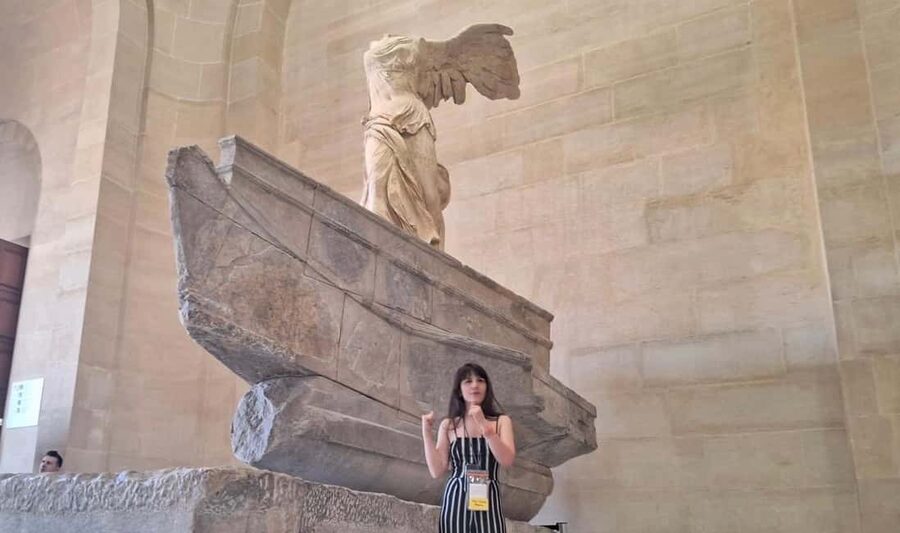
The tour runs with no more than 6 visitors. That small number is not a luxury detail—it changes everything about what the guide can do. You’ll be able to stop, look longer when something grabs you, and still keep the group moving.
You’ll also get better audio than you would on your own. Audio headsets are included when available, which helps because the Louvre galleries can be loud and echoey.
One more practical benefit: with a group this size, the guide can respond to the people in front of them. I’ve seen this kind of artist-led structure work especially well with families, including teens, because it keeps attention focused while still inviting questions.
Where you’ll likely feel the constraints
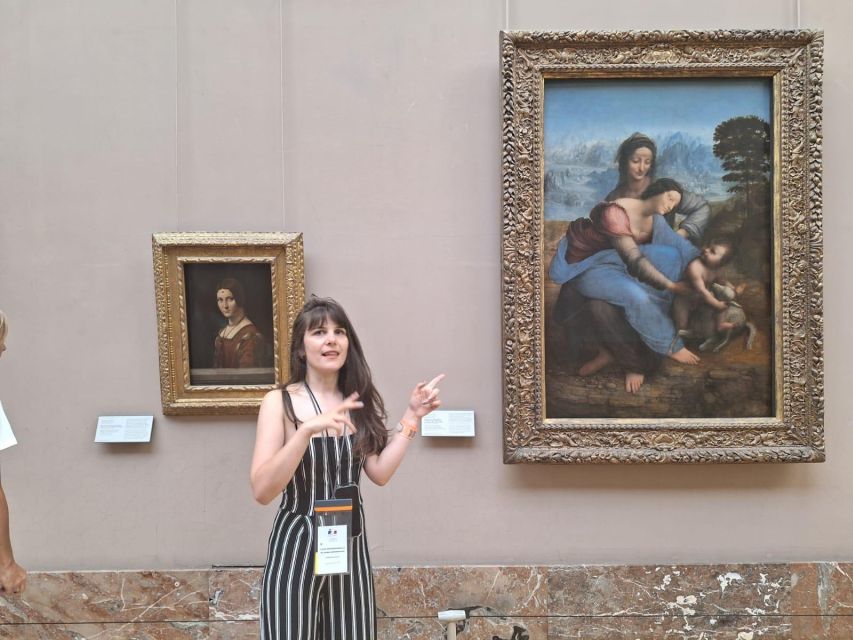
Let’s be honest: a 2-hour Louvre tour can’t do the full museum. That’s the main limitation.
Even with reserved entry, you’ll still be moving through a complex building with changing room density. You won’t leisurely stroll every wing, and you shouldn’t plan to fit in additional self-guided masterpieces on top unless you truly keep expectations lean.
Also, note the tour is not suitable for wheelchair users. The route will involve museum walking that isn’t set up for that. If mobility is a concern, it’s worth asking directly how the route handles stairs and tight passages before you book.
Price and value: why $246 can make sense here
At $246 per person for a 2-hour experience, this is not a budget Louvre ticket add-on. So you should look at what you’re buying, not just the cost.
Here’s what you’re getting for the price:
- Skip-the-line entry with reserved tickets (real time savings)
- A certified artist-guide who teaches technique, not only facts
- Small group attention so you can ask questions and get specific answers
- A route that hits major highlights like Mona Lisa, Venus de Milo, and Nike
If you’re the type of visitor who wants to understand what you’re seeing, the artist element justifies a lot of the expense. If you mainly want photos and a quick once-over, you might feel the price is too steep for how short the visit is.
What to bring (and what will slow you down)

Keep it simple:
- Passport or ID card (a copy is accepted)
- Comfortable shoes
- Reusable water bottle
Leave the extras that can cause hassles at home. Weapons or sharp objects are not allowed, and food and drinks are not allowed.
This is also why timing matters. When you arrive with the right ID and shoes, you spend less time dealing with preventable problems and more time inside doing what you came for.
Languages and guide styles that help different groups

The live guide can be in Albanian, English, or French. That means you can pick the language that matches your comfort level, which is important for a tour built on explanation and visual technique.
Guide style can also matter for family visits and art-curious beginners. In example experiences with guides such as Blerta, the stories can land well with kids and teens because the explanations are tied to what you’re looking at right now. Other guides mentioned in similar contexts include Arianna and Assgan, and the common thread is interactive guiding—questions are welcome and the pacing tries to stay humane.
Who should book this Louvre artist-tour?
This tour is a strong fit if you:
- Want the Louvre’s top works explained in plain language
- Like art when it’s connected to how artists actually build an image
- Prefer a small group over a big bus-style crowd
- Need a plan because the museum feels too massive to tackle alone
It’s also a good option for first-timers who worry they’ll miss the best stuff. Instead of wandering until they’re overwhelmed, you’ll follow a route built around key themes and visuals.
If you’re a hardcore Louvre super-planner who wants to map every gallery, you may find 2 hours too brief. But if your priority is meaning plus efficiency, this is the kind of structure that helps you get more from less time.
Should you book this skip-the-line Louvre artist tour?
I’d book it if you want a Louvre visit that feels guided but not stiff: reserved entry, a small group, and an artist-guide who helps you read masterpieces like a craft.
Skip it if your goal is maximum coverage or you plan to spend hours roaming on your own. In that case, you could use the basic ticket and build your own route.
If you do book, I recommend you come with at least one or two pieces you care about most—because that artist-led format works best when you can ask targeted questions and stay focused on what you’re seeing.
FAQ
What is the duration of the Louvre museum tour?
The tour lasts 2 hours.
Where do I meet for this tour?
You meet at Le Kiosque des Noctambules by Jean-Michel Othoniel, across from the Comédie Française. The nearest metro is Palais Royal – Musée du Louvre, exit at Place Colette.
Does it include skip-the-line entry?
Yes. You get skip-the-line reserved entry tickets and enter via a separate entrance.
What languages are available for the live guide?
The live guide is available in Albanian, English, and French.
Is the tour suitable for wheelchair users?
No. The tour is not suitable for wheelchair users.
What should I bring, and what is not allowed?
Bring your passport or ID card (a copy is accepted), comfortable shoes, and a reusable water bottle. Food and drinks are not allowed, and weapons or sharp objects are not allowed.