REVIEW · PARIS
Skip-the-line Rodin Museum – Exclusive Guided Tour
Book on Viator →Operated by Babylon Tours Paris · Bookable on Viator
A few minutes saved can change everything. With this skip-the-line visit to the Musée Rodin, you head straight past the queue and into the stories behind Rodin’s sculptures. I like that the tour stays focused—about 2 hours—and that your guide steers you toward the biggest artwork moments without wasting time in crowd flow.
One consideration: even with skip-the-line access, security checks can still create some waiting, and there can be a bit of time outside before you enter the museum proper. Also, follow the bag rules closely: no large bags or suitcases inside, only small bags through security.
In This Review
- Key things to know before you go
- Skip-the-line entry at Musée Rodin (77 Rue de Varenne)
- What your guide does on the inside: stories you miss alone
- Rodin’s standouts: The Gates of Hell and The Thinker
- The human form in focus: hands, studies, and The Walking Man
- Rodin’s circle in clay: Balzac and contemporaries
- Gardens after the galleries: sculptures outdoors
- Price and logistics: does $142.89 feel worth it?
- Who should book this Rodin Museum tour?
- Should you book? My take on the decision
- FAQ
- How long is the Rodin Museum skip-the-line guided tour?
- Is admission included?
- What language is the tour offered in?
- Does it really skip the lines?
- Where do I meet for the tour?
- Is hotel pickup or drop-off included?
- Are large bags allowed inside the museum?
- Is the tour wheelchair friendly?
- What should I do if the museum opening is delayed?
Key things to know before you go

- Skip-the-line museum entry to cut down the worst of the queue.
- English guide who connects sculptures to the people and ideas around Rodin.
- A tight 1.5–2 hour route that focuses on standout rooms and key works.
- Hands-on themes: studies of the human form, especially gestures and facial expression.
- Galleries plus gardens so you get Rodin in two settings: rooms and outdoor sculpture spaces.
- Private or semi-private choice, depending on the option you book and whether you get a guide just for your group.
Skip-the-line entry at Musée Rodin (77 Rue de Varenne)
This tour is built for people who want maximum art time and minimum queue time. You meet at 77 Rue de Varenne, 75007 Paris, and the activity ends back at the same spot. Since it’s near public transit, you can keep your logistics simple—no need to build your day around a specific metro line, just get yourself to the address.
You’ll get a mobile ticket and you’re required to provide a mobile phone number (with country code). That matters because in Paris, last-minute updates happen, and a ticket sent digitally is easier to manage than printed paper that can get lost in your daypack.
One practical point: skip-the-line doesn’t mean zero security. The museum (and Paris attractions in general) can still have checks, and the notes say you might still see some lines on tours with skip-the-line or no-wait access. So if your ideal scenario is always instant entry, temper expectations a little and arrive a touch early to stay relaxed.
Also, there’s mention that the museum may face occasional closures. If the opening is delayed by more than an hour from the start time, you’ll be offered an appropriate alternative, but no refunds or discounts apply in those cases. That’s rare, but it’s worth knowing so your plan can stay flexible.
You can also read our reviews of more guided tours in Paris


What your guide does on the inside: stories you miss alone
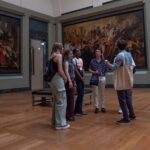
Rodin’s museum can feel like it’s all about the art on first glance. But the real value of a guided tour is how the guide helps you read the room.
As you move through the galleries, you’ll see sculptures and also more than 200 paintings Rodin collected over his life. That mix matters. It shows Rodin wasn’t working in a vacuum—he studied other artists and ideas, then translated that thinking into form, gesture, and texture. On your own, it’s easy to treat the museum like a highlight reel. With a guide, it becomes a guided set of “wait, look at that” moments.
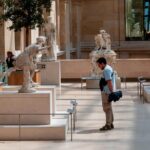
The tour centers on Rodin’s repeated obsession: the human body as a living subject. The itinerary highlights his studies of the body, including the famous obsession with hands—small changes in position and tension that make a figure look emotional even when the pose is still. You’ll also encounter references to life-sized sculpture like The Walking Man, which gives you a sense of how Rodin thought about movement and weight, not just anatomy.
Guides also bring in the context of Rodin’s contemporaries. You’ll hear about how he depicted key figures in clay, not just stone. That approach helps you notice that some works are studies of a person’s presence—what they represent, how their identity was captured—rather than “just portraits.”
One more small but important detail: some rooms are very quiet or restrict speaking. Your guide will point out where the rules apply before you enter. So don’t bring the “I’ll talk freely in this room” mindset. If you respect the quiet, the whole experience feels more focused.
Rodin’s standouts: The Gates of Hell and The Thinker
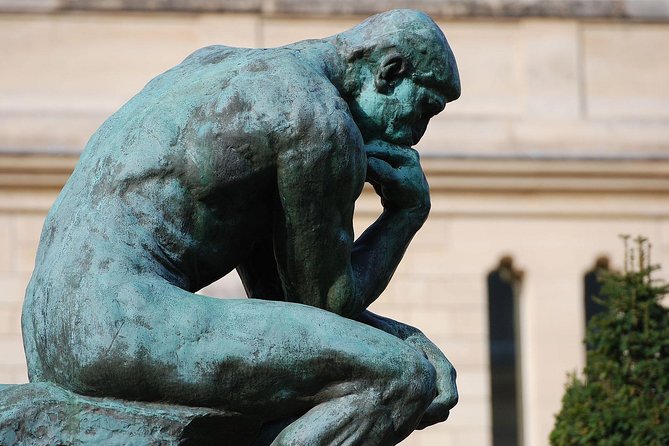
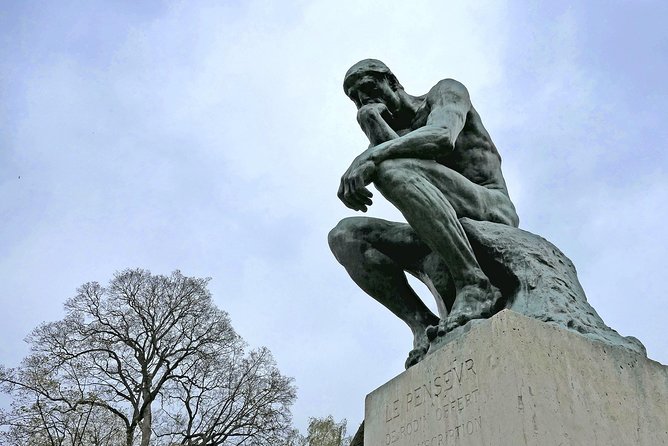
There’s a reason The Thinker is the museum magnet. On a guided route, it becomes more than a famous pose. You’ll get the “why this matters” framing around The Gates of Hell, including the connections to Rodin’s bigger creative vision.
The “Gates” theme is useful because it links sculpture to narrative thinking. Rodin didn’t just carve figures—he built a world of emotion, tension, and moral drama through arrangements of bodies. Seeing the pieces in context makes the famous images feel less like a postcard and more like a chapter in a longer story.
And yes, the Thinker still hits. Even if you’ve seen photos before, seeing it at museum scale is different. You can check out how the body is constructed: how the pose balances effort and control, and how the head turns the whole figure into a question. With a guide, you’re not just looking—you’re learning what to pay attention to as you look.
Also, the tour is timed for highlights. That’s a benefit if you want the best of Rodin without turning your day into a 4-hour marathon of endless rooms. The downside is that you won’t have time to read every label slowly, because the route is paced. If you’re the kind of person who likes to stop and study details for long stretches, you may want to carry a little patience or plan a second return to the museum on your own.
The human form in focus: hands, studies, and The Walking Man
Rodin is often explained in broad strokes: modern sculpture, the human body, emotion. The tour format gets more specific than that. You’ll follow the through-line of how he studied form—again and again—until gesture became meaning.
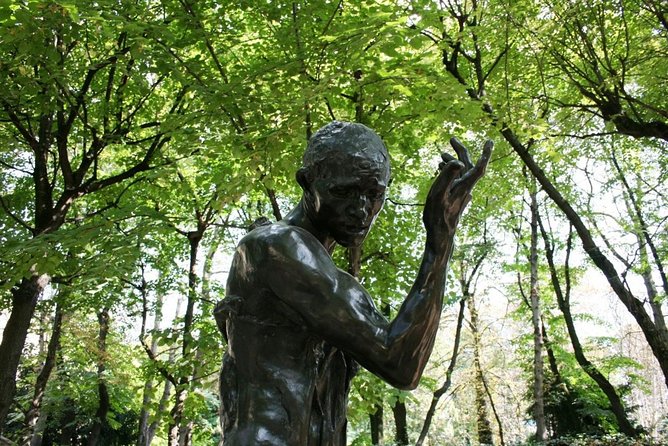
A big theme is the hands. That may sound odd at first, but the museum’s structure pushes you to notice them: hands are where emotion shows up fast. In sculpture, fingers don’t move. Still, Rodin makes them feel active—caught mid-thought, mid-action, mid-release.
You’ll also look at his life-sized work, including The Walking Man. This piece helps you understand Rodin’s sense of weight and stride. It’s one thing to see a figure standing in a museum display case-like setting. It’s another to see the feeling of motion captured at scale, where the body looks like it could step forward into your space.
If you’ve ever felt museum audio guides are too slow or too generic, a real guide helps more here. You’re guided to the parts that actually train your eye—like how Rodin repeats motifs, or how a small shift in posture changes the whole reading of a figure.
I also like that the paintings are included in your route. Even if you focus on sculpture most of the time, the presence of paintings helps you see how Rodin’s collecting and looking shaped his approach. It’s a reminder that art-making is also art-watching.
Rodin’s circle in clay: Balzac and contemporaries
Rodin didn’t just make figures; he made interpretations of people. One of the tour’s strengths is how it brings in his contemporaries—especially through how Rodin depicted them, including Honore de Balzac.
That connection helps you understand portraits in a different way. Instead of thinking only about physical resemblance, the guide frames the figure as a concept—an idea of intellect, presence, and personality expressed through clay studies. You’re not only learning who Balzac was. You’re learning how Rodin used artistic tools to suggest character and temperament.
This part of the tour is where a good guide can feel like the difference between seeing sculptures and understanding them. In the supplied guide names—Donja, Ana, Julien, Sunday, Barbara, Malaika, and Flor(i)ant—you’ll see a pattern: people praised guides for explaining the cultural and historical context behind the art, not just describing what you’re already looking at.
That doesn’t mean every guide will match your exact taste, of course. One account flagged a more surface-level walkthrough, so if you truly want deep commentary, I’d arrive ready with questions—especially about how the guide connects sculpture choices to the era and to Rodin’s life.
You can also read our reviews of more museum experiences in Paris






Gardens after the galleries: sculptures outdoors
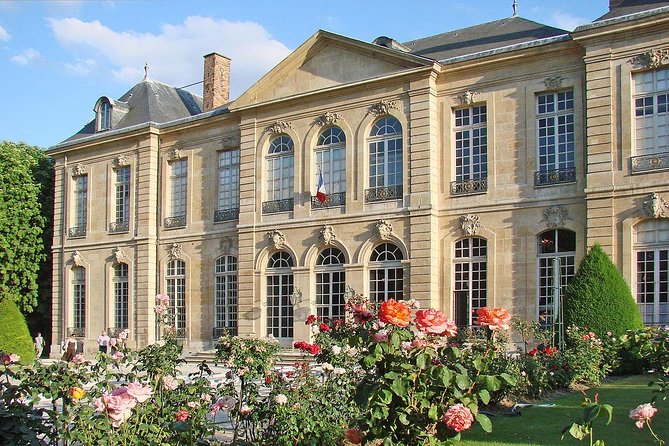
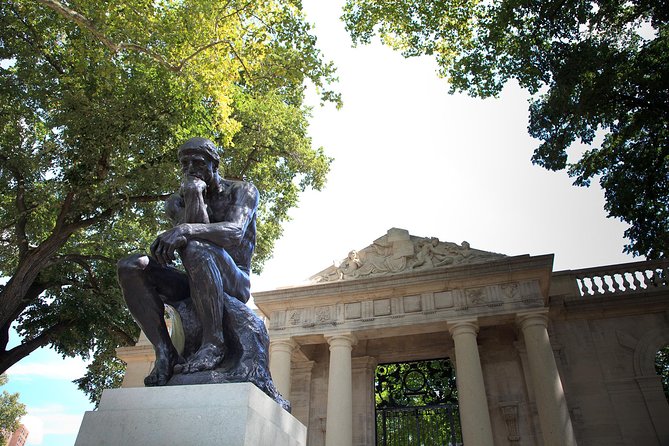
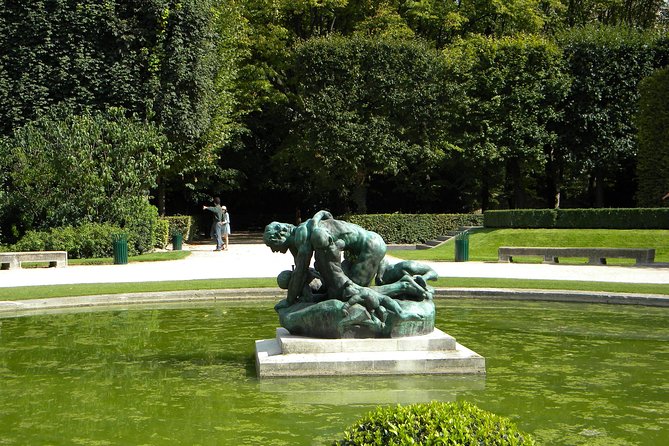
The museum visit doesn’t end in the rooms. After the interior portion, you can stroll the manicured gardens, where more sculptures are on display. This shift is more than a pleasant break. It changes how you experience the works.
Outdoor viewing adds real-world texture. You’ll see pieces against sky light and changing shadows, and that can make certain details feel sharper. Rodin’s work often carries movement and tension, and the garden setting gives that energy a natural stage.
This is also where the tour can feel especially “Paris.” You’re not just doing museum hours—you’re pairing art with a calm walk through sculpted space. If you’re visiting during warm weather, it’s a great way to cool down from indoor crowding.
One note: there can be extra time outside before entering the museum proper. If you’re sensitive to cold, heat, or rain, plan accordingly. Layers help in Paris, even when the forecast seems fine earlier in the day.
Price and logistics: does $142.89 feel worth it?

At $142.89 per person for about 2 hours, this is not a budget museum outing. But it can be good value when you weigh what you’re buying:
- Skip-the-line guided entry saves time, and time is money in Paris.
- Entrance fees are included, so you’re not juggling extra charges on the spot.
- The guide route focuses on major works—so you’re paying for interpretation, not just access.
The big variable is the tour option. The information says tour guide exclusively for you does not apply if you choose the SAVE! BOOK SEMI-PRIVATE option. That means the experience may shift from a fully private feel to a shared small-group dynamic. If you’re traveling with someone you want to do everything together with, I’d lean toward the option that keeps the guide time focused on your group.
Also, skip-the-line isn’t a guarantee that you never wait due to security. So you’re buying reduced friction, not perfect magic.
Logistics-wise, hotel pickup and drop-off are not included. That’s normal for city tours, but it matters for budgeting. Use Uber or a taxi to avoid dragging bags and walking across traffic-heavy streets with museum gear. And because there’s a no-large-bags rule, pack light if you can.
For timing, the tour is commonly booked about 52 days in advance on average. That’s a hint you should book early during peak weeks if you want your preferred slot.
Who should book this Rodin Museum tour?
This tour fits you if you want a guided route that brings out the meaning behind what you’re seeing. It’s a strong choice for:
- First-timers to the museum who want the top works and the story links.
- Art lovers who like specific themes, like hands, gesture, and human form studies.
- People who prefer structure over wandering room-to-room.
It’s less ideal if you want total freedom to roam slowly with no pacing. The route is built for highlights in a set time window, so you won’t linger for hours on every label.
Wheelchair access is listed as wheelchair friendly, but it does not apply if you choose the SAVE! BOOK SEMI-PRIVATE option. If mobility access is a must, confirm you’re booking the option that maintains wheelchair friendliness before you go.
Should you book? My take on the decision
If your priority is a Rodin Museum guided tour that keeps you moving, gets you past the worst waiting, and helps you understand what you’re looking at, I think this is a smart booking. The combination of indoor masterpieces—The Gates of Hell and The Thinker—plus the garden walk gives you a rounded experience in about two hours.
If you hate any waiting at all, or you’re traveling with bulky bags, adjust expectations and pack light. And if you care deeply about commentary, ask questions early and make sure the guide style matches what you want.
Overall: this is a good value when you treat it as part of your Paris art plan, not a quick add-on.
FAQ
How long is the Rodin Museum skip-the-line guided tour?
It runs about 2 hours (approximately), with a duration listed as 1.5–2 hours.
Is admission included?
Yes. Entrance fees are included in the tour price.
What language is the tour offered in?
The tour is offered in English.
Does it really skip the lines?
The tour is marketed as skip-the-line for museum entry, though security may still create some waiting.
Where do I meet for the tour?
You meet at Musée Rodin, 77 Rue de Varenne, 75007 Paris, France.
Is hotel pickup or drop-off included?
No. Hotel pickup and drop-off are not included, and using Uber or a taxi is recommended.
Are large bags allowed inside the museum?
No large bags or suitcases are allowed. Only handbags or small thin bag packs are allowed through security.
Is the tour wheelchair friendly?
Wheelchair friendly access is listed, but it does not apply if you choose the SAVE! BOOK SEMI-PRIVATE option.
What should I do if the museum opening is delayed?
If the museum opening time is delayed more than 1 hour from the tour starting time, you’ll be given an appropriate alternative. In those cases, refunds or discounts are not provided.