REVIEW · PARIS
The Musée d’Orsay in Focus: Impressionists & Beyond (Max 6)
Book on Viator →Operated by Fat Cat Tours · Bookable on Viator
Paris can swallow your time fast.
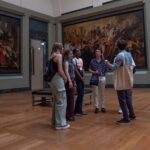
This 2-hour small-group visit to the Musée d’Orsay helps you make sense of 19th-century art quickly and intelligently. I like that you get an expert, licensed guide, and I also like that you start with guided focus and then continue on your own with post-impressionist works. A possible drawback: you’ll need to walk through a lot of museum space in a short window, so it helps to plan for breaks.
What really makes this tour feel worth it is the way the guide connects the art to the world that produced it. You’ll hear about big changes in the period—like the invention of paint tubes and the arrival of trains and electricity—so Monet, Renoir, Degas, and Van Gogh land in context, not just as famous names.
The other thing to consider is the pace: this is built for active participation, not a slow sit-and-stare tour. Guides can accommodate needs for occasional seating, and that flexibility matters if you’re older or just prefer fewer standing-only stretches.
In This Review
- Key highlights to know before you go
- Why the Musée d’Orsay experience works so well in 2 hours
- Getting there and using skip-the-line access (without losing your momentum)
- From tubes of paint to trains and electricity: the time period context that makes art click
- Impressionists you’ll recognize faster: Monet and Renoir in plain terms
- Degas and the rebel mindset: learning to look at relationships, not just styles
- Van Gogh and the transition to post-impressionism (your self-guided payoff)
- What it’s like with guides Adam and Lilijana (and why that matters)
- How to get the most out of your own time inside the museum
- Price and value: what $190.52 buys you in real terms
- Who should book Musée d’Orsay in Focus
- Quick practical tips before you go
- Should you book this tour or not?
- FAQ
- How long is the Musée d’Orsay in Focus tour?
- Is the tour offered in English?
- What group size should I expect?
- What’s included in the price?
- Where does the tour start and end?
- Can I cancel for a full refund?
Key highlights to know before you go
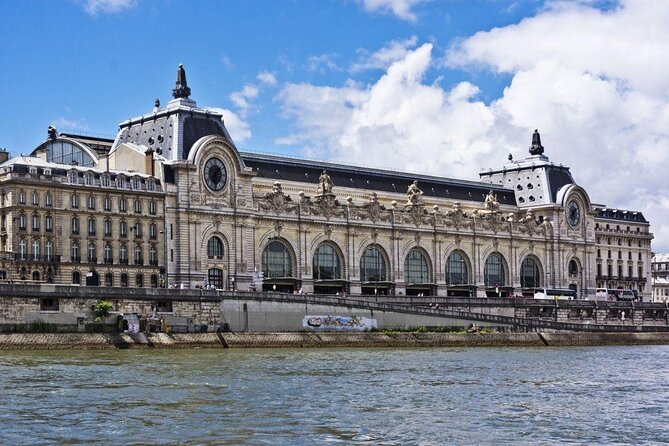
- A licensed English guide for a maximum of 6 people, so questions actually get time
- Skip-the-line access and museum entry tickets included, so you start seeing art sooner
- A focused timeline (1848 to 1914) that frames Impressionism and what comes next
- Monet, Renoir, Degas, and Van Gogh explained with the relationships among the artists
- Guided insight first, then time on your own to keep exploring post-impressionist works
- Real guide styles you can expect, including Adam’s clear diction and Lilijana’s fast navigation through the galleries
Why the Musée d’Orsay experience works so well in 2 hours
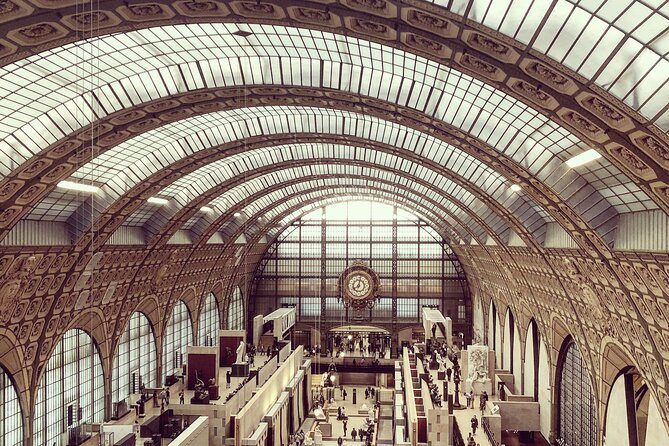
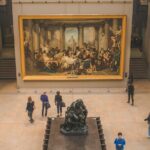
The Musée d’Orsay is one of those Paris stops that can feel overwhelming if you go in cold. The building holds a long sweep of art, from the mid-19th century into the early 20th century. That date range matters, because the art isn’t just “pretty pictures”—it’s tied to technology, shifting society, and new ways of seeing.
This tour is designed around that problem. Instead of handing you a museum map and hoping for the best, you get a guide who can steer you toward the most important work and explain why each artist is connected to the next. You’ll also learn to look beyond surface style—brushwork, light effects, and composition—toward the bigger story of how artists pushed back against what was expected of them.
And yes, you’ll see famous paintings. But what makes this time slot so useful is that you’re not just collecting titles. You’re building a mental framework for how Impressionism forms, what happens as it spreads, and where post-impressionist thinking takes over.
You can also read our reviews of more tours and experiences in Paris.



Getting there and using skip-the-line access (without losing your momentum)
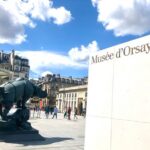
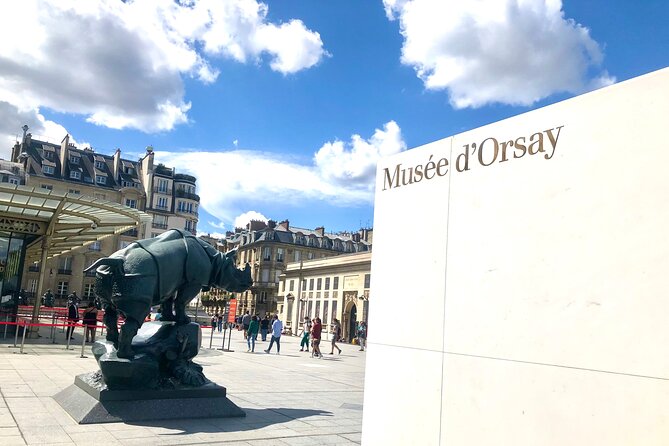
Meeting at the Musée d’Orsay Esplanade Valéry Giscard d’Estaing is straightforward, and the tour ends inside the museum. That last part matters: you don’t end up shuffling around outside, trying to figure out where your self-guided time should begin.
The skip-the-line element is also a big deal for a short tour. When you’re only on-site for about 2 hours, every minute you spend waiting is a minute you could spend looking closely. With this format, you start working immediately: guide talks, you move through key galleries, you get context, then you keep exploring on your own.
Group size is capped at 6 travelers, and that has a practical effect. You can ask questions without the tour feeling like a lecture with no air in it. You’re also more likely to notice what the guide points out, because you’re not just drifting behind a crowd.
From tubes of paint to trains and electricity: the time period context that makes art click
One of the most helpful things this guide does is treat the museum like a window into a changing world. The period covered here—1848 to 1914—was not calm. Society changed fast. New inventions and new transportation reshaped daily life, and artists responded.
You’ll hear about the invention of paint tubes, which is the kind of detail that suddenly makes Impressionism feel logical rather than mysterious. Portable paint changed how painters could work, and that connects directly to why so many artists leaned toward capturing scenes quickly and from direct observation.
The guide also connects the era to trains and electricity. Those aren’t just trivia. They explain why urban life, modern energy, and speed show up in the subjects and moods of paintings. When you can place a work inside that kind of shift, you stop asking why the style looks different and start asking what problem the artist was trying to solve.
This context is one of the reasons the tour feels efficient. You’re not memorizing dates. You’re learning a set of cause-and-effect links that make the artwork easier to interpret when you look at it again later, even after the guide moves on.
Impressionists you’ll recognize faster: Monet and Renoir in plain terms
Yes, you’ll see masterpieces by Monet and Renoir. But the value comes from how the guide frames the “why.” Impressionism is often described in terms of light and color, yet those words can feel vague unless someone points out what to notice.
In this tour, you’ll get explanations that go beyond technique. You’ll learn how the artists relate to each other—who influenced whom, how styles traveled, and how “rebellion” against older expectations shows up in the way paintings are made and presented.
Monet and Renoir are ideal anchors for this approach because they’re central figures, and you can use their works to understand the broader direction of the movement. By the time you’ve seen what the guide highlights, you’ll be able to look at other Impressionist works with more confidence. You’ll recognize patterns: the way the scene is built, the mood created by brushwork, and the feeling that the painting is catching a moment rather than locking it in time.
If you’re the kind of person who likes to leave museums knowing what you just saw, this part is exactly that.
Degas and the rebel mindset: learning to look at relationships, not just styles
A lot of museum tours name artists and list characteristics. This one pays attention to relationships. That matters because Impressionism and what follows weren’t isolated inventions; they were part of a network of conversation, competition, and shared ideas.
Degas is a great example of how this works in practice. The guide isn’t only pointing you to a recognizable name. You’ll learn how the artist’s choices fit into the broader artistic climate of the time. You’ll also get a sense of how these painters pushed boundaries in ways that weren’t always obvious at first glance.
Even if you don’t consider yourself an “art person,” you can still enjoy this section because the guide is connecting dots you’d otherwise miss. You start seeing the museum as a story about artists negotiating new ways of seeing—sometimes quietly, sometimes loudly.
In the small-group setting, that story stays understandable. You’re close enough to hear details clearly, and you’re not rushing through rooms that don’t feel meaningful.





Van Gogh and the transition to post-impressionism (your self-guided payoff)
After the guided portion, you get time to explore post-impressionist works at your own pace. That’s a smart design, because post-impressionism can feel like it’s on a different planet if you only hear it as a concept. You need time to stand in front of a painting and take it in slowly.
This tour’s structure helps: you walk in with a framework, then you use your own eyes to test what you learned. You’ll see Vincent Van Gogh included in the guided focus, and the explanation of his place in the timeline helps you understand why the style shifts the way it does.
Then, when you head into self-guided viewing, you’re not just wandering. You’re looking with a purpose. You can revisit the themes the guide explained and try to spot the movement from Impressionism’s moment-catching mindset toward post-impressionist approaches that lean more toward structure, emotion, and interpretation.
One practical note: because the tour is only about two hours, your self-guided time is best used strategically. Choose a few works that interest you most and stay with them long enough to notice what your eyes might otherwise skip.
What it’s like with guides Adam and Lilijana (and why that matters)
A tour lives or dies on the guide. In this case, I’d pay attention to the guide experiences associated with the tour.
Adam is described as both charming and exceptionally clear, with great diction that makes details easy to follow. There’s also a strong theme of flexibility—he has accommodated requests for occasional seating and adjusted within schedule constraints when needed. That kind of on-the-spot responsiveness can make a short tour feel smoother rather than stressful.
Lilijana is noted for helping people navigate galleries quickly and efficiently, focusing on timely viewing of key masterpieces. Her background in historical and biographic facts is presented in an engaging way, so you come away with more than just “what” you saw.
If you’re picky about communication—clear explanations, good pacing, and a guide who can handle small needs—these are the types of strengths that fit your day in Paris.
How to get the most out of your own time inside the museum
Once the guided portion ends, don’t treat the rest of your time like a scavenger hunt. Use what you learned immediately.
Here’s how I’d do it:
- Pick a short list of works that match the story you just heard (Impressionist edges, then post-impressionist follow-through).
- Slow down for one painting at a time. Let your eyes adjust to the style changes the guide talked about.
- If you need a pause, ask. The tour format and guide experience suggests seating accommodations are possible when needed.
Also, remember you’re inside a museum, not a street festival. The best results come from standing still long enough to notice how brushwork and composition change the emotional tone of a scene.
If you leave with only names, you’ll feel like you wasted the price. If you leave with a mental map of how artists and ideas connect, you’ll feel like you bought a ticket to understanding.
Price and value: what $190.52 buys you in real terms
At $190.52 per person for about 2 hours, this isn’t a budget “quick hit” tour. But value isn’t just price—it’s what you avoid losing.
You’re paying for:
- A licensed expert guide in English
- Admission tickets included
- Skip-the-line entry that matters a lot for short time windows
- A small group max of 6, which boosts the odds you’ll get answers and better attention
For me, the best value metric here is time. If you’re only in Paris for a limited number of museum hours, a guided 2-hour window can be more efficient than spending that same time trying to figure out which rooms matter most.
It also helps that the tour is structured to combine guided explanation with self-paced viewing. That means you get the “teacher’s help” up front, then you still get the freedom to choose what you linger on.
If you love art but don’t want to spend your entire day researching in advance, this cost can feel like a fair trade.
Who should book Musée d’Orsay in Focus
This tour fits best if you want a guided path through major artists without turning your museum day into homework.
You’ll likely enjoy it if:
- You want Monet, Renoir, Degas, and Van Gogh explained with context
- You like small groups and clear communication
- You prefer a short, high-quality museum format rather than a half-day wandering session
- You want a blend of guided learning and independent looking
It may be less ideal if:
- You dislike moving fairly constantly for about 2 hours
- You’re hoping for a slow, open-ended museum “stroll” with lots of free wandering time
The tour notes a moderate physical fitness level requirement, so comfortable shoes and a plan for breaks are smart.
Quick practical tips before you go
- Download or have your mobile ticket ready on your phone.
- Plan to arrive a few minutes early at Esplanade Valéry Giscard d’Estaing so you’re not rushing.
- If you need occasional seating, mention it to your guide early. The experience record includes accommodations for older guests.
- Consider booking ahead. This is often reserved around 110 days in advance, so popular dates can disappear.
Should you book this tour or not?
If you want the Orsay experience without the guesswork, I think you should seriously consider booking. The mix of skip-the-line access, a licensed English guide, and a structured focus on Impressionists and beyond makes the 2-hour window feel productive.
Skip this only if you’d rather roam freely with zero guidance and you’re comfortable building your own narrative through the museum rooms. Otherwise, this is a strong choice for turning a famous museum into an experience you actually understand.
FAQ
How long is the Musée d’Orsay in Focus tour?
The tour lasts about 2 hours.
Is the tour offered in English?
Yes, it is offered in English.
What group size should I expect?
The experience has a maximum of 6 travelers.
What’s included in the price?
The tour includes an expert English-speaking licensed tour guide and all entry tickets. It also includes a mobile ticket.
Where does the tour start and end?
You start at Musée d’Orsay Esplanade Valéry Giscard d’Estaing, 75007 Paris and the tour ends inside the Orsay Museum.
Can I cancel for a full refund?
Yes. You can cancel up to 24 hours in advance for a full refund.