REVIEW · VIENNA
Vienna: Ticket to the Museum of Natural History
Book on GetYourGuide →Operated by Naturhistorisches Museum · Bookable on GetYourGuide
Vienna’s natural history museum is a time machine. You get one day inside a grand Ringstrasse landmark and a chance to see icons like the Venus of Willendorf. I also love how this place mixes serious science with eye-catching rooms, from gemstones to huge dinosaur fossils, all in one historic building.
Two things I especially like: the sheer scope of the collections—over 30 million objects—and the exterior’s palace-like presence on the Ringstrasse. One caution: this museum is big (39 exhibition halls on two floors), so without a simple plan you can lose time wandering.
If you like big ideas, old worlds, and objects you’ll remember later, this ticket is a strong value at $21 for a full day. You’ll just need to pick your priorities before you walk in.
In This Review
- Key things to make your visit count
- Ticket value: what $21 really buys you in Vienna
- Start with the Venus Cabinet: two ancient icons in one room
- The fossil and meteorite-heavy world on the lower floor
- Gemstone bouquet, gold rooms, and the Hallstatt salt-mine story
- The upper floors: animal world displays you’ll want to slow down for
- Behind the scenes: science research that shapes what you see
- Don’t miss the exterior and plan for the rooftop view
- Timing and how to structure your one-day visit
- Who this museum ticket is perfect for (and who might want a different plan)
- Should you book this Natural History Museum ticket?
- FAQ
- What is included with the Vienna Natural History Museum ticket?
- How long is the ticket valid?
- Are there specific entry times I need to choose?
- Can I cancel and get a refund?
- Is there a reserve now & pay later option?
- Is the museum wheelchair accessible?
- Where does this ticket work?
Key things to make your visit count

- Venus Cabinet: the famous Venus of Willendorf and the older Venus of Galgenberg
- Lower-floor fossil power: minerals, rare fossils, giant dinosaurs, and major meteorite collections
- Hallstatt salt-mine room: 7,000 years of mining history in one focused setting
- Gemstone bouquet: Maria Theresa’s gift object displayed in the cabinet halls
- Upper-floor animal halls: mounted specimens including rare and extinct amphibians, reptiles, birds, and mammals
- Optional rooftop guided tour: view Vienna’s center from above if you find a slot
Ticket value: what $21 really buys you in Vienna
This is an admission ticket for one day, so you’re paying for access, not a tight guided program. That’s good news if you like to set your own pace. Vienna’s Natural History Museum is the kind of place where you can easily spend hours—and still feel like you barely scratched the surface.
At $21 per person, the value comes from the museum’s scale and variety. You’re not just looking at a few famous displays. The building holds a huge collection (over 30 million objects) and spreads it across 39 exhibition halls. That means you can build a visit around your interests: prehistory, fossils, gemstones, anthropology, animals, or the big science stories connecting all of it.
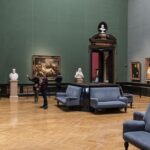
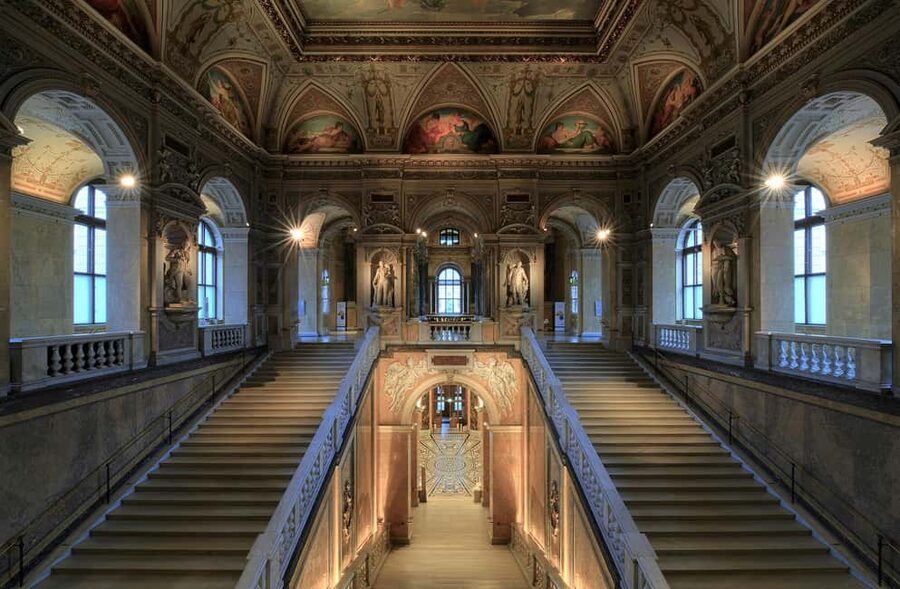
One more value point: the museum is housed in a building designed as a “Palace of Natural Science and Evolution,” created by architects Gottfried Semper and Carl von Hasenauer. It opened in 1889 under Emperor Franz Joseph I. In other words, you’re not just entering a museum—you’re entering a piece of Vienna’s cultural architecture.
A few more Vienna tours and experiences worth a look



Start with the Venus Cabinet: two ancient icons in one room
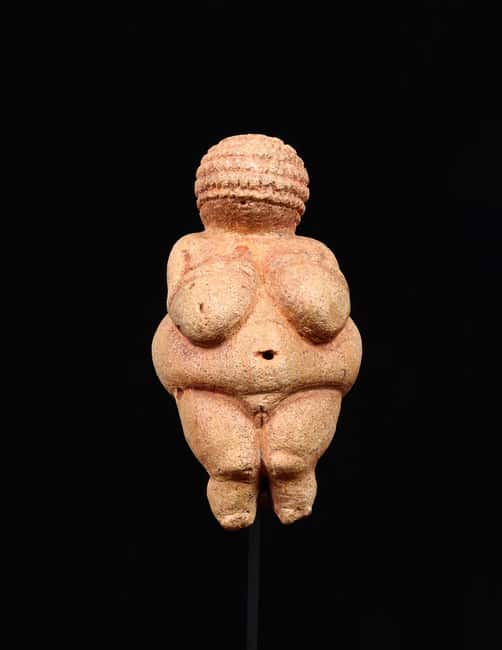
If you only have time for one “must,” make it the Venus Cabinet. This is where the museum shows two of its headline prehistoric figures side by side: the Venus of Willendorf (about 29,500 years old) and the Venus of Galgenberg (about 36,000 years old), noted as the oldest known human figure made of stone.
Why this matters: these objects aren’t just pretty artifacts. They’re milestones for how humans expressed ideas long before writing, long before cities—when survival and belief systems shaped everyday life. If you stop long enough to look at shape, material, and how the figures are presented, you’ll get more than a quick photo moment.
Practical tip: don’t rush this room. Many visitors sprint to the next hall, but the Venus displays are exactly the kind of slow-looking exhibits that make the ticket feel worth it. Give yourself a few minutes of calm here, then move on with momentum.
The fossil and meteorite-heavy world on the lower floor

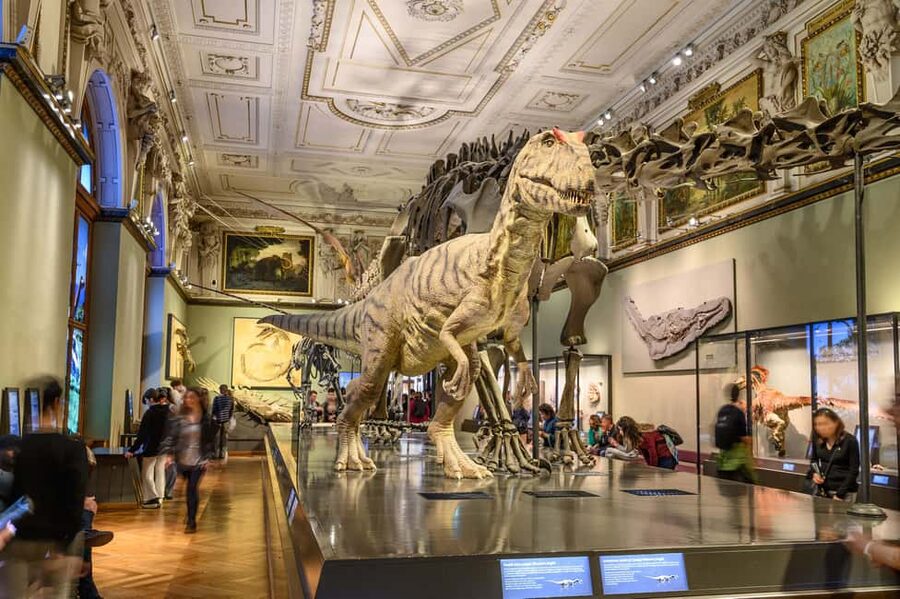
The lower floor is where the museum leans hard into the big physical story: Earth’s history and the evidence left behind. You’ll find gemstones and minerals, rare fossils, giant dinosaur exhibits, and the museum’s meteorite collections, described as among the largest and oldest in the world.
If you’re into fossils, plan this area early. Dinosaur displays can be extremely popular, and you’ll enjoy them more if you arrive with your energy up rather than at the end of a long day.
Even if dinosaurs aren’t your main interest, this lower-floor layout helps you connect themes. Minerals and meteorites are the Earth’s “materials,” fossils are the “past life,” and the museum’s presentation ties it to longer development over time. It’s not just science facts—it’s a way of reading Earth like a timeline.
Also look for the museum’s displays on the origin and development of mankind. Even when you’re not looking for anthropology specifically, this portion gives context to why prehistory and human history sit inside the same museum building.
Gemstone bouquet, gold rooms, and the Hallstatt salt-mine story
The museum’s cabinet rooms feel like stepping into a different genre of collecting—more intimate, more detailed, and often more emotional. One standout example is the gemstone bouquet: a gift from Maria Theresa to her husband, Emperor Franz I Stephan of Lorraine. Seeing a treasured object like that in the same complex as fossils and prehistoric human artifacts makes the museum feel refreshingly human.
Then there are the prehistoric treasure rooms. The Gold Cabinet includes prehistoric gold and silver treasures, including the second oldest gold find in the world. If you like objects with a strong sense of craftsmanship and age, this is a good counterbalance after the dinosaur halls. You’ll shift from massive time (dinosaurs) to human time (craft, trade, ritual).
Don’t miss the room dedicated to Hallstatt. It focuses on finds from a prehistoric mine and burial ground where 7,000 years of uninterrupted salt mining left behind a wealth of archaeological traces. This display is valuable because it turns “history” into a specific place and a specific material: salt. Salt is one of those resources that changes diets, economies, and power—so the story behind the objects feels grounded.
If you’re short on time, choose one “history of humans” stop (like Venus or Hallstatt) and one “materials from Earth” stop (like gemstones, meteorites, minerals). That pairing keeps your visit coherent instead of random.
The upper floors: animal world displays you’ll want to slow down for
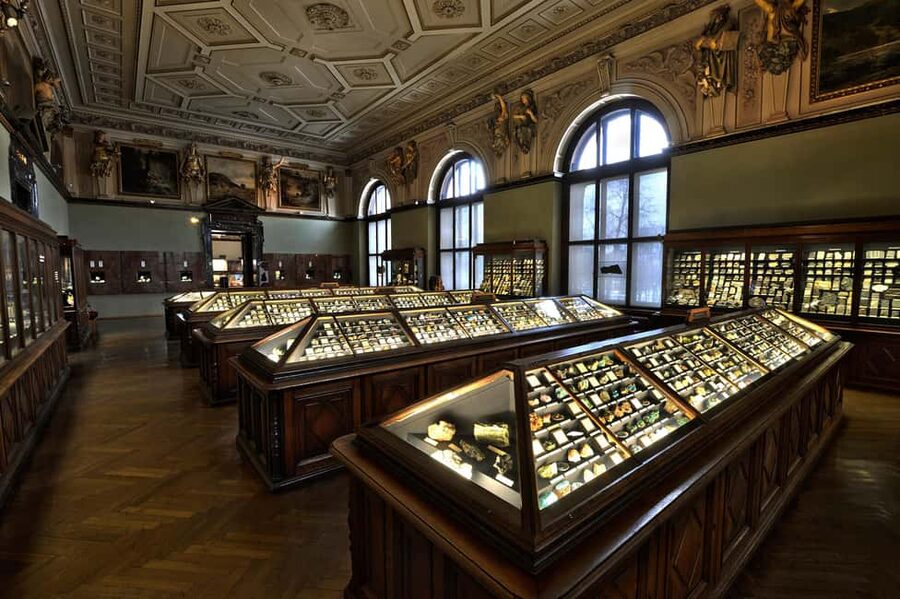
Upstairs, the museum turns from geology and prehistory to the diversity of life. You’ll see the animal world from simpler marine organisms to highly developed mammals, shown through mounted specimens. The exhibits include rare and extinct amphibians and reptiles, plus mammals and birds.
This is the part of the visit where I recommend slow looking. Mounted specimens have their own style: they feel like old-school natural history, less like a moving video and more like a careful record. If you take a moment to notice size, posture, and how collections are arranged, you’ll get more than just a list of species.
A practical note: because this floor is about breadth, it can be easy to skim. Don’t. Pick a theme that interests you—amphibians, reptiles, birds, or mammals—and chase that thread through the rooms. You’ll come away with a stronger memory than if you try to see everything.




Behind the scenes: science research that shapes what you see
A museum this large doesn’t work on luck. Behind the scenes, the description notes that 60 scientists are working on cutting-edge issues across human, earth, and life sciences. They focus on questions tied to environmental and climate topics, and the knowledge gained is regularly incorporated into the public collection design.
You might not see the researchers while you’re visiting. But you can feel the impact in the structure of the exhibits: the museum doesn’t just show objects, it shows relationships between objects—between time periods, between Earth processes, between life forms, and between evidence.
If you like museums that feel intellectually serious without feeling cold, this is one of those places. The science is there, even if the lab work stays offstage.
Don’t miss the exterior and plan for the rooftop view
Even before you enter, the museum’s exterior on the Ringstrasse is a big deal. It’s part of why this stop works as a Vienna sightseeing anchor. This building isn’t a hidden museum tucked away from city life—it’s a centerpiece.
Once inside, the rooftop is an extra reason to think beyond the galleries. The museum offers the opportunity to take a guided tour to the rooftop for a fantastic view of Vienna’s city center and the Ringstrasse buildings. Since this rooftop option is a tour experience inside the museum day, it’s smart to check what timing is available when you arrive.
How to plan it: if you’re going in high season or on a weekend, aim to handle the major exhibition areas first, then leave time to see the rooftop view if you can. If you can’t, don’t let that derail your day. The main collections alone are enough for a full visit.
Timing and how to structure your one-day visit
You have a one-day ticket, and with a museum this size, timing matters more than people expect. Most visitors get into trouble by trying to do it all in one continuous loop.
Here’s a structure that keeps the day fun instead of exhausting:
- Start with your top “icon” stop: Venus Cabinet if that’s your priority, or fossil halls if you’re chasing dinosaurs first.
- Spend a focused block on the lower floor: minerals, fossils, meteorites, and one or two cabinets (gold or gemstones).
- Finish upstairs with one theme: animals and mounted specimens, not every room in sight.
- Add optional time for rooftop views if a guided slot fits your schedule.
If you only have a few hours, make it count by choosing two floors worth of priorities. Don’t force “everything” into a half-day brain. You’ll enjoy the museum more when your attention stays sharp.
Also, wear comfortable shoes. The museum is impressive, but it involves a lot of walking across exhibition halls on two floors.
Who this museum ticket is perfect for (and who might want a different plan)
This ticket is ideal for you if you like:
- Big, memorable objects like the Venus of Willendorf and fossil displays
- Natural history that ties prehistory, minerals, and animals into one coherent day
- Architecture and classic Vienna sightseeing on the Ringstrasse
- A self-guided pace where you can linger
It may be less ideal if you:
- Want a very short, structured experience with minimal walking
- Get overwhelmed by very large museums and prefer smaller collections
- Don’t enjoy browsing or slow-looking exhibits
If you’re traveling with kids, this is the kind of museum where dinosaur and animal displays can do the heavy lifting. If you’re traveling solo or as a couple, it also works well because you can split and reunite—then compare favorites, especially if one of you is more into prehistoric figures and the other into fossils.
Should you book this Natural History Museum ticket?
Yes, I’d book it if you want a one-day anchor stop in Vienna that feels both educational and visually satisfying. The value is real because the ticket gets you into a museum with major highlights across both prehistory and natural science. Plus, you’re stepping into a Ringstrasse palace that’s part of Vienna’s identity, not a tucked-away venue.
Book this ticket if:
- You’re excited by fossils, meteorites, gemstones, and prehistoric objects
- You want a flexible day plan (the ticket is for a day, not a rushed itinerary)
- You like classic museum halls with lasting displays
Skip or look for a different option if:
- You only want a quick hit and plan to do almost everything else in Vienna in the same day
- Large museums stress you out more than they excite you
FAQ
What is included with the Vienna Natural History Museum ticket?
The ticket includes admission to the Museum of Natural History in Vienna.
How long is the ticket valid?
It is valid for 1 day.
Are there specific entry times I need to choose?
You’ll want to check availability to see starting times.
Can I cancel and get a refund?
Yes. You can cancel up to 24 hours in advance for a full refund.
Is there a reserve now & pay later option?
Yes. There’s a reserve now & pay later option so you can book without paying immediately.
Is the museum wheelchair accessible?
Yes, the experience is listed as wheelchair accessible.
Where does this ticket work?
It’s for Vienna, Austria.