REVIEW · MONT ST MICHEL
Airborne Museum Admission Ticket
Book on Viator →Operated by AIRBORNE MUSEUM · Bookable on Viator
This museum turns D-Day into a story you can feel. In Sainte-Mère-Église, the Airborne Museum uses film, artifacts, and a Histopad augmented reality guide to bring the American parachute landings to life.
I especially love the way the experience starts in the themed space called Operation Neptune and quickly gets you thinking like a soldier on June 6, 1944. I also like that you’re not tied to a rigid schedule once inside—you can move at your own pace with a self-guided setup. The only downside to plan around is that your ticket does not include skip-the-line entry, so peak hours can add a wait.
If you want a focused, high-value stop near Utah Beach, this one is easy to recommend. You’ll spend about 2 hours (roughly) learning how the 82nd and 101st Airborne supported Allied operations in Normandy, and you’ll get hands-on interpretation through the Histopad tablet. One consideration: because it’s flexible-entry and self-paced, you’ll want to pick your time thoughtfully so you’re not rushing through the AR parts.
In This Review
- Key highlights at a glance
- Airborne Museum basics in Sainte-Mère-Eglise
- Operation Neptune: a storyline you can follow in one visit
- Histopad augmented reality: your pace, your timeline
- The film and what it adds beyond D-Day headlines
- C-47 aircraft artifacts and why aviation matters here
- What to expect from a self-guided visit (and how to not rush it)
- Timing and opening hours: when the museum feels easiest
- Price and value: why $13.32 can be a smart Normandy add-on
- Who this museum fits best (and who might want a different plan)
- Should you book the Airborne Museum?
- FAQ
- What does the Airborne Museum admission include?
- How long does the museum visit take?
- Where is the Airborne Museum?
- Is skip-the-line entrance included?
- What opening hours should I expect?
- Is there a limit on group size?
- What is the cancellation policy?
Key highlights at a glance
- Operation Neptune theater-style setup that reenacts the path from England to Sainte-Mère-Église
- Histopad tablet with augmented reality for a “back in time” feel
- A 20-minute film that covers life under German occupation and liberation in the Cotentin region
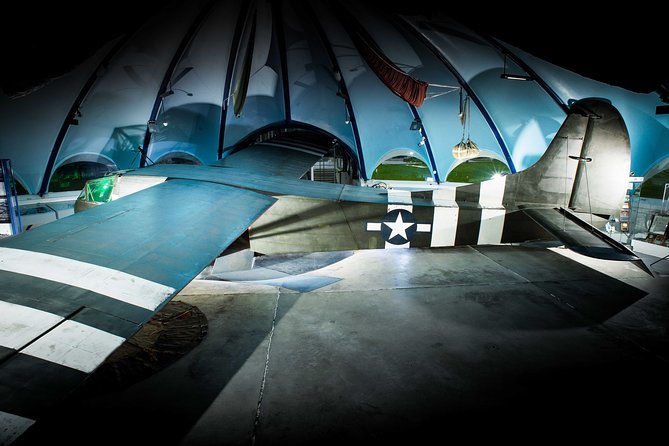
- C-47 related exhibits and WWII aviation artifacts to make the story concrete
- Practical museum visit length: about 2 hours for most people
Airborne Museum basics in Sainte-Mère-Eglise
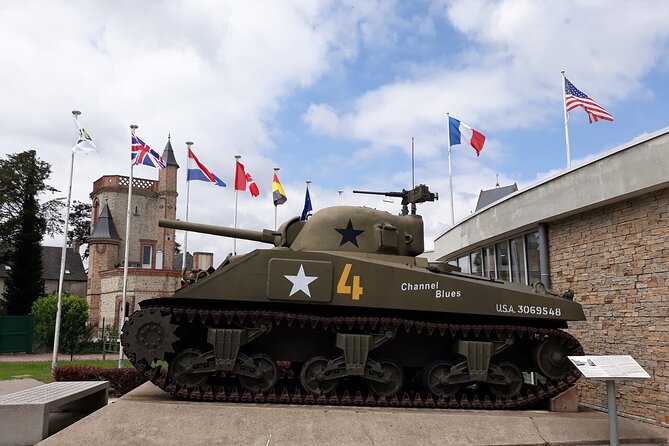
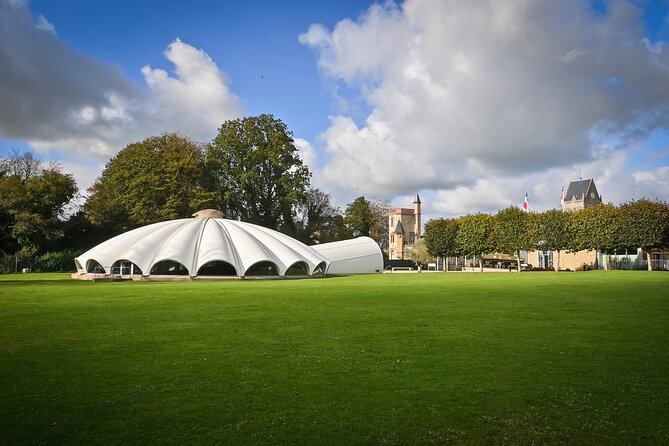
Sainte-Mère-Église sits right in the D-Day orbit, so the Airborne Museum hits well if you’re already planning Normandy sites around Utah Beach and the Normandy Landing Beaches. The setting matters here: you’re not just reading about events. The museum is tied to the place where the paratroopers landed, and the exhibits keep returning to the same core story—American airborne troops and what their arrival meant for Allied operations.
Your ticket is $13.32 per person, and you can usually find it booked about 26 days in advance on average. That’s a useful planning signal: don’t wait until the last minute if you’re traveling in high season or on a day you really want to keep free.
The museum is designed to be simple to use. You buy admission, then choose when to enter (flexible entrance). Once inside, it’s self-guided, so you’re free to slow down, repeat something on the Histopad, or move on when you feel you’ve got the gist.
Operation Neptune: a storyline you can follow in one visit
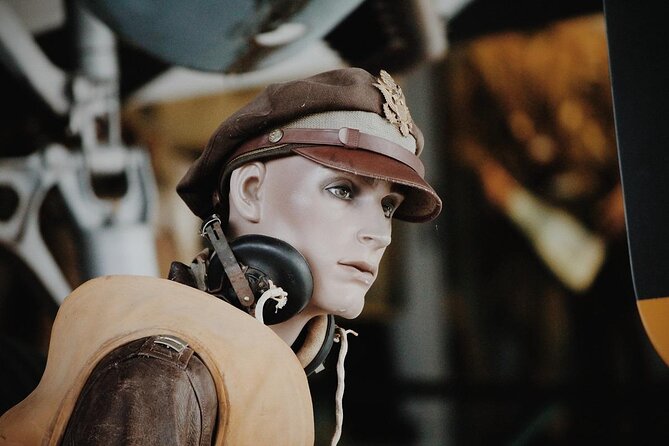
The first “anchor” in the museum is the building experience called Operation Neptune. It’s built around the idea that you’re stepping into the events leading up to June 6, 1944. The experience is presented in a way that starts you off at night—then moves you through the jump and landing into Sainte-Mère-Église amid fighting.
Even if you know the broad outline of D-Day, I like how this part frames airborne operations as a sequence with consequences. The museum doesn’t only focus on the dramatic moments. It pushes you to think about timing, uncertainty, and what happens right after troops hit the ground.
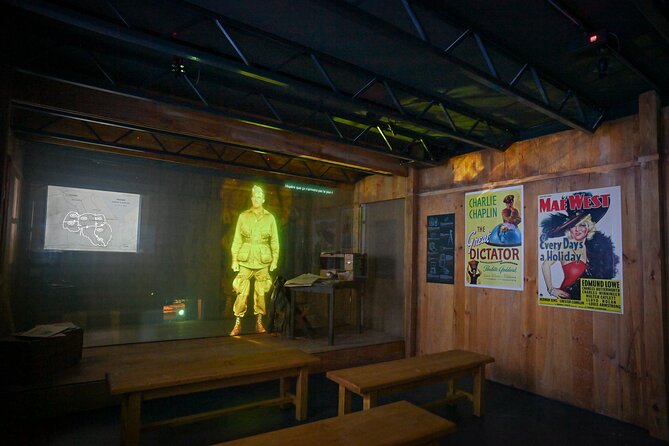
A key detail that makes this setup worth your time: there’s a 20-minute film that recounts life under German occupation and the liberation of Sainte-Mère-Église and the Cotentin region. That film length is right for a single museum block. It’s long enough to matter, but short enough that you won’t feel trapped in the dark.
Possible drawback: this opening is intentionally immersive and story-forward. If you’re the type who prefers a straightforward museum of objects with minimal narration, you may find the “living the moment” approach a little intense at first. You can still control your pace afterward.
Histopad augmented reality: your pace, your timeline
The star tool here is the Histopad—a tablet included with admission. It uses augmented reality and interactive features, with hyper-realistic presentation meant to place you in Normandy scenes from 1944.
What you’ll like most is that Histopad doesn’t work like a one-size-fits-all audio guide. You can slow down and trigger scenes as you go. That matters because AR experiences often feel best when you’re not rushing. If you’re traveling with kids or you just want to take breaks, self-paced control makes a real difference.
This Histopad guide is also framed as a way to “go back in time.” In practice, that means the museum helps you connect what you’re seeing—artifacts, aircraft references, and the film story—to what the battlefield experience may have looked like. It’s not just facts on a wall. It’s explanation paired with visual storytelling.
One practical point: because Histopad is a tablet, your “best route” inside becomes your own. If you’re serious about getting the most from it, plan on using it for more than a quick scan. The museum is about 2 hours for a reason; the AR component takes time to do well.
The film and what it adds beyond D-Day headlines
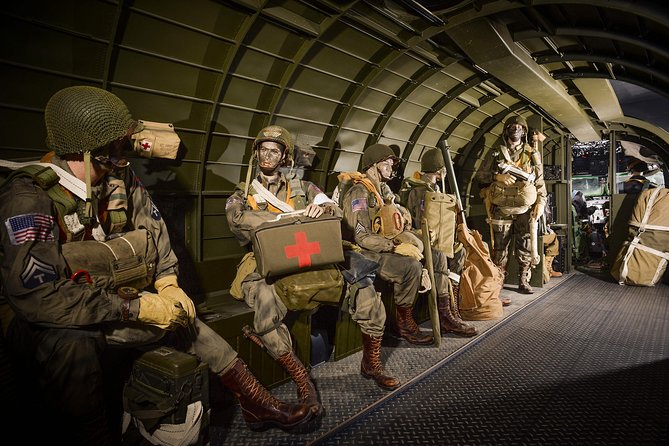
The 20-minute film is a major reason this museum works. Many WWII museums can get stuck in famous battles and military movement. Here, the narrative stretches into what the local population endured before liberation—life under German occupation—and then follows through to the liberation of Sainte-Mère-Église and the broader Cotentin region.
That human thread is where the Airborne Museum earns its keep. You can leave feeling you understand not just where paratroopers landed, but what that landing changed for the people living there. If you’ve ever felt that D-Day summaries can be too “timeline only,” this film helps balance the story.
Also, the film timing fits the visit. You’re not forced to watch something that eats the whole afternoon. Instead, it acts like a spine, so when you move to other exhibits, you’ll understand what you’re looking at and why it matters.
C-47 aircraft artifacts and why aviation matters here

The museum includes WWII artifacts, including a C-47 aircraft component/exhibit. That aviation connection matters because airborne operations depend on air transport, aircraft crews, and the mechanics of getting troops into the right place at the right time.
When a museum includes an aircraft element, it changes how your brain stores the story. Instead of “paratroopers landed,” you start thinking about the planes, the logistics, and the mission setup that made the landing possible. It gives weight to the airborne part of the D-Day story, not just the ground fighting.
In the same spirit, the museum experience is presented with an aircraft simulation feel—one that some visitors highlight as feeling like a simulator inside an aircraft setting, and even a glider-like sensation is mentioned in feedback. Even if you don’t have strong aerospace interests, that kind of sensory framing can make the experience more memorable than another room of text.
What to expect from a self-guided visit (and how to not rush it)
This is a self-guided museum stop, and that’s a double-edged sword in the best way. Good news: you can linger over Histopad and films. Not-so-good news: if you walk in and treat it like a quick checklist, you’ll miss the payoff.
Here’s a practical way to approach it:
- Start with Operation Neptune so you get the story sequence in your head.
- Plan a dedicated block for the 20-minute film so you don’t end up watching it late when you’re tired.
- Use Histopad at a comfortable pace, especially if you like seeing scenes triggered as you move through the museum.
Group size is kept small (up to 9 travelers), which helps the experience feel calm rather than chaotic. Even though it’s flexible entry, small group dynamics usually mean the museum staff and flow feel more manageable.
Most people take about 2–3 hours, and the “approx. 2 hours” estimate is realistic if you focus on the film plus Histopad without getting stuck on every exhibit.
Timing and opening hours: when the museum feels easiest
Hours vary by season, so check your travel dates:
- May 1 to August 31: 9:00 AM–7:00 PM
- September: 9:30 AM–6:30 PM
- October to November: 10:00 AM–6:00 PM
If you want the smoothest visit, pick a time that avoids your day’s biggest crowds. Since your ticket does not include skip-the-line entry, peak entry moments could add waiting time. If you’re also planning other Normandy stops, timing matters even more because you’ll want to avoid a domino effect where a delay ruins your next plan.
Also, flexible entrance is your friend. If you arrive early, you can adjust and still choose a better moment to start the experience rather than feeling pressured.
Price and value: why $13.32 can be a smart Normandy add-on
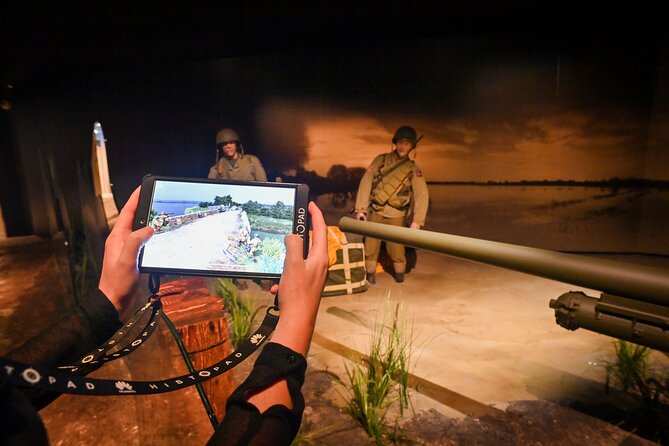
At $13.32, the Airborne Museum is priced like a practical, focused museum rather than a premium, half-day attraction. The best value angle is what’s included: your admission comes with the Histopad with augmented reality. That’s not just an optional extra—it’s part of how you experience the museum’s main “time travel” storytelling.
You’re also getting a complete arc in one go:
- a themed WWII introduction (Operation Neptune)
- a 20-minute film with context about occupation and liberation
- interactive AR scenes via Histopad
- artifacts including a C-47-related exhibit
For Normandy, where costs can add up across multiple sites, this kind of admission—low-ish price, bundled interpretation tool, and a visit length that doesn’t consume your entire day—tends to be a good deal.
Who this museum fits best (and who might want a different plan)
This museum suits you if you want a meaningful D-Day stop that doesn’t demand a full day. It’s also a strong match if you like interactive tech that helps you visualize what otherwise might stay abstract.
It’s especially good for:
- Families: feedback includes enjoying it with children from ages 6 to 12
- People who like WWII stories with a strong local connection
- Anyone who wants a Normandy stop close to Utah Beach and the Landing Beaches rather than a drive into another region
It might not fit as well if:
- You want a pure object-only museum with minimal storytelling and minimal screen/tablet time
- You’re sensitive to longer indoor film moments early in the day (the museum does have that 20-minute film segment)
Accessibility-wise, service animals are allowed. If you have specific needs beyond that, you’ll want to plan around how much tablet interaction you prefer and how comfortable you are with indoor environments.
Should you book the Airborne Museum?
Yes, I think you should book this if you want a high-signal Normandy museum stop that connects airborne operations to what people experienced on the ground. The combo of Operation Neptune storytelling, a 20-minute context-setting film, and an included Histopad AR guide is a strong mix for the time and money.
Book it sooner rather than later if your travel window is tight, since tickets are often reserved about 26 days ahead on average. And since skip-the-line entry isn’t included, choose a start time you can enjoy without rushing.
If your Normandy plan needs a focused 2-hour experience with real interpretive value, this one belongs on your list.
FAQ
What does the Airborne Museum admission include?
Your ticket includes a Histopad with augmented reality. The museum is also self-guided, so you explore at your own pace.
How long does the museum visit take?
Most visits take about 2 hours (approximately).
Where is the Airborne Museum?
It’s in the Normandy town of Sainte-Mère-Eglise, close to Utah Beach and the Normandy Landing Beaches.
Is skip-the-line entrance included?
No. Your ticket includes admission and the Histopad, but skip-the-line entrance is not included.
What opening hours should I expect?
Hours vary by date range:
- May 1 to Aug 31: 9:00 AM–7:00 PM
- Sept: 9:30 AM–6:30 PM
- Oct to Nov: 10:00 AM–6:00 PM
Is there a limit on group size?
Yes. The experience has a maximum of 9 travelers.
What is the cancellation policy?
Cancellation is free up to 24 hours in advance for a full refund.
If you tell me your travel month and whether you’re doing Utah Beach the same day, I can suggest a smart start time to fit the museum without stress.