REVIEW · MONT ST MICHEL
Normandy Victory Museum admission ticket
Book on Viator →Operated by Normandy Victory Museum · Bookable on Viator
You don’t expect to learn D-Day from hedgerows. That’s exactly what you get at the Normandy Victory Museum in the Carentan area—an emotional, well-built look at the weeks after June 1944, centered on the Battle of the Hedges.
I love the scale of what’s on display—20 larger-than-life scenes plus 10,000+ original objects—and I also like how the museum uses old military vehicles to make the story feel physical, not textbook.
One thing to consider: it’s easy to focus so hard on the exhibits that you can lose track of time. Give yourself a full 1.5 to 2 hours, and if you’re pairing this with other stops around Normandy, plan buffer time for parking and moving through everything.
In This Review
- Normandy Victory Museum: Key Things You’ll Notice
- Why This Museum Works in Normandy (And Not Just for WW2 Fans)
- Entering the Story: The “Battle of the Hedges” Setup
- The Exhibits: Scenes, Original Artifacts, and Military Vehicles
- Lifelike scenes that explain the ground reality
- A serious collection: 10,000+ original items
- Vehicles outdoors: the icing on the war-story
- Information that doesn’t fight you
- How Much Time to Plan (And When You’ll Get the Best Visit)
- Price and Value: Is $11.95 a Good Deal?
- Practicalities That Actually Matter on the Day
- Mobile ticket, English support, and free Wi-Fi
- Food and drink: plan ahead
- Dogs and service animals
- Accessibility basics
- Where This Fits in Your Normandy Route
- Who Should Book This Museum?
- Should You Book the Normandy Victory Museum Ticket?
- FAQ
- How long does the Normandy Victory Museum visit take?
- What’s the ticket price?
- Is the museum visit available in English?
- Are food and drinks included with the ticket?
- What are the opening hours?
- Do I need to print a ticket?
- Are pets allowed?
- Is Wi-Fi available?
- Can I cancel for a full refund?
Normandy Victory Museum: Key Things You’ll Notice
- Battle of the Hedges spotlight: A less-covered angle on the Normandy landings and the fighting that followed.
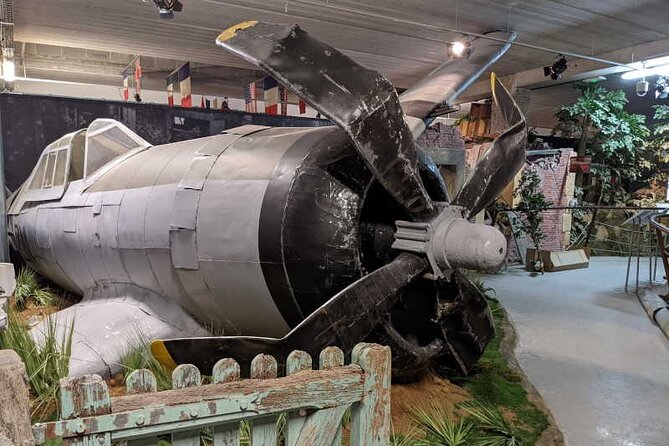
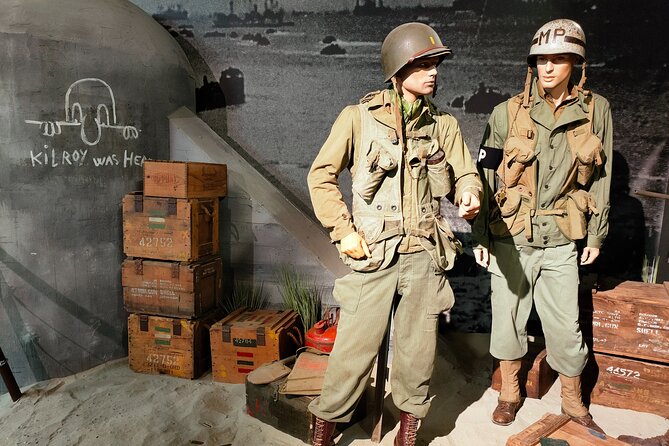
- 20 lifesize scenes: Dramatic staging that helps you understand how the ground-level war unfolded.
- 10,000+ original objects: Real material culture—tools, gear, and authentic pieces—makes it feel grounded.
- Old vehicles on and off display: You’re not just looking; you’re seeing equipment and military tech up close.
- English-friendly visit: Tickets are offered in English, so you won’t be stuck guessing.
- Solid value for the time: At $11.95, it’s a long-enough visit to feel worth it without dragging.
Why This Museum Works in Normandy (And Not Just for WW2 Fans)
Normandy already has famous stops. This one doesn’t try to compete on name recognition. It competes on detail—and it wins.
The big hook is the museum’s focus on what happened right after D-Day, when the fighting turned into brutal, close-quarters battles tied to the hedgerows. Those hedgerows weren’t just scenery. They shaped visibility, movement, tactics, and survival. When you see the museum’s scenes and objects, it clicks fast: the landscape wasn’t background. It was part of the weapon system.
I also like that the museum feels built for real people, not museum insiders. Most visitors can participate, and the pacing tends to work whether you’re coming with kids or adults who want something that doesn’t require a war degree.
A few more Mont St Michel tours and experiences worth a look

Entering the Story: The “Battle of the Hedges” Setup
Your visit centers on a single stop: the Normandy Victory Museum. Expect an about 1 hour 30 minutes to 2 hours walkthrough, designed to guide you through the aftermath and day-to-day reality of June 1944 and what followed.
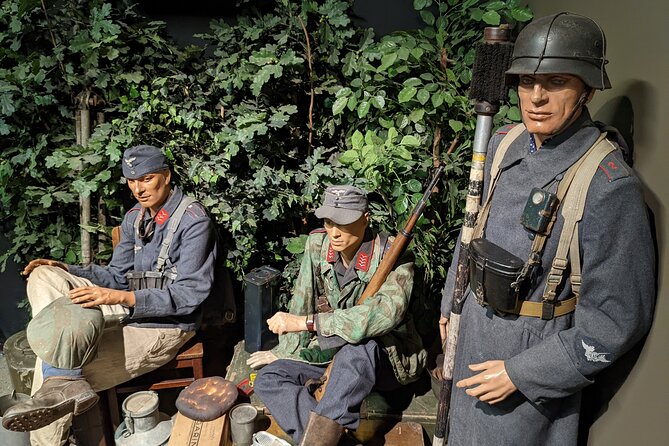
What makes the approach effective is the way the museum turns history into a sequence of scenes. Twenty larger-than-life settings give you a timeline you can follow with your eyes and your feet. You’re not wandering a warehouse of objects—you’re walking through a story.
And then there are the objects themselves. The museum’s collection includes more than 10,000 original items, not replicas-as-a-collection. That matters because you start paying attention to textures and details: equipment looks like equipment, not props. It’s the difference between seeing a war as an idea versus seeing it as things people held, wore, fixed, and carried.
The Exhibits: Scenes, Original Artifacts, and Military Vehicles
Here’s what you’ll actually spend your time looking at.
Lifelike scenes that explain the ground reality
The museum’s staging is meant to be understandable. You’ll see diorama-style scenes and set pieces that convey what fighters and civilians faced around the hedgerow battlefields. The visuals help you interpret the artifacts you’re reading about.
This is one of those museums where you’ll catch yourself going back a step—because once you understand the hedgerow problem, the scene makes more sense and you notice new details.
A serious collection: 10,000+ original items
You’re surrounded by original objects. That’s a big reason the visit feels authentic. Even if you don’t read every label (and you won’t), the density of real material keeps the place from feeling generic.
If you like hands-on history, you’ll appreciate that the museum leans into “what this was used for,” not just “what it is.” It’s also why the museum works for different age groups: the visuals do half the teaching, and the objects do the rest.
Vehicles outdoors: the icing on the war-story
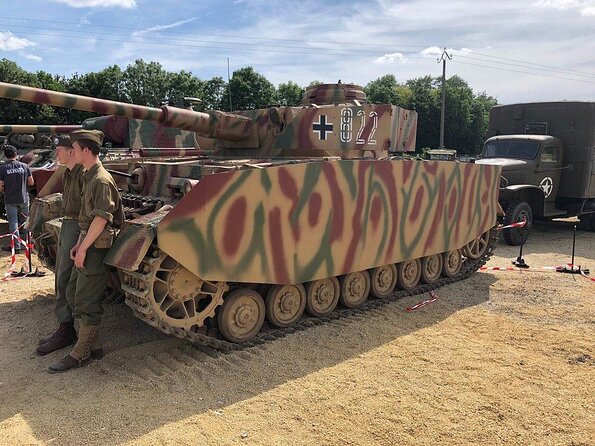
Outside, you can spot old military vehicles that add scale. In fact, visitors have singled out the outdoor vehicles—things like jeeps and lorries—as standout “icing on the cake.” If you’re the type who likes to connect a label to a real machine, this is where that payoff happens.
There have also been sightings of specific vehicles like a Luchs in the area, which tells you the museum sometimes ties into special displays or larger events. Even without that extra excitement, the outdoor vehicle lineup gives you a break from reading and helps the museum feel less like an indoor-only experience.
Information that doesn’t fight you
The museum includes lots of information panels. That’s helpful, but the key is how the information is paired with the scenes. It prevents the common problem of big museums where you either read everything and get exhausted, or you skip it and miss what the objects mean.
A practical tip: when the scene grabs you, read the most direct label first, then let the rest come second. That keeps the visit moving and keeps you from turning it into homework.
How Much Time to Plan (And When You’ll Get the Best Visit)
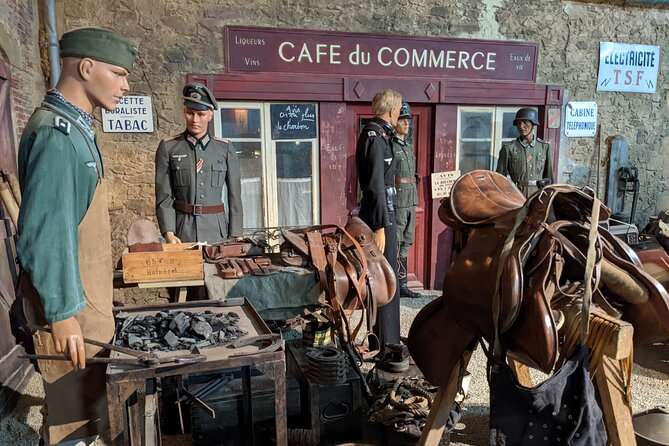
Plan for 1.5 to 2 hours. That’s long enough to walk the scenes comfortably and still have time to stop and really look at vehicles and objects.
If you can choose your time, earlier can feel calmer, especially outside reading-heavy parts of the museum. The museum is open year-round, with different hours by season, so you’re usually able to fit it into a route.
Season hours to keep in mind:
- 02/14/2026 – 04/03/2026: 10:00 AM – 5:30 PM
- 04/04/2026 – 05/29/2026: 10:00 AM – 6:30 PM
- 05/30/2026 – 08/23/2026: 9:30 AM – 7:00 PM
Why that matters: Normandy weather can shift. Having flexible daylight hours helps you pair this museum with other stops without cutting your experience short.
Price and Value: Is $11.95 a Good Deal?
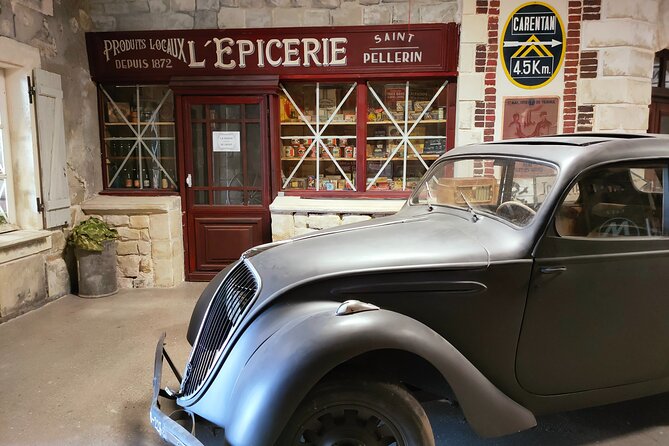
At $11.95 per person, the math works in your favor. Why? Because you’re getting a focused museum visit that takes up a meaningful chunk of time—up to 2 hours—and it’s built around heavy-hitting content: 20 scenes and 10,000+ original objects.
You also have ticket options that can reduce cost depending on eligibility:
- Reduced ticket at the reception for PMR, students, teachers, and military (listed as €7)
- Children 0–6: included/free
- Youth 7–17: €7
For families, that price structure can make a difference. For solo travelers, it’s the kind of ticket where you’re less likely to feel like you paid for a quick look and a gift shop stop.
Also worth noting: you’re visiting with a maximum of 100 travelers, which can help keep the place from turning into a crowded slog (though it’s still a museum, so expect some busy moments during peak hours).
Practicalities That Actually Matter on the Day
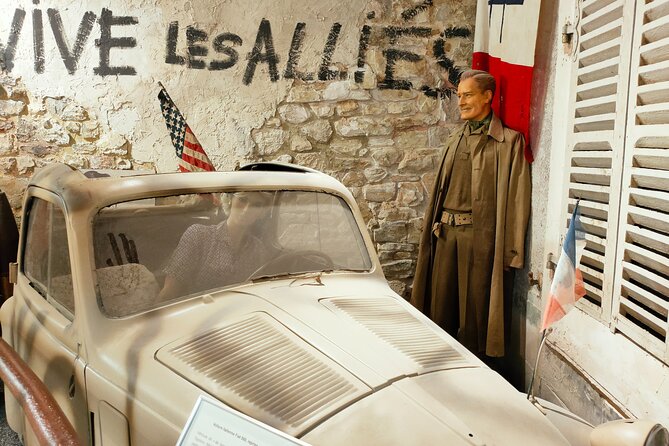
Mobile ticket, English support, and free Wi-Fi
You get a mobile ticket, and the experience is offered in English. That combination helps if you’re moving fast in Normandy. You won’t waste time hunting for a printed ticket at the worst possible moment.
There’s also free Wi-Fi, which is handy if you want to look up context on your phone while you’re standing there.
Food and drink: plan ahead
Food and drinks are not included with admission. That said, there is on-site food available according to visitor descriptions—so you might be able to grab something during your stop. Just don’t assume it’s included in the ticket price. If you’re visiting near a busy travel day, pack a small snack or plan a café stop nearby.
Dogs and service animals
Dogs are accepted, and service animals are allowed. If you’re traveling with a dog, this is one of those “good to know” places where you won’t automatically feel like you need to leave the animal behind.
Accessibility basics
A reduced ticket is listed for PMR, and the museum is described as accessible to everyone. For anything beyond that, you’ll want to check on the spot details if you have specific needs—still, the availability of a reduced option is a good sign.
Where This Fits in Your Normandy Route
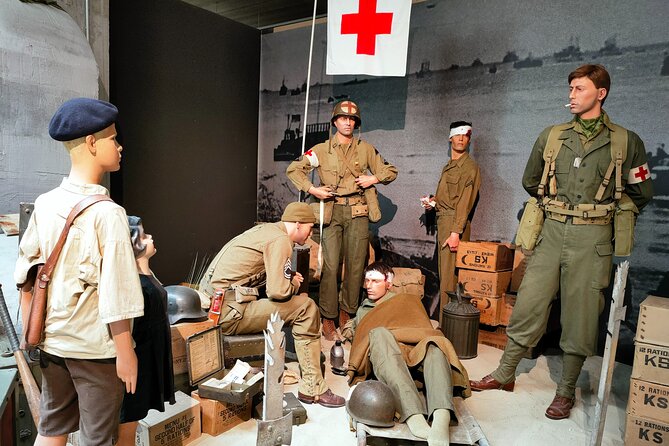
Even though Normandy has a lot of D-Day heavy hitters, this museum is a smart side-stop because it teaches a different piece of the puzzle.
If you’re already visiting well-known landing beaches or memorial sites, this is a good counterweight. It focuses on the after, on ground-level combat, and on the hedgerows that turned movement into a fight. You’ll understand other stops better because you’ll “see” the landscape differently.
It’s also a good match for people who want history with emotion rather than just facts. The museum is designed to be hear-wrenching in tone, and that emotional effect is part of why people recommend it so strongly.
Who Should Book This Museum?
Book it if:
- You want a D-Day-related museum that focuses on something a bit less obvious than the big landing headlines
- You like displays that use original objects and not just interpretive boards
- You’re traveling with older kids or teens who learn well with visuals and readable information panels
- You want a museum stop that won’t swallow your whole day
You might skip it if:
- You only want the most famous Normandy sites and don’t care about the broader combat picture after D-Day
- You hate reading labels in any museum setting (this place does have plenty of information)
- You’re looking for a short 20-minute “tick-the-box” stop
Should You Book the Normandy Victory Museum Ticket?
If you want a high-value, well-built museum stop in Normandy, I’d book it. $11.95 buys you time—up to 2 hours—and it’s structured around a story that helps you understand what the fighting meant on the ground. Add in English-friendly access, mobile tickets, and the mix of scenes + original artifacts + vehicles, and you get an experience that feels both educational and genuinely moving.
If you’re doing Normandy right—mixing major memorials with smaller, story-driven stops—this one earns its place on the route. Just give it the time it deserves, and don’t rush past the scenes that slow you down.
FAQ
How long does the Normandy Victory Museum visit take?
Plan on about 1 hour 30 minutes to 2 hours for the museum experience.
What’s the ticket price?
The admission ticket is listed at $11.95 per person.
Is the museum visit available in English?
Yes. The experience is offered in English.
Are food and drinks included with the ticket?
No. Food and drinks are not included with admission.
What are the opening hours?
Hours change by season:
- 02/14/2026 to 04/03/2026: 10:00 AM – 5:30 PM
- 04/04/2026 to 05/29/2026: 10:00 AM – 6:30 PM
- 05/30/2026 to 08/23/2026: 9:30 AM – 7:00 PM
Do I need to print a ticket?
No. The ticket is a mobile ticket.
Are pets allowed?
Dogs are accepted, and service animals are allowed.
Is Wi-Fi available?
Yes, there is free Wi-Fi.
Can I cancel for a full refund?
Yes. Cancellation is free if you cancel up to 24 hours in advance for a full refund. If you cancel less than 24 hours before the start time, the amount paid is not refunded.