REVIEW · TRAPANI
Guided tour of the Trapani Salt Pans and Salt Museum
Book on GetYourGuide →Operated by ORO DI SICILIA S.R.L. · Bookable on GetYourGuide
White salt, blue sea, and family craft. The 75-minute guided loop between the Saline Culcasi of Trapani and the salt museum is a rare salt-and-sea history lesson you can walk and feel. I love that you can taste fleur de sel in different aromas from the Slow Food Presidium, not just sample one salty pinch. I also love the WWF reserve walk, where the salt tanks shift in tone and you’re in a living landscape shaped by centuries of practice.
Don’t underestimate the footwear—this tour is described as about a 1-hour hike with a basic fitness level needed, and you’ll be walking the perimeter of the salt pans. If you’re recovering from illness or feel steady only on flat ground, plan carefully before you book. Pack comfortable shoes and a hat.
The payoff is the human side of salt. You’ll touch the salt inside the production tanks, then continue with a guided visit to the salt museum in an ancient farmhouse and the 1400s mill—plus stories from four generations of Culcasi salt workers.
In This Review
- 6 things that make this Trapani salt tour worth your time
- Why Trapani’s salt pans feel different from most Sicily tours
- Part 1: The Salina Culcasi walk where you see pink pools, gray clay, and salt under your hands
- Part 2: The ancient salt museum and the 1400s mill that explain the people behind the work
- The tastings: when flavored fleur de sel teaches you how to notice salt
- Touching salt in the tanks: why that simple act matters
- Price and value: what you’re really paying for at about $21
- Who should book this salt pans and museum tour
- Practical tips that make the tour go smoothly
- Should you book the Culcasi salt pans and Salt Museum tour?
- FAQ
- How long is the guided tour?
- How much does the tour cost?
- Where is the meeting point?
- What’s included in the ticket price?
- Do I get to taste the salt?
- Is the tour offered in English?
- Is the tour wheelchair accessible?
- Will I be walking during the tour?
- What should I bring?
- Can I eat after the tour?
- Can I cancel and get a refund?
- Can I reserve without paying right away?
6 things that make this Trapani salt tour worth your time

- Only Culcasi-family guided option in the area: this is the tour proposed by the Culcasi family themselves.
- A hands-on salt moment: you can touch salt in the production tanks and see how seawater becomes table salt.
- A guided walk with real scenery cues: you follow the perimeter toward the banks where water mirrors the sky.
- WWF reserve setting: the route runs within a WWF reserve with protected plants and birds you might spot with the guide’s help.
- Flavored fleur de sel tastings (Slow Food Presidium): you taste multiple aromas tied to their production.
- Salt museum inside an ancient farmhouse + 1400s mill: you get the broader story of salt work, not just photos and facts.
Why Trapani’s salt pans feel different from most Sicily tours

Sicily has a lot of coast, and a lot of history. But salt is a different kind of subject. It’s not museum history you look at from a distance. It’s a working system—water, clay, sun, patience—plus the people who keep it running.
This guided tour connects the dots between the Saline Culcasi salt pans and an on-site salt museum. You’re not just hearing that salt mattered. You’re seeing the physical steps: seawater sits in tanks, changes as conditions shift, and salt forms. Then you step into the museum to understand what the work cost in time and effort, and how one family carried the trade through generations.
The best part for your day-planning mindset: it’s short. At 75 minutes, you can fit it without turning your schedule into a full-day mission. And when you’re done, you may have the option to add an aperitif or dinner at the restaurant with a view (assuming it’s available when you go). That makes the whole visit feel like a true outing, not a quick stop-through-and-leave.
Part 1: The Salina Culcasi walk where you see pink pools, gray clay, and salt under your hands
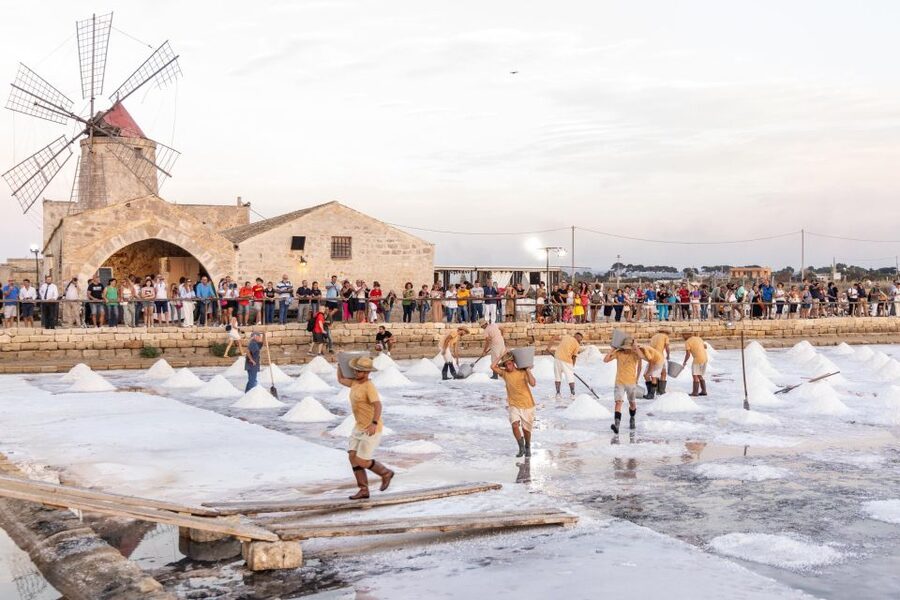
The tour starts at the meeting point in the forecourt below the windmill, at the ticket office. You’ll find the guide behind the salt sales counter. The activity then moves you through the salt pans area on a guided route designed to make the process visual.
Expect a relaxed walk first. The goal isn’t to power-walk. It’s to slow down enough to notice how the salt pans look and change:
- the white of salt as it forms
- the blue of the sea beyond
- gray clay in the working areas
- pink tones in the pools (a color shift you’ll likely see as you follow the route)
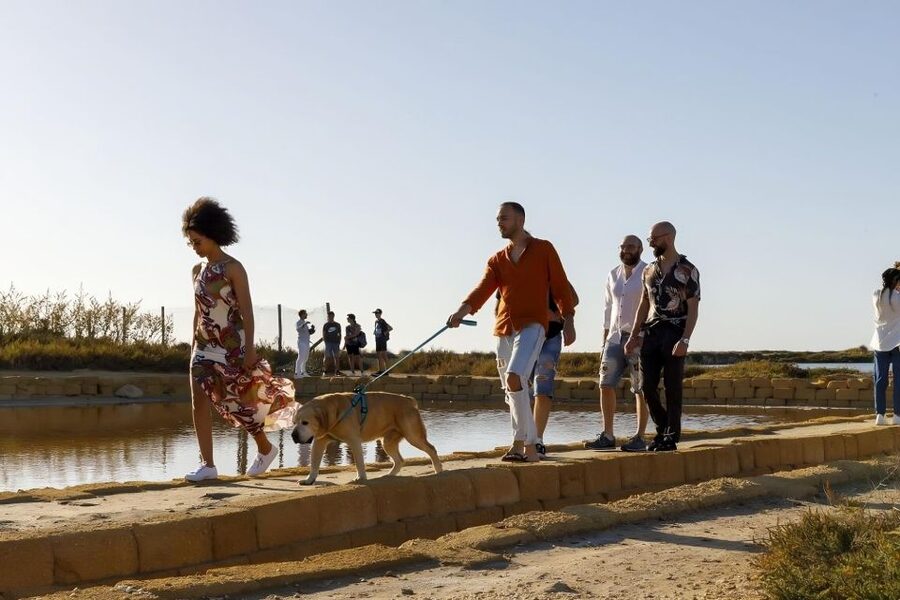
You follow the perimeter of the salt pan, heading toward the banks where the water mirrors the sky. It’s one of those simple, practical scenes that instantly helps you understand why salt-making depends on nature and weather. When you can see reflection and surface conditions, the whole “why it works” logic clicks faster.
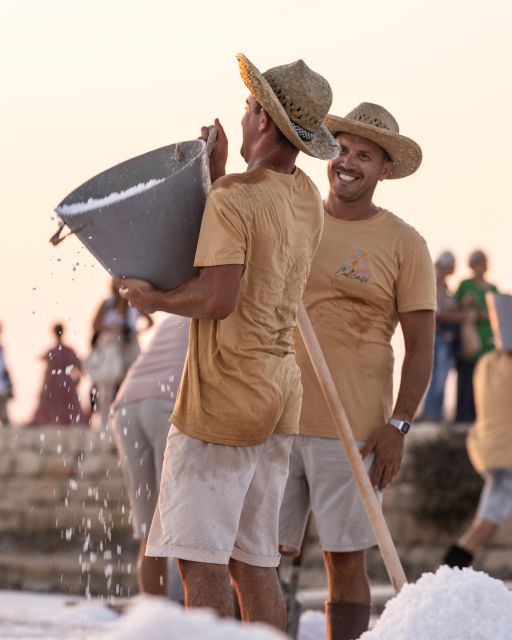
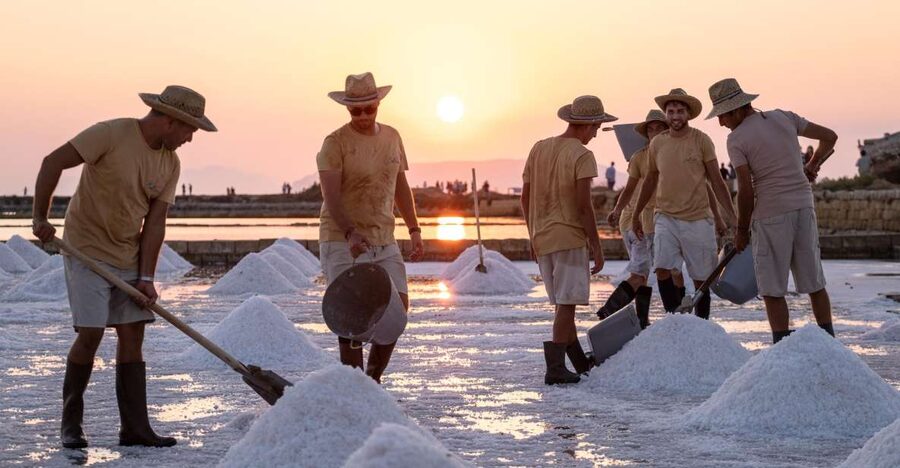
Now for the part that makes this more than a photo stop: you’ll see salt production in action and you can collect or touch the salt with your hands. That tactile moment helps you remember the tour. You stop thinking of salt as something that appears on a table. You start thinking of it as something grown—piece by piece—by process.
Important practical note: this is described as about a 1-hour hike with a basic fitness level required. Even if it’s not a strenuous climb, you are walking. Wear comfortable shoes, and if it’s hot, bring your hat. One of the easiest ways to ruin a good nature-and-history visit is showing up unprepared.
Part 2: The ancient salt museum and the 1400s mill that explain the people behind the work
After the salt-pan walk, the tour shifts focus. Part two is the guided visit to the salt museum, located inside an ancient farmhouse. You’re not just walking through rooms; you’re retracing the work of the salt pans and the family story tied to them.
Here’s what makes this museum stop especially valuable: it anchors the “how salt is made” explanation to real human effort across time. The Culcasi salt workers are described as working for four generations. In the museum space, that becomes more than a fact. It turns into context for what you saw outside—why the system matters, how long it takes, and what daily labor looks like when your product depends on the sea and the sun.
You’ll also visit the ancient mill dating from the 1400s. That’s the kind of detail that makes the whole salt story feel continuous instead of random. Salt wasn’t a single breakthrough. It was a long-running industry shaped by coastal living.
If you’re the type who likes your history practical—work, tools, and trade rules—this part will land with you. If you only want a quick glance, you might feel you’re spending time in a slower setting. But the way the tour is built (walk outside, story inside) helps most people connect both halves.
The tastings: when flavored fleur de sel teaches you how to notice salt
This tour includes tastings of whole salt and fleur de sel in different aromas connected to the salt production. One highlight specifically calls out fleur de sel flavored in versions tied to the Slow Food Presidium.
In plain terms, this tasting does two jobs:
1) It shows you salt isn’t just salt. Different textures and forms can change how food tastes.
2) It gives you a “flavor memory” that sticks after the walk and museum.
And because you’re tasting something local right after seeing the production tanks, you’re less likely to treat it like a generic “free sample” stop. You’ll likely catch yourself thinking: I just saw the salt form. Now I’m tasting what that looks like on a plate.
Practical tip: take your time during the tasting. If you rush, you’ll miss the point. Also, if you’re sensitive to strong flavors, pace yourself. The tour gives you multiple salt samples, and they can be more intense than what you’re used to using at home.
Touching salt in the tanks: why that simple act matters
This is one of those rare experiences where a small physical moment improves your understanding more than another hour of explanation would. When you touch salt inside the production area, it turns a concept into something you can almost feel: texture, grain, and the physical presence of the drying and crystallizing process.
That hands-on step helps you connect:
- the outdoor colors you saw while walking
- the guided explanation of how seawater becomes salt
- the museum story about the work behind the product
If you’re traveling with kids or with someone who learns by doing, this tactile element is a big win. And even if you’re traveling solo, it keeps the experience from turning into a standard lecture.
Price and value: what you’re really paying for at about $21
At around $21 per person for a 75-minute guided visit, you’re not just buying entry into a museum. You’re paying for:
- a guided walk through the salt pans area
- the salt-pan experience inside a reserve setting
- museum access and a guided explanation in an ancient farmhouse
- tastings of whole salt and fleur de sel (including flavored aromas)
- a hands-on moment with salt in the production tanks
That adds up. You’re getting nature + food + history in one compact block. If you prefer tours that teach through multiple senses—sight, touch, taste—this is the kind of pricing that usually feels fair.
The biggest value test for you: Are you curious about how everyday products are made? If yes, you’ll likely feel the time was well spent.
Who should book this salt pans and museum tour
This fits best if you:
- like hands-on experiences where you can touch what you’re learning
- enjoy food-related learning (salt and tasting)
- want a short, guided activity that still has depth
- prefer nature-with-purpose over scenery-only sightseeing
It may be less comfortable if you:
- dislike walking or struggle with a basic fitness level
- need very smooth surfaces and minimal foot time
- are traveling when you can’t handle heat or sun without shade and rest
The tour is described as suitable for all age groups within the reserve area, but suitability doesn’t cancel out the fact that you still hike for about an hour. I’d treat that as the deciding factor if you’re on the edge physically.
Practical tips that make the tour go smoothly
Where to meet: ticket office in the forecourt below the windmill, guide behind the salt sales counter.
What to bring: comfortable shoes, a hat, and comfortable clothes.
Pace expectations: it’s a 1-hour hike level, not a long trek, but you should plan as if you’ll be walking steadily.
Language support: live tour guide is available in English and Italian.
What’s included: entrance ticket with guided tour of the salt pan and salt museum, plus salt tastings.
One more heads-up based on real-life experiences: if you’re the kind of traveler who assumes everything is fully seated until the museum, read the walking requirement carefully. The walk is part of the point, and it helps set up the museum visit.
Should you book the Culcasi salt pans and Salt Museum tour?
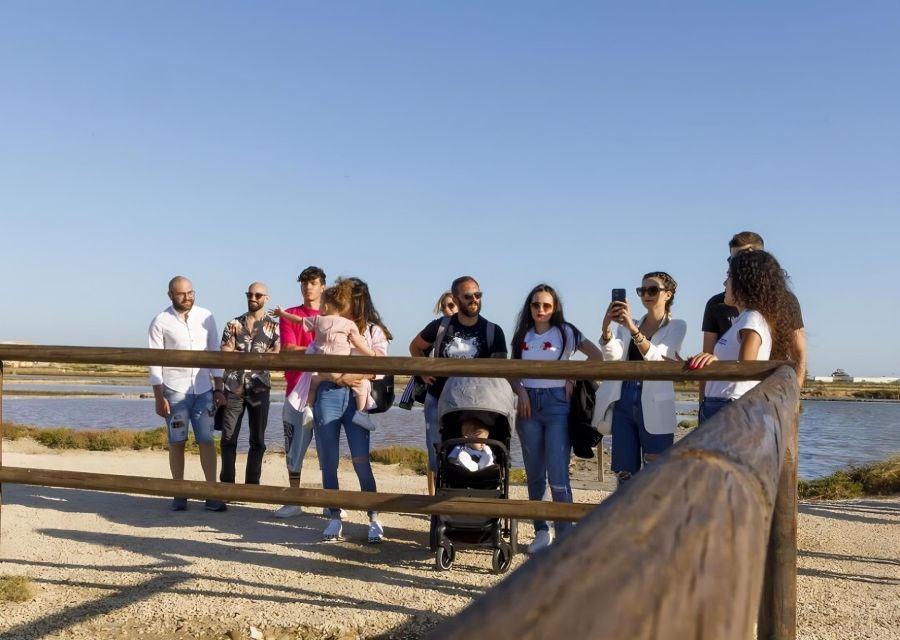
I’d book it if you want a compact, guided experience that explains salt in a way you can feel. The mix of hands-on salt, a guided walk through the salt pans area, and museum storytelling about four generations of workers makes it more than a scenic stop. Add in the tastings—including flavored fleur de sel connected to the Slow Food Presidium—and you get a souvenir that isn’t just a photo.
Skip or rethink it if you know you won’t handle the basic hike requirement. At about a 1-hour walk, comfort depends on your feet and stamina. Also, if you’re hoping for something purely indoors, this tour starts outside and keeps moving.
FAQ
How long is the guided tour?
The guided tour lasts about 75 minutes.
How much does the tour cost?
The price is listed as $21 per person.
Where is the meeting point?
Meet at the ticket office in the forecourt below the windmill, and look for the guide behind the salt sales counter.
What’s included in the ticket price?
You get the entrance ticket with a guided tour of the Culcasi salt pan and salt museum, plus tastings of whole salt and fleur de sel in different aromas from their production.
Do I get to taste the salt?
Yes. The tour includes tastings of whole salt and fleur de sel, including flavored versions in different aromas from their production.
Is the tour offered in English?
Yes. The live tour guide is available in English and Italian.
Is the tour wheelchair accessible?
The tour is described as wheelchair accessible.
Will I be walking during the tour?
Yes. It’s described as a 1-hour hike with a basic level of fitness required.
What should I bring?
Bring comfortable shoes, a hat, and comfortable clothes.
Can I eat after the tour?
The experience notes that after the tour it may be possible to have an aperitif and/or dinner at the restaurant with a view.
Can I cancel and get a refund?
Free cancellation is available up to 24 hours in advance for a full refund.
Can I reserve without paying right away?
Yes. It offers a reserve now & pay later option, meaning you can book your spot and pay nothing today.