REVIEW · NAPLES
Archaeological Museum of Naples Small Group Tour with an Archaeologist
Book on Viator →Operated by Askos Tours · Bookable on Viator
Naples museum crowds can feel like a maze, and this tour helps you cut through it. I like the tight 2-hour structure and the fact it’s led by an archaeologist, so you get context fast. The Farnese highlights plus the Pompeii/Herculaneum pieces are a strong combo in one stop, but plan for heat and lots of walking inside.
My favorite part is how the guide turns famous objects into stories you can actually picture. You also get a “best of” route through a huge museum, including the Farnese standouts and major Roman finds from the 79 A.D. eruption zone.
The main drawback is simple: there’s no AC, and you’ll be on marble floors and stairs. If you’re sensitive to heat or mobility limits, the timing and pacing may feel like a lot.
In This Review
- Key highlights to look for
- Naples’ Archaeological Museum is the kind of place you need to steer
- Meeting at Piazza Museo and settling into a smart pace
- Stop 1: Museo Archeologico Nazionale di Napoli’s Farnese treasures
- Pompeii and Herculaneum artifacts: the museum’s emotional punch
- Why the archaeologist angle usually beats a basic highlights tour
- What 2 hours in the museum actually feels like
- Practical tips: beat the heat and make the most of your shoe time
- How much is it really, and is it good value?
- Who should book this Naples museum tour
- Should you book this tour?
- FAQ
- How long is the tour?
- What does the ticket price include?
- Where do I meet the guide?
- What language is the tour offered in?
- Is transportation included?
- Are food and drinks included?
- What’s the maximum group size?
- Is there any mobility limit noted?
- Is there a free cancellation option?
Key highlights to look for
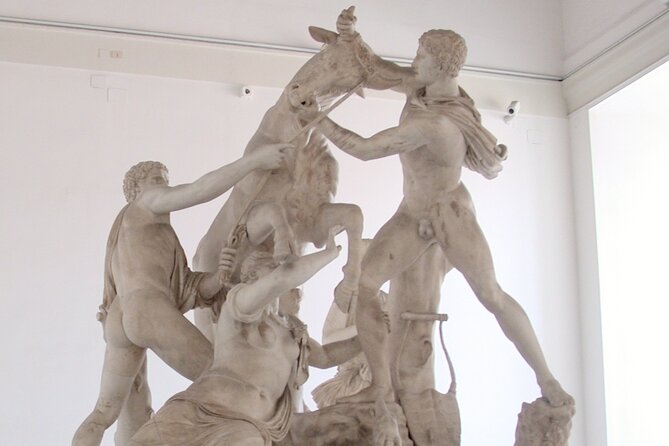
- Farnese Collection focus: Hercules, the Tyrannicides, Toro Farnese, gods, and emperors in one streamlined path
- 79 A.D. eruption connection: artifacts tied to the city destroyed by Vesuvius in 79 A.D.
- Pompeii and Herculaneum showpieces: some of the best-preserved frescoes and mosaics
- Archaeologist-guided context: explanations that make materials and functions easier to understand
- Small group size: a max of 20 travelers helps questions and pacing
- Optional extra time after: you can keep exploring once the tour ends
Naples’ Archaeological Museum is the kind of place you need to steer
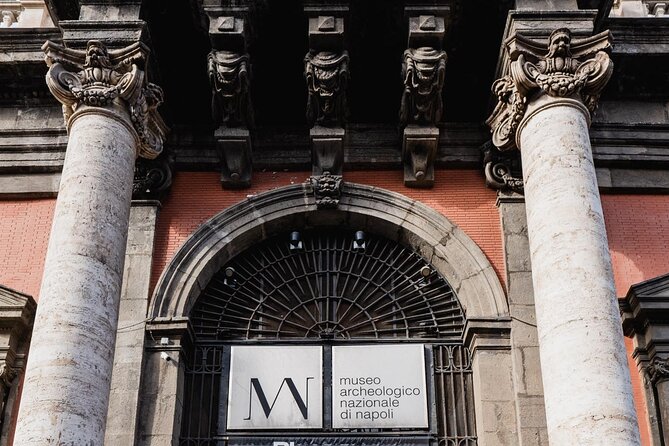
The Museo Archeologico Nazionale di Napoli is famous for a reason. It’s enormous, and even if you love classical art, you can end up staring at labels and feeling like you missed the point. A small-group tour with an archaeologist gives you a human map through the highlights.
I also like the “why it matters” approach this style of tour tends to use. Instead of treating objects like museum decorations, the guide frames what you’re seeing—who made it, what it meant, and where it came from. That’s exactly the difference between passively looking and actually understanding.
One more reason this works well: the tour is short enough to keep your energy up. Two hours is a practical window for a museum visit here, especially if you’re also planning Pompeii or Herculaneum later.
You can also read our reviews of more museum experiences in Naples


Meeting at Piazza Museo and settling into a smart pace
You meet at Piazza Museo, 19, 80135 Napoli, right at the museum ticket area. It’s a straightforward start point, and since it’s near public transportation, you’re not stuck figuring out a long first leg across town.
This is set up as a small group (up to 20 people), which matters more than it sounds. In a museum this size, a large tour can turn into a marching line. With fewer people, you’re more likely to get answers to questions and keep moving at a comfortable speed.
The tour runs about 2 hours and includes your admission. That means you’re not paying for guidance plus an extra ticket later—you’re getting both in one timed visit, which is great for avoiding wasted time at the entrance.
Stop 1: Museo Archeologico Nazionale di Napoli’s Farnese treasures
The tour’s core is a guided run through the museum’s top collections, starting with Farnese’s collection. This is where you get the “I’ve seen this in books” feeling, but with the missing context filled in.
Expect to focus on major sculpture highlights such as:
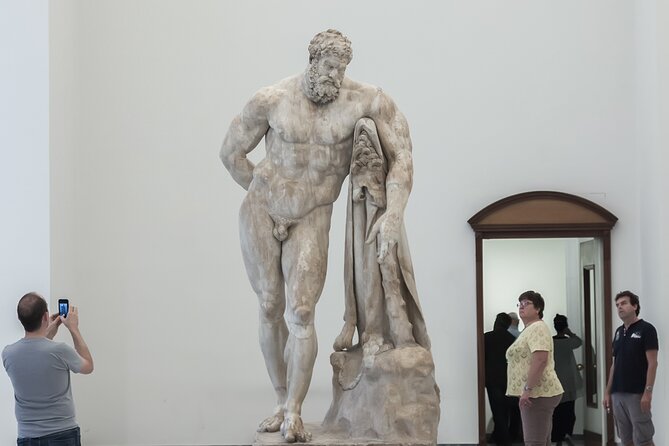
- Hercules statues
- The two Tyrannicides
- The Toro Farnese (one of the most imposing pieces in the collection)
- Statues of gods
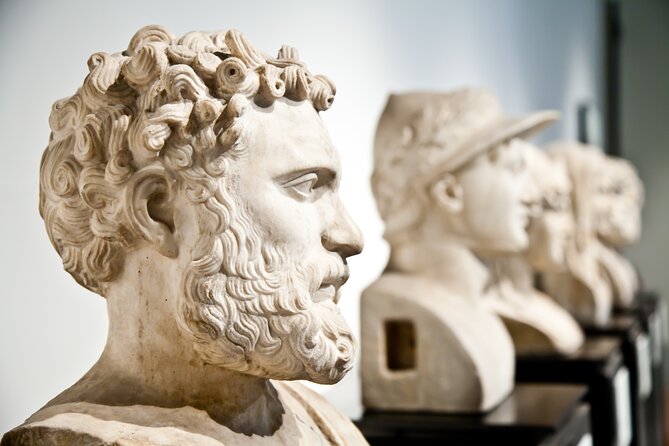
- Busts of emperors
What I like about focusing on these pieces is that they teach you how to look. A strong archaeologist-led explanation can help you notice details that you’d normally skip: posture, scale, the kind of story the work is telling, and why Roman collectors cared so much about Greek-style art and heroic themes.
You also get a feel for the museum’s “layers.” This collection isn’t just random brilliance—it’s one part art history, one part collecting history. Guides often connect the objects to how Naples fits into the broader story of Roman and Hellenistic culture, so you’re not just admiring stone. You’re understanding the cultural agenda behind it.
If your group includes questions, this is usually where the pace stays lively. In past versions of this tour, guides such as Nicolette and Bruno have been highlighted for clear explanations and an ability to keep the group moving without rushing.
Pompeii and Herculaneum artifacts: the museum’s emotional punch

After the Farnese highlights, the museum shifts into its Roman collection. This is where the connection to everyday life kicks in. You’ll spend time on artifacts tied to the city destroyed during the Mt. Vesuvius eruption in 79 A.D.
The museum is especially known for well-preserved frescoes and mosaics from Pompeii and Herculaneum. These pieces don’t just show you decoration—they help you imagine rooms, walls, and public spaces as they were before disaster. That’s why many people find the museum so gripping: the art isn’t distant. It’s tied to real spaces where people lived.
A guide will usually help you read the scenes. You might learn what the imagery suggests, why mosaic styles mattered, and how preservation conditions affected what survived. It also helps to understand that museum objects are only fragments of a much bigger original setting. The explanation helps you “rebuild” the scene in your head.
One practical note: at times, a major mosaic may be affected by restoration. For example, the Alexander mosaic has been reported as under restoration during at least one tour, with visitors shown pictures or video of the work. If that happens on your visit, it’s still worth going—expect context, not disappointment.
Why the archaeologist angle usually beats a basic highlights tour
Lots of museum tours show you the famous objects. This one adds something crucial: guidance from someone trained to interpret the material.
That matters because Naples isn’t just a museum of pretty things. It’s a museum of evidence. When an archaeologist explains context—how an object was found, what it likely was used for, and how it connects to Pompeii and Herculaneum—it changes what you take away.
You’ll notice this best when the guide compares the museum items to the wider archaeological story. Some guides mentioned in this tour format have strong backgrounds in art and archaeology, such as Maria, who’s been praised for making the art readable and the history understandable. Other names that show up in guide highlights include Vito, Alfredo, and Annalise—each referenced for clear pacing and the ability to answer questions in a direct way.
Also, small-group pacing often helps here. If you can ask one follow-up question without waiting for a megaphone, you get more meaning per minute.






What 2 hours in the museum actually feels like
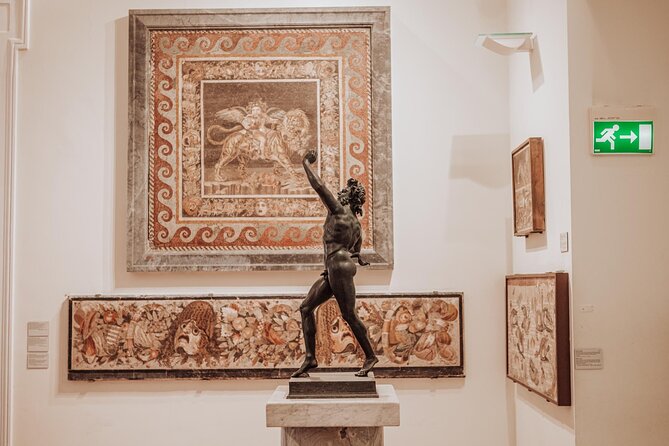
Two hours can sound short, but this museum is so packed that a short, focused tour is often the most satisfying way in. The route is designed to make the museum manageable. You’re not trying to see everything; you’re prioritizing the works that best represent the collections.
In fact, one recurring theme is that visitors find the guided portion makes the rest of the museum easier to explore. Once you understand the main threads—Farnese sculpture, Roman collections, and eruption-linked artifacts—you’ll be more comfortable wandering afterwards.
When the tour ends, you can usually stay inside to look around more. Several guides have been described as setting you up to keep exploring on your own afterward. If you have time that day, I’d plan a little extra buffer, because the museum is the kind of place where one room can pull you in.
Practical tips: beat the heat and make the most of your shoe time
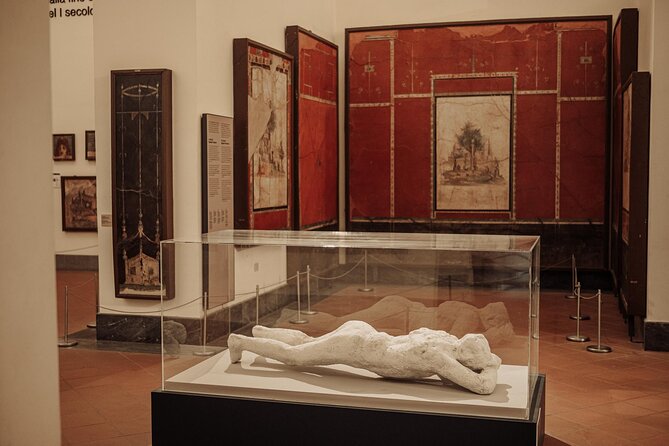
Let’s talk about comfort, because the museum itself can be a challenge. Multiple guide comments point out that the museum has no AC. On hot days, bring a bottle of water and use it. If you tend to overheat, plan a lighter outfit and consider bringing a small fan if you’re able.
You’ll also be dealing with stairs and marble floors. Wear comfortable shoes with grip. This isn’t the moment to test new footwear.
Finally, think about your expectations for what you’ll cover. The tour is designed to hit the key masterpieces, not to scan every corner. If you love one specific area—mosaics, sculpture, or Pompeii domestic life—use the guide time to get your bearings, then target your free time afterward.
How much is it really, and is it good value?

The price is $52.86 per person, and the tour includes admission. The museum entry fee is listed as 20.00 euros for adults (and 2.00 euros for reduced EU citizens age 18–25), and the tour covers your ticket.
That means you’re paying for both the museum entry and the archaeologist-guided route in a timed group experience. For Naples, that’s usually a strong deal compared to paying for admission and then trying to piece together a meaningful visit with only self-guided browsing.
The real value shows up in how you use those two hours. If you walk in without a plan, the museum can swallow your time fast. With a guide choosing the most important objects and giving context, you get more “aha” moments per minute.
Who should book this Naples museum tour
This is a great fit if you:
- want the best highlights without getting lost in a massive museum
- plan to visit Pompeii and/or Herculaneum and want the art and artifacts to make more sense first
- enjoy archaeology explanations that connect objects to the 79 A.D. eruption story
It’s also a smart pick for people who like asking questions. Small groups make it easier to get direct answers, and guides have been praised for working at an appropriate pace.
You might consider another option if you:
- struggle with heat or long indoor walking on stairs and marble
- need a lot of flexibility to roam at your own speed for more than two hours
Should you book this tour?
I’d book it if you want a guided route through Naples’ top archaeological highlights, especially if Pompeii and Herculaneum are on your itinerary. The combination of Farnese sculpture, the Roman eruption-linked objects, and the museum’s frescoes and mosaics is the kind of pairing that benefits from an expert explanation.
I’d also book it if you’re short on time but still want to leave feeling like you understood something, not just saw it. The ticket is included, the group stays small, and the archaeologist-led framing helps you look at the collection like it’s part of a bigger story.
Just go in ready for heat, wear good shoes, and plan to use your post-tour time wisely. With that mindset, this turns a huge museum into a focused, memorable visit.
FAQ
How long is the tour?
It runs for about 2 hours.
What does the ticket price include?
Your price includes the guided tour with an archaeologist and the museum entrance ticket.
Where do I meet the guide?
Meet at Piazza Museo, 19, 80135 Napoli NA, Italy at the museum ticket office.
What language is the tour offered in?
The tour is offered in English.
Is transportation included?
No. Transportation is not included.
Are food and drinks included?
No. Food and drinks are not included.
What’s the maximum group size?
The tour has a maximum of 20 travelers.
Is there any mobility limit noted?
Most travelers can participate. The experience involves walking inside the museum, including stairs and marble floors.
Is there a free cancellation option?
Free cancellation is available, and you can cancel up to 24 hours in advance for a full refund.