REVIEW · WASHINGTON DC
The Smithsonian National Air & Space Museum Exclusive Guided Tour
Book on Viator →Operated by Babylon Tours DC · Bookable on Viator
Air & Space feels like a science playground, but it’s huge. This guided tour helps you find the best highlights in about 2.5 hours, with a guide walking you past the worst crowd friction and toward artifacts like Apollo gear and moon-related items.
My two favorite parts are the focus on original space and flight artifacts and the way the guide turns each stop into a story you can actually follow. You’ll also have a real chance to ask questions instead of just reading labels.
One thing to plan for: the museum is under major construction, and some exhibits may not be on display at the time you go, even though the tour is designed to adapt.
In This Review
- Key things to know before you go
- Why Air & Space guided time is worth it during renovation
- Getting in at 600 Independence Ave SW without wasting daylight
- The moon-landing lineup: spacesuits, moon boots, moon rocks, and why originals stick
- What you can expect around the moon theme
- Aviation icons that make the Space Race make more sense
- Space Race hardware: Mercury capsule, Apollo gear, and the human scale
- Hubble and Skylab backups: why replicas can still be a big win
- The astronaut-life details and the freeze-dried ice cream option
- Tour structure, pacing, and choosing small-group vs private
- Price and value: what $89.67 really buys you
- Who should book this tour (and who can skip it)
- Should you book this Air and Space guided tour?
- FAQ
- How long is the Smithsonian National Air & Space Museum Exclusive Guided Tour?
- Where do we meet and where does the tour end?
- What is the price per person?
- What language is the tour offered in?
- Is admission included?
- Does the tour include a guided visit to the museum?
- Is there a dress or bag guidance for entering the museum?
- Does construction affect what I will see?
- Are gratuities included?
Key things to know before you go
- Guaranteed entry timing: You check in at a set start time, which helps you commit to the most popular Smithsonian stop without gambling on walk-up access.
- Construction-smart routing: Your path through the museum can change based on what’s currently open, so you still get the big names.
- Original artifacts on the route: Plan around high-ticket items like Buzz Aldrin’s spacesuit and an Apollo 11 command module highlight area.
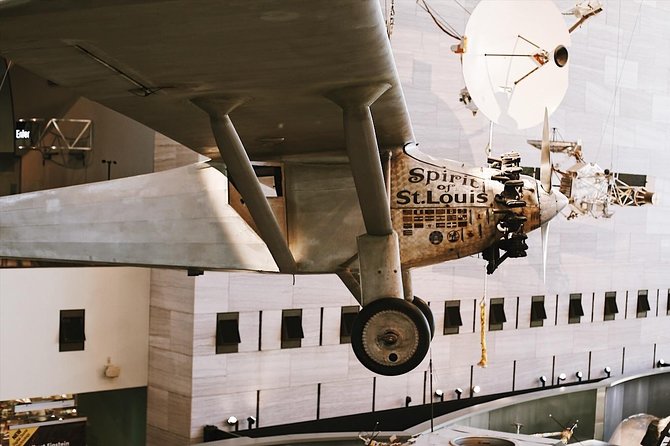
- Aviation history that stays understandable: You’ll connect Wright Flyer and Spirit of St. Louis style milestones to the bigger Space Race picture.
- Guide-led explanations of astronaut life: Expect practical, human-scale details, including a chance to buy freeze-dried ice cream at your own expense.
- Pick your group style: Choose small-group or private for more attention and pacing that fits kids, couples, or solo adult curiosity.
Why Air & Space guided time is worth it during renovation
The Smithsonian’s National Air and Space Museum is one of those places where you can easily lose an entire day… and still feel like you saw nothing but crowds and posters. What I like about this exclusive guided approach is that it solves the big problem: you get a clear route with stops that matter, not just wandering until your feet give up.
Renovation changes the game. The museum is under massive construction for multiple years, so some exhibits you might picture ahead of time may be temporarily unavailable. The tour is built to adjust to what’s open now, using the museum’s current exhibition status to reshuffle the emphasis where needed. In plain terms: you’re not paying for a fixed checklist that might fail. You’re paying for a guided plan that can pivot.
For a lot of people, that’s the real value: you buy time, direction, and context—especially when the building is in motion.
You can also read our reviews of more guided tours in Washington DC


Getting in at 600 Independence Ave SW without wasting daylight
You meet at 600 Independence Ave SW, Washington, DC 20560, and the tour ends back at the meeting point. Start times are offered in the morning or afternoon, so you can match it to the rest of your DC day. Since the museum is popular, going at a scheduled time helps you avoid that frustrating loop of waiting, checking lines, and re-checking your map.
Bring a mobile phone number (with country code). That matters because the tour uses mobile ticketing, and you’ll want everything ready for the day-of check-in.
Also plan your bag. Security at the museum doesn’t allow large bags or suitcases. You’ll want to travel light, with only handbags or small thin pack-style bags allowed through security. If you’re used to tossing a big backpack everywhere, this is one stop where you’ll want to rethink that.
The moon-landing lineup: spacesuits, moon boots, moon rocks, and why originals stick
The highlight pitch for this tour is simple: you’ll see the kind of moon gear that usually turns space history into a photo-only concept. On your route, you’re likely to encounter items tied to Apollo missions and astronauts, including spacesuits and moon-related artifacts.
Two details matter here.
First, the tour isn’t just name-dropping. The guide explains how these objects connect to actual missions—what they were made for, what they reveal about technology at the time, and what the challenges were. You’re not just seeing a costume; you’re seeing engineering and human risk.
Second, the museum portion is paced so you can actually look. A self-guided visit at Air and Space is often a blur: you catch a famous item from a distance, then rush onward because you feel behind. With a guided route, you get that brief chance to slow down and take in what makes each piece distinct.
What you can expect around the moon theme
Depending on what’s open that day, you may see things like:
- Buzz Aldrin’s spacesuit (original) and other Apollo-era gear
- moon-related items such as moon boots
- lunar mission artifacts such as moon rocks
- an Apollo-era module area, described as a key stop on the tour route
If you care about how the Space Race became real hardware instead of TV moments, this is where the tour shines.
Aviation icons that make the Space Race make more sense
Air and Space isn’t only about outer space. It’s about how humans got good at flight, then used those skills to go farther than anyone planned.
On this tour route, you can run into some of the most famous aviation names tied to “firsts.” You might spot the Wright Flyer (original) and the Spirit of St. Louis (original), plus other iconic experimental aircraft. If you’ve ever wondered how early propeller-era breakthroughs turned into rocket-era triumphs, your guide connects those dots without turning it into a textbook.
Here are the aviation stops you’ll want to pay attention to:
- Wright Flyer (original): It’s not just a plane. It’s the start of controlled powered flight history in a very tangible way.
- Charles Lindbergh’s Spirit of St. Louis (original): It helps explain why long-distance flight obsessed early aviation—and how the world changed when crossing the Atlantic became achievable.
- Chuck Yeager’s Bell X-1 (original): This gives you the speed-and-boundary-pushing story that sits right next to later space acceleration topics.
The tour also includes discussion of Amelia Earhart, which adds a human layer to the technology story. You get the sense that aviation history is never just about machines. It’s about people trying, failing, trying again, and pushing public attention forward.
You can also read our reviews of more museum experiences in Washington DC






Space Race hardware: Mercury capsule, Apollo gear, and the human scale
The Space Race section is where many tours go broad and feel rushed. This one aims for a more story-driven path—so you understand what each phase was trying to accomplish.
You might see:
- John Glenn’s Mercury capsule (original): a key step in putting humans into space with early spacecraft design.
- Neil Armstrong Apollo 11 spacesuit (original): a powerful stop because it connects the astronaut to the mission timeline in a way a screen never can.
- Apollo 11 module (as described on the tour): the kind of object that helps you picture how missions worked once they were no longer ideas.
A good guide makes this make sense. They’ll talk about moon landings, the Space Race pressure, and what it meant to travel from Earth to the lunar surface using the tools available at the time. You’ll come away with fewer disconnected facts and more of a timeline you can hold in your head.
Hubble and Skylab backups: why replicas can still be a big win
Here’s a fun twist: some of what you’ll see is described as test vehicles or backups, because original items stayed in space or weren’t meant to be moved around. That could sound disappointing at first—until you realize it’s often the best way to get close.
Two examples your tour route highlights:
- Hubble Telescope (test vehicle)
- Skylab, America’s 1st space station (backup)
When the real original can’t come down to be looked at, the museum’s approach gives you the next-best option: a chance to see the form, design, and scale up close. Your guide helps you understand what you’re seeing and why the backup/test approach matters historically.
You’ll also get a sense of how the early space station era built toward later space missions, including how spacecraft design evolved to support longer-term work in orbit.
The astronaut-life details and the freeze-dried ice cream option
This tour doesn’t stop at objects. It talks about what astronauts deal with day to day—procedures, limitations, and why survival and comfort are big deals in space. Your guide includes this “what it’s like today” perspective, which is a nice change from purely chronological museum tours.
There’s also a small, optional gift shop moment. If you want the full playful experience, you can buy freeze-dried ice cream—astronaut-style treats—though it’s own expense.
Even if you skip the snack, the point remains: the tour helps you feel the gap between Earth assumptions and space realities.
Tour structure, pacing, and choosing small-group vs private
Duration is listed at about 2 hours 30 minutes (with 2 hours referenced for admission timing as well). In practice, that’s enough time to hit a strong set of major artifacts without the tour turning into a sprint.
This matters at Air and Space because the building is huge and your attention can scatter fast. A guided pace helps you stay with the same thread: flight history → Space Race → moon landing reality → follow-on space programs.
You can also choose your group size:
- Small-group: usually best if you want other people around but still want some attention and manageable pacing.
- Private tour: best if you’re a family with specific questions, a couple who wants quieter conversation, or anyone who hates sharing a guide’s focus.
One practical note: certain options may not include wheelchair-friendly coverage and may change whether you have an exclusively guided experience. If accessibility is part of your plan, confirm which option matches your needs before you lock it in.
Price and value: what $89.67 really buys you
At $89.67 per person, this isn’t a budget impulse buy. So you should ask: what are you paying for?
You’re paying for three things that are hard to replicate cheaply:
- A guide-led route that gets you meaningfully close to the most famous objects instead of playing museum roulette.
- Context while you look, not after. The guide’s explanations help turn artifacts into a story you can remember.
- Time saved, especially during renovation when self-guided plans can get disrupted. When exhibits shift, a guide’s ability to reroute matters more than you’d expect.
Also, admission is noted as ticket-free in the provided details, so you’re not paying the museum entry fee on top of the tour. That improves the value math for a lot of visitors.
If you’re the type who loves reading museum plaques and can handle slow wandering, you might be fine DIY. But if you want the highlights plus real explanations in a set window—this is the kind of guided time that often feels worth it.
Who should book this tour (and who can skip it)
This tour is a strong match if:
- you want to see the big icons without spending your whole trip “figuring out the museum”
- you’re traveling with kids or mixed ages and need a pace that keeps attention
- you care about the details behind missions: how flight history connects to space travel
- your dates fall during construction and you want someone to adapt the route for what’s open
You might skip or reconsider if:
- you’re visiting with plenty of extra days and you enjoy long unstructured museum browsing
- you’re planning a deep dive over multiple visits and prefer to spend time reading slowly in each gallery
Should you book this Air and Space guided tour?
Yes, if you want your Air and Space visit to feel like a coherent experience instead of a scattered set of photos. The real payoff is the guide’s ability to connect artifacts to the bigger story—especially when construction means some of your mental “must-see” list may change.
Book it when:
- you’re short on time in DC
- you care about seeing moon and aviation milestones up close
- you want someone to help you choose what to prioritize when the museum layout shifts
One more practical tip: check what’s currently on display using the museum’s now-view list before you go. Renovation isn’t a small footnote here, and being mentally flexible makes the tour even better.
FAQ
How long is the Smithsonian National Air & Space Museum Exclusive Guided Tour?
The tour is about 2.5 hours.
Where do we meet and where does the tour end?
You meet at 600 Independence Ave SW, Washington, DC 20560, and the tour ends back at the meeting point.
What is the price per person?
The price is $89.67 per person.
What language is the tour offered in?
The tour is offered in English.
Is admission included?
Admission is listed as ticket free.
Does the tour include a guided visit to the museum?
Yes. It includes a guided museum tour, and a tour guide is included for you with the standard options.
Is there a dress or bag guidance for entering the museum?
Appropriate dress is required for entry into some sites. Large bags or suitcases are not allowed inside the museum; only handbags or small thin bag packs are allowed through security.
Does construction affect what I will see?
Yes. The museum is under massive construction, so many exhibits described may not be on display. The tour adjusts based on what is available at the time, and you can check the museum’s now-view page for updates.
Are gratuities included?
No. Gratuities are not included and are optional.