REVIEW · WASHINGTON DC
Smithsonian Natural History + Air and Space Museum Private Tour
Book on Viator →Operated by Babylon Tours DC · Bookable on Viator
Smithsonian on your schedule, not the crowds. This combo tour pairs two top DC museums with a guide who helps you move fast and still understand what you’re looking at. You’ll get set up to hit the big-ticket items like Fossil Hall, the Hope Diamond, and the Wright brothers, without burning your day wandering.
I especially like the way the day is structured: two focused blocks (2.5 hours in Natural History, 2 hours in Air & Space) plus a real break between them. I also like that guides bring the exhibits to life with human stories and practical pacing—names that show up in recent experiences include Rebecca, Maureen, Brenda, Christopher, Tim, Richard, Donna, Jennifer, and Doug. That kind of guide matters when the museums feel endless.
One thing to consider before you book: the experience can be small-group or fully private depending on the option you choose. If you’re sensitive to being near other people, make sure you’re selecting the “only your group” version, not a semi-private format.
In This Review
- Key highlights to know before you go
- Why this Smithsonian combo tour is built for time-pressed DC days
- Price and value: what you’re really paying for
- Start point and timing: the 10:00 am setup that keeps your day smooth
- Stop 1: Smithsonian National Museum of Natural History highlights that land fast
- Stop 2: National Air and Space Museum from the Wright Flyer to the edge of space
- The lunch break, security rules, and what to pack
- Who should book this tour (and who might prefer another approach)
- The guides: what the best ones do differently
- Should you book this Smithsonian Natural History + Air and Space tour?
- FAQ
- How long is the Smithsonian Natural History and Air & Space tour?
- What time does the tour start and where do we meet?
- Which museums are included?
- How much time do we spend at each museum?
- Is lunch included?
- Is this tour private?
- What are the bag and entry rules?
- Can I get a full refund if I cancel?
Key highlights to know before you go

- Two museums, one day: Natural History first, then Air & Space after a break to reset.
- Crowd navigation included: your guide helps you avoid the long detours people waste time on.
- Iconic objects with context: expect the Hope Diamond, the Wright Flyer, and space artifacts explained in plain language.
- Fossil Hall is a show: Mastodon, T-Rex, and Diplodocus sightings are built into the route.
- Air & Space is still worth it during renovation: you’ll see major highlights even while parts are changing.
- Real guide energy: multiple guides are praised for humor, planning, and tailoring the visit to interests.
Why this Smithsonian combo tour is built for time-pressed DC days
If you only have one day for Smithsonian museums, you need a plan. The Natural History and Air & Space buildings are huge, and both can eat your time in a hurry. This tour solves the main problem: you don’t just walk in and hope for the best—you get a route that prioritizes the artifacts and galleries most people came for, while still leaving room for a few “wait, I didn’t know that” moments.
The best part is that the day feels like two mini-days, not one rushed sprint. You start at the Smithsonian National Museum of Natural History for a deep, structured look at fossils, gemstones, and the museum’s signature wow-factor. Then you cross the National Mall to Air & Space, where the storyline shifts from Earth’s natural history to aviation and human spaceflight. That contrast is what makes the combo more than a checklist.
Also, because this runs with a small group (or private setup, depending on your booking), you’re not stuck behind an endless human knot. Your guide’s job is to help you get your bearings fast and keep your energy up as the day stacks up.
You can also read our reviews of more private tours in Washington DC


Price and value: what you’re really paying for
At $166.15 per person for about 5 hours 30 minutes, you’re not paying for museum entry—both museums list admission as free. You’re paying for the parts that are hard to DIY:
- A guide who can cut through the noise and point you to the most meaningful stops.
- A planned pace so you don’t spend an hour lost when you could be standing in front of the Hope Diamond or the Wright Flyer.
- A lunch break built into the timeline (note: it’s the break time, not a provided meal).
In other words, this is value pricing if you want efficiency with explanation. If you love wandering unguided, you could do both museums on your own. But if you want the “I can’t believe we saw all that” feeling without spending your day figuring it out, the guide time is what justifies the cost.
One small detail that helps the value: the tour start time is 10:00 am, so you’re not starting late and losing your best light of the day (or your best energy).
Start point and timing: the 10:00 am setup that keeps your day smooth
The meeting point is 1010 Madison Dr NW, Washington, DC 20004, and the tour begins at 10:00 am. Your tour ends at Smithsonian’s National Air and Space Museum, 650 Jefferson Dr SW, Washington, DC 20004.
That matters because these museums don’t just sit next to each other like a casual stroll. They’re linked by the National Mall, and that walk is part of the experience. If you’re choosing this tour to save time, timing is everything. Starting at 10:00 am gives you enough cushion to see big highlights in both places without feeling like you’re sprinting through security twice and reading every placard forever.
The tour also calls for moderate physical fitness. You’ll be on your feet, moving between galleries, and spending time indoors standing at exhibit areas. If that’s fine for you, you’ll benefit most from having someone guide your route.
Stop 1: Smithsonian National Museum of Natural History highlights that land fast
You’ll spend about 2 hours 30 minutes at the Natural History Museum, and the structure here is the key. This is the museum that can swallow a whole day. With a guide, your time gets aimed at the most iconic rooms and “how did they find that?” objects.
A few highlights built into the day:
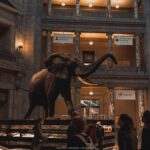
- Henry the elephant: you’ll meet the museum’s large, famous taxidermy elephant named Henry. It’s a classic welcome moment and a great anchor for your visit early.
- Hope Diamond: you’ll get time with the museum’s most famous single artifact, the Hope Diamond, with the story attached (including how the museum frames the legend).
- Renovated Fossil Hall: you’ll see the big fossil displays that loom over visitors—Mastodon, T-Rex, and Diplodocus. This is often the room people want to hit first, and here it’s built into the plan.
Why this stop works with a guide: Natural History has something for everyone, and that can be a problem. Without help, you might wander into a dozen things you find interesting but never reach the artifacts that define the museum. With a guide, you get a path that hits the set pieces, then (when time allows) helps you understand what you’re seeing without spending your whole visit reading everything.
The guide also helps with pacing around crowd flow. Even when you arrive with a plan, museum crowds can still push you off your route. Your guide’s job is to keep you moving toward the “must-see” rooms and not get stuck in the same bottleneck everyone hits.
One practical note: the tour info warns that some rooms can have quiet or restricted speaking rules. That usually means you’ll be given a heads-up before you enter those spaces. It’s a small thing, but it keeps the experience smoother for everyone.
Stop 2: National Air and Space Museum from the Wright Flyer to the edge of space
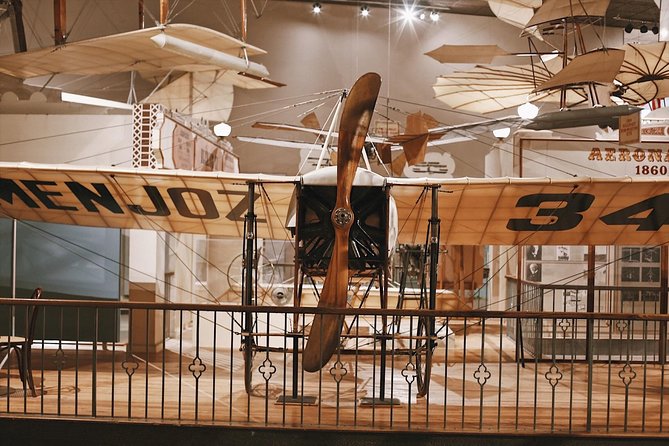
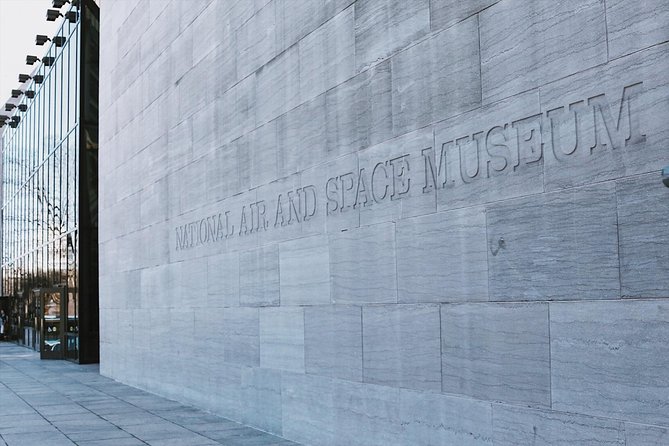
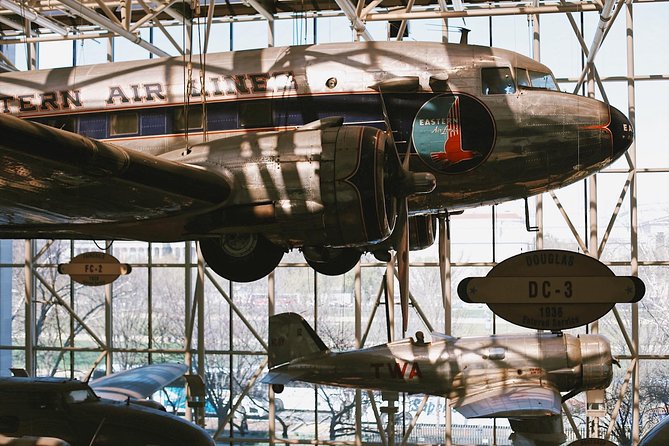
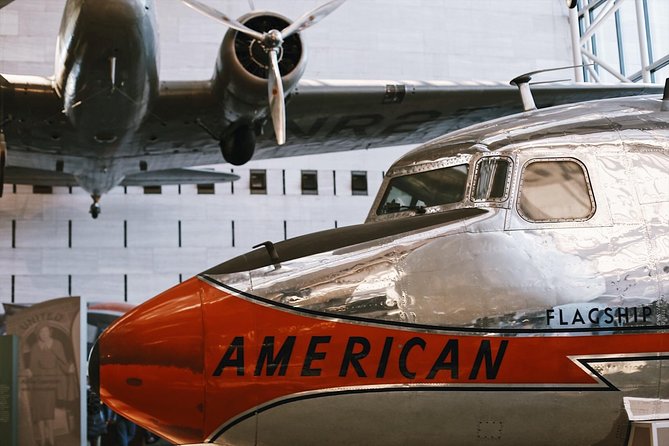
After a break to recharge, you’ll head across the National Mall to the Air and Space Museum for about 2 hours. The museum is noted as undergoing renovation, but the tour still focuses on major exhibits and iconic artifacts.
Expect the story to move in a clear arc:
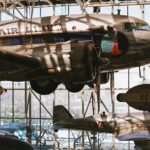
- Wright Brothers and the Wright Flyer (1903): the original Wright Flyer gets highlighted, with context on what changed after 1903.
- Early military aviation (1909): you’ll also get to see a first military flyer from 1909, also linked to the Wright brothers.
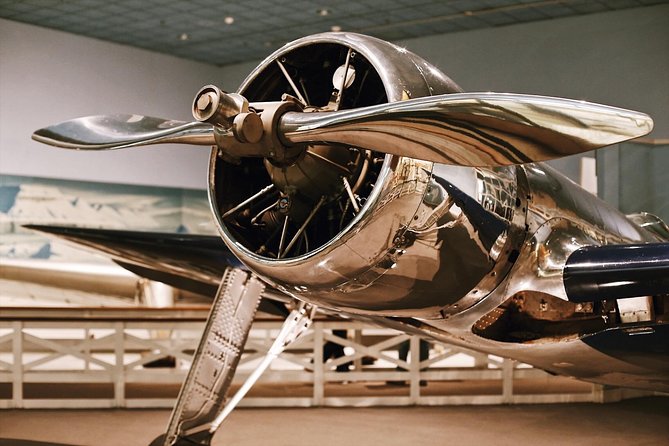
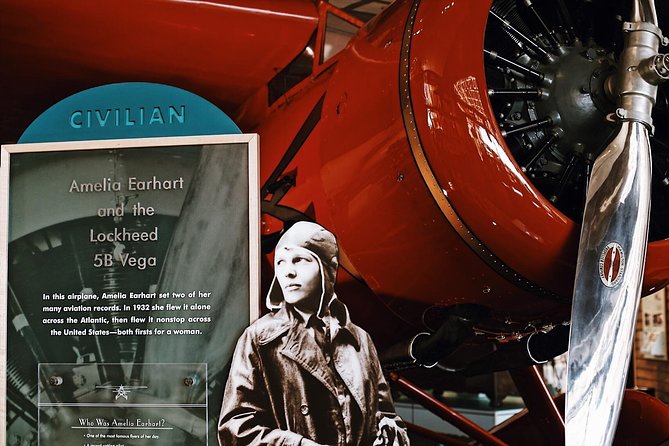
- From records to commercial aviation: the route connects the courage and risk of early flight to the era when aviation spread and set new records.
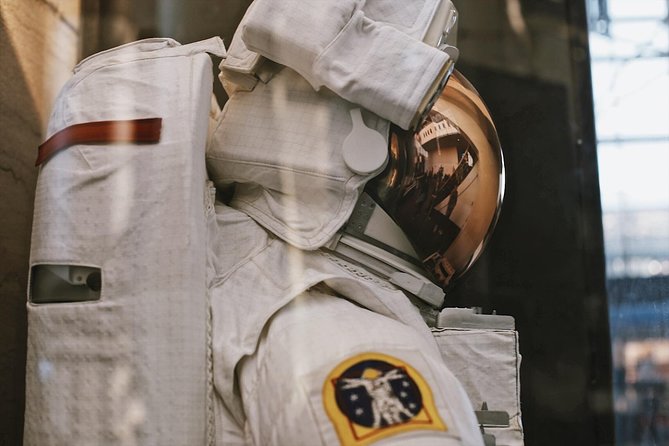
- Space exhibits and real artifacts: then the tone shifts. You’ll look at actual objects involved in space exploration, paired with explanation about conquering a harsh environment.
- Imagination as the finale: you’ll land on the theme that space progress isn’t just engineering—it’s imagination, risk, and the will to try.
If you’ve ever felt intimidated by Air and Space because you don’t know the technical background, you’ll likely appreciate what a good guide does here: translate it into human terms. Even if you’re not a history buff, the story is built to make sense—what problem was solved, what risk was taken, and why those machines mattered.
Also, since the museum is still in renovation mode, a guide helps you avoid the frustration of planning around changes. You’ll still get a strong cross-section of the galleries, not just the parts that happen to be open that day.
You can also read our reviews of more historical tours in Washington DC





The lunch break, security rules, and what to pack
The tour includes a lunch break, but lunch isn’t included. So plan to bring your own snacks or budget for a meal nearby during the break window. The fact that lunch isn’t included usually keeps the tour price more reasonable, and it also gives you flexibility based on your food preferences.
Here are the practical rules that matter:
- No large bags or suitcases. The guidance is that only handbags or small thin bag packs should go through security.
- Dress matters. Some sites require appropriate dress for entry.
- Lines can happen. The tour notes that security and lines may form at places even with a skip-the-line style approach.
- Mobile phone number required. You’re told it’s imperative to provide a mobile phone number with country code. Do this so your day doesn’t turn into a guessing game if staff need to contact you.
If you want the day to feel easy, pack light. A small day bag you can manage at security keeps your momentum. And since you’re moving between two major museums, you don’t want to spend your “rest break” hunting for lockers or re-checking what you’re allowed to bring.
Who should book this tour (and who might prefer another approach)
This is a great match if:
- You’re visiting DC for the first time and want the Smithsonian heavy hitters without turning your day into a self-guided maze.
- You’re short on time but still want stories behind the artifacts, not just photos.
- You enjoy museums but don’t want to spend hours deciding where to go inside the buildings.
It’s also a strong choice for families who need structure. The Air and Space portion starts with Wright brothers and early flight—things kids often latch onto right away—and the Natural History visit has big visual moments like Fossil Hall.
One caution for some people: the day can be run as small-group or private depending on what you book. If you need total control of your personal space for comfort or accessibility reasons, confirm the exact option you’re buying before you lock it in.
The guides: what the best ones do differently
Across the guide names connected with recent experiences—Rebecca, Maureen, Leigh, Brenda, Christopher, Tim, Amanda, Richard, Donna, Jennifer, Doug, Glennyce, and Aron/Aaron—the praise patterns are consistent. The guides are praised for:
- making the museum feel planned (not random)
- packing a lot of meaning into a limited window
- adding humor and story so exhibits feel human
- tailoring the route to what the group cares about
Even if you don’t know the difference between an early flyer or a later aviation era, a good guide turns it into a story you can follow. That’s the difference between seeing artifacts and understanding them.
Should you book this Smithsonian Natural History + Air and Space tour?
Book it if you want a guided, efficient Smithsonian day with two major museums, strong pacing, and a guide who helps you reach the biggest icons like Henry the elephant, the Hope Diamond, the Wright Flyer, and key Air and Space spaceflight artifacts. The price makes sense because museum entry is free and you’re paying for time, routes, and interpretation—not tickets.
Consider a different approach if you want complete freedom to wander without any structure, or if you’re very sensitive to being near other people. In that case, confirm you’re getting the format you expect.
If you’re a first-timer or you only have one Smithsonian day, this is one of the cleanest ways to make it count.
FAQ
How long is the Smithsonian Natural History and Air & Space tour?
It runs about 5 hours 30 minutes (approx.).
What time does the tour start and where do we meet?
The tour starts at 10:00 am at 1010 Madison Dr NW, Washington, DC 20004.
Which museums are included?
You’ll visit the Smithsonian National Museum of Natural History and the Smithsonian National Air and Space Museum.
How much time do we spend at each museum?
About 2 hours 30 minutes at Natural History and about 2 hours at Air and Space.
Is lunch included?
A lunch break is included in the schedule, but lunch is not provided.
Is this tour private?
It is listed as private, meaning only your group participates. One option notes that if you choose SAVE! BOOK SEMI-PRIVATE, the guide exclusively for you benefit may not apply.
What are the bag and entry rules?
The tour notes no large bags or suitcases. Only handbags or small thin bag packs are allowed through security, and some sites require appropriate dress.
Can I get a full refund if I cancel?
Yes. You can cancel up to 24 hours in advance for a full refund. If you cancel less than 24 hours before the start time, you won’t receive a refund.