REVIEW · LONDON
British Museum Guided Tour with Priority Timeslots(Small Group)
Book on Viator →Operated by Best Tours London · Bookable on Viator
London’s the best kind of chaotic. This small-group British Museum tour uses priority timeslots to help you see the big-name treasures fast, without getting swallowed by the crowds.
I especially like the live guide approach. You get story-driven context at the objects themselves, and guides such as Daniel, James, Joey, and Antonio have a track record of keeping the pace upbeat and easy to follow.
One watch-out: it’s only about 2 hours. You’ll hit the highlights and then be free to roam, but you cannot see the museum’s full spread in a single sprint.
In This Review
- Key highlights at a glance
- Priority Timeslots and a Small Group: The Smart Way to Start
- Meet-Up at Great Russell Street: What You’re Really Paying For
- Stop 1: Your Two-Hour Run Through British Museum Highlights
- Rosetta Stone and Egyptian Masterpieces
- Elgin Marbles and Parthenon Sculpture
- Assyrian Winged Bull
- Easter Island Moai and Global Connections
- Sutton Hoo Ship Burial
- Lewis Chessman
- How “More Than a Label” Works
- Headsets and Crowds: Why the Audio Makes This Tour Easier
- How to Use Your Extra Time After the Tour (Without Feeling Lost)
- Price and Value at $48.60 for Museum-Scale Learning
- Should You Book This British Museum Highlights Tour?
Key highlights at a glance
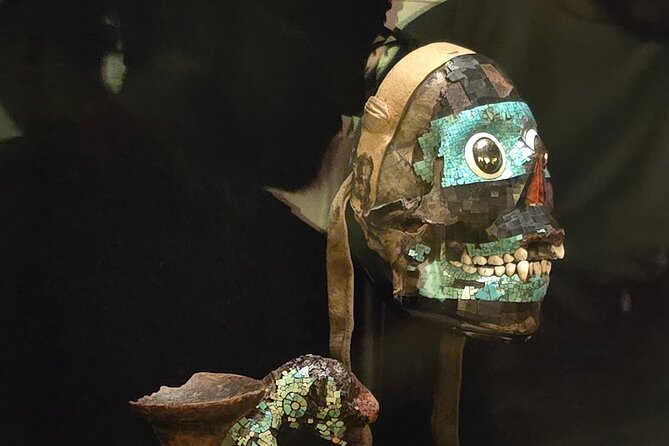
- Priority timeslots for a free, crowded museum so you spend less time stuck in lines
- Headsets available to hear commentary clearly even when the room gets noisy
- Max 15 travelers for a tighter, more personal feel
- Iconic objects covered like Rosetta Stone, Elgin Marbles, and the Parthenon sculpture
- Egypt, Assyria, Greece, and beyond including Ramesses II, winged bull, and Moai
- Free time after the tour to keep exploring on your own
Priority Timeslots and a Small Group: The Smart Way to Start
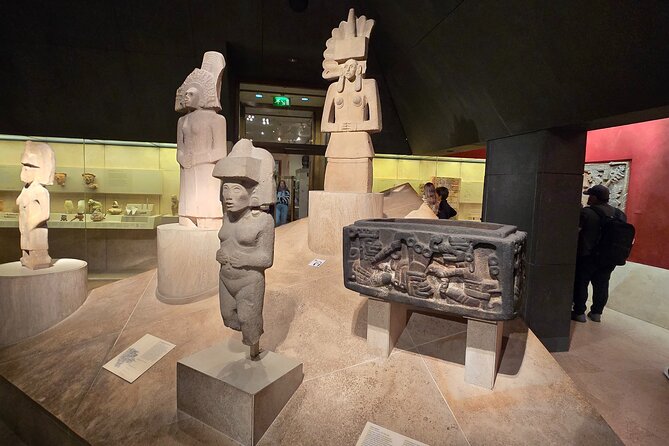
At the British Museum, the tricky part isn’t that you don’t have enough things to see. It’s that you can’t see them all, especially with the crowds. This guided highlights tour solves that by bundling priority timeslots with expert direction, so you’re not spending your visit hunting for where to go next.
And the size matters. This tour caps at 15 travelers, which keeps your route from turning into a slow-moving train. In practice, it means you’re more likely to hear directions, ask quick questions, and stay oriented while the museum swells with other groups.
The tour runs about 2 hours, so it’s not pretending to be a full museum education. It’s a focused primer that gets you oriented and gives you a handful of objects to anchor your self-guided wandering later.
You can also read our reviews of more guided tours in London

Meet-Up at Great Russell Street: What You’re Really Paying For
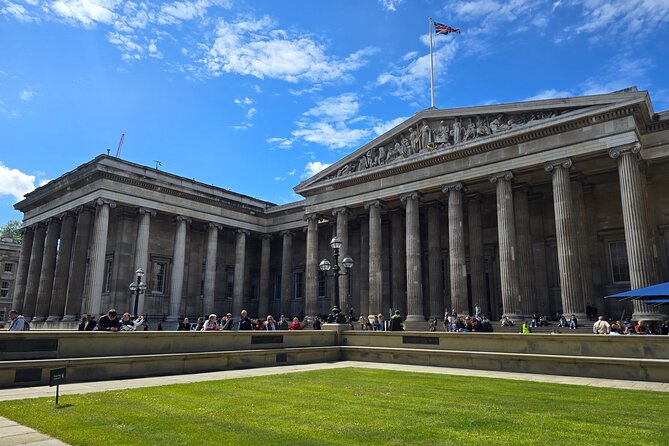
The tour starts at The British Museum, Great Russell St, London WC1B 3DG, and it ends back at the meeting point. That simple loop is part of the value: you’re not piecing together transport, ticket timing, and meeting points across multiple stops. You show up, connect with your guide, and the museum handles the chaos.
The price is $48.60 per person. Since the museum itself is free to enter, this can look pricey at first glance. But you’re paying for two things that are hard to DIY in a limited time window:
- A guide who brings the objects to life with context, not just museum labels
- A timed, priority entry approach that reduces the “wasted time” problem
You’re also not locked into a rigid script. The tour is designed to show you the museum’s most important highlights, and then you continue exploring at your own pace after the guided portion ends.
Stop 1: Your Two-Hour Run Through British Museum Highlights
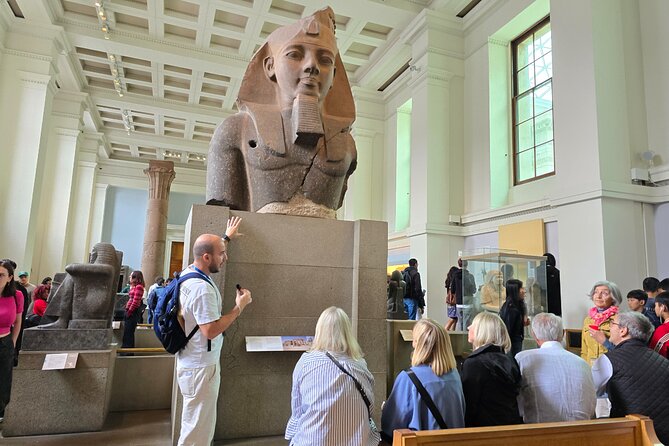
The entire guided experience is focused on one stop: the British Museum. Within that 2-hour window, your guide takes you to major works from different cultures and time periods, using them as stepping stones to explain how each object fits into a bigger story.
Here’s what you can expect to see and why each piece matters for first-time visitors:
Rosetta Stone and Egyptian Masterpieces
If you want one object that immediately signals why this museum is famous, the Rosetta Stone is the one. Your guide will use it to explain the importance of the breakthrough in understanding ancient writing systems, and how a single artifact can unlock whole chapters of history.
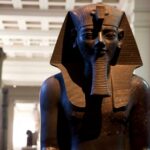
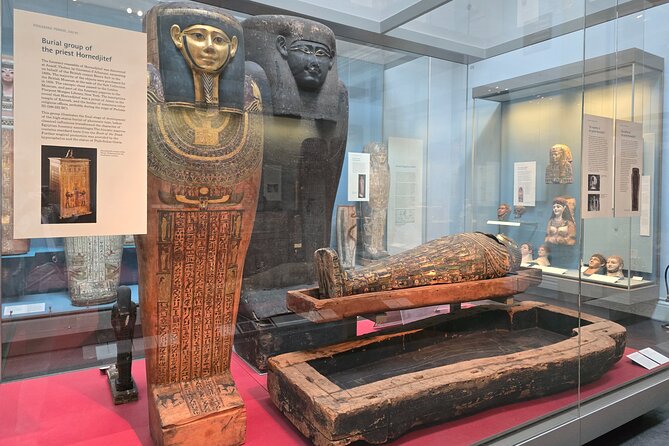
From there, the tour’s Egyptian coverage brings you into the world of royal portraits and funerary culture. You can look forward to stops such as Ramesses II (including a bust) and Egyptian statues and mummies. The payoff of having a guide here is that the objects stop feeling like random relics behind glass. They become evidence of beliefs, political power, and ritual life.
Elgin Marbles and Parthenon Sculpture
Next up are the Parthenon sculptures and the Elgin Marbles. These objects are famous, but they’re also overwhelming if you approach them without context. With a guide, you get the story of why these pieces mattered to their original setting and how they ended up housed here.
Even if you’re not a stone-nerd, this part works because the guide ties details to meaning: what you’re looking at, what it represents, and why these sculptures became a lightning rod in later centuries.
You can also read our reviews of more museum experiences in London


Assyrian Winged Bull
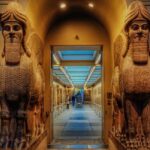
The Assyrian winged bull is another highlight that benefits from live narration. It’s not just a cool artifact. It’s a key piece for understanding how ancient societies represented protection, power, and the forces they believed shaped daily life.
A guide helps you read the object rather than just stand beside it. When commentary is live and organized, you’re more likely to notice the craftsmanship and symbolism you would otherwise miss.
Easter Island Moai and Global Connections
Then the tour stretches outward. You’ll get to see the Easter Island Moai statue, a reminder that the British Museum’s strength is truly global. This is where the guided format shines: in a short time, you get evidence of connections across distant places.
It also helps you build a framework for the museum after the tour. You’re not just collecting isolated facts. You’re learning how to think about the museum as a large, interconnected collection.
Sutton Hoo Ship Burial
The Sutton Hoo ship burial is one of the museum’s most striking links to early medieval Britain. Your guide can help you understand why it matters—both as a burial context and as an example of wealth, craftsmanship, and status in its era.
If you’ve ever walked into a museum and felt like the objects blur together, this is a moment where guided clarity helps you remember what you saw and why it’s significant.
Lewis Chessman
The Lewis Chessman adds a different flavor: everyday-like culture in an extraordinary object form. Even though chess sounds familiar, the point here is that the guide can explain what makes these pieces stand out and how they fit into their original world.
This is a great stop for visitors who want at least a slice of human everyday life mixed into the big, formal history.
How “More Than a Label” Works
A common theme in the strong guides’ performances is that the stories you hear are not just re-reading the signs. People like Daniel and James are specifically praised for sharing background that you wouldn’t get from the display text or a generic audio track.
So when you’re standing there in a crowd, your guide acts like a filter. You’re not trying to decode everything yourself in real time—you’re getting the key points in a sequence that makes sense.
Headsets and Crowds: Why the Audio Makes This Tour Easier
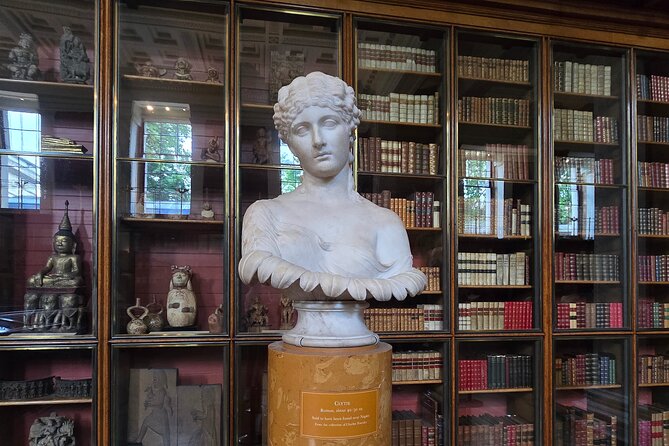
In a busy museum, sound becomes its own challenge. This tour offers an option for headset available, and it’s exactly the difference between hearing your guide clearly or trying to pick up bits over raised voices and passing feet.
You’ll appreciate this most at the popular stops. Even when you’re close to a famous artifact, the museum can get crowded enough that you lose the narrative thread. The headset keeps you in the story, even from a little distance.
This also helps the pacing. When you can hear your guide without turning your whole body every few seconds, you stay with the route and don’t get mentally lost.
How to Use Your Extra Time After the Tour (Without Feeling Lost)
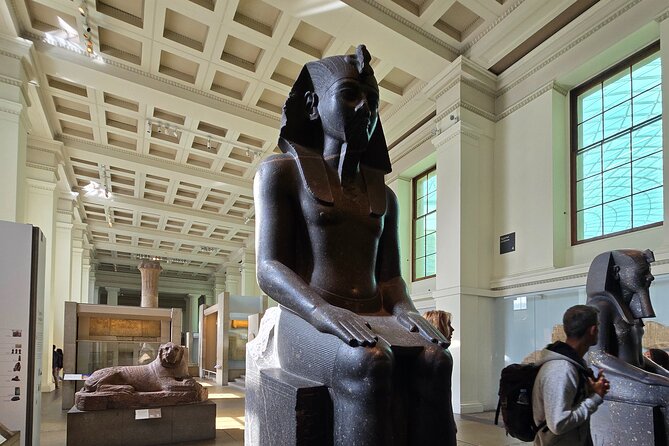
A big benefit of the format is that you don’t end with a sealed capsule of information. After the guided portion, you’re free to continue at your own pace.
That matters because the British Museum isn’t built for quick visits. It has a collection exceeding 8,000,000 objects across over 70 galleries. A 2-hour highlights tour is not meant to compete with that scale. It’s meant to make the museum usable.
Here’s how I’d use your post-tour time:
- Revisit the stops that stuck with you during the guide’s commentary
- Follow the direction your guide gives you on where the highlights sit in the bigger layout
- Spend extra time on the type of culture you liked most (Egyptian royal life, classical sculpture, Assyrian symbolism, and so on)
If you only have one short shot at the museum, this tour sets you up so you’re not wandering blindly. And if you’ve already visited before, it still works as a way to focus attention on the objects that visitors usually miss.
Price and Value at $48.60 for Museum-Scale Learning
Let’s do the value math in plain terms. The museum entrance ticket is included, and the tour also provides entry tickets for the main entrance with priority timeslots. So you’re not just paying for narration—you’re paying for easier arrival at a peak-demand site.
Then there’s the guide itself. The reviews highlight that guides like Daniel, James, Joey, and Antonio are energetic, organized, and able to cover a lot in a short time without making it feel rushed. People also call out clear pacing, with the feeling that the tour hits the high points while leaving enough time to retrace steps and explore further afterward.
For 2 hours, that’s a pretty efficient use of time, especially if you’re trying to fit the British Museum into a London schedule with other must-dos.
One more practical value point: this tour is booked well in advance on average (about 38 days). That’s a clue that demand is real. If you’re traveling during a busier stretch, getting priority timeslot value usually means locking it in sooner rather than later.
Should You Book This British Museum Highlights Tour?
Book it if:
- You only have around 2 hours to work with and want the museum’s biggest hits in a logical order
- You prefer a guided narrative over reading signs at a fast walking pace
- You want priority entry and help navigating crowds
- You like the idea of headsets to keep the commentary clear
Skip it or consider a different approach if:
- You want a deep, slow museum immersion (this is structured for highlights, not total coverage)
- Your interests are extremely niche and you’d rather spend the entire visit in one or two focused sections
- You’d be disappointed if the tour spent more time on certain themes during the day (some routes can linger longer on particular areas)
If you’re a first-time British Museum visitor—or even a second-timer who wants a fast, guided “best of” orientation—this is one of the most practical ways to get real value out of a very large museum.