REVIEW · PARIS
Paris Louvre Museum: Small Group Guided Highlights Tour
Book on GetYourGuide →Operated by Memories France · Bookable on GetYourGuide
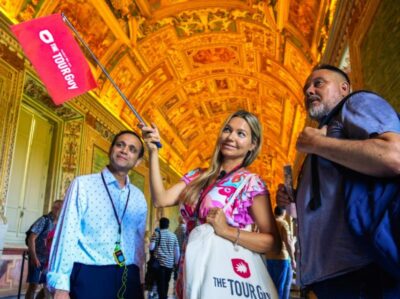
Paris’s art overload ends here. This small-group Louvre highlights tour is built for people who want the big hits without spending half the day stuck in queues. You meet at Arc de Triomphe du Carrousel and head straight toward the museum’s most famous rooms with a guide who keeps the pace human.
I love how this tour focuses on the works that define the Louvre. The Mona Lisa, Venus de Milo, and the Winged Victory of Samothrace get real attention, not quick photo stops. I also like that you’re not just handed a list—you get stories that make the art feel connected, from Michelangelo sculptures to the French crown jewels and decorated royal apartments.
One drawback to keep in mind: it’s a highlights tour, so you won’t see everything. Even though it’s listed as 90 minutes, the guided portion is described as about two hours, and some sessions can run longer depending on pace and crowd flow.
In This Review
- Key points worth planning around
- Why the 90-Minute Louvre Format Still Feels Like a Full Experience
- Meeting at Arc de Triomphe du Carrousel: Be Ready to Start Fast
- Skip the Ticket Line, But Still Expect Security Checks
- The Headliner Route: Mona Lisa, Venus de Milo, Winged Victory
- Mona Lisa: More Than a Photo Stop
- Venus de Milo: The Human Detail You Might Miss
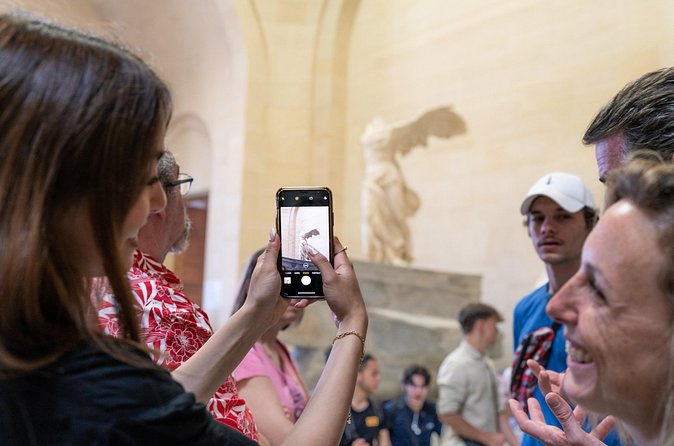
- Winged Victory of Samothrace: Awe, With Explanations
- Michelangelo, Crown Jewels, and Royal Apartments: The Stuff Under the Flash
- Michelangelo sculptures: The moment the style shifts
- French crown jewels: Power you can see
- Royal apartments: A lesson in how people lived
- How Your Guide Changes the Museum: Stories, Layout, and Pace
- After the Tour: Use Your New Map to Explore Without Panic
- Price and Value: Is $129 Worth It?
- Who Should Book This Louvre Highlights Tour
- Should You Book This Louvre Small-Group Guided Highlights Tour?
- FAQ
- How long is the Louvre guided highlights tour?
- How many people are in the small group?
- What famous artworks will I see?
- What’s included in the price?
- Where do I meet the tour group?
- Are large bags or luggage allowed inside the museum?
Key points worth planning around
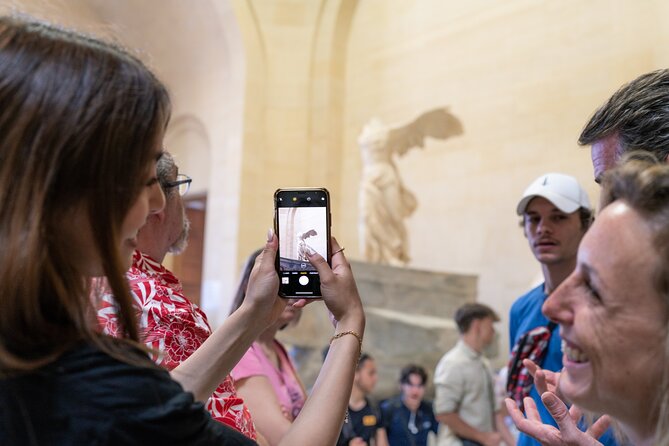
Small group (max 6) means you can actually hear your guide and ask questions.
Pre-reserved entry and skip-the-ticket-line access save real time at the busiest museum in Paris.
You hit the Louvre’s headline trio: Mona Lisa, Venus de Milo, and Winged Victory of Samothrace.
Beyond the obvious, you’ll also cover Michelangelo sculptures, French crown jewels, and royal apartments.
After the guided highlights, you keep exploring on your own for as long as you wish.
Meeting at Arc de Triomphe du Carrousel puts you in a smart central starting spot (no hotel pickup).
Why the 90-Minute Louvre Format Still Feels Like a Full Experience
The Louvre can crush first-timers fast. Ten miles of galleries and thousands of objects turns the museum into a choose-your-own-adventure nightmare. This tour fights back with structure: you get a guided route built around the most iconic pieces, plus a sense of the museum’s layout so you don’t wander in circles afterward.
The timing is listed as 90 minutes, but the tour content is described as a roughly two-hour highlights visit, and the experience can feel longer once you factor in how the guide manages flow and photo stops. Either way, the point is the same: you’re going in with priorities already set.
And that’s where the small-group setup matters. With up to 6 people, your guide has room to slow down when something is unclear. You’re not yelling over a crowd just to ask where to stand for the best view.
You can also read our reviews of more guided tours in Paris



Meeting at Arc de Triomphe du Carrousel: Be Ready to Start Fast
You meet at Arc de Triomphe du Carrousel, 75001 Paris. There’s no hotel pickup, so you’ll want to arrive a bit early and use the time to get organized.
Also, bring what you need and nothing extra. The tour requires a passport or ID card. That’s not a weird fine print detail—it’s the kind of requirement that keeps you from getting stuck at security. If you’ve got a plan for your day, this is an easy win: get your ID handy, keep your bag situation simple, and you’ll move with the group.
Skip the Ticket Line, But Still Expect Security Checks
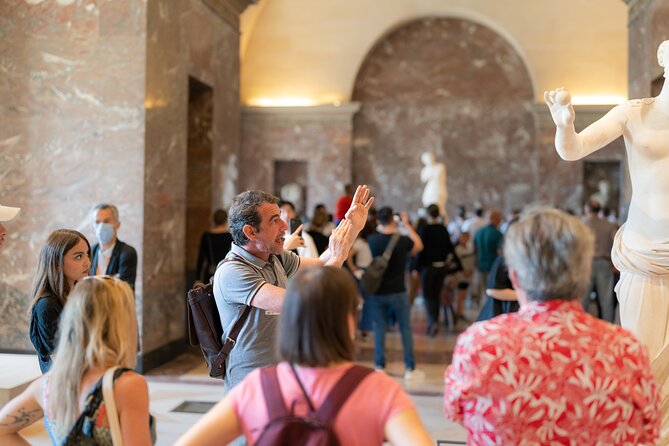
This experience includes pre-reserved entry tickets and the chance to skip the ticket line. That’s huge at the Louvre, because the ticket area can swallow your morning.
But don’t assume skip-line means zero waiting. The tour notes that increased security measures may affect lines. So you’ll still want a calm mindset. If you’re traveling with kids, this is where having a prepared strategy helps: keep everyone hydrated, keep them close, and let the guide handle the movement when lines shift.
And yes, baggage rules are real. Luggage or large bags are not allowed, and items larger than 55x35x20 cm aren’t permitted in the museum. If you’re the type who packs a full-week travel kit into one bag, this is the moment to adjust. Bring a day bag that fits the limit, or you risk losing time.
The Headliner Route: Mona Lisa, Venus de Milo, Winged Victory
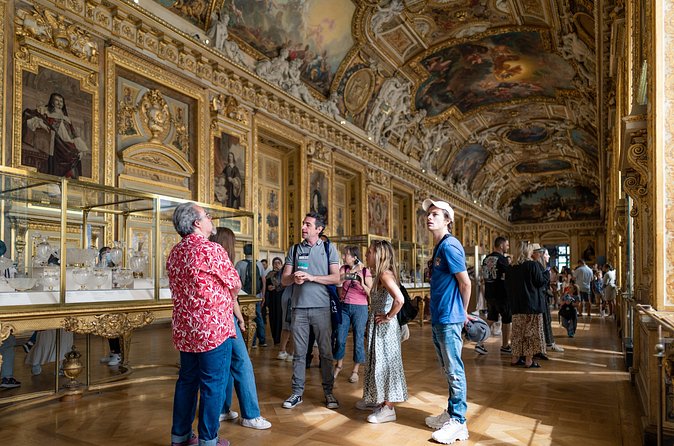
The best part of this Louvre tour is that it’s built around moments you can’t easily recreate on your own—mostly because you’d have to navigate the museum like a pro.
Mona Lisa: More Than a Photo Stop
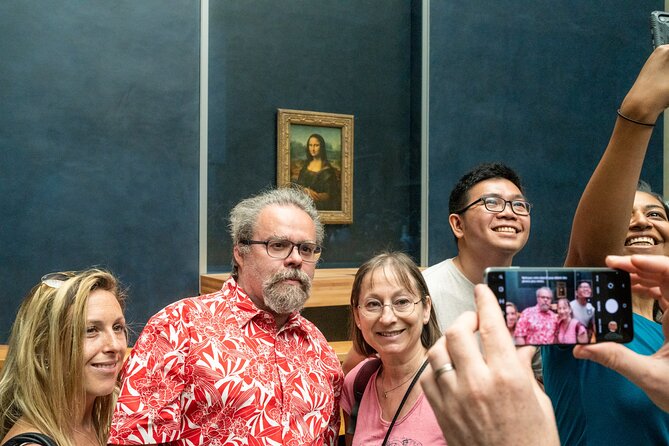
The Mona Lisa is often treated like a celebrity sighting. Here, it’s treated like an artwork with context. Your guide’s job is to get you to the right place, at the right time in the flow, and to share what you’re actually looking at—so you can move from I saw it to I understand why it matters.
One smart thing: many guides use the short downtime around the painting area to add extra story. That means even the parts that feel like waiting can become part of the learning.
You can also read our reviews of more museum experiences in Paris




Venus de Milo: The Human Detail You Might Miss
Venus de Milo can be one of those famous works you expect to be “overrated.” This tour pushes you past that by focusing on form, proportion, and the reasons this statue became such a cultural reference point. Standing close helps. It stops being a postcard and starts being a sculpture you can read with your eyes.
Winged Victory of Samothrace: Awe, With Explanations
The Winged Victory is dramatic, and the Louvre knows it. A highlights tour is valuable here because it helps you arrive with the right expectations. Your guide frames what you’re seeing—how the pose reads, why it’s so powerful, and what makes it historically important.
With this trio covered, you come away with the Louvre’s “greatest hits” done right: famous pieces, explained clearly, and seen with less chaos than you’d manage solo.
Michelangelo, Crown Jewels, and Royal Apartments: The Stuff Under the Flash
If you only see the biggest names, the Louvre still feels like a win—but it can feel incomplete. This tour aims to add depth by moving beyond the usual crowd magnet.
Michelangelo sculptures: The moment the style shifts
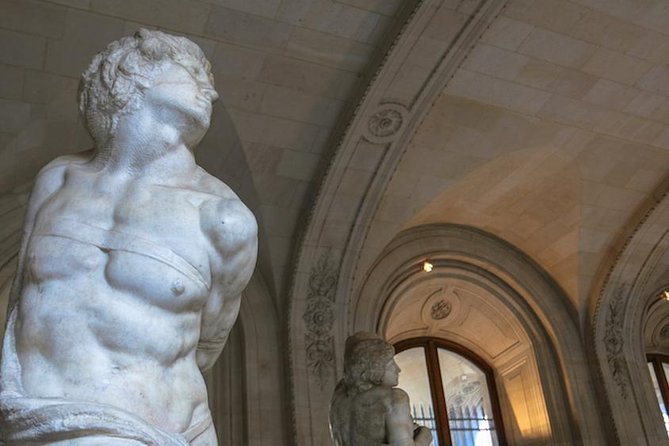
The Louvre has art that’s famous for technique, and Michelangelo’s work is a major reason. You’ll get exposure to Michelangelo sculptures as part of the guided highlights. Even if you’ve never studied Renaissance art, the guide’s stories help you spot what makes this kind of sculpture different from what comes before and after.
French crown jewels: Power you can see
The French crown jewels aren’t just decorative. They represent authority made visible. Seeing them in context matters—your guide helps connect the objects to the idea of monarchy, ceremony, and how wealth gets turned into symbolism.
Royal apartments: A lesson in how people lived
The tour also points you toward the Louvre’s richly decorated royal apartments. This is where the museum stops being a collection and starts feeling like a place where history happened. You’re not only looking at art—you’re learning what it meant in the spaces where elites once lived and moved.
This “beyond the big three” section is one of the reasons the small-group format feels worth paying for. It steers your attention toward areas most first-timers skip because they assume they can’t handle the museum’s scale.
How Your Guide Changes the Museum: Stories, Layout, and Pace
People don’t pay for a Louvre tour just to “see things.” They pay because the museum is hard to navigate. A great guide turns the museum from a giant warehouse into a sequence of ideas you can follow.
In the reviews, guides are consistently praised for being friendly, approachable, and very effective at keeping the group moving while still making time for questions. Names come up often—Megan, John, Claire, Caroline, Will, and Christina—and they represent a pattern: guides who use clear explanations and don’t treat the highlight route like a cattle run.
The group size helps here. With up to 6 participants, your guide can adjust to your pace. That matters when:
- you want a moment longer in front of the Mona Lisa,
- someone in the group has questions,
- or the flow of visitors suddenly shifts.
After the Tour: Use Your New Map to Explore Without Panic
Once the guided portion ends, you’re free to keep going through the Louvre’s galleries on your own for as long as you wish. This is where the highlights tour earns its keep.
Here’s how to use that extra time well:
- Pick 1 or 2 themes you cared about during the tour (Renaissance sculpture, French monarchy, or painting).
- Don’t try to “finish” the museum. Aim for one satisfying mini-route.
- If you’re unsure where to head next, go back to the idea your guide gave you: you now have a mental map of how the museum’s highlights connect.
Even if you plan to be there a long time, it’s smart to take breaks. The Louvre can wear you out because there’s so much to look at. A guided start helps you avoid the tired feeling of trying to decide what to see while you’re already overwhelmed.
Price and Value: Is $129 Worth It?
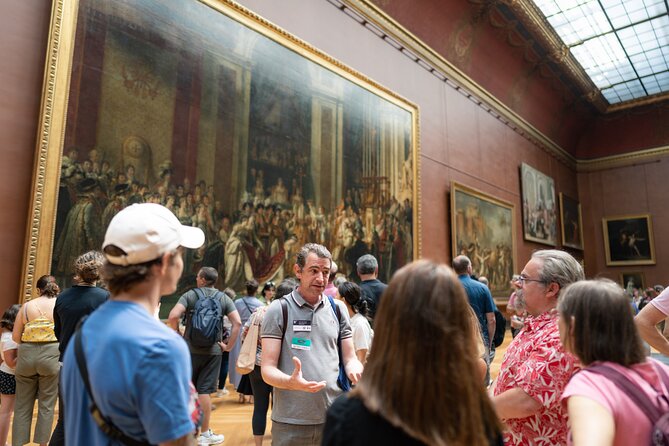
At $129 per person for the guided highlights, the price only feels fair if you’re buying something you can’t easily recreate on your own. In this case, you are.
You’re paying for:
- time saved through reserved entry and skip-the-ticket-line access,
- a focused route built around iconic works,
- and expert storytelling that makes the visit more than a photo scavenger hunt.
Could you DIY the Louvre? Sure. But you’d still face the same problems this tour solves: crowds, security flow, and decision fatigue inside a huge museum. If you only have a day (or half a day), this kind of structured visit often delivers better value than buying an unplanned ticket and then spending hours figuring out where to go.
Who Should Book This Louvre Highlights Tour
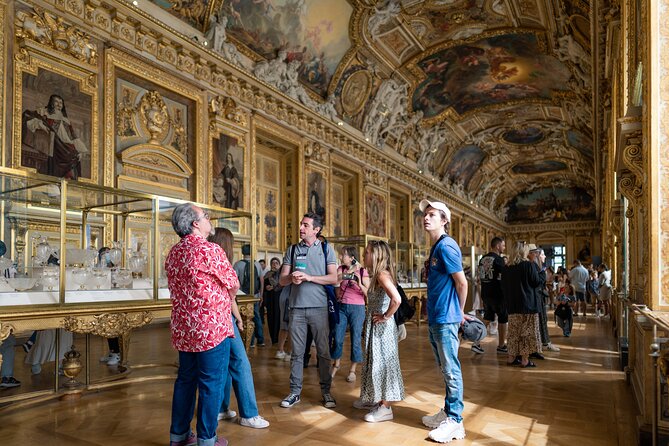
This tour is a strong match if you:
- want to see the Louvre’s top masterpieces without spending your whole day navigating,
- prefer a small group where you can ask questions,
- and like art history explained through real, concrete context.
It may not be ideal if you want a slow, seat-and-stare museum day. The format is designed for priorities, not for endless wandering.
One more thing to verify before you book: the information includes wheelchair accessibility, but it also lists it as not suitable for wheelchair users. If mobility is a concern, confirm details directly with the provider so you’re not relying on mixed notes.
Should You Book This Louvre Small-Group Guided Highlights Tour?
If you’re choosing between spending your limited Paris time on a guided highlights plan or winging it, I’d lean toward booking this. You get a tight route to the artworks most people come for, plus additional stops that add real flavor beyond the usual headline posters.
The main decision point is your tolerance for a highlights format. If you’re the type who wants to spend hours deep in one wing, you might feel shortchanged. If you want the Louvre’s essential beats with less stress—and you like the idea of finishing with self-guided wandering—this is a smart, efficient use of time.
FAQ
How long is the Louvre guided highlights tour?
The duration is listed as 90 minutes. The tour description also refers to a 2-hour guided highlight visit, and some experiences may run longer depending on pace.
How many people are in the small group?
The tour is limited to a maximum of 6 participants, which helps with hearing the guide and asking questions.
What famous artworks will I see?
You’ll visit highlights including the Mona Lisa, Venus de Milo, and the Winged Victory of Samothrace. The guide also covers other major areas such as Michelangelo sculptures, French crown jewels, and royal apartments.
What’s included in the price?
Included are a small group fully guided tour, a fully accredited local guide, and pre-reserved entry tickets. The tour also includes skip-the-ticket-line access.
Where do I meet the tour group?
You meet at Arc de Triomphe du Carrousel, 75001 Paris, France. There is no hotel pickup/drop-off.
Are large bags or luggage allowed inside the museum?
No. Luggage or large bags aren’t allowed, and items exceeding 55x35x20 cm aren’t permitted in the museum. You should also plan to bring passport or ID card.