REVIEW · BERLIN
Berlin: Classical concerts at the Bode Museum Berlin
Book on GetYourGuide →Operated by Berliner Schlosskonzerte · Bookable on GetYourGuide
Music changes inside a museum. The Gobelin Room at the Bode Museum makes every note feel close, and I love that the lineup spans real musical worlds, from baroque to romantic duets, with internationally known performers on stage.
This experience also scores for value: you get free museum admission alongside the concert ticket, so the evening can feel like more than just a show. One caution: the venue can be a little tricky to locate once you’re already inside the museum, so build in extra time and plan to ask at the box office if you’re unsure.
In This Review
- Key highlights
- The Gobelin Room: where the concert setting does half the work
- What you’ll hear: February to May programs and featured artists
- February 14, 2026: Italian Masters of the Baroque
- March 28, 2026: The Birth of Romanticism
- April 1, 2026: Pure Romance – Romantic Duets
- April 2, 2026: Italian Impressions
- April 3, 2026: The Seven Last Words by Joseph Haydn, Op. 51
- April 4, 2026: Piano music to dream to
- April 5, 2026: Romanticism in women’s hands
- April 6, 2026: Beethoven–Liszt in dialogue
- May 9, 2026: Bach Violin Sonatas 2
- May 10, 2026: Mozart: Bastien and Bastienne & Gluck: The Converted Drunkard
- Timing: what 90 minutes usually feels like in this room
- Price and value: $37 plus free museum entry, but compare if you’re price-sensitive
- Finding the Gobelin Room: the one spot you shouldn’t wing
- Seating reality: categories, not exact seats
- Who this concert fits best (and who may not love it)
- Should you book Berliner Schlosskonzerte at the Bode Museum?
- FAQ
- Where is the concert meeting point?
- Where exactly is the Gobelin Room?
- How long is the concert?
- Does the concert include a break?
- What’s included in the price?
- Can I select specific seats?
- Is the venue wheelchair accessible?
- Can I cancel for a full refund?
Key highlights
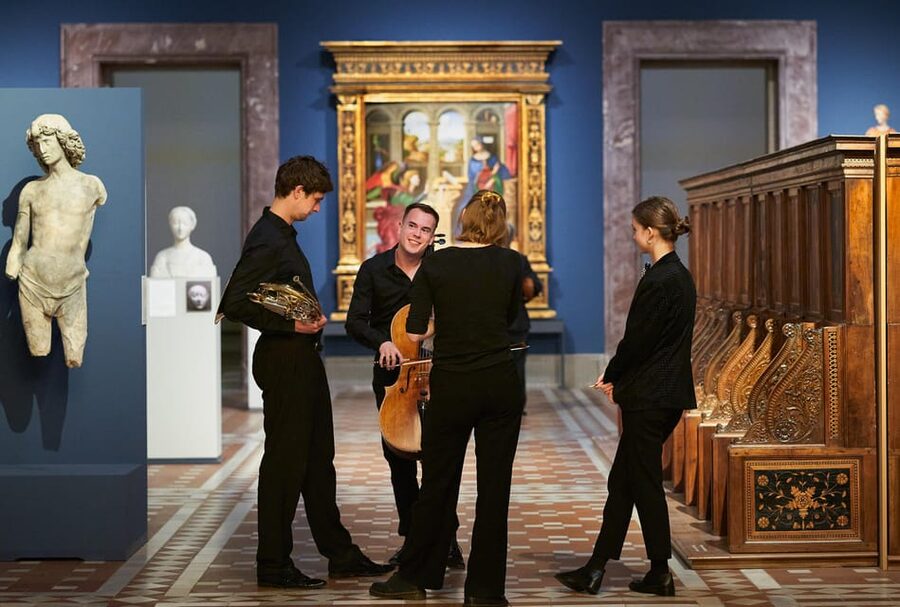
- Gobelin Room acoustics in the historic first-floor setting of the Bode Museum
- Concert programs with variety from Italian Baroque to Mozart and Beethoven-Liszt
- International performer lineups including Mozart Ensemble Berlin and guest soloists
- Free museum admission paired with your concert ticket
- No seat numbers, only categories so you’ll want to arrive on time
The Gobelin Room: where the concert setting does half the work
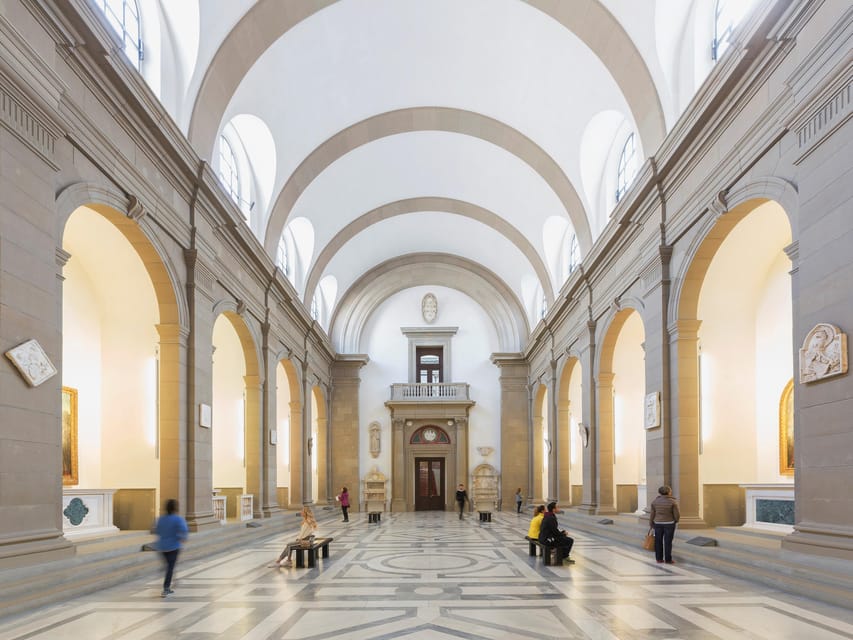
The Bode Museum isn’t just a backdrop here. The concert happens in the Gobelin Hall, on the first floor, and that historic room changes how the music lands. With chamber-style programs—recorders, organ, violin, piano, and staged works—the intimacy matters. You’re not waiting for sound to travel for ages. You’re hearing music that’s meant to be listened to carefully.
I also like that the evening isn’t treated like a rushed “event.” Even with a performance clocked around 90 minutes (often up to two hours), the setting makes it feel like a cultural appointment. That pairing—music plus art and museum space—is exactly what makes this kind of Berlin experience more satisfying than a generic concert hall visit.
You can also read our reviews of more museum experiences in Berlin



What you’ll hear: February to May programs and featured artists
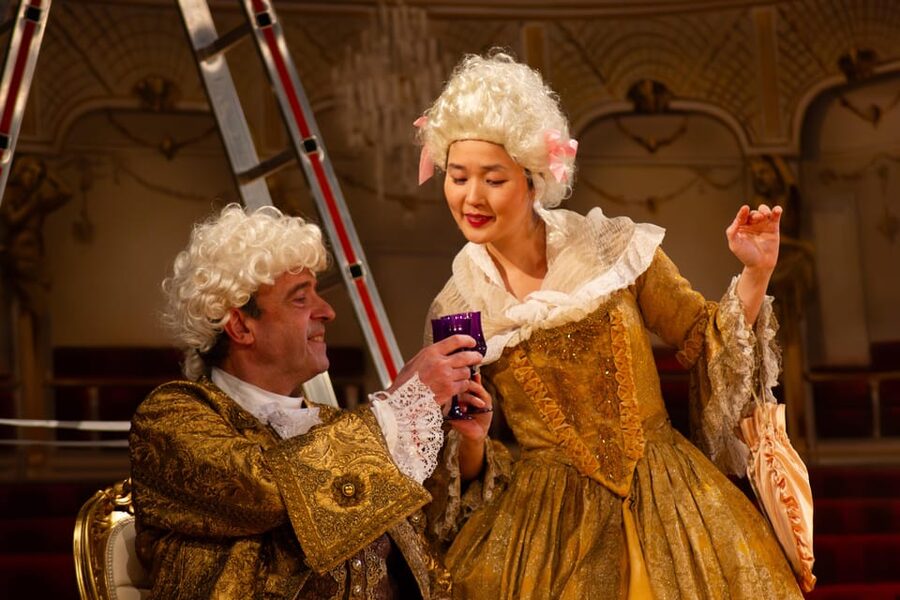
Your booking is tied to specific dates, and that’s good news. You can match your taste to the program instead of guessing. Here are the scheduled concerts and the artists you’ll be listening to:
February 14, 2026: Italian Masters of the Baroque
Expect a baroque flavor built around Susanne Ehrhardt (recorders) and Christian Finke (chest organ). This kind of pairing is made for clear articulation and textures that sound crisp even when the room is calm. If you like music that feels architectural—patterns, lines, and playful interplay—this one is a strong bet.
March 28, 2026: The Birth of Romanticism
This program puts Mozart Ensemble Berlin on the spotlight for music that bridges styles. “Birth of romanticism” usually means you’ll hear emotion rising, harmonies getting more expressive, and phrases that feel like they’re leaning forward rather than simply outlining structure.
April 1, 2026: Pure Romance – Romantic Duets
This one is explicitly duet-focused: Inês Pinto (soprano), Kristina Naudé (alto), and Beatrice Wehner-Schaller (piano). If your idea of a great evening includes vocal lines with character, plus a piano that supports rather than dominates, this program is built for you. You get the human voice in conversation with piano color.






April 2, 2026: Italian Impressions
Another chamber combination: Marianne Boettcher (violin), Yasuko Fuchs-Imanaga (flute), and Karin Leo (guitar). Guitar in a classical program is one of those details that can surprise you—in a good way. Expect variety in timbre: the violin’s warmth, the flute’s brightness, and guitar adding a different kind of resonance to the harmony.
April 3, 2026: The Seven Last Words by Joseph Haydn, Op. 51
Mozart Ensemble Berlin performs Haydn’s Op. 51. Even if you don’t know the piece, the title tells you the mood is serious and dramatic. Works like this often feel like musical scenes—slow gravity, carefully controlled intensity, and movement that’s more storytelling than background music.
April 4, 2026: Piano music to dream to
A solo piano concert by Maria-Magdalena Pitu-Jokisch. This is your calm evening option. If you want an unhurried performance that leaves space for the sound to breathe, piano-only programs can be perfect in a museum setting.
April 5, 2026: Romanticism in women’s hands
Still Beatrice Wehner-Schaller (piano), but this time the theme is the focus. When a concert frames the repertoire through a thematic lens, it tends to guide how you listen—less “spotting favorites,” more “hearing a story through the program.”
April 6, 2026: Beethoven–Liszt in dialogue
You’ll hear the back-and-forth feeling between composers through Naoko Fukumoto (piano). If you like contrasts—classical force meeting virtuoso flourish—this type of program often brings out both discipline and drama in a single instrument.
May 9, 2026: Bach Violin Sonatas 2
Marianne Boettcher (violin) and Yuko Tomeda (harpsichord). Harpsichord matters here. It changes the articulation and rhythmic bite compared with a modern piano, so you’ll notice baroque clarity even when the melodies are lyrical.
May 10, 2026: Mozart: Bastien and Bastienne & Gluck: The Converted Drunkard
This is the most “operatic” option on the calendar. It includes staging and a larger ensemble cast:
- Bastien and Bastienne: Yuri Mizobuchi (Bastien), Inês Pinto (Bastienne), Stephen Barchi (the magician)
- The Converted Drunkard: Marcel Benedikt (Jacob Ofenloch), Kristina Naudé (Barbara), Inês Pinto (Bastienne), Yuri Mizobuchi (Bastien), Stephen Barchi (Luke)
- Staging: Roland Treiber
- Mozart Ensemble Berlin
If you want more theatrical storytelling than a standard instrumental recital, this is the date to pick. The presence of a magician role and the explicit staging credit are your clues that it’s not just singing in place.
Timing: what 90 minutes usually feels like in this room

The performance length is listed as about 90 minutes, but plan for up to two hours. A 20-minute break is usually included, so the evening isn’t a single uninterrupted sprint.
That break is useful. You can step out, reset your ears, and then come back ready to notice details you might have missed earlier. In a museum setting, it also gives you a natural rhythm to your day—concert, pause, then one more movement of listening.
One practical tip: if you hate being late, arrive early enough to take the museum moment seriously. Not because you’ll need ages, but because you want your stress level at zero when it’s time to find the Gobelin Room and check in.
Price and value: $37 plus free museum entry, but compare if you’re price-sensitive
The price is shown as $37 per person, and that’s where the value equation starts. The big win is not just the concert ticket; it’s also free museum admission. So you’re not paying only for the music—you’re also buying time in one of Berlin’s major museum spaces.
Still, I’d be honest: price can vary depending on how you book. One confirmed booking experience noted the concert ticket price at the cash desk was lower than what showed up online on that channel (reported as 64€ versus 48/40€). That doesn’t mean you’ll see the same difference for every date or seating category. It does mean you should check: if you’re in Berlin anyway, it can be worth comparing what the box office lists versus what you see online.
If you’re flexible and want the best deal, treat the $37 figure as your baseline value, then sanity-check the local ticket price once you’re there. If you’re not worried about saving a few euros and you mainly want a specific program date, book with confidence.
Finding the Gobelin Room: the one spot you shouldn’t wing
This is the part that matters most for a smooth evening. The Gobelin Room is on the first floor of the Bode Museum. Your voucher needs to be presented at the box office to receive your tickets.
And here’s the simple reality: the museum is big. One booking experience described searching for the concert hall as difficult without a guide, even after arriving on time. That tells me you should do two things:
- Arrive with buffer time so you’re not hunting once your concert start time is near.
- If you’re unsure, stop at the box office and ask for the Gobelin Room on the first floor.
I’d rather you feel slightly early than slightly lost. Museums don’t care about your clock.
Seating reality: categories, not exact seats
You only select a seating category, not specific seats. That means you can’t guarantee the exact sightline or position you’d pick if you were choosing seat numbers.
So choose your category based on your priorities:
- If you want the best chance at a good view and easy sightlines, pick the top category available.
- If you’re more focused on hearing clearly than on visual angles, lower categories can still work fine—just accept that your exact place is a surprise.
Since the concert happens in a museum room, staff will manage entry and seating. Just don’t plan to stroll in at the last minute and expect everything to be effortless.
Who this concert fits best (and who may not love it)
I think this works especially well for:
- You if you love classical music and want a setting that feels more cultural than commercial.
- You if you enjoy the mix of art + music. The museum context gives the performance a “listen with attention” tone.
- You if you like variety across styles: baroque (recorders/organ), romance (vocal duets), and staged Mozart/Gluck.
You might be less thrilled if:
- You need a standard concert-hall experience with predictable wayfinding.
- You prefer music only from a single era and don’t want to choose among themed programs.
- You’re sensitive to a break (even though it’s typically 20 minutes).
Also, good news for practical travelers: the venue is wheelchair accessible, so you can consider it with that in mind.
Should you book Berliner Schlosskonzerte at the Bode Museum?
If you want a concert experience that feels tied to place—historic room, serious listening mood, and a real chance to get both music and museum time—this is a strong yes.
I’d book it if:
- You’re choosing a date like Haydn’s Seven Last Words, the duets program, or the May staged Mozart/Gluck performance.
- You value free museum admission as part of the night.
- You like hearing internationally known artists in a room designed for chamber clarity.
I’d think twice if:
- You’re going to arrive with no spare time and hate asking staff questions.
- You’re strictly chasing the lowest ticket cost and might want to compare what the box office charges for your specific date and category.
If you pick the program that matches your taste and give yourself time to find the Gobelin Room on the first floor, you’ll be set for a very Berlin kind of evening: art all around, music up close.
FAQ
Where is the concert meeting point?
The Gobelin Room is on the first floor of the Bode Museum. Present your voucher at the box office to receive your tickets.
Where exactly is the Gobelin Room?
It’s located on the first floor of the Bode Museum in Berlin.
How long is the concert?
The duration is about 90 minutes, but it can last between 90 minutes and two hours.
Does the concert include a break?
Usually, yes. The program typically includes a 20-minute break.
What’s included in the price?
You get free museum admission and a concert ticket. Food is not included.
Can I select specific seats?
You can only select a seating category, not specific seats.
Is the venue wheelchair accessible?
Yes, the activity is listed as wheelchair accessible.
Can I cancel for a full refund?
Yes. Free cancellation is available up to 24 hours in advance for a full refund.