
REVIEW · BERLIN
Berlin: Samurai Museum Entry Ticket
Book on GetYourGuide →Operated by Samurai Museum Berlin · Bookable on GetYourGuide
Samurai myths, staged with serious tech. The interactive exhibition mixes real artifacts with touchscreens, projections, and hands-on learning, and you get to experience the Nō theatre and tea house in Berlin, built with traditional materials and techniques. One watch-out: your visit depends on available starting times, so it helps to check your slot before you head over.
What I like most is how the museum turns history into something you can work out with your hands and eyes, not just read. The AI fox Kitsune asks you questions as you move through the displays, and the staff are there to help you get started fast at the entrance.
In This Review
- Where you are in Berlin (and how to get there)
- Key things to know before you go
- Entry ticket value: what $15 buys you
- Getting inside: skip-the-line and the smartphone barrier
- The interactive high-tech exhibition: learn by answering and touching
- Sword collection and swordsmithing: more than weapons on display
- Nō theatre and tea house: traditional buildings with projected performances
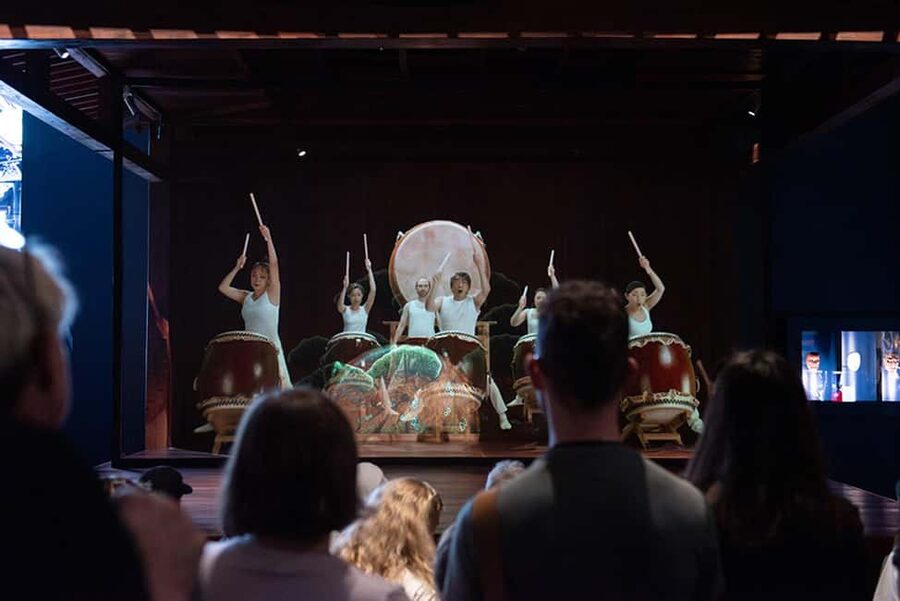
- Holographic drum performance: a show moment you can time your day around
- Peter Janssen Collection: why this museum feels different
- Practical visit tips: packing rules and pacing
- Who this ticket suits best
- Should you book this Berlin Samurai Museum ticket?
Where you are in Berlin (and how to get there)
The Samurai Museum Berlin sits in Berlin-Mitte on Auguststraße, close to the Museum Island and Alexanderplatz area. It is easy to combine with a day of classic sights, cafés, and shopping in the same neighborhood, because you’re not crossing the city to reach it.
Public transport is straightforward. Use U-Bahn to U6 Oranienburger Tor or U8 Rosenthaler Platz. Take the S-Bahn to Oranienburger Straße (S1, S2, S25, S26) or hop on trams M1, M5, or M8 near Oranienburger Straße/Rosenthaler Platz. This matters because it makes your museum plan simple: you can stop in for a focused visit without turning your day into logistics.
Key things to know before you go
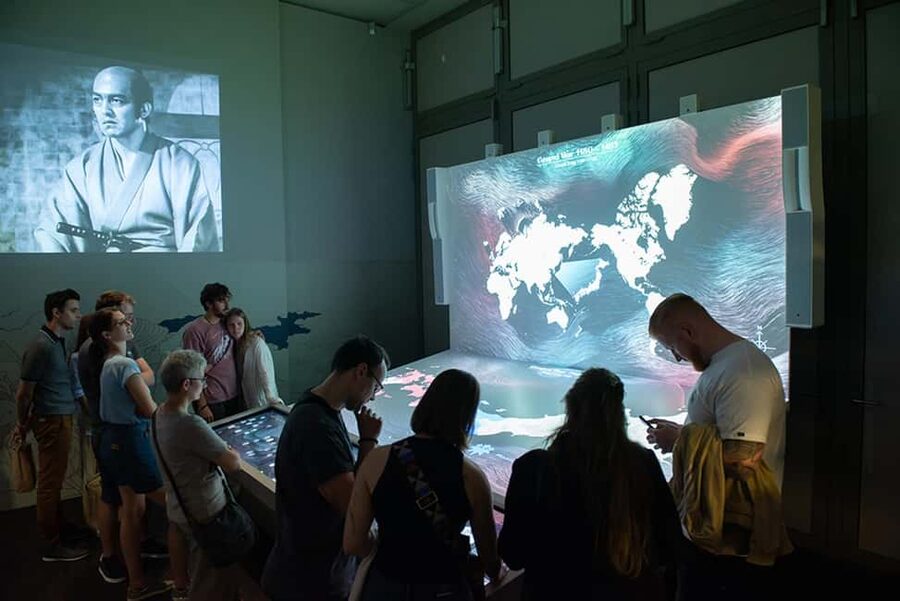
- High-tech interactive stations: touchscreens, projections, and hands-on installations help you learn by doing.
- AI fox Kitsune: a guided Q-and-A element that keeps the visit playful.
- Swordsmithing and weapon craft: learn techniques tied to the art of making legendary blades.
- Nō theatre and tea house: traditional structures in Berlin with realistic projected performances.
- Holographic drum experience: a show-style moment inside the exhibition flow.
- Peter Janssen Collection focus: rare samurai culture pieces, including armor and tea utensils from major eras.
A few more Berlin tours and experiences worth a look



Entry ticket value: what $15 buys you
At $15 per person, the ticket is priced like a “doable, worthwhile stop” rather than a museum that demands half a day of planning. And that’s the point here: it’s built to be a full experience even if you only have a couple of hours.
You get entry only. An exhibition catalog is not included, so if you like taking notes or bringing something home, plan to buy it only if you feel like you truly need it. The ticket is valid for 1 to 14 days, but you still need to check availability to see the starting times. That means you get flexibility, yet you do not have a free-for-all entry when you feel like it.
For value, I look at two things:
1) Do you get more than “look at objects behind glass”? Here, yes—there are interactive installations throughout.
2) Is the museum unusually specific? Also yes. The collection and presentation are centered on samurai culture, including armor and weapons, plus cultural elements like tea ceremony and Nō theatre.
Getting inside: skip-the-line and the smartphone barrier
The museum is set up so you can skip the ticket line. You show your ticket on your smartphone and go directly to the entrance barrier. That sounds minor, but it changes the mood of a museum visit. You don’t lose time standing around before you even reach the first exhibit room.
Practical tip: your phone battery matters. Bring a charged device so you can scan quickly. Also, keep an eye on the time you choose. The ticket gives you a valid window and starting-time availability, so treat the slot as part of your plan, not an afterthought.
The interactive high-tech exhibition: learn by answering and touching
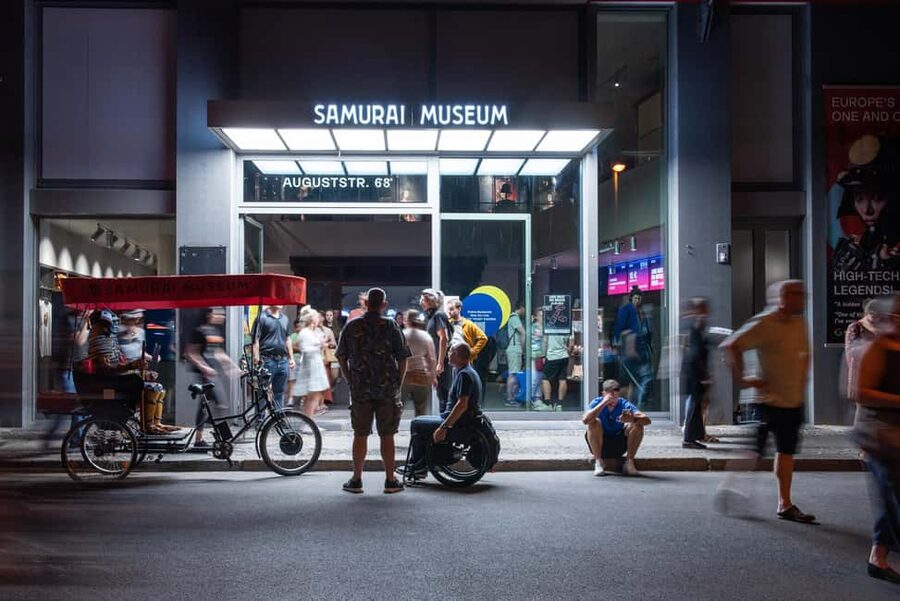
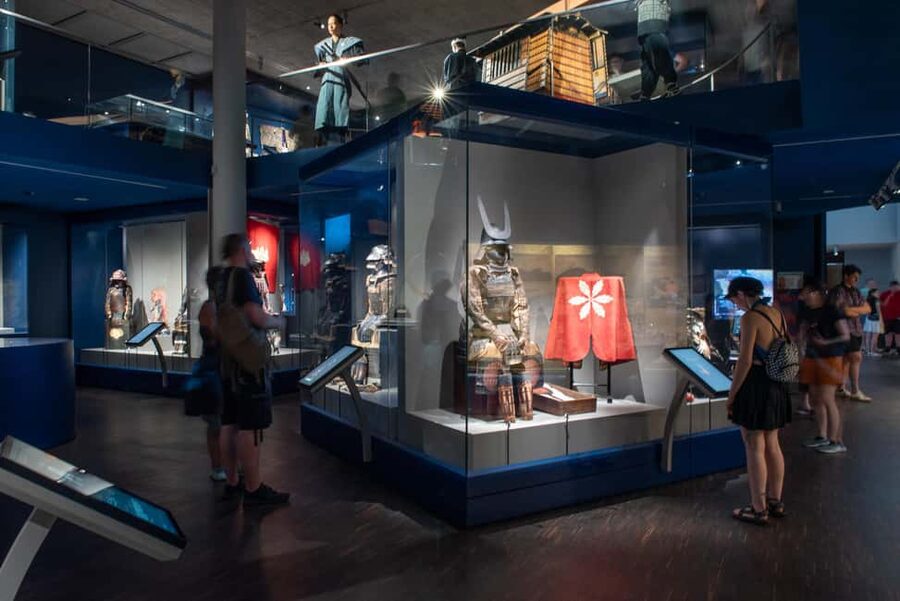
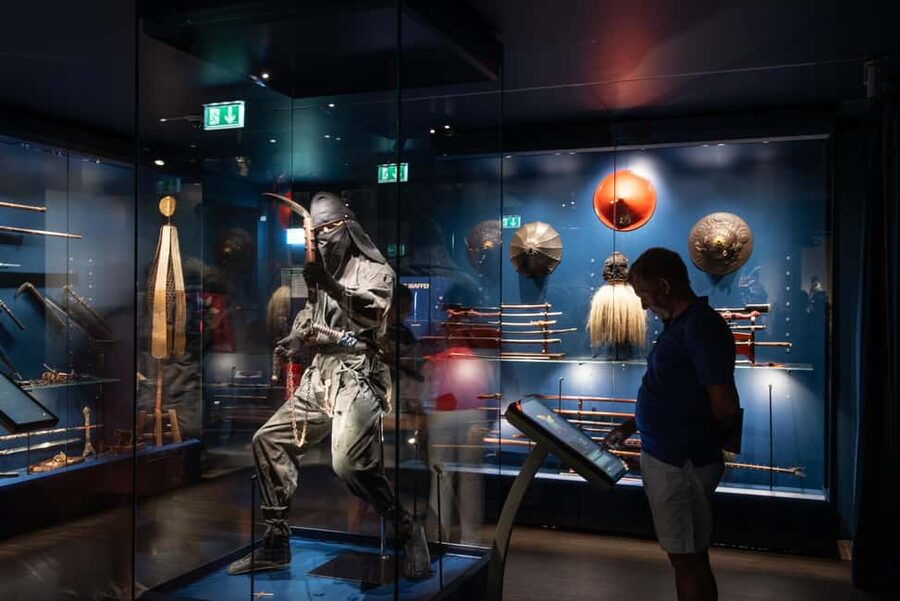
The heart of this visit is an interactive, high-tech setup built to connect Japanese legends and daily arts with physical artifacts. Expect touchscreens, projections, and hands-on elements that guide you through the world of samurai, ninja, and even yōkai (mysterious supernatural beings).
One standout for me is how learning is staged like a conversation. Kitsune, the fox character guide, asks questions as you go. You’re not only consuming information—you’re being pulled into it. If you travel with kids, this is exactly the kind of structure that keeps attention from wandering. Adults tend to enjoy it too, because it slows you down in a good way. You spend more time at each station.
Language support is another practical win. The museum includes information for both German and English speaking visitors, and the interaction design helps you follow along even if you’re not fluent.
Sword collection and swordsmithing: more than weapons on display
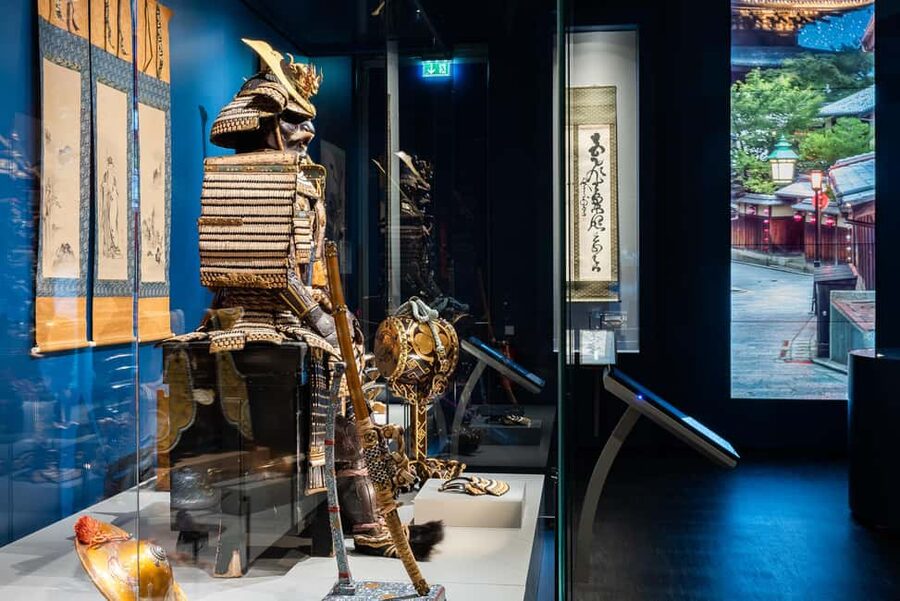
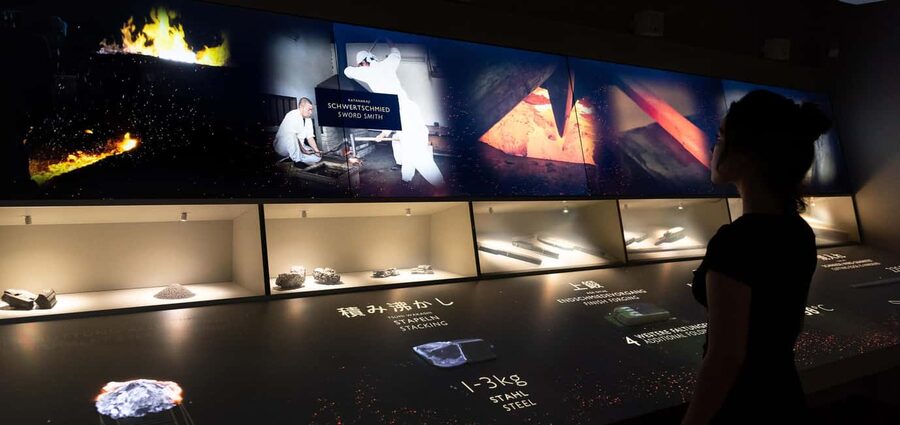
Yes, you’ll see armor and weapons up close. But the sword area aims to teach the craft behind the blade. The museum presents the art of swordsmithing, including how legendary sword blades are produced and why different techniques matter.
What this means for you in real terms: you can leave with a clearer picture of samurai culture beyond the surface fantasy. It’s easier to understand why a sword was treated as an object of identity and skill, not just a piece of equipment.
If you’re the type who likes objects with story hooks, you’ll probably linger here. And if you’re not, the interactive components help you stay oriented so the display doesn’t feel like a long hallway of metal.
You can also read our reviews of more museum experiences in Berlin






Nō theatre and tea house: traditional buildings with projected performances
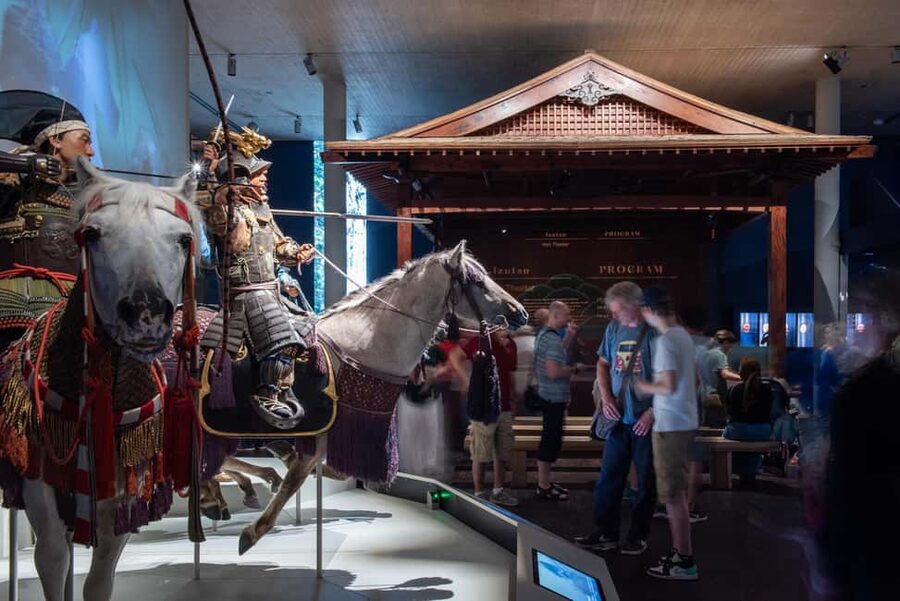
This is one of the most unusual parts of the whole museum. The Nō theatre and tea house are described as having been built in Japan using traditional materials and techniques, then erected in Berlin. That alone makes the space feel special, but what really carries it is the use of realistic projections inside these rooms.
You can experience the theatre element through performances that play out with that projection layer. Then there’s the tea ceremony segment, where you get an insight into centuries-old processes. Even if you know almost nothing about tea culture, the setting and step-by-step structure make it easier to connect the dots.
For many visitors, these two spaces provide the calm contrast to the more tech-and-action parts of the museum. You go from answering questions and exploring mechanics to a quieter rhythm where details matter.
Holographic drum performance: a show moment you can time your day around

The museum includes a holographic drum performance. It’s the kind of moment that gives the visit a natural peak: you know there’s a performance element, not just static displays.
If you’re visiting during a busy time of day, this show piece is a good reason to stay flexible with your pacing. Let the exhibition flow guide you, then stop when the performance draws you in. In practice, it keeps the visit from feeling like you’re rushing to check off rooms.
Peter Janssen Collection: why this museum feels different
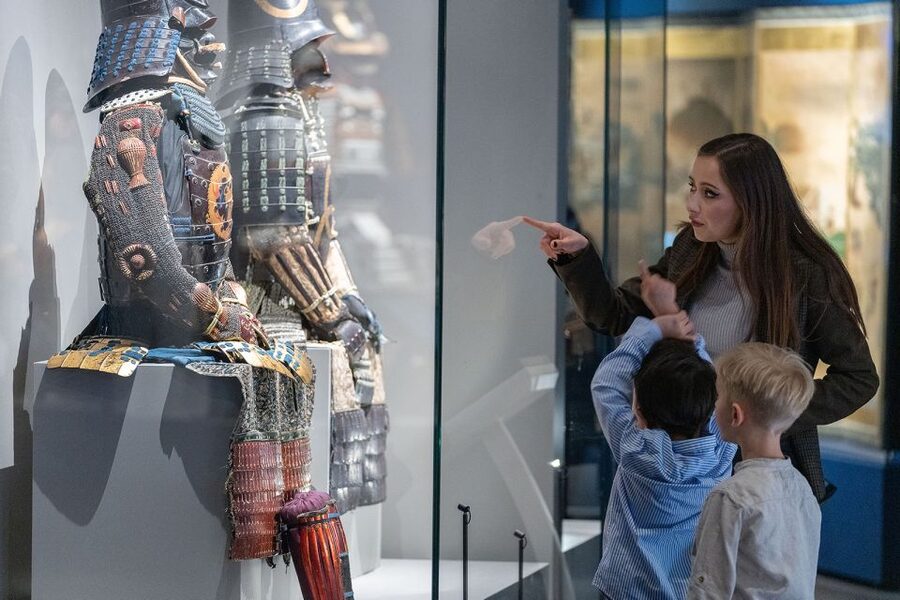
The museum’s presentation leans heavily on one major source: the Peter Janssen Collection. It is described as one of the world’s largest private collections of samurai culture, built from a start that began with a flea market find in Berlin and grew into a private collection of more than 4,000 objects.
The museum’s timeframe focus spans from the late Kofun to the early Meiji period (6th–19th century). That broad range matters, because it helps you see development across centuries instead of treating samurai culture like one snapshot.
Some highlight examples called out include:
- An 18th-century palanquin
- A 17th-century armor connected to the Matsudaira clan
- Tea utensils from the time of Sen no Rikyū (1522–1591)
If you love craftsmanship, you’ll probably appreciate how these objects connect different parts of culture—military skill, social display, and everyday ritual—into the same story line.
Practical visit tips: packing rules and pacing
This museum is strict about what you bring. Pets are not allowed, and you can’t bring food and drinks. Luggage or large bags are also not allowed, so travel light.
Why this matters: if you’re coming from a train station or you’re in Berlin for multiple days with carry-on luggage, you’ll want a plan for your bags. The last thing you want is to arrive ready to scan your ticket and then have to solve a bag problem at the door.
Timing-wise, because tickets depend on starting times, try not to schedule it as the final stop of a tight itinerary. Build in a little buffer. The museum uses a lot of interactive elements, and the best experience comes from slowing down, especially in the tea and theatre areas.
Who this ticket suits best
This museum is a strong match if you:
- Want culture you can touch and test, not just read about
- Enjoy hands-on exhibits and tech-guided learning
- Like Japanese art and history but don’t want a textbook-heavy visit
- Travel with families, especially kids who get bored by quiet museum rooms
It’s also worth your time if you’re the “I want one unique museum” traveler. The Nō theatre and tea house setting in Berlin is not something you see often.
Should you book this Berlin Samurai Museum ticket?
If you’re deciding between museums in Mitte and you want something unusual, I’d lean yes. For $15, you get a focused visit with interactive technology, a playable guide element (Kitsune), and cultural sets like the Nō theatre and tea house that you can’t recreate at home.
Skip it only if you prefer museums that are mostly quiet object viewing with minimal interaction, or if you’re traveling with lots of luggage and don’t have an easy way to travel light. Also, if your schedule is extremely rigid, remember you’ll want to match your arrival to the museum’s starting-time availability.
If you can keep it simple—phone ready, light bags, and a bit of time to go at your own pace—this is the kind of stop that turns a Berlin day into something genuinely different.