REVIEW · BERLIN
Berlin: Deutschlandmuseum – Flexible Entrance Ticket
Book on GetYourGuide →Operated by Deutschlandmuseum · Bookable on GetYourGuide
Two thousand years, one ticket. Deutschlandmuseum uses interactive staging and period exhibits to cover Germany’s big turning points across 12 eras. You’ll go from the Battle of Varus to a much more modern stop tied to 2006, all designed for learning through sight and sound.
I especially like the hands-on style: detailed scenes plus interactive media that make events easier to follow than a wall of dates. I also like the practical setup with no waiting in line, thanks to a separate entrance, and the flexibility of using your ticket across a 1-day window.
One thing to consider: if you want a museum that goes ultra-deep into historical scholarship, this may feel more visual and approachable than intensely academic. Also, it can get busy, so choose a quieter time if you dislike crowds.
In This Review
- Key takeaways before you go
- Deutschlandmuseum: A Berlin history stop built for active learning
- The “12 eras” format: what the museum really does differently
- From the Battle of Varus to 2006: the long story you’ll walk through
- The early chapter: Battle of Varus
- The modern chapter: the 2006 summer fairy tale
- The middle: 12 eras of turning points (how to approach them)
- What you’ll actually feel in the exhibits: history with multiple senses
- Skip-the-line entry: why it changes your museum-day math
- Pacing a 1-day visit: how to get the most without burning out
- Price and value: is the $30 ticket fair for what you get?
- Who should book Deutschlandmuseum (and who might want a different kind of museum)
- Should you book? My practical decision guide
- FAQ
- How long does the Deutschlandmuseum experience last?
- Does the ticket include skip-the-line entry?
- Is the museum wheelchair accessible?
- What is included with the flexible entrance ticket?
- How much does it cost?
- Can I cancel if my plans change?
Key takeaways before you go

- 2,000 years covered in 12 eras, with turning-point scenes that keep the story moving
- Interactive media + period exhibits in each staging, so you learn with multiple senses
- Battle of Varus to 2006 gives you a clear long-arc from early conflict to recent memory
- Skip-the-line via a separate entrance means more time for exhibits
- Best for curious minds and families, but not necessarily for people chasing deep academic detail
Deutschlandmuseum: A Berlin history stop built for active learning
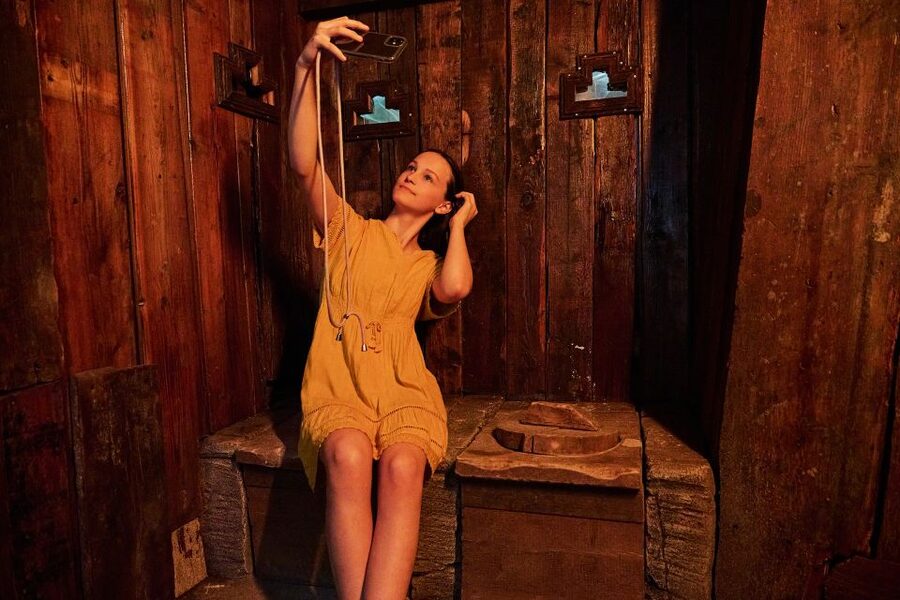
If you like history but get tired of museums that feel like homework, Deutschlandmuseum is a refreshing change. This Berlin museum presents Germany’s past through staged scenes and interactive elements. The idea is simple: you don’t just read about events, you experience the atmosphere and context.
You’re looking at 2,000 years of German history organized into 12 eras. Each era is shown with detailed recreations of major turning points and paired with exhibits from the time period. That mix matters because it helps you connect the story to the everyday material culture around it.
And yes, it’s fun. The museum doesn’t pretend history is only serious plaques. It uses media, staging, and interactive moments to keep you engaged, even if you are only planning a short museum day.
A few more Berlin tours and experiences worth a look


The “12 eras” format: what the museum really does differently

What makes Deutschlandmuseum feel different is the way it blends two learning styles. You get a visual, scene-based environment, and you also get interactive media that can explain what you’re looking at. In practice, that means you’re not stuck scanning long text panels the entire time.
Each depiction of a turning point is equipped with:
- Historical exhibits from the period, so you see artifacts and details connected to that era
- Interactive media, designed to guide you through the meaning of what’s on display
For you, this is the core value. It turns history into a sequence of understandable moments rather than a list of dates. Instead of memorizing, you can build a mental timeline by walking through spaces that feel like different chapters.
The museum frames its approach as a new way of knowledge transfer. Whether you love that philosophy or not, you can feel it in the pacing: you move, you look, you respond to prompts, and the story clicks in a more natural way.
From the Battle of Varus to 2006: the long story you’ll walk through
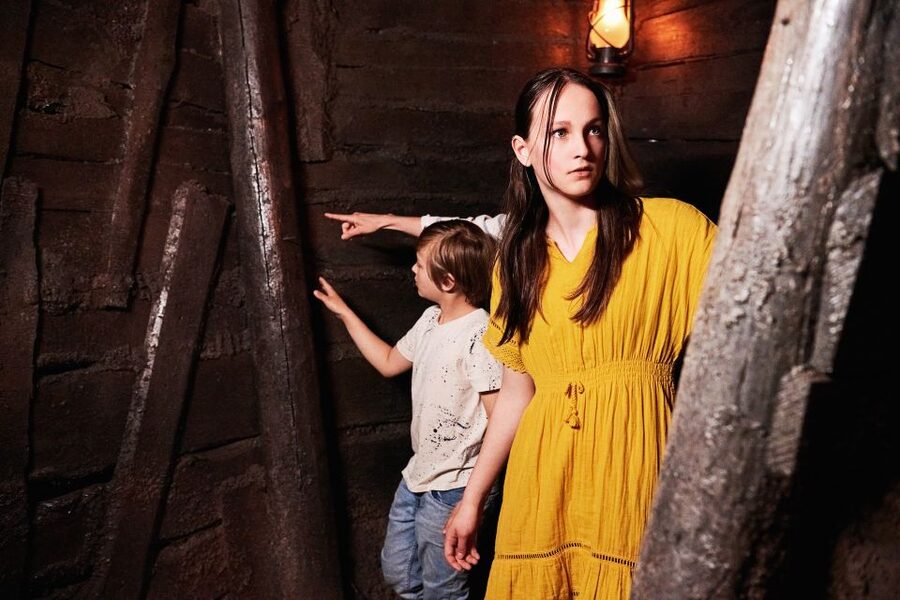
The museum includes major anchors at both ends of the timeline, and that helps you orient quickly.
The early chapter: Battle of Varus
The Battle of Varus is one of the notable starting points highlighted in the museum’s coverage. Having an early, high-impact conflict at the beginning gives you a sense of how long the German story stretches back. You also get a reminder that modern Germany didn’t appear all at once; it grew out of layers of conflict, power shifts, and cultural change.
This matters if you visit with kids or people who usually say history is boring. A dramatic starting scene grabs attention fast, and the museum can build from there.
The modern chapter: the 2006 summer fairy tale
At the other end, the museum references a turning-point depiction tied to the 2006 summer fairy tale. That jump to a recent cultural moment shows the museum isn’t only focused on wars and rulers. It signals that modern identity also gets shaped by shared events, media, and collective memory.
For you, that ending can be satisfying because it closes the loop. You leave with the sense that history isn’t locked behind museum glass—it’s part of what people talk about now.





The middle: 12 eras of turning points (how to approach them)
Between those anchors, you’ll move through 12 eras presented as interactive staged depictions. The museum doesn’t give you one endless room. It gives you a sequence.
So here’s my practical advice: don’t try to speed-run every media panel. Instead, pick a comfortable rhythm—one or two interactive moments per era, plus time to take in the period exhibits. If you go too fast, the format that makes the museum work (scene + explanation + interaction) won’t have time to do its job.
What you’ll actually feel in the exhibits: history with multiple senses
The museum’s theme is that you can experience Germany’s history with all your senses. That doesn’t mean it’s a theme park, but it does mean the design tries to create presence.
You get that in a few ways:
- Staging that recreates key turning points rather than offering only flat visuals
- Period exhibits that give physical context
- Interactive media that helps interpret what you’re seeing
This combination is especially good for short-attention visits. You don’t have to love every single moment to still get the overall story.
One caution: some visitors want history that goes extremely deep and academic. If that’s your style, you might find the museum’s approach more approachable than scholarly. It can feel like a guided understanding rather than a reference library.
That’s not a deal-breaker—it’s just a mismatch to watch for.
Skip-the-line entry: why it changes your museum-day math
The ticket includes entry plus no waiting in line through a separate entrance. In Berlin, that’s more valuable than it sounds. If you’re doing multiple stops in one day, time lost in queues is the fastest way to turn a fun plan into a stressful one.
With the skip-the-line setup, you can:
- Get in and start immediately
- Use more of your day inside the exhibits
- Avoid the frustration of arriving and having your visit shrink
Also note the “flexible appearance” concept: the ticket is valid for 1 day and works without needing pre-registration for a specific time slot in the way some timed-entry tickets do. You still should check starting times for the day you plan to go, but the overall experience is designed to be easier to fit into real schedules.
Pacing a 1-day visit: how to get the most without burning out
Since the experience is listed as 1 day, you don’t need to treat this like an all-night marathon. But it’s easy to overpack your day in Berlin, so plan a visit that won’t tempt you to rush.
Here’s a pacing strategy that fits the museum’s style:
- Spend time in each era’s staged depiction
- Use the interactive media when it helps you connect the dots
- Pause for the period exhibits so the staging doesn’t turn into only “click and move”
If the museum is busy, you’ll notice it most in the interactive sections, because those naturally slow down more than a hallway of objects. If you dislike crowds, try to arrive at a calmer time rather than the peak rush.
And if you’re visiting with kids, the format is built for easier explanations. You’ll find that history can become less intimidating when people are standing in a scene and getting guidance through interactive prompts.
Price and value: is the $30 ticket fair for what you get?
At about $30 per person with a 1-day duration, Deutschlandmuseum sits in the “paid museum” category, not the “free add-on” category. So the real question is value for you.
You get good value if:
- You want a Germany-history overview with interactive learning
- You appreciate staged turning points rather than only reading labels
- You prefer a structured timeline from early history to modern culture
You may feel less satisfied if:
- You’re chasing deep, academic depth at every stop
- You prefer museums where you can spend an hour studying one major collection without moving between media-heavy environments
The rating is also very strong: it scores 4.8 out of 5 based on 74 ratings. That doesn’t mean it will match every taste, but it does suggest most people find the experience worthwhile.
My bottom line: for a single museum day in Berlin, it’s a fair price when you want story-driven learning and less “homework museum” energy.
Who should book Deutschlandmuseum (and who might want a different kind of museum)
This is a great fit if you:
- Want a Germany history overview across a long timeline
- Like interactive exhibits and scenes that make concepts easier
- Are visiting with children and want history explained in a friendlier way
It may not be the best fit if you:
- Want the museum to function like an academic textbook
- Strongly dislike crowding, since some days can feel full
If you’re the type who enjoys history but doesn’t want to choose between seriousness and fun, this museum leans into the middle ground.
Should you book? My practical decision guide

Book Deutschlandmuseum if you want an active, story-based German history experience in Berlin. The skip-the-line entry and the 12-era interactive format make it easy to turn your day into something structured without being exhausting.
Skip it (or pair it carefully) if you’re the kind of visitor who needs extreme depth on every topic and you usually judge a museum by how long you can lose yourself in one section.
If you’re deciding between this and a more traditional history museum, think of Deutschlandmuseum as the option that helps history “click” through staging and interaction. That’s a specific kind of value, and when it matches your style, it’s a great use of a day in Berlin.
FAQ
How long does the Deutschlandmuseum experience last?
The ticket is listed as valid for 1 day, so you can plan to spend your chosen day exploring the exhibits.
Does the ticket include skip-the-line entry?
Yes. Your ticket includes no waiting in line and entry through a separate entrance.
Is the museum wheelchair accessible?
Yes. The experience is listed as wheelchair accessible.
What is included with the flexible entrance ticket?
The included items are entry to Deutschlandmuseum, no waiting in line, and flexible appearance without pre-registration.
How much does it cost?
The price is listed as $30 per person.
Can I cancel if my plans change?
Yes. Free cancellation up to 24 hours in advance for a full refund is listed.