REVIEW · PARIS
Paris: Guided Tour of the Must-Sees of the Louvre Museum
Book on GetYourGuide →Operated by Memories France · Bookable on GetYourGuide
Crowds at the Louvre can feel brutal. This guided run gives you pre-reserved entry plus a focused route to the biggest masterpieces, starting at Arc de Triomphe du Carrousel. You’ll walk together into the museum and get context as you move from ancient worlds to French art, all with a small-group pace.
I particularly love two things: the headsets so you can follow your guide clearly even when the group compresses in bottlenecks, and the way the tour is built to cover major works like the Mona Lisa, Venus de Milo, and Winged Victory without making you feel lost.
The main consideration is timing. Even with reserved tickets, you may still wait at security (up to about 20 minutes in high season), and there’s a reasonable amount of walking—so comfortable shoes matter.
In This Review
- Key things to know before you go
- Arc de Triomphe du Carrousel meeting: your easiest start point
- Skip the ticket line, then plan for security
- How the 90 minutes really plays out in the Louvre
- The must-see route: Mona Lisa, Venus de Milo, Winged Victory
- Mona Lisa: why it’s always harder than it looks
- Venus de Milo: a fast lesson that actually sticks
- Winged Victory: from impact to meaning
- The Louvre’s storyline: Egypt, Greece and Rome, and beyond
- Royal palace corridors: why the building changes the mood
- Crowd control and small-group flow
- What the “must-sees” plus extras really means
- Value for $82: what you’re actually buying
- Who this tour fits best (and who should consider alternatives)
- Practical tips to make the most of the 90-minute highlight route
- Should you book this Louvre guided tour?
- FAQ
- How long is the Louvre guided tour?
- Where do I meet the guide?
- Will I be able to skip the ticket line?
- Are headsets provided?
- What are the main highlights I’ll see?
- What should I bring?
- Is this tour suitable for wheelchair users?
- What items are not allowed during the tour?
- Will there still be a wait even with pre-reserved tickets?
- Is the tour language English?
Key things to know before you go

- Pre-reserved entry helps you bypass the worst of the ticket lines
- Headsets keep commentary clear in packed galleries
- Must-see lineup includes Mona Lisa, Venus de Milo, and Winged Victory
- Small group helps the guide keep everyone moving together
- A 90-minute total plan means you’ll see highlights without getting overwhelmed
- Security queues still happen, especially at peak times
Arc de Triomphe du Carrousel meeting: your easiest start point

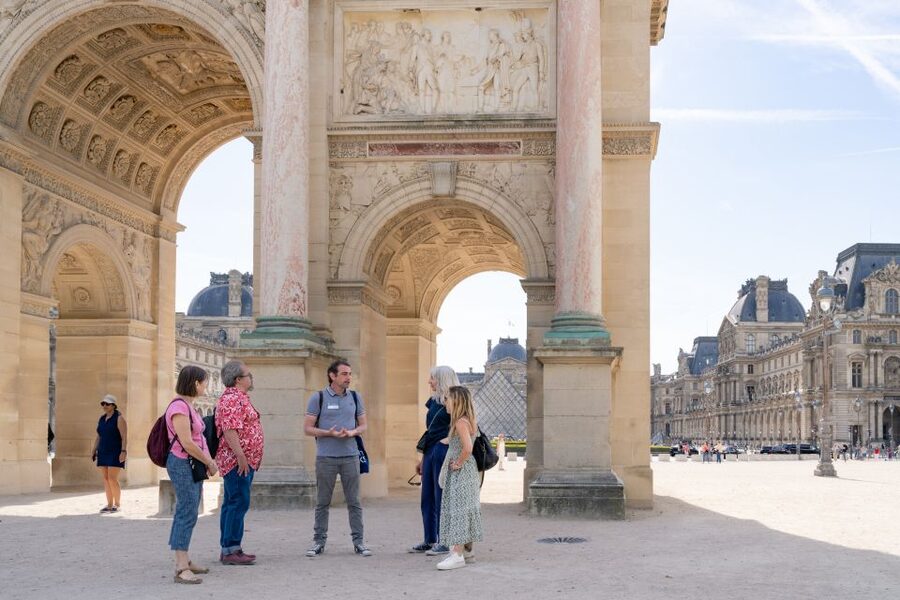
Your tour begins at Arc de Triomphe du Carrousel, at the Louvre side, opposite the glass pyramid. This matters because it gets you oriented from the start—less wandering, more time looking at art.
Look for your guide wearing an orange lanyard with the Memories France logo and their guide card around their neck. That little detail can save you real minutes in a crowded plaza.
You can also read our reviews of more guided tours in Paris



Skip the ticket line, then plan for security
Pre-reserved tickets are one of the biggest practical wins of this tour. You’re set up to enter faster than you would on your own, which is huge at the Louvre—especially if you’re trying to pack Paris into a tight schedule.
That said, reserved entry doesn’t always remove everything. You should still expect a wait at security, and in high season it can be up to 20 minutes. The best strategy is mental: treat the queue as a necessary pause, not a sign the tour is failing.
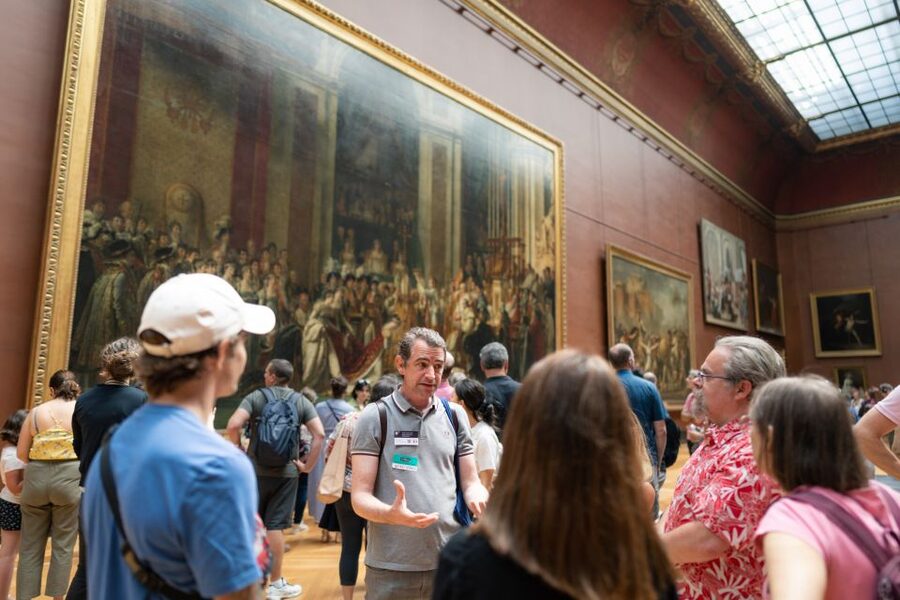
Once inside, the tour’s setup helps a lot. You’ll have headsets, which make a difference when you’re surrounded by people stopping suddenly to take photos or read a plaque. With the headsets, you don’t have to strain your neck or compete to hear your guide.
How the 90 minutes really plays out in the Louvre
The total tour time is listed as 90 minutes. Within that, the guided portion is about 1.5 hours in the museum.
That timing shapes the whole experience. You’re not doing a slow, gallery-by-gallery museum crawl. Instead, you get a concentrated route through standout collections, with just enough context to make the famous works feel meaningful—then you’re released with a clearer sense of where you want to go next.
The upside of this structure is focus. The Louvre is enormous, and without a route you can spend your best energy walking long distances between highlights. With a guide, you get from one landmark work to the next in a logical flow, including some additional pieces along the way.
The must-see route: Mona Lisa, Venus de Milo, Winged Victory
The lineup is built for the classics, and it hits the works that most people actually came to see:
Mona Lisa: why it’s always harder than it looks
The Mona Lisa is famous for a reason, but it’s also famous for crowds. Even with a guided plan, you’ll still experience the atmosphere around it—people gathering, cameras everywhere, and tight viewing space.
What I like about a guided stop here is not just seeing the painting, but understanding what you’re looking at. Your guide’s job is to help you notice details you’d otherwise miss while you’re fighting for a position.
You can also read our reviews of more museum experiences in Paris




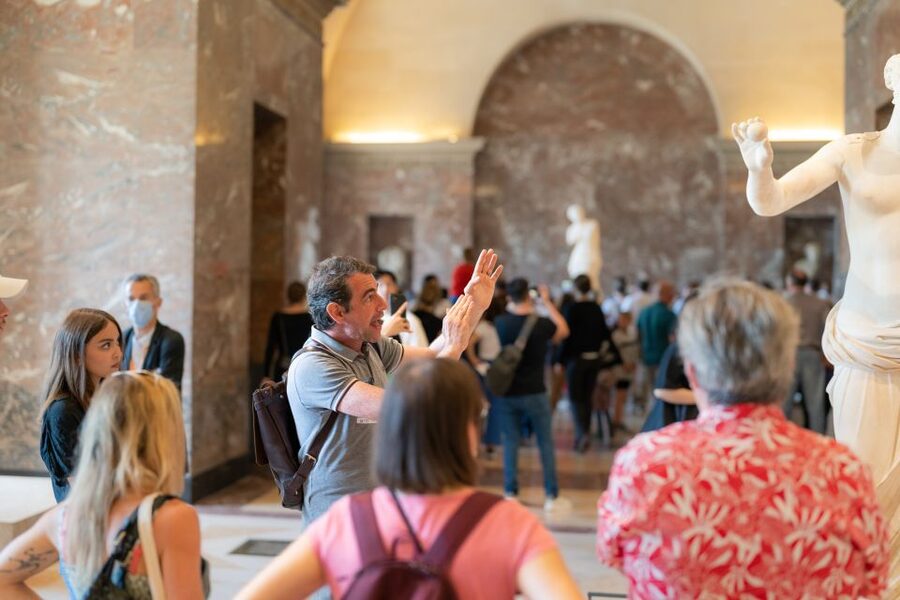
Venus de Milo: a fast lesson that actually sticks
Venus de Milo often gets treated like a postcard. With a guide, it becomes a story: where it fits in ancient Greek art, why it’s so enduring, and what the statue communicates through form and pose.
This is the kind of work that rewards a short, guided explanation. You get enough context to move beyond I recognize this, and into I understand why it matters.
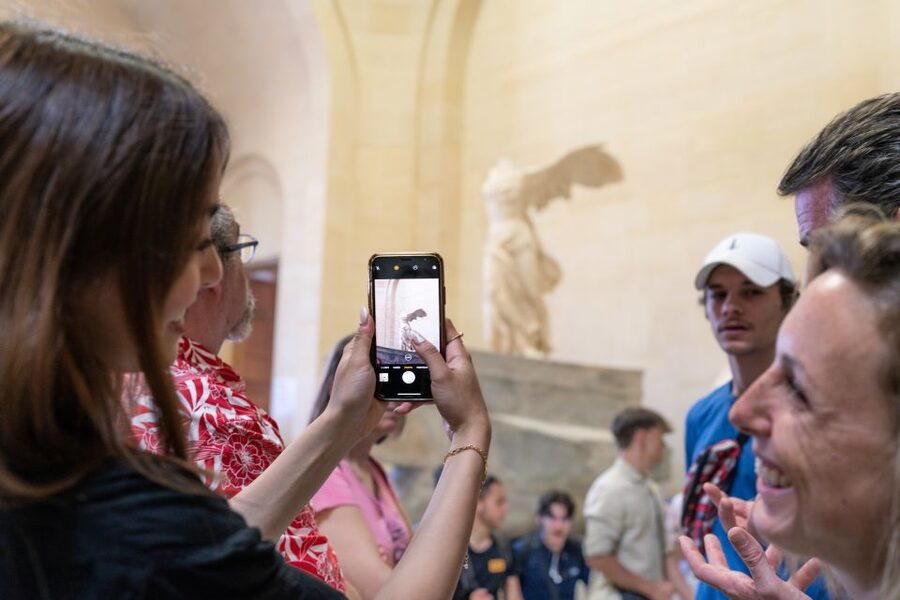
Winged Victory: from impact to meaning
Winged Victory can feel like a single “big” moment on the map—until someone explains what you should look for and how the piece functions as an artwork.
A good guide will help you see it as more than a headline name. That’s where you get the emotional punch people expect, plus the historical framing that makes the admiration feel specific instead of vague.
The Louvre’s storyline: Egypt, Greece and Rome, and beyond
One strong reason this tour works is that it doesn’t trap you in a single era. You’ll move through major collections spanning:
- Italian Renaissance
- Ancient Egypt
- Greece and Rome
- French paintings of the 19th century
For you, that variety means your visit doesn’t feel like random famous-object hopping. It feels more like a guided walk through how art styles changed across time—and how different civilizations told visual stories.
The tour also frames the Louvre as more than a museum. It highlights the idea that the building was once a royal palace, so when you move through sumptuous corridors, you’re not only seeing galleries—you’re walking through a place kings and queens once used. That architectural context helps the whole experience land differently.
Royal palace corridors: why the building changes the mood

The Louvre’s interior isn’t neutral. Even when you’re heading quickly between highlights, the palace setting affects your sense of scale and intention.
If you’ve ever visited museums that feel like warehouses for art, this is the opposite feeling. The Louvre’s palace background gives you a sense of why certain rooms feel grand and why the collection is presented with drama. Your guide’s commentary helps you connect those dots while you’re moving.
Crowd control and small-group flow
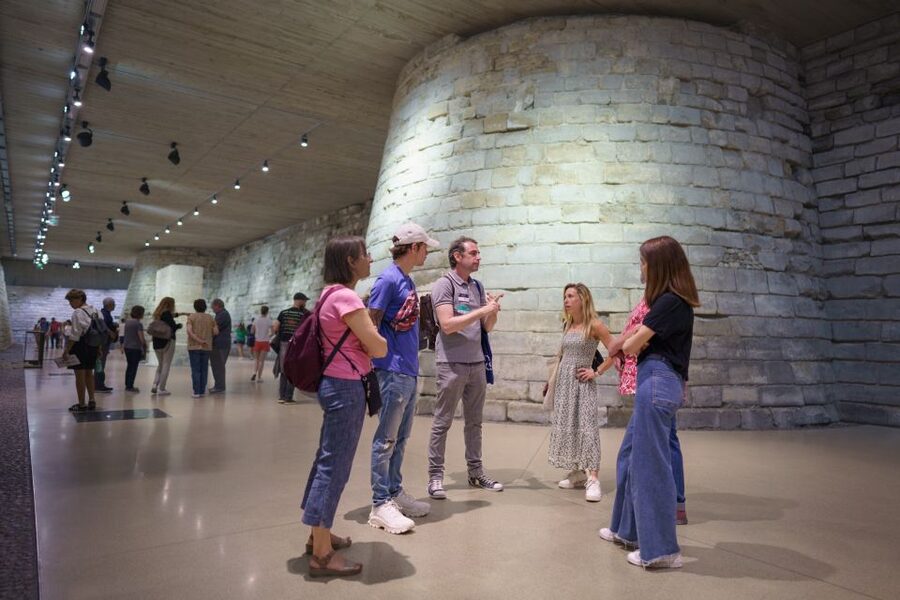
A big theme in how this tour is experienced is how well it moves.
This is a small-group option, and that’s not just a comfort perk—it’s a time-saver. Smaller groups are easier for a guide to manage in tight halls, and that keeps you from getting stuck waiting while people fan out to read everything.
You’ll also notice how much the guide matters. The tour can be led by different English-speaking guides through Memories France, and the quality shows in the way they handle bottlenecks and keep the group together. In past tours, guides like Marjolein, Antonio, Anton, Sara, Stan, and Saeed have been specifically praised for expert navigation and storytelling.
Even when you’re not a hardcore art person, the best part is how guides keep you thinking. Some guides actively invite questions. Others explain symbolism in plain language, so the classics stop feeling like homework.
What the “must-sees” plus extras really means
This is not only a checklist of famous names. The tour is designed to cover core masterpieces and then add a handful of other interesting works along the way.
That “plus extras” approach is valuable because the Louvre is so big that a pure highlights tour can feel thin once you’re done. A few additional stops can create hooks you want to follow later—maybe toward a different era, a theme you didn’t plan to chase, or a style that surprises you.
In one example, the Medieval section came up as a meaningful add-on in a guide-led visit. So if you love variety, this kind of route can work especially well.
Also, some guides are careful about pacing and timing details like giving the group chances to handle basics such as a restroom break. If that sounds minor, it’s not. At the Louvre, timing a short break can keep the rest of your energy from evaporating.
Value for $82: what you’re actually buying
At $82 per person, you’re paying for three high-impact things:
- Pre-reserved entry to cut down on ticket-line time
- An English-speaking expert guide to translate art and context
- Headsets so you can hear clearly while walking and standing
If you’re trying to do the Louvre on your own, the math often shifts fast. The museum is so large that you can easily lose 90 minutes just finding your first must-see, figuring out which direction to go, and then waiting in lines. This tour buys you a focused route and reduces wasted time.
Is it the cheapest way to enter the museum? No. But it’s one of the best ways to convert your time into actual seeing, plus learning that makes the famous works more than just an image on your phone.
Who this tour fits best (and who should consider alternatives)
This tour fits you best if:
- You’re short on time and want the Louvre’s top masterpieces covered
- You prefer art history explanations in English
- You’d rather follow a plan than risk getting overwhelmed in a huge museum
- You want a route that leaves you in a good place to explore further afterward
It might be less ideal if:
- You need wheelchair access (the tour is listed as not suitable for wheelchair users)
- You’re traveling with items you can’t bring inside (strollers, luggage, and large bags are not allowed)
- You want a slow, self-directed museum day with lots of room to linger at each work
Also, go in with the right expectation: this is efficient. Even when it doesn’t feel rushed, it’s still a structured highlights tour.
Practical tips to make the most of the 90-minute highlight route
Bring:
- Passport or ID card
- Comfortable shoes (you’ll do a reasonable amount of walking)
Plan for:
- Security lines even with reserved tickets
- Tight viewing spaces at the most famous works
- Staying with the group so you don’t lose the flow of the route
And here’s a smart move: after the tour ends, use what you learned to choose your next stops. When you know the eras and themes the guide pointed out, you stop wandering and start selecting.
Should you book this Louvre guided tour?
Book it if you want an efficient, high-value way to see the Louvre’s headline masterpieces with context and guidance. The combination of pre-reserved tickets, headsets, and a route that hits Mona Lisa, Venus de Milo, and Winged Victory is exactly what makes this kind of tour worth the price.
Skip it or switch to a different format if you need wheelchair accessibility, you dislike structured pacing, or you want to spend lots of time alone in quiet corners. In that case, you might prefer a longer, more flexible guided visit or a self-guided plan with more time buffer for lines.
If you’re visiting for the first time and you want to leave feeling like you truly saw the Louvre—not just the outside—this is a strong choice.
FAQ
How long is the Louvre guided tour?
The tour is listed as 90 minutes total, with about 1.5 hours of guided visiting inside the museum.
Where do I meet the guide?
Meet at Arc de Triomphe du Carrousel, at the Louvre side opposite the glass pyramid.
Will I be able to skip the ticket line?
Yes. The tour includes pre-reserved entrance tickets to skip the ticket line.
Are headsets provided?
Yes. Headsets are included so you can hear your English-speaking guide.
What are the main highlights I’ll see?
The tour focuses on major works such as Mona Lisa, Venus de Milo, and Winged Victory.
What should I bring?
Bring a passport or ID card and wear comfortable shoes due to a reasonable amount of walking.
Is this tour suitable for wheelchair users?
No. The activity is listed as not suitable for wheelchair users.
What items are not allowed during the tour?
Baby strollers are not allowed. Luggage or large bags are also not allowed.
Will there still be a wait even with pre-reserved tickets?
There may still be a wait at security. Even with reserved tickets, security lines can take up to 20 minutes in high season.
Is the tour language English?
Yes. The tour is guided in English by an English-speaking tour guide.