REVIEW · PICASSO S BIRTHPLACE MUSEUM
Malaga: Picasso’s Birthplace Museum Entrance Ticket
Book on GetYourGuide →Operated by Distributor: GetYourGuide Tours & Tickets GmbH · Bookable on GetYourGuide
Picasso’s life starts in an ordinary house. I love how this ticket gets you into Museo Casa Natal de Picasso and then walks you through the meaning of Malaga in his work. Two things I particularly like are the small scale (easy to finish) and the audio guide that helps you connect early life to later art.
My only real caution: plan for a short visit. Most people will be done in about an hour or a little less, so this is best as a focused Picasso stop—not a whole-day museum marathon.
In This Review
- Key Things to Know Before You Go
- Finding Picasso’s Birth House in Plaza de la Merced
- Ticket Value: Skip the Line for a Focused, Under-2-Hour Plan
- Entering the 9 Rooms: Picasso’s Early Life and the Malaga Connection
- The Symbol Hunt: Doves, Bullfighting, Nudes, and the Mediterranean
- Personal Objects: Baby Shirt, Walking Shoes, and Family Photos
- Artwork Across Media: Sketchbooks, Lithographs, Ceramics, and More
- Temporary Exhibition: Picasso’s Image Through Other Creators
- The Contemporary Art Section: 3,500 Works by 200+ Artists
- Audio Guide Practical Tips (and When to Use It)
- Timing, Last Entry, and Free Sunday Hours
- Who This Is Best For (and Who Should Skip It)
- Should You Book Picasso’s Birthplace Museum Ticket?
- FAQ
- What’s included with the Museo Casa Natal de Picasso ticket?
- How long should I plan to spend inside?
- Do I need headphones for the audio guide?
- What languages are available for the audio guide?
- Where is the museum located?
- Is the museum accessible for wheelchair users?
- When is the museum free?
- What’s the last entry time?
- What’s the focus of the temporary exhibition?
Key Things to Know Before You Go
- Birthplace setting in Plaza de la Merced: you’re visiting the home where Picasso began.
- 9 rooms with a clear storyline: family life, training, and the themes tied to Malaga.
- Audio guide in multiple languages: English, Spanish, French, German, Italian, Chinese.
- Symbol-driven art explanations: you’ll get context for motifs like doves, bullfighting, and nudes.
- Temporary exhibition plus a contemporary-art section: over 3,500 works by 200+ artists are part of the experience.
- Bring headphones: the audio guide is included, but you supply the headphones.
Finding Picasso’s Birth House in Plaza de la Merced
The museum meets you right where Malaga feels like Malaga: Plaza de la Merced. The address is Plaza de la Merced 15, 29012 Malaga, and it’s an easy stop to pair with a walk through the city center. If you’re trying to keep your day simple, this location helps—you’re not trekking across town just to see one small exhibit.
Inside, the museum experience starts with the idea that art doesn’t begin in a grand gallery. It begins in a home, in family routines, in a childhood environment. That mindset is the whole point here. Even if you’ve seen Picasso paintings elsewhere, coming to his birthplace changes the emotional temperature of the visit.
Ticket Value: Skip the Line for a Focused, Under-2-Hour Plan
This ticket runs about $4.71 per person, and the value is hard to beat if you want something meaningful without spending hours. You’re not just buying access to a room of paintings—you’re getting entry to the permanent exhibition, the temporary exhibition, and an audio guide.
The practical sweet spot is time. You can realistically do the museum in around an hour (or less) because it’s a compact set of 9 rooms. That makes it ideal if you have limited time in Malaga, or if you’re doing multiple sights in one afternoon and want a high-impact stop that won’t swallow your day.
One more detail that affects value: the museum is free every Sunday from 4:00 PM until closure (and free for unemployed and disabled persons). If your schedule includes Sunday afternoon, you can stretch the budget further.
Entering the 9 Rooms: Picasso’s Early Life and the Malaga Connection
Once you’re inside, the layout supports a “chronological and thematic” feel. The first floor focuses on Picasso’s early world—especially works by Picasso and by his father, José Ruiz Blasco. You also start picking up how the museum links place to art, not just biography to dates.
As you move through the rooms, you’re guided toward the bigger theme: Malaga didn’t just happen to Picasso—it shaped him. The museum explains how growing up around a Mediterranean environment fed his subject matter and visual instincts. It’s not only about where he was born; it’s about how that world left fingerprints on symbols that show up repeatedly later.
What I like about this structure is that it doesn’t require you to be an art historian. You get enough context to connect the dots yourself. You’re looking at the origins of motifs, training, and early life objects, then seeing how they become recurring ideas in Picasso’s later work.
The Symbol Hunt: Doves, Bullfighting, Nudes, and the Mediterranean
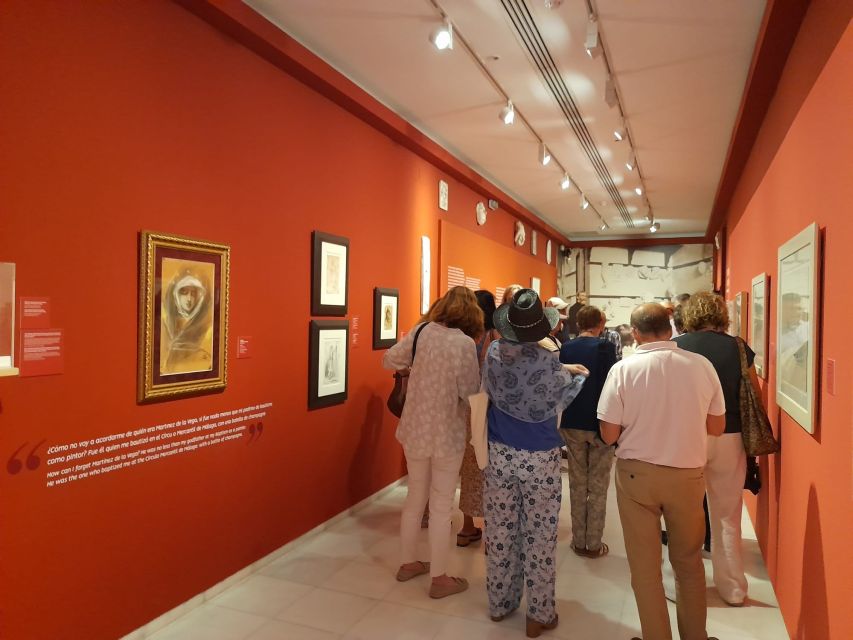
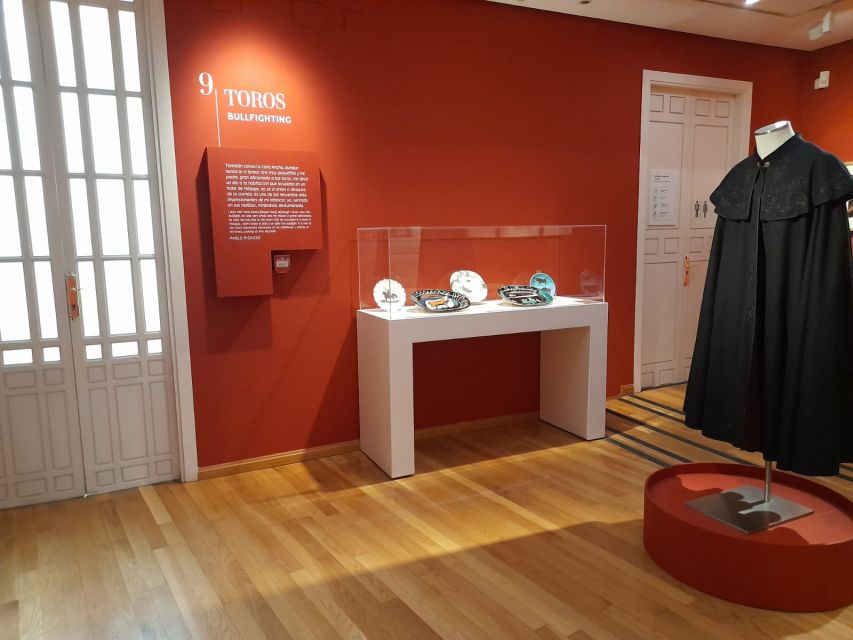
A big part of the experience is learning the “why” behind certain Picasso themes. The museum specifically points you toward motifs like doves, bullfighting, nudes, and the Mediterranean. That matters because Picasso can feel like a puzzle box if you only see finished works.
Here’s what the museum’s approach gives you: when you recognize a dove-like form, a bullfighting scene, or a figure study later in other museums, you’ll know there’s a thread back to his early influences and repeated obsessions. The themes aren’t treated like random visuals—they’re explained as lasting ideas.
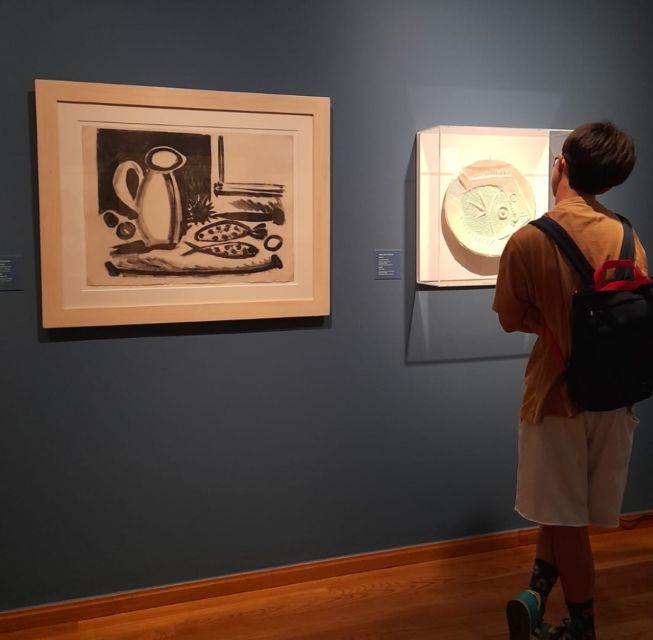
Also, this isn’t limited to paintings. You’ll encounter a range of media that make the symbols feel more alive and less like museum labels. That variety helps you understand Picasso as a working artist, not just a famous name.
Personal Objects: Baby Shirt, Walking Shoes, and Family Photos
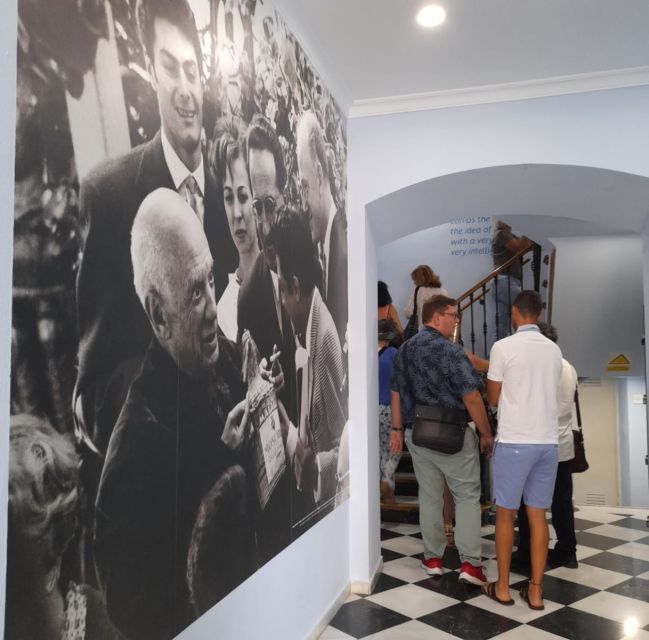
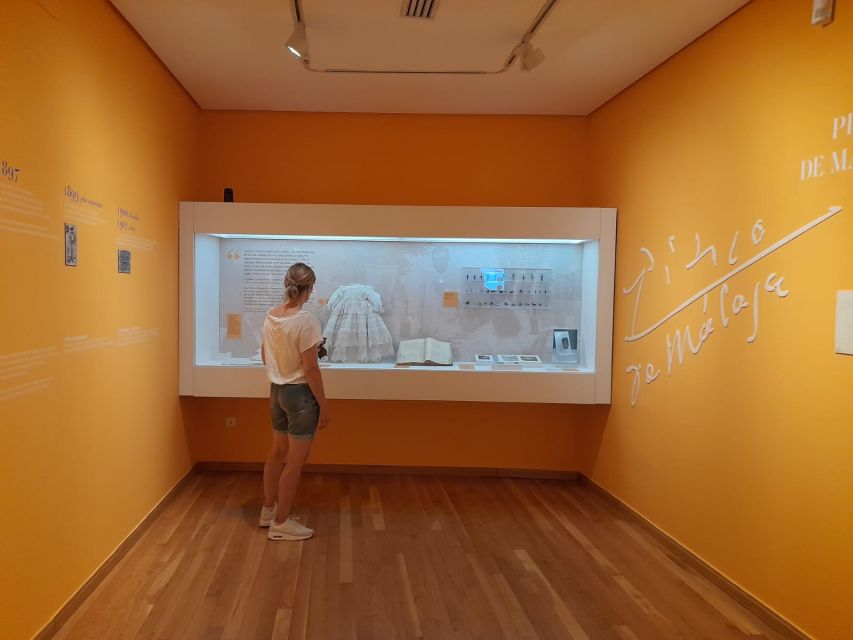
One of the most memorable parts is how tactile it feels. You see objects connected to Picasso’s earliest years, including a baby shirt and the shoes he learned to walk in. Those details sound small, but they do something important: they pull Picasso’s later fame back down into ordinary life.
You also get glimpses of family life through photographs and portraits. This adds a human scale to the story—especially helpful if you’ve mostly encountered Picasso through the myth of genius. Here, the museum frames him as someone who grew up in real relationships and a real household.
For me, this is where the birthplace idea becomes more than a ticket headline. Seeing the early objects in the space where they belonged (or where they can be interpreted as belonging) turns “Picasso’s youth” from a concept into something you can almost feel.
Artwork Across Media: Sketchbooks, Lithographs, Ceramics, and More
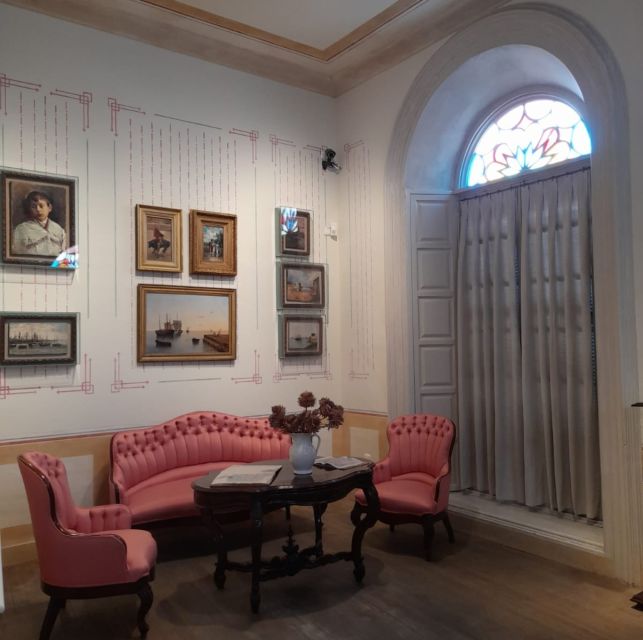
The permanent exhibition doesn’t just show one style. It shows Picasso as an artist working across materials. You’ll see things like sketchbooks, lithographs, ceramics, and other works, and that helps you understand how his ideas traveled from one format to another.
The museum also brings in context about his artistic training and early life. That’s useful because Picasso’s evolution can look sudden if you only compare famous masterpieces. With this museum’s smaller, explanatory focus, the changes in subject and approach start to feel more connected to what came before.
And if you’re the type who gets tired quickly in large museums, this is a relief: the scale stays manageable, and the presentation is designed around comprehension rather than volume.
Temporary Exhibition: Picasso’s Image Through Other Creators
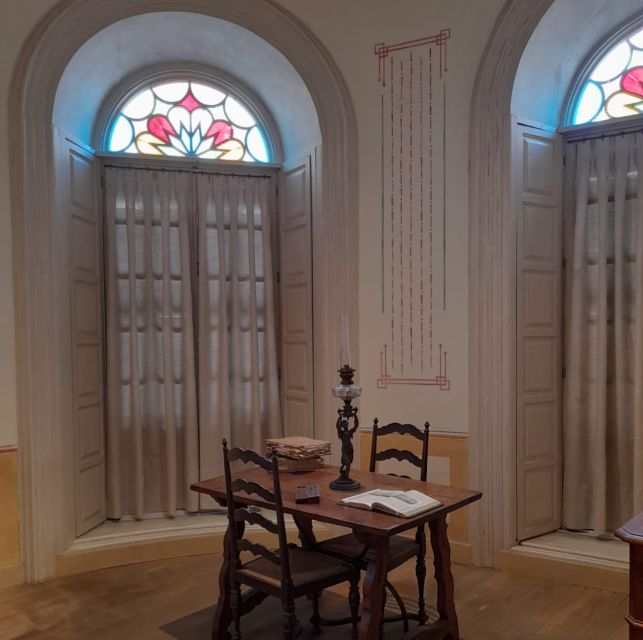
Alongside the permanent rooms, you’ll have access to a temporary exhibition. At the time listed, it’s titled Picture of Picasso (until 28 April 2024). The theme is how Picasso’s presence shows up through other creative media—so you’re not only looking at Picasso, you’re looking at Picasso as a cultural force.
The exhibition invites you to appreciate the complexity of Picasso through how he appears in:
- books and the press
- social networks
- advertising
- photography
- comics
- cinema and television
- popular music
That setup is great for modern visitors because it links an old master to how art images spread now. Even if you don’t love every stop, it gives you fresh angles on why Picasso remains instantly recognizable.
The Contemporary Art Section: 3,500 Works by 200+ Artists
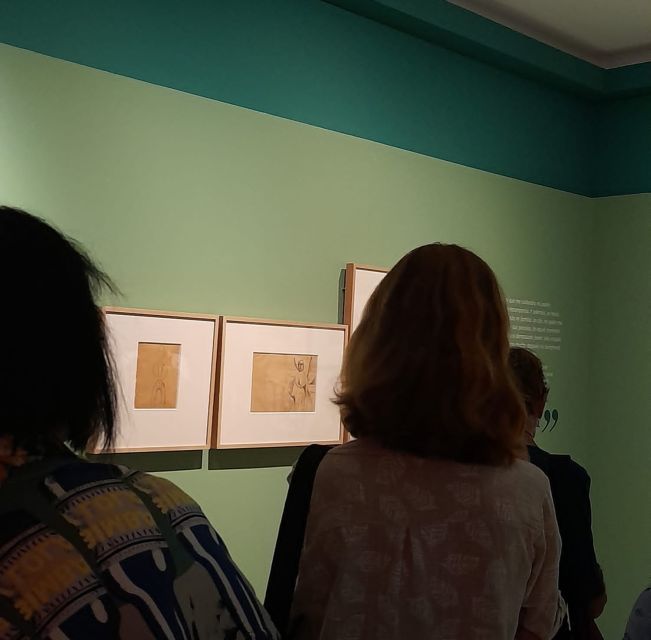
One twist you should know about before you go: the museum experience includes a strong contemporary art presence. The museum features over 3,500 examples of contemporary art by more than 200 artists.
If that sounds like a lot, the good news is that it’s part of the overall experience rather than a separate mega-museum. It’s also easy to skim if you want to return to the Picasso-focused story.
A standout detail in what’s listed: you’ll see graphic-art works connected to artists such as Miró, Bacon, Ernst, Matta, and others. That matters because it shows Picasso’s influence isn’t trapped in a historical timeline—it keeps echoing into styles that came long after his lifetime.
So think of this as the museum’s “afterlife” section: Picasso’s birthplace story leads into how his impact traveled across generations of artists.
Audio Guide Practical Tips (and When to Use It)
The audio guide is included with the ticket, and it covers multiple languages: English, Spanish, French, German, Italian, Chinese. You’ll want headphones (bring them), because the museum expects you to supply that part.
If you like learning at your own pace, this is a strong feature. It helps you connect what you’re seeing in each room to themes like training, early life objects, and repeated motifs. It also makes the museum easier to follow if your Spanish is limited, since multiple languages are available.
One small consideration: some visitors find the English audio voice distracting if it sounds synthetic. If that might annoy you, you can treat the audio as optional and skim labels instead, or switch to a language that feels natural to you.
Timing, Last Entry, and Free Sunday Hours
You’re buying a ticket valid for 1 day from first activation, and the museum has a last entry 30 minutes before closing. That’s an important timing rule because you don’t want to arrive late and feel rushed through the rooms.
For planning flexibility, remember the free Sunday window: Sundays from 4:00 PM until closure. If you’re on a budget, that single detail can be the difference between a basic ticket day and a more comfortable spending day in Malaga.
Also keep in mind the museum is wheelchair accessible, so the space is designed to be workable for visitors with mobility needs.
Who This Is Best For (and Who Should Skip It)
This ticket is best for you if:
- you want a Picasso experience that’s small and understandable
- you enjoy context—how childhood objects and symbols show up later in his work
- you only have about an hour and still want something memorable
- you already saw other Picasso museums and want a birthplace-focused angle
You might skip or supplement this if you want a long, multi-hour museum day. This isn’t the kind of place you get lost in for half a day. The upside is clarity and pace; the trade-off is less time on each corner.
Should You Book Picasso’s Birthplace Museum Ticket?
Yes, I’d book it if you want value and focus. For around $4.71, you get access to the birthplace house museum, the temporary exhibition, and an audio guide, all in a format that typically fits into an hour-long visit.
Book it especially if you’re curious about how Malaga shaped Picasso—those themes (doves, bullfighting, nudes, and the Mediterranean) become easier to recognize once you’ve seen them explained close to the origins of his life. And if you’re a fan of breadth, the inclusion of 3,500+ contemporary works adds extra layers beyond a standard “just Picasso” stop.
FAQ
What’s included with the Museo Casa Natal de Picasso ticket?
Your ticket includes entrance to the permanent exhibition, access to the temporary exhibition, and an audio guide.
How long should I plan to spend inside?
Most visits are about an hour or a little less, since the museum covers 9 rooms.
Do I need headphones for the audio guide?
Yes. The audio guide is included, but you should bring headphones.
What languages are available for the audio guide?
The audio guide is available in English, Spanish, French, German, Italian, and Chinese.
Where is the museum located?
It’s at Museo Casa Natal de Picasso, Plaza de la Merced 15, 29012 Malaga.
Is the museum accessible for wheelchair users?
Yes, the museum is wheelchair accessible.
When is the museum free?
The museum is free every Sunday from 4:00 PM until closure, and it is also free for unemployed and disabled persons.
What’s the last entry time?
Last entry is 30 minutes before closing.
What’s the focus of the temporary exhibition?
The temporary exhibition listed is Picture of Picasso (until 28 April 2024), and it explores Picasso’s presence in other creators across media like books, the press, social networks, advertising, photography, comics, cinema, television, and popular music.