REVIEW · NEW YORK CITY
New York City: Museum at Eldridge Street Docent-Led Tour
Book on GetYourGuide →Operated by Museum at Eldridge Street · Bookable on GetYourGuide
A synagogue museum feels like a time machine. The Eldridge Street Synagogue tour brings the Lower East Side back to life with architecture and storytelling you can actually see and read in real rooms. I especially love the 60 historic stained-glass windows—many are close enough that you notice the craft, not just the effect.
What makes it work is the docent-led format: you’re guided through immigration-era life, community-building, decline, and a major restoration that saved the building for public use. Another thing I really like is the mix of old and new, including the museum’s modern stained-glass work by Kiki Smith and Deborah Gans.
One consideration: the experience depends on your docent. Most guides are excellent at connecting details to daily life, but tone and pacing can vary, so if you’re sensitive to how religion is discussed, choose a session with care.
In This Review
- Key Highlights to Look For
- Stepping Into the Eldridge Street Synagogue (and Finding the Story Fast)
- Moorish Architecture and the 60 Stained-Glass Windows Up Close
- Lower East Side Jewish Immigrant Life: More Than One Big Timeline
- The Rise, Decline, and the $20 Million Restoration That Saved the Building
- What the Modern Stained Glass Adds (Kiki Smith and Deborah Gans)
- How the Docent Tour Actually Feels in Practice
- Photography, Food, and the Rules That Affect Your Comfort
- Price and Time: Is This Worth $7 for an Hour?
- Who This Tour Suits Best (and Who Might Want to Adjust Expectations)
- Quick Practical Checklist Before You Go
- Should You Book the Museum at Eldridge Street Docent-Led Tour?
- FAQ
- How long is the docent-led tour?
- How much does the tour cost?
- Where does the tour start?
- What’s included in the price?
- Is the tour wheelchair accessible?
- Can I take photos during the tour?
- Are food and drinks allowed?
- Is there free cancellation?
Key Highlights to Look For
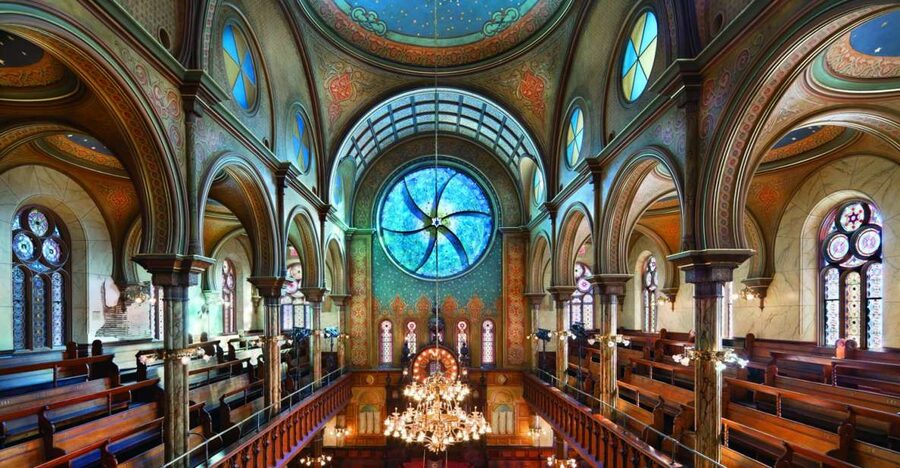
- 60 historic stained-glass windows that reward slow looking inside the sanctuary spaces
- Moorish architecture details you can study up close in a former synagogue built in 1887
- Immigration-era context that turns a big story into understandable neighborhood life
- Restoration and preservation lessons showing how a landmark almost disappeared
- Modern stained glass by Kiki Smith and Deborah Gans placed in conversation with the past
- A one-hour pace that’s long enough for meaning, not so long you lose the thread
Stepping Into the Eldridge Street Synagogue (and Finding the Story Fast)
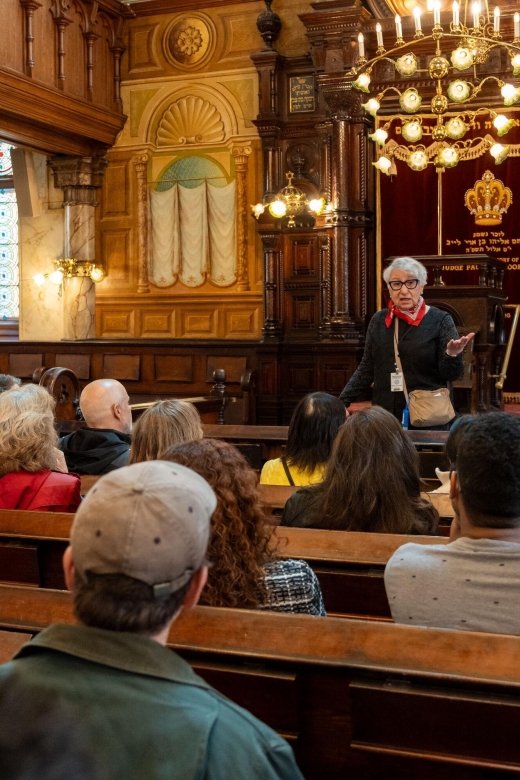
You start the tour by walking down the stairs and entering the Museum at Eldridge Street, and the tour begins right inside. That matters. You aren’t assembling your own plan in a big building; you’re oriented in the first minutes, then the guide pulls the place apart piece by piece—what you’re looking at, what it meant, and why it survived.
The synagogue itself is a National Historic Landmark, and it was built in 1887. The museum setting is part of the appeal: you’re not just reading about a synagogue. You’re in it—surrounded by the very design choices Eastern European Jewish immigrants made when they were trying to build community in the Lower East Side.
The one-hour format is also smart. New York museums can tempt you into a long, tiring loop of browsing. Here, you get structure: the guide steers your attention, and you leave with a mental map, not just photos.
You can also read our reviews of more city tours in New York City


Moorish Architecture and the 60 Stained-Glass Windows Up Close
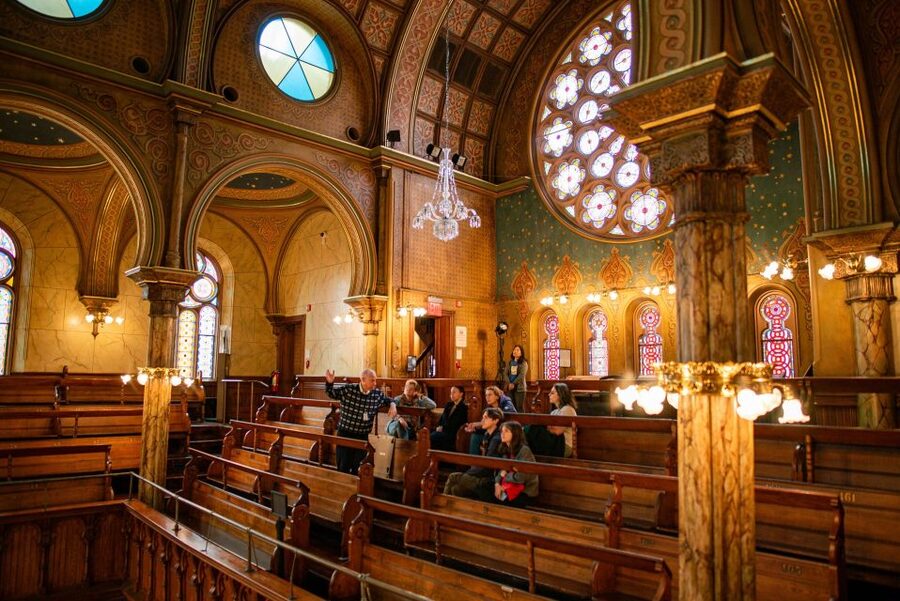
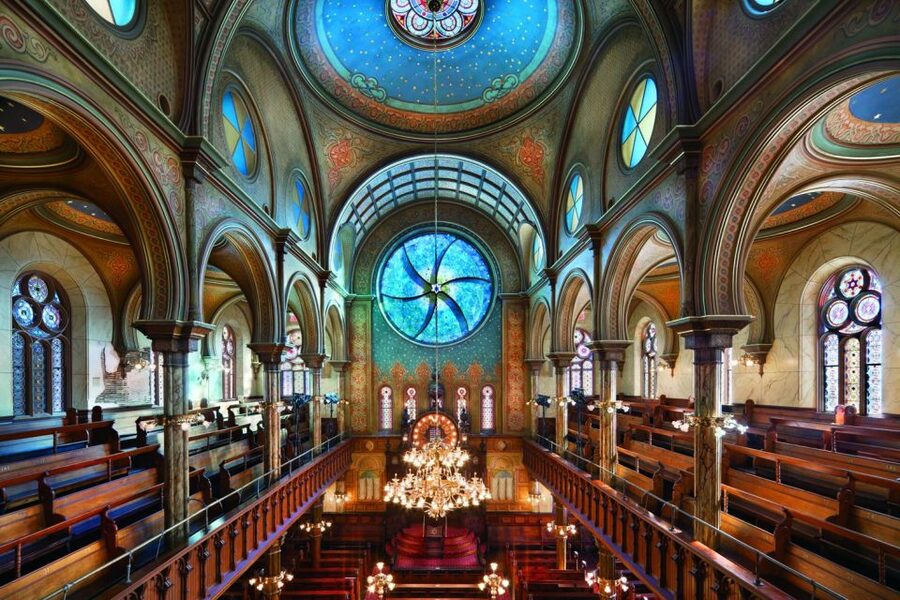
If you like design, this is one of those tours where the visuals do real work. The synagogue’s Moorish architecture isn’t just decoration; it’s a statement about identity and aspiration. You’ll see how the building projects dignity and permanence in an area known for overcrowding and rapid change.
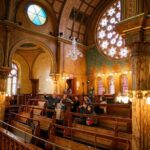
Then come the stained-glass windows. The tour highlights 60 historic stained-glass windows, and you’ll understand why once you slow down. These aren’t random color patches. They give the interior its mood and rhythm, and they make the space feel layered—like the room has multiple eras talking to each other.
Here’s a practical tip: don’t rush for the best shot. Look for details first—colors, patterns, and how light moves across surfaces. The guide’s pacing helps, because you’re usually pointed at the exact window to notice before you move on.
Lower East Side Jewish Immigrant Life: More Than One Big Timeline
The tour’s storytelling is built around Jewish immigrant life around the turn of the 20th century—especially the realities of arriving, settling, and creating community. You’ll hear how the synagogue served multiple purposes: it was a house of worship, yes, but also a place to build ties in a neighborhood where new arrivals were trying to get their footing.
One reason I think this tour hits is that it links geography and everyday life. For example, one docent named Bonnie is praised for making the geography of the Pale understandable, and connecting it to personal stories. Even if you already know some Jewish Eastern European history, you’ll likely appreciate how the tour turns place-names into lived reality: where people came from, what they carried with them, and how traditions fit into the neighborhood’s crowded rhythm.
You’ll also get the bigger immigration context: the era saw a massive movement of Europe’s Jewish population across the Atlantic, and the synagogue became a visible sign that people were building permanent roots—not just passing through.
The Rise, Decline, and the $20 Million Restoration That Saved the Building
Buildings don’t vanish overnight. They decline slowly—when attention, money, and community shift. The Eldridge Street Synagogue had a rough road. After 1920s immigration policies and stricter quotas, the building was nearly lost to neglect.
That’s where the tour becomes more than a past-tense story. You learn how the museum’s 20-year, $20 million restoration project returned the space to glory and public use. This is valuable for you even if you don’t care about architecture: it’s a lesson in how cultural landmarks survive. Restoration isn’t just about fixing walls; it’s about choosing what a community decides is worth protecting.
The guide also tends to show you how the building’s function evolved over time. You see the cause-and-effect. That makes the space feel less like a static artifact and more like something that fought for its place in the city.
What the Modern Stained Glass Adds (Kiki Smith and Deborah Gans)
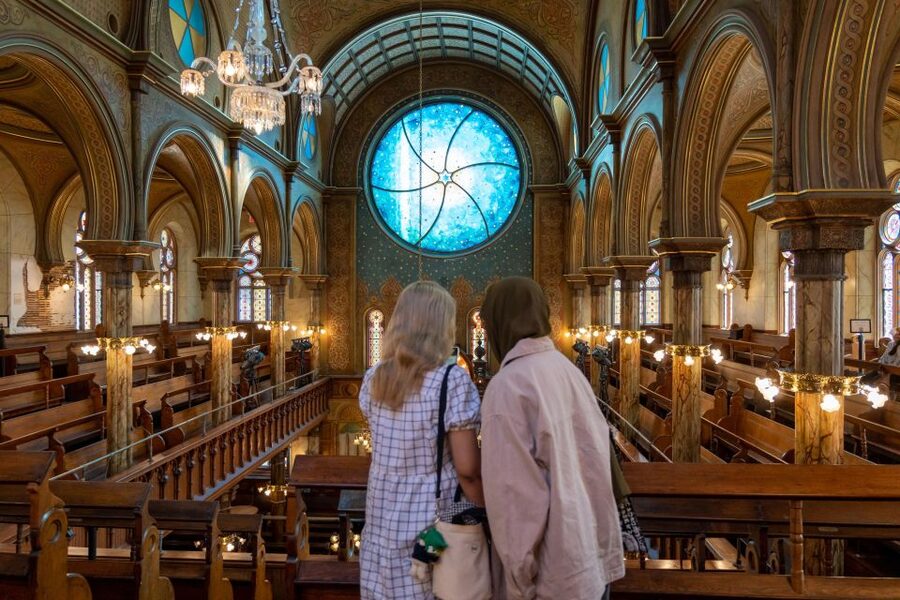
This tour doesn’t freeze the synagogue in time. It invites you to see how the building can still speak in the present.
You’ll be shown the museum’s modern stained-glass installation by artists Kiki Smith and Deborah Gans. The effect is not just visual; it changes how you interpret the historic windows around it. Instead of treating the stained glass as museum relics, you start to notice continuity: artists are still responding to spiritual space, identity, and memory.
If you like art that creates conversation across time, this is a highlight. It’s also a reminder that preservation isn’t the same thing as refusing change.
You can also read our reviews of more museum experiences in New York City




How the Docent Tour Actually Feels in Practice
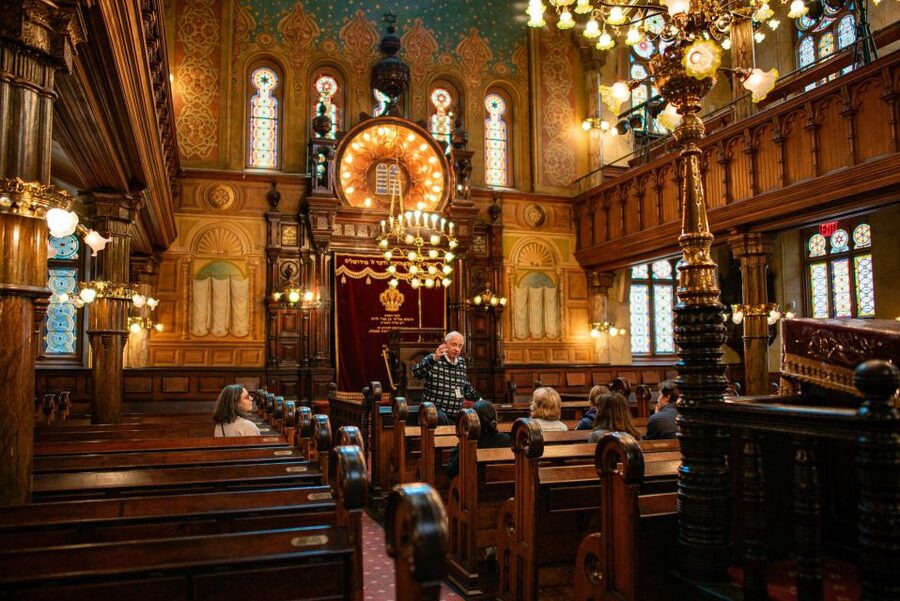
Because this is docent-led, the experience is guided rather than self-paced. That’s a benefit for many people. In a place full of details—windows, floors, fixtures, changing exhibits—you get to ask yourself fewer questions. The guide handles the sequencing: where to look, why it matters, and how it connects to the immigrant story.
One strong point from the experience is how guides can bring small details into focus. Original interior elements are part of the impression, including details visitors love seeing firsthand: floors and furnishings that help you imagine everyday life around the synagogue. The tour also ties those details to the community’s purpose, so you’re not left staring at objects with no context.
There’s also a temporary exhibit element in the museum visit. That means your time isn’t only spent on the synagogue itself. You’ll have access to both the temporary exhibit and the permanent collection as part of your admission—so if you’re a slower reader or want a little extra time after the tour, you’re not stuck.
Photography, Food, and the Rules That Affect Your Comfort
Museums put rules in place for a reason, and here they’re pretty standard but worth knowing so you don’t get surprised.
You cannot use flash photography or professional cameras. Personal, non-commercial photography is welcome, so you can still capture what you care about. There’s also no bikes or scooters, and you’ll have your items handled on arrival.
Food and drinks are restricted to water. Strollers and backpacks will be searched and checked in, which matters if you’re traveling with kids or carrying a bag full of essentials. Plan to travel light. The simpler your bag, the smoother your entry and start.
If you’re the type who always wants a photo before you listen, flip that habit here. Wait until the guide points you to what to look for. Your photos will be better because your eyes will be trained.
Price and Time: Is This Worth $7 for an Hour?
At $7 per person for a one-hour docent-led tour with admission included, the value is strong. Here’s why: you’re paying for guided interpretation, not just building access. For many museums, you could spend more and still feel like you wandered. This tour gives you direction and meaning—especially for architecture and immigrant-life context that’s easy to miss when you’re on your own.
You also get admission to the museum’s temporary exhibit and permanent collection. That’s a practical bonus. If the tour whets your appetite, you have additional spaces to continue at your own pace afterward.
In short: you’re buying a focused hour of context plus the freedom to explore further. That combination tends to work well for first-timers who don’t want a half-day commitment.
Who This Tour Suits Best (and Who Might Want to Adjust Expectations)
This experience is a great fit if you want New York beyond skyscrapers and street noise. It’s also ideal if you care about religious art, architecture, or how neighborhoods change over time.
You’ll likely enjoy it if:
- you like seeing historic spaces with clear explanations
- you want immigrant-history context tied to real rooms and objects
- you’re curious about how preservation works and why it matters
One group to approach thoughtfully: people who want a particular kind of respectful religious discussion. There’s at least one negative report about tone. You can’t predict your docent, but it’s fair to say you’ll have the best time when you approach the tour open-minded and let the guide’s approach guide your expectations.
Quick Practical Checklist Before You Go
- Plan for about an hour for the guided tour portion
- Bring minimal items to avoid friction with bag checks
- Charge your phone, but remember no flash and no professional cameras
- Wear comfortable shoes; you’ll be inside and moving through rooms
- If you care about art details, slow down after the guide points you at windows
Should You Book the Museum at Eldridge Street Docent-Led Tour?
I’d book it if you want a high-value, low-stress way to experience the Lower East Side’s immigrant story through the building itself. The stained glass, Moorish architecture, and the pairing of historic and modern works make it more than a lecture. And at $7 for a one-hour guided experience with admission included, it’s one of those deals that feels smart rather than symbolic.
Skip it only if you strongly prefer purely self-paced museums or you dislike any guided religious-history discussion. Otherwise, it’s a thoughtful hour that leaves you with clear images: windows, light, community-building, and the preservation story that kept this synagogue from disappearing.
FAQ
How long is the docent-led tour?
The tour duration is 1 hour.
How much does the tour cost?
The price is listed as $7 per person.
Where does the tour start?
Walk down the stairs and enter the Museum; the tour begins inside.
What’s included in the price?
You get museum admission to the Museum at Eldridge Street/Eldridge Street Synagogue, plus admission to the temporary exhibit and permanent collection. The docent-led tour is available in English.
Is the tour wheelchair accessible?
Yes. The museum is fully accessible, and an elevator reaches all 4 floors.
Can I take photos during the tour?
You can take personal, non-commercial photography. Flash photography and professional cameras are not allowed.
Are food and drinks allowed?
Food and drinks are not allowed, except for water.
Is there free cancellation?
Yes. You can cancel up to 24 hours in advance for a full refund.