REVIEW · NEW YORK CITY
New York City: Museum of Illusions Entry Ticket
Book on GetYourGuide →Operated by Museum of Illusions New York City · Bookable on GetYourGuide
Your eyes will argue with you here. At the Museum of Illusions in Chelsea, you’ll walk through visual tricks that look simple at first, then turn your brain inside out, with the science of optical illusions powering the fun.
I love that it’s truly interactive—not a sit-and-stare museum. You get to mess with what you see across 50+ hands-on exhibits, including illusion rooms and installations, plus hologram-style visual effects.
One consideration: the experience can feel short if you’re expecting a big, hours-long museum at a “classic NYC museum” size. At $35, you’ll want to go in with the right mindset—playful, curious, and ready to move.
In This Review
- Key highlights worth planning around
- Museum of Illusions in Chelsea: what you really get for $35
- Getting to 77 8th Ave without stress
- Your “one-day” flow: how to pace a short, high-energy visit
- 50+ interactive exhibits: the main reason this works
- Illusion rooms and installations: where the fun gets physical
- Holograms and the “looks real” effect
- Photo moments that don’t feel like a trap
- Wheelchair access: what you can plan for
- Price and value: is $35 worth it?
- Who should book this ticket?
- A simple itinerary plan for a smooth day
- Should you book the Museum of Illusions ticket?
- FAQ
- Where is the Museum of Illusions in New York?
- How much is the entry ticket?
- How long does the experience last?
- What’s included with the ticket?
- Do I need to choose a start time?
- Is the museum wheelchair accessible?
- Is this ticket refundable?
- About how many exhibits are there?
- What kinds of exhibits should I expect?
Key highlights worth planning around

- 50+ interactive exhibits focused on optical illusions and how your brain interprets reality
- Illusion rooms and installations designed for hands-on, body-based effects
- Hologram-style visuals that make great group photos
- A life-size kaleidoscope moment that’s fun even if you dislike “museum posing”
- 1-day entry in a convenient Chelsea location near 14th St and 8th Ave
Museum of Illusions in Chelsea: what you really get for $35
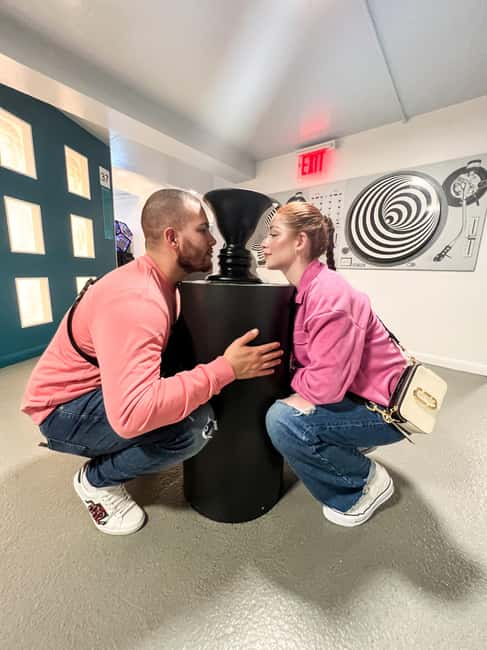
The Museum of Illusions New York City is a one-stop, ticketed experience where the whole point is to challenge your senses. The setting is in Manhattan’s Chelsea area, right by 14th St and 8th Ave, so it’s an easy add-on to a day out in Midtown West.
For $35 per person, you’re not buying a “museum day pass” that promises endless galleries. You’re buying admission to a concentrated experience with 50+ interactive exhibits—the kind of attraction where you’ll want to actually participate, not just look.
If you’re coming with a group, this ticket often makes more sense than it sounds. The exhibits are built for multiple people to test the same illusion at once. That’s where the fun lands: arguing playfully about what you see.
A few more New York City tours and experiences worth a look



Getting to 77 8th Ave without stress

The museum address is 77 8th Ave, and the entrance is on the corner of W 14th St and 8th Ave. That corner matters, because it’s right where you’d naturally be aiming if you’re walking from subways around 14th St.
Plan to arrive a little earlier than your time slot. Not because you’ll be stuck in a long museum line, but because you’ll want a calm minute to orient yourself. Optical illusions are way more entertaining when you’re not rushing through them.
Also, keep an eye on the day-of opening times. I saw signs that some people had issues when closing times changed without clear communication. A quick check before you leave helps you avoid a wasted trip, especially if you’re going with kids.
Your “one-day” flow: how to pace a short, high-energy visit
The ticket is valid for 1 day, and you’ll need to check availability for starting times. That’s important because the museum experience is meant to be taken in a session format.
Here’s how I’d pace it so you don’t feel either rushed or underwhelmed:
1) Start strong. Hit the rooms and exhibits that are most “impossible-looking” first. Early on, your brain is fresh and you’ll get more satisfaction from the surprises.
2) Middle is for body tricks and bigger interactions. The exhibits described include things where you can change how you look (like growing and shrinking your body). Those usually take a bit more time because you’ll want multiple attempts for photos and experiments.
3) Finish with the wow factor. Leave your most photo-friendly illusions toward the end so you don’t end up spending your best energy trying to capture everything in a panic.
Because the museum can feel compact, pacing is the difference between “too short” and “perfectly timed.”
50+ interactive exhibits: the main reason this works
This isn’t a traditional gallery of artifacts. It’s a sensory playground built around optical illusions, with exhibits that show how your brain constructs reality. The museum describes it as visual, sensory, and educational—but in a hands-on way.
You’ll see themes repeated in different forms. You might test how motion affects perception, how angles can trick you, or how the body can “feel” one thing while the eye says another. That’s why the experience works for different ages and interests. Even if you’re not a “science person,” you’re still learning something: what your brain does automatically.
I particularly like that the exhibits aren’t random chaos. They’re designed to guide you through a sequence of perception problems—then give you a clear reason to keep moving.
Illusion rooms and installations: where the fun gets physical
The highlights call out illusion rooms, installations, and holograms, and that’s exactly where most of the emotional payoff happens. These are the exhibits where you stop being an observer and become part of the illusion.
The museum lists several big interactions, including:
- Defying gravity (the kind of trick where you hold a pose and your body becomes the “proof”)
- Growing and shrinking your body (usually a crowd-pleaser because it turns you into the subject)
- Walking into a life-size kaleidoscope (made for motion, framing, and group reactions)
These attractions are valuable because they give you feedback instantly. You try something, you look again, and the illusion either clicks or fails. Either way, you learn faster than reading any explanation panel.
One practical tip: if you’re going with friends or family, split tasks. One person handles the “test pose,” one watches alignment, and one does the timing for photos. It keeps you from wasting time trying to do everything yourself while the illusion changes.
You can also read our reviews of more city tours in New York City




Holograms and the “looks real” effect

The museum experience includes holograms and other visual installations. This matters because hologram-style effects rely on your perception of depth and angles, which is where optical illusions get especially personal.
Holograms and similar exhibits also make the experience social. People tend to gather naturally when something looks like it has a physical presence. That’s helpful if you’re visiting with a date night group or a mixed-age family crew, because it gives everyone something to react to even if they don’t share the same interests.
Just remember: these effects are designed to persuade your brain, not to be “perfect” in the physics sense. The fun is the mismatch between expectation and what your senses deliver.
Photo moments that don’t feel like a trap
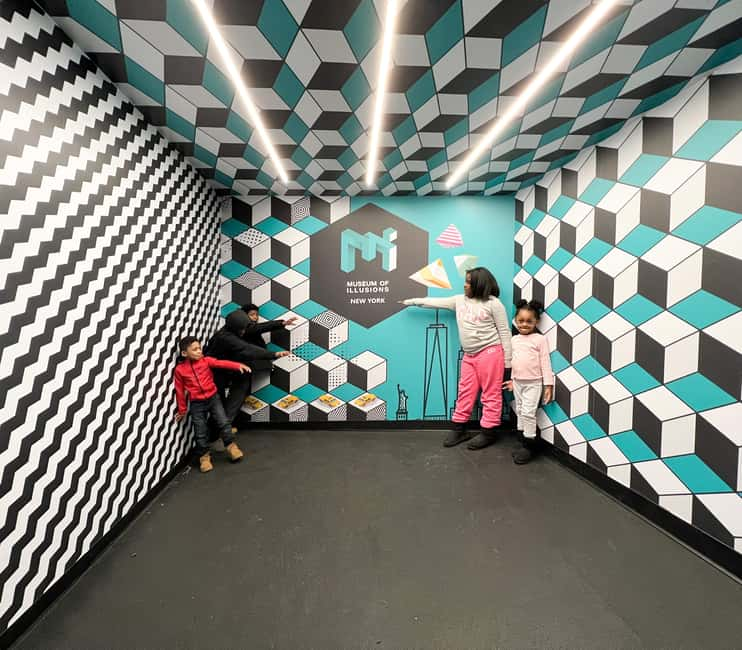
A lot of museums with optical illusions look photo-friendly from the outside. The difference here is that the illusions are built for participation, so photos don’t feel like you’re forcing it.
The museum’s “walk into a life-size kaleidoscope” concept is a prime example. It turns a background into an experience, which makes pictures easier for everyone. You don’t need fancy gear or perfect lighting just to get a memorable shot.
If you want a smoother photo experience:
- Take a quick wide shot first
- Then do shorter bursts for expressions and poses
- Don’t spend so long on one setup that you end up rushing the rest
The museum can feel compact, so a little planning saves time later.
Wheelchair access: what you can plan for
This museum is wheelchair accessible. That’s a real plus in NYC, where many attractions make you work for every step.
If you’re bringing a wheelchair or mobility device, I’d plan to keep your time expectations flexible. With interactive exhibits, some areas may naturally invite crowds, and crowd flow can affect how quickly you can move through each station.
Price and value: is $35 worth it?

For Manhattan, $35 is in the “pay for fun” category. It’s not outrageous for a hands-on attraction, but it is a fair question if you’ve got high expectations for a huge museum day.
Here’s how I think about value for this specific experience:
- If you enjoy hands-on illusions, photos, and group testing, the $35 feels more reasonable because you’re using the ticket to actively play.
- If you expected a long, traditional museum with a wide range of galleries, you might feel like it’s over too quickly. The museum is described as small by some visitors, and the experience can read as short.
So the value depends on your goal. If your goal is a playful, perception-challenging day in Chelsea, this can land really well. If your goal is a “classic NYC museum marathon,” it might not.
Who should book this ticket?
This works best for:
- Families looking for a screen-free, hands-on activity
- Friend groups who like playful challenges and group photos
- Date nights where you want a shared activity, not just dinner and a walk
- Anyone who enjoys science as “experiments you can feel,” not lectures
If you’re someone who hates waiting, won’t touch anything, or doesn’t like getting actively involved, you may find the experience less satisfying. The whole point here is that your participation drives the payoff.
A simple itinerary plan for a smooth day
Since the ticket is for a single day and you’ll pick a start time, you can treat your visit like a short “stations” route:
- Arrival at the corner entrance: Get oriented on W 14th St and 8th Ave, then start moving right away.
- First wave of illusions: Choose the most eye-catching optical traps early so your brain is ready for the surprises.
- Hands-on body effects mid-visit: Spend your time on exhibits involving growing/shrinking, gravity-style effects, and other body-based tricks.
- Holograms and kaleidoscope near the end: Save the most dramatic visual moments for later so you don’t rush them.
- Final passes: If you loved a specific illusion, do a second round before you leave. The museum is designed so you can re-test what you think you saw.
Should you book the Museum of Illusions ticket?
I’d book it if you want a compact, playful New York experience that focuses on optical illusions you can test with your hands and your body. It’s a great fit for groups, and it’s easy to pair with other Chelsea or Midtown West plans because the address is so straightforward.
I would hesitate only if you’re the type who needs a long, traditional museum visit to justify the price. At $35, you’ll feel better going in expecting a fun session rather than an all-day cultural marathon. Also double-check the day-of schedule before you head out.
If that sounds like your kind of day, you’ll likely leave with at least a few moments that still don’t quite make sense when you try to explain them later.
FAQ
Where is the Museum of Illusions in New York?
It’s located at 77 8th Ave, with the building entrance on the corner of W 14th St and 8th Ave in the Chelsea area of Manhattan.
How much is the entry ticket?
The price is $35 per person.
How long does the experience last?
The experience is listed as 1 day.
What’s included with the ticket?
Your ticket includes entry to the Museum of Illusions.
Do I need to choose a start time?
The ticket is valid for 1 day, and you should check availability to see starting times.
Is the museum wheelchair accessible?
Yes, the museum is wheelchair accessible.
Is this ticket refundable?
No. The activity is non-refundable.
About how many exhibits are there?
The museum features 50+ interactive exhibits.
What kinds of exhibits should I expect?
You can expect illusion rooms, installations, and holograms, plus experiences designed to defy gravity, grow and shrink your body, and a life-size kaleidoscope illusion.