REVIEW · LONDON
London: Royal Museums Greenwich Day Pass
Book on GetYourGuide →Operated by Royal Museums Greenwich · Bookable on GetYourGuide
London runs on time, and Greenwich is where you see it. This day pass strings together the home of GMT and the legend of the Cutty Sark—plus two major free-to-enter stops—so you can walk from astronomy to life at sea without much fuss.
I love the instant, iconic photo moment: standing astride the Prime Meridian Line with one foot in the east and one in the west. I also love the Cutty Sark feeling that you’re not just looking at a ship—you’re getting close to the deck, the rigging, and even the wheel.
One consideration: the day moves fast. With sites opening 10 AM and closing 5 PM (last entry 4 PM), you’ll want to pace yourself so you don’t miss your entry window for the paid stops like Cutty Sark.
Key points to know before you go
- Prime Meridian photo: stand on the line where GMT is anchored.
- Harrison’s clocks: see timekeeping ideas that helped change the world.
- Cutty Sark under the hull: the ship was raised so you can look right up at the elegant structure.
- Take the helm: the ship’s wheel experience makes the museum feel hands-on.
- Plan your hours: 6 hours is enough, but it’s not a slow stroll if you stop for everything.
In This Review
- Royal Museums Greenwich Day Pass: One Ticket, Four Big Icons
- Royal Observatory Greenwich: From London Views to the Prime Meridian Line
- Flamsteed House, Harrison’s Clocks, and the Time Ball
- Octagon Room and the Great Equatorial Telescope in the Onion Dome
- Down the Hill to Cutty Sark: Tea-Clipper Legend You Can Walk Around
- Queen’s House and the National Maritime Museum: Two Free Stops That Change the Flavor
- The Queen’s House: Inigo Jones architecture with art displays
- National Maritime Museum: exploration stories on the grand scale
- Timing, Walking, and Getting Your Photos Without Rushing
- Price and Value: Does $40 Per Person Make Sense?
- Who Should Book This Day Pass?
- Should You Book? My Straight Answer
- FAQ
- What is included in the London Royal Museums Greenwich Day Pass?
- Do I have to pay for the Queen’s House and the National Maritime Museum?
- Is food or drink included?
- How long does the day pass take?
- What are the opening hours for these sites?
- What languages are available on the audio guide?
- Is the experience wheelchair accessible?
- Where are the Royal Observatory and Cutty Sark located?
- Are special exhibitions or guided tours included at the museums?
Royal Museums Greenwich Day Pass: One Ticket, Four Big Icons
If you like your sightseeing with meaning, Greenwich is a smart choice. This pass brings you to the Royal Observatory Greenwich, then down the hill to Cutty Sark, and adds time in the Queen’s House and the National Maritime Museum. It’s a rare combo: science, shipbuilding, art/architecture, and global exploration all in one compact area.
At a price point of $40 per person, what makes this feel like decent value is that it isn’t just one museum admission. Your ticket covers entry to the Royal Observatory and Cutty Sark, and it also gives you access to the National Maritime Museum and the Queen’s House—both of which are free except for special exhibitions and guided tours. So you’re paying for the two headline paid sites, while using the rest of your time inside major institutions without extra ticket math.
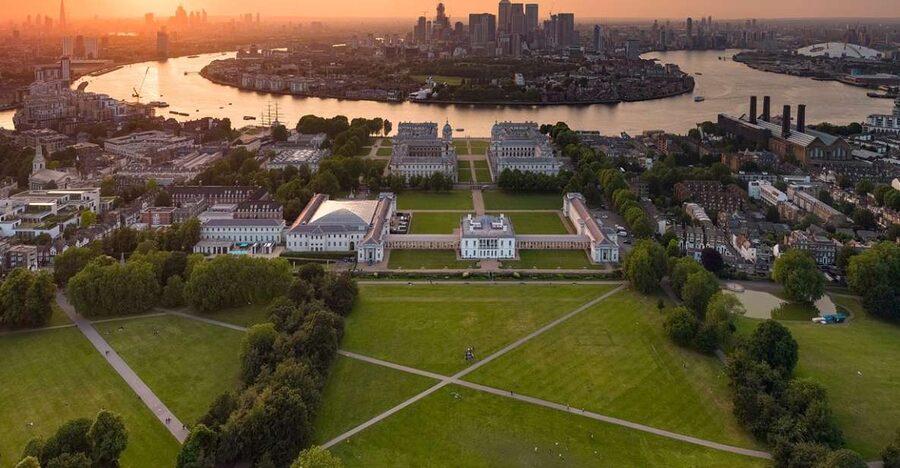
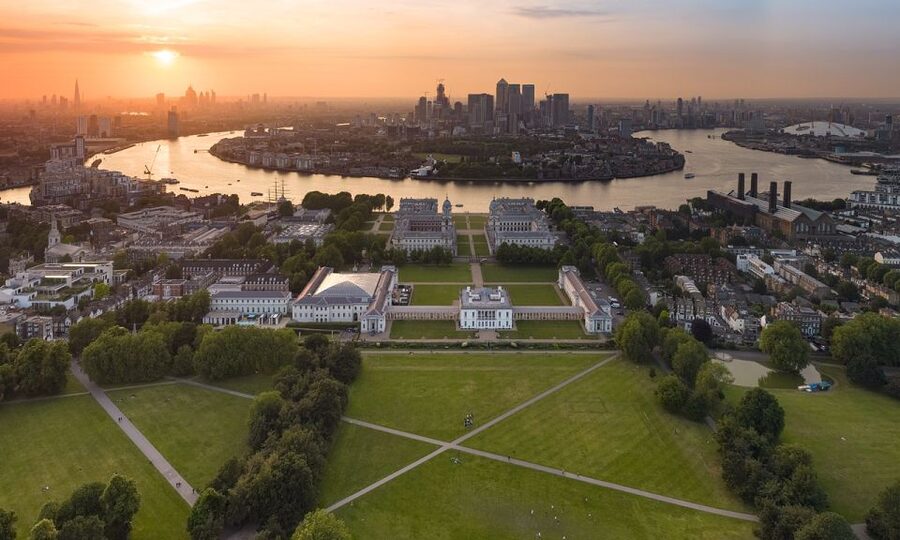
The other big “yes” is distance. Greenwich Royal Park and the Cutty Sark area are close enough that you’re walking between them without needing a whole transit plan. That matters, because a day pass lives or dies on time.
Royal Observatory Greenwich: From London Views to the Prime Meridian Line
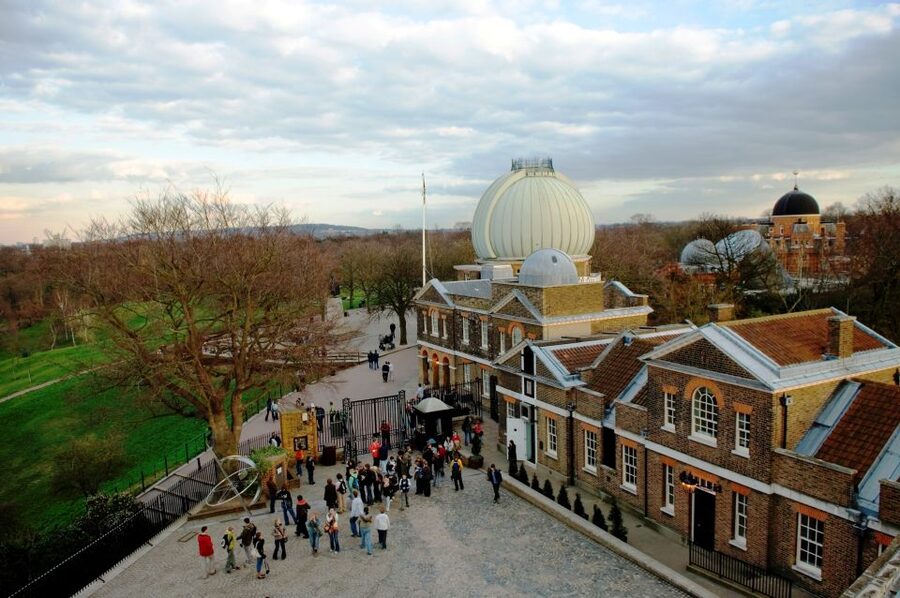
Start at Royal Observatory Greenwich, set in Greenwich Royal Park. Even before you reach the main sights, you get a sense of why this location matters: the views over London—the City, the River Thames—make the science feel grounded and real. It’s the kind of setting where you look up at the sky and also look out at the city lights.
Then comes the main moment. In the Meridian Courtyard, you can stand astride the Prime Meridian Line, putting one foot in the east and the other in the west. This is one of those attractions where the photo moment isn’t just for Instagram—it’s a clear way to understand what Greenwich represents in global timekeeping.
Inside, the experience is set up as a guided walk through the history of astronomy and measurement. You’ll move through spaces named for the people who did the work, including the chance to walk in the footsteps of the Astronomers Royal in Flamsteed House. It’s not a show; it’s a building that explains its own purpose.
What I like most about the Observatory layout
- You get a clear story arc: from instruments and people to public time signals.
- The main spaces are close enough that you don’t burn your whole day on “getting there.”
- It’s easy to stop and read, then look up at views again when you need a break.
A practical note: the Observatory and the ship museum portions can take longer than you think if you stop for displays and photos. The day pass helps because you’re not locked into a strict guided group pace—but you still have closing times to respect.
You can also read our reviews of more museum experiences in London


Flamsteed House, Harrison’s Clocks, and the Time Ball
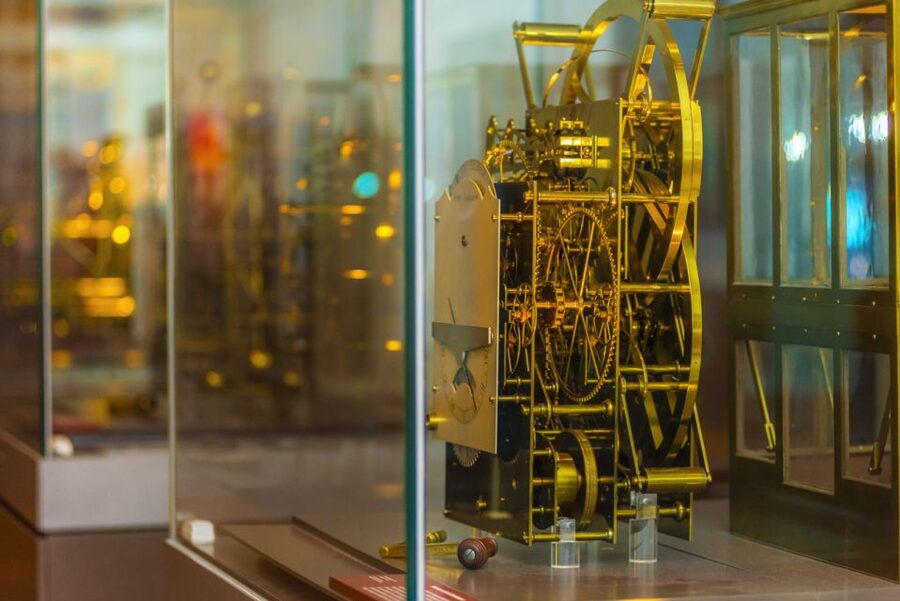
Flamsteed House is where the Observatory story gets especially tangible. This is where you’ll find Harrison’s clocks, the inventions tied to making timekeeping accurate enough to matter for navigation and scientific progress. Even if you don’t consider yourself a “science person,” the displays are presented as achievements with real-world consequences, which makes them much easier to care about.
Don’t miss the Shepherd Gate Clock, mounted outside. It’s described as the first clock to show Greenwich Mean Time to the public. That detail is a good reminder: this wasn’t just academic astronomy. Greenwich helped shape daily life by making time visible and shared.
Also on-site is the red Time Ball atop Flamsteed House. It’s one of the world’s earliest public time signals, first used in 1833, and it still operates today. The Time Ball is one of those “small but powerful” experiences: you’re watching a public system designed to keep people coordinated over distance.
If you’re the type who likes to understand why something matters, this part delivers. Time signals, accurate measurement, and public display connect science to the everyday world.
Octagon Room and the Great Equatorial Telescope in the Onion Dome

Two of the Observatory highlights stand out for different reasons.
First, the Octagon Room. It was designed by Sir Christopher Wren, and it’s described as one of the best preserved Wren interiors in London. That means you’re not just looking at instruments; you’re in a historically significant space. The building itself helps the story feel serious.
Second, the Great Equatorial Telescope in the huge iconic onion dome. This is the “wow” moment for astronomy lovers. It represents how astronomers gained new views of the universe over 100 years ago using better tools and more precise measurement.
These areas also help balance your day. If Cutty Sark is about motion, ropes, and ship scale, the telescope and Wren room shift you into the slow, careful world of observation. You end up with a day that feels like it has contrast instead of repeating the same museum mode over and over.
Down the Hill to Cutty Sark: Tea-Clipper Legend You Can Walk Around

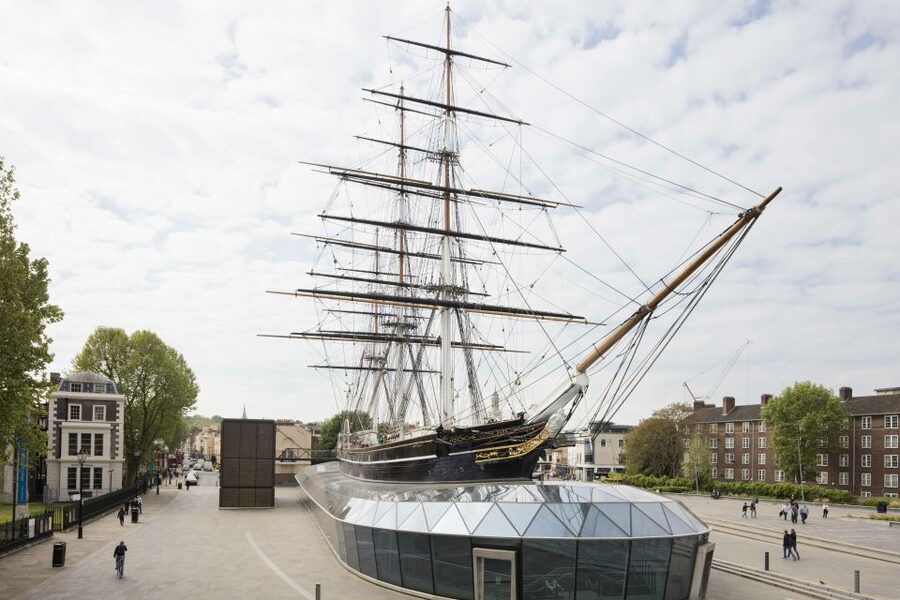
Then it’s time to head downhill toward Cutty Sark. Cutty Sark is the world’s sole surviving tea clipper, and it’s celebrated for record-breaking passages around the globe. You’re not just visiting a ship; you’re stepping into a preserved vessel that was built for a specific trade and a specific era of shipping.
Once you come aboard, the museum design does something clever: it lets you explore the ship like a real space. You can see the sailors’ quarters, and you can take the helm at the ship’s wheel. That wheel moment matters because it turns passive viewing into a physical experience—your body is doing the “where would I stand?” work even if you can’t operate the mechanism.
The conservation details are a big part of why this ship still works as a museum. The information emphasizes that original wooden planks and iron frames were meticulously conserved. And then there’s the raised hull concept: the ship was raised over three meters during a six-year conservation project. That gives visitors the unique opportunity to stand directly underneath and see the ship’s elegant lines and ground-breaking design.
On the main deck, you’ll notice the scale immediately: towering masts and about 11 miles of rigging. It’s hard to describe that in a sentence. In person, it helps you imagine what sailing required—coordination, knowledge, and muscle.
One practical tip for your Cutty Sark time
- If you care most about the ship experience, get your deck time first, before you spend too long in the Observatory. Some people hit the observatory hard, then arrive for Cutty Sark after their time window tightens.
Queen’s House and the National Maritime Museum: Two Free Stops That Change the Flavor

After Cutty Sark (or on your way through Greenwich), you’ll reach the Queen’s House and the National Maritime Museum.




The Queen’s House: Inigo Jones architecture with art displays
The Queen’s House is a pioneering 17th-century building designed by Inigo Jones. Think of it as a royal villa that’s also an art space—your time here often depends on whether you enjoy paintings and exhibition-style galleries.
It’s free of charge unless you’re looking for special exhibitions or guided tours. If you want a quieter break from ship and science, this stop can work well because it’s slower-paced and more about space, light, and viewing.
A balanced take: not everyone loves art galleries on a day that already includes the most photogenic icons in the area. If art isn’t your thing, use your time here strategically—hit the must-sees, then move on.
National Maritime Museum: exploration stories on the grand scale
The National Maritime Museum is described as the largest museum of its type in the world. This is where the day widens out from one ship (Cutty Sark) into the larger themes of exploration and endeavour that helped shape the world.
Again, entry is free unless you’re paying for special exhibitions or guided tours. Even if you only scratch the surface, you’ll get the sense of a museum built for big stories—ships as technology, trade as history, and exploration as motivation.
Timing, Walking, and Getting Your Photos Without Rushing
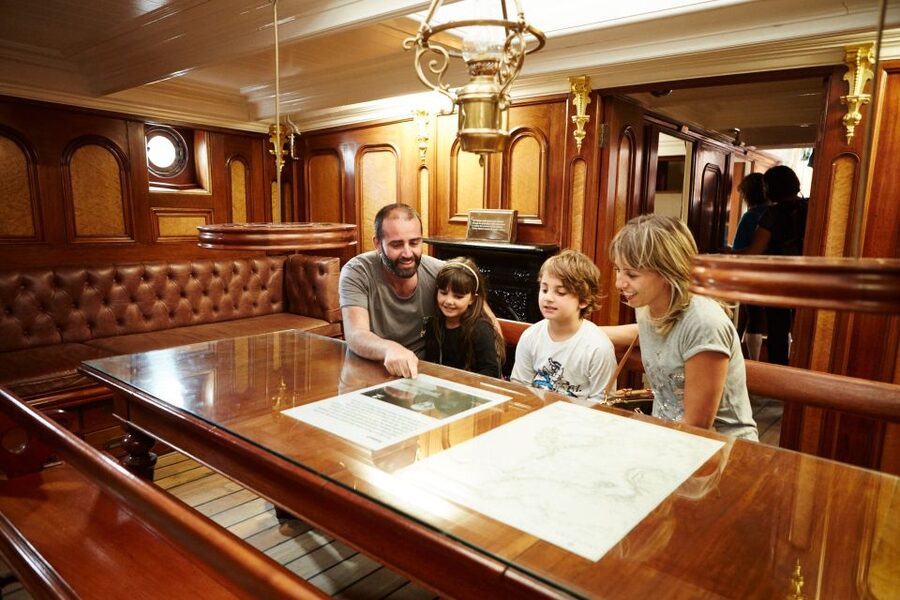
This day pass is built for a 6-hour experience, but Greenwich is one of those places where “6 hours” can mean two different things: either you move briskly and hit every highlight, or you stop for one extra display and suddenly you feel the clock.
Here’s how to keep it fun:
- Start strong at the Observatory so you get the Prime Meridian courtyard and your instrument highlights before your energy drops.
- Know your last entry timing: sites are open 10 AM–5 PM, and last entry is 4 PM.
- Plan for walking. Greenwich Royal Park involves hills and paths. You’ll feel it if you’re not used to uphill stretches, and it matters more when you have multiple stops.
One more practical detail: the day pass includes a downloadable multilingual interactive guide at both the Royal Observatory and Cutty Sark. Some places in the park and around the Thames can have weaker phone signal. If your guide depends on connectivity, it’s smart to download what you need before you start walking and keep expectations realistic for spotty coverage.
If you’re traveling with kids, there’s a note to consider: some visitors want more hands-on or kid-friendly tasks. That doesn’t mean it’s not enjoyable for families, but you may want to keep expectations focused on looking, reading, and occasional interactive moments rather than a playground-style experience.
Price and Value: Does $40 Per Person Make Sense?
Let’s talk value in plain terms.
Your day pass includes paid entry to:
- Royal Observatory Greenwich
- Cutty Sark
You also get access to:
- Queen’s House (free unless special exhibitions/guided tours)
- The National Maritime Museum (free unless special exhibitions/guided tours)
So your main cost is covering the two headline attractions that typically feel like the “big ticket” parts of the day. The other two are major institutions, but the pass helps you roll them into the same day without extra effort.
At $40 per person, this can be a good deal if you truly want the Observatory + Cutty Sark combo and you’re also willing to spend time inside the extra free-access museums rather than treating them as optional add-ons.
If you’re only interested in one site—say, you mainly want the Observatory photo and clocks—then it can feel like you’re paying for more than you’ll use. But if you’re aiming for the full Greenwich sweep, the structure of the pass makes sense.
Who Should Book This Day Pass?
This is a strong fit if you want a one-day plan that covers:
- Global timekeeping (Prime Meridian, GMT, public time signals)
- Maritime history with a living-feeling ship visit (helm, main deck, rigging scale)
- Optional-but-meaningful cultural stops (Inigo Jones and the wider exploration stories of the National Maritime Museum)
It’s also a good option if you like clean museum logistics. The sites are close enough to keep the day from turning into transit time, and the attractions naturally connect: measurement leads to navigation, and navigation leads to exploration.
I’d think twice if:
- You hate walking hills and don’t want to move much.
- You only care about one of the paid attractions and will skip the rest.
- You dislike art galleries; the Queen’s House may feel like a mismatch unless you’re intentionally choosing it.
Should You Book? My Straight Answer
Book this day pass if you want the classic Greenwich day: stand on the Prime Meridian, see the evolution of timekeeping, and step onto a preserved tea clipper that you can literally stand beneath. The combination is efficient, and the contrast between science, ship scale, and museum stories keeps it from feeling repetitive.
Skip it or adjust your expectations if you’re short on time, sensitive to walking, or you know you won’t use the extra free-access spaces. In that case, you might prefer a more focused plan so the 6 hours work for your pace.
If you do book, my advice is simple: start early, prioritize the paid highlights first, and save slower gallery time for when you still have energy.
FAQ
What is included in the London Royal Museums Greenwich Day Pass?
The pass includes entrance to the Royal Observatory Greenwich and Cutty Sark, plus downloadable multilingual interactive guides at both attractions. It also provides access to the National Maritime Museum and the Queen’s House.
Do I have to pay for the Queen’s House and the National Maritime Museum?
Entry to the Queen’s House and the National Maritime Museum is free of charge, except for special exhibitions or guided tours.
Is food or drink included?
No. Food and drink are not included.
How long does the day pass take?
The experience is listed as 6 hours, depending on available starting times.
What are the opening hours for these sites?
All sites open at 10 AM and close at 5 PM, with last entry at 4 PM.
What languages are available on the audio guide?
An audio guide is included in English and other languages, including Spanish, Chinese, French, German, Italian, Portuguese, and Korean.
Is the experience wheelchair accessible?
Yes, it is listed as wheelchair accessible.
Where are the Royal Observatory and Cutty Sark located?
The Royal Observatory is at Blackheath Avenue, London, SE10 8XJ. Cutty Sark is at King William Walk, London SE10 9HT.
Are special exhibitions or guided tours included at the museums?
No. Special exhibitions or guided tours at the Queen’s House and National Maritime Museum are not included.