REVIEW · ROME
Guided Tour Vatican Museums & Sistine Chapel with Basilica Access
Book on Viator →Operated by Saints Tours · Bookable on Viator
Rome’s museum crowds are a force. This small-group Vatican Museums and Sistine Chapel tour cuts straight through the worst of the waiting with skip-the-line access and a Vatican State-licensed guide with a headset. I also like how it’s paced for highlights across major spaces like the Courtyard of the Pine Cone and the Gallery of Maps, not just the Sistine Chapel. One thing to consider: even with advance entry, you can still end up in lines and tight flows inside the Vatican area—so plan for a bit of crowd pressure and walking.
Guides can make or break the day. In past groups, I’ve seen names like Pietro, Natalia, Sofia, Vincenzo, and Thomas come up for praise, often for storytelling and for keeping people moving. Still, some experiences sound rushed or harder to follow if the guide’s English or pacing isn’t a match for your group, so choose the time slot that fits your stamina.
In This Review
- Key things to know before you go
- Skip-the-Line Value at the Vatican Museums (and what you’re paying for)
- Meeting at Piazza Pio XII and the uphill reality
- Courtyard of the Pine Cone: where the Vatican starts to make sense
- Museo Pio Clementino: the statues that set the tone
- Gallery of Maps: 120 meters of “how Italy got explained”
- Sistine Chapel: rules, stillness, and what your guide should do
- Direct passage into St. Peter’s Basilica: your on-your-own time starts fast
- Guides, group size, and why the experience can vary
- What to pack: comfort beats heroics
- Who this tour is best for (and who should choose something else)
- Should you book this tour?
- FAQ
- Where does the tour start?
- How long is the guided visit?
- What group size should I expect?
- Is this tour really skip-the-line?
- Does it include the Sistine Chapel?
- Do I get access to St. Peter’s Basilica?
- Are headphones and toilets included?
- What is not included in the ticket price?
- How does cancellation work?
Key things to know before you go
- Skip-the-line entry helps you avoid the worst queues and get into the Museums efficiently
- Headset radio sets mean you don’t have to strain to hear the guide
- Small group size (max 16) is built for crowd navigation without feeling like a herd
- Major “must-sees” are threaded together: Pine Cone courtyard, Pio-Clementino, Maps Corridor, Sistine Chapel
- Direct passage to St. Peter’s Basilica when open, plus time to explore on your own
- No snacks or drinks included, so build your comfort plan around that
Skip-the-Line Value at the Vatican Museums (and what you’re paying for)
This tour costs $110.06 per person and runs about 2 hours 30 minutes. For Rome, that’s not a bargain-bucket price, but it’s also not just for standing in line with better posture. You’re paying for three practical advantages: a Vatican State-licensed guide, skip-the-line entrance, and headsets so you can actually follow what you’re seeing.
The other big value is the pairing: Vatican Museums + Sistine Chapel, then a direct route into St. Peter’s Basilica. If you’re visiting for the first time, doing these separately means more tickets, more timing headaches, and more time spent coordinating yourself inside the world’s most crowded church complex.
Still, manage expectations. Skip-the-line doesn’t mean zero waiting. It means you often enter the restricted flow earlier than general ticket holders, but the Vatican can still require queuing as groups filter through controlled entry and security rhythms.
You can also read our reviews of more guided tours in Rome
Meeting at Piazza Pio XII and the uphill reality
Your start point is Piazza Pio XII, 5 (Vatican area), and you finish at St. Peter’s Square. That sounds simple, and the logistics mostly are. But the Vatican is set on hills, and some people report a tougher walk from the meeting area up toward the museum entrance.
So if you have mobility limits—or even just don’t love uphill walking in summer—factor that in. A taxi can be a smart move for the half-day that involves major crowds and lots of stairs once you’re inside.
Also, since the tour doesn’t include snacks or drinks, treat the first hour like it matters. Use any toilet chance you’re given at the meeting point, then plan for the fact that museum time is tight and the crowd flow can limit stops later.
Courtyard of the Pine Cone: where the Vatican starts to make sense
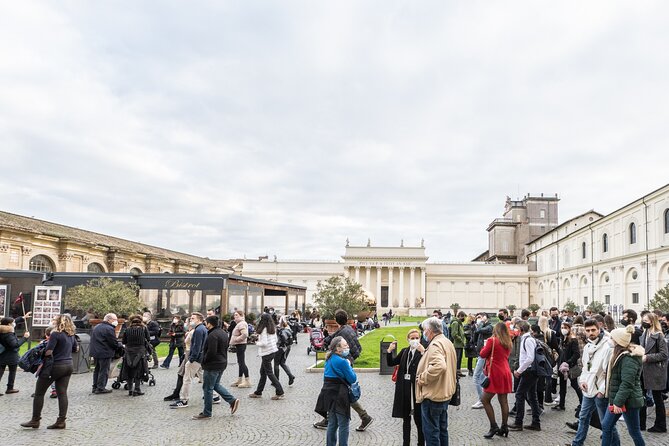
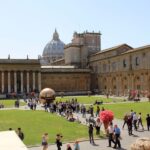
The first stop is the Cortile della Pigna, a big open courtyard right inside the museum complex. It’s also a smart opener because it gives you a quick sense of scale before you get pushed into corridors and rooms packed with art.
This is the place with the Pine Cone centerpiece (hence the name), sitting in an open space adjacent to museum halls. If the weather is good, you’ll likely get a little breather to look around and orient yourself. That matters, because the Vatican Museums can feel like a maze until your brain gets landmarks.
A practical tip: use this stop to confirm you can hear the guide through the headset. Once you’re moving deeper into the Museums, it’s a pain to fix audio issues while people are threading forward.
Museo Pio Clementino: the statues that set the tone
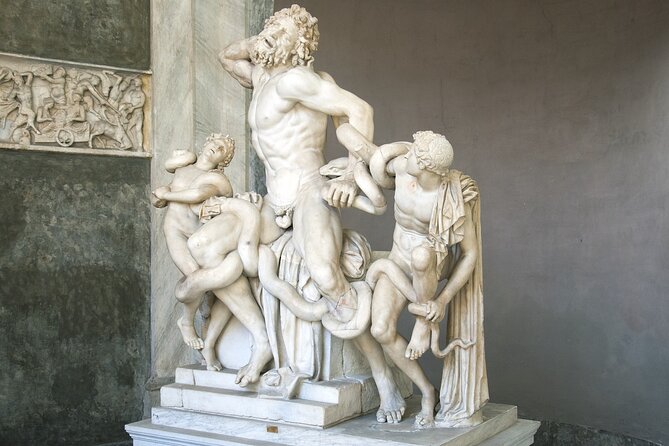
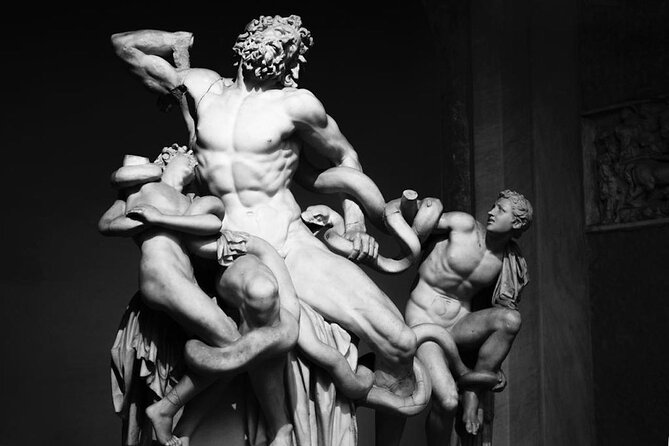
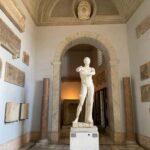
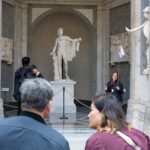
Next comes the Museo Pio Clementino, a museum wing originally commissioned under Popes Clement XIV and Pius VI to display Greek and Roman masterpieces. The setting itself is part of the show: the heart of this space is an octagonal courtyard, surrounded by famous sculpture groups.
This is where you get close to myth and classical art, and the guide can turn names into stories fast. Some standouts you should be watching for include the Apollo of the Belvedere, the Laocoon group, and figures connected to Perseus and Medusa. You may also see the Hermes Pius-Clementine and other pieces that connect Roman copies with Greek originals.
Why this stop is worth your time: it helps you read what comes next. If you understand how the Vatican curated classical beauty into its collections, the rest of the Museums doesn’t feel like random rooms—it starts feeling like a deliberate path.
Downside: if your group rush feels too strong here, you might skim rather than absorb. That’s not the fault of the sculptures, just the time limit.
Gallery of Maps: 120 meters of “how Italy got explained”
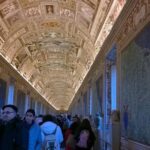
Then you move into one of the Vatican’s cleverest pieces of design: the Gallery of Maps. It’s a long corridor—about 120 meters—and the walls are packed with 40 maps showing Italian regions and key cities.
This is not only a geography lesson. In the design, the maps are paired with religious scenes placed above each region, painted by artists guided by Ignazio Danti, a mathematician, astronomer, and cosmographer. The result is a corridor where politics, faith, and science-era thinking all share the same walls.
This is also a great stop for the headset stage, because a good guide can explain what you’re looking at quickly—without you needing to read every label yourself. If your headset audio is clear and your guide’s pacing works for you, this hallway can be surprisingly memorable for an area that sounds like it would be boring on paper.
Potential snag: it’s a corridor, which means crowd pressure is real. If your group is slow or your guide is holding everyone in place, you may feel that “moving” is constant and “stopping to really see” is limited.
You can also read our reviews of more museum experiences in Rome
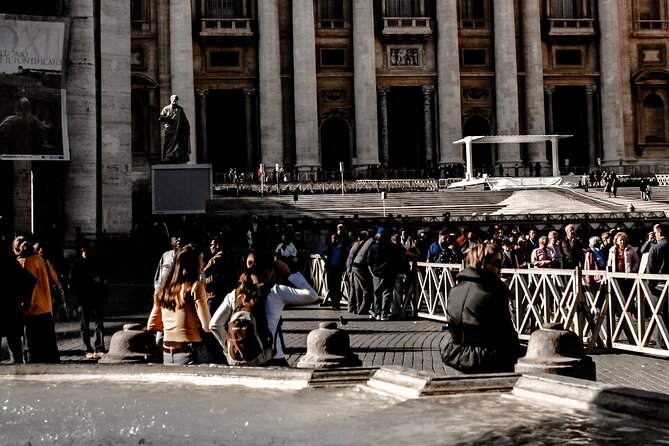
Sistine Chapel: rules, stillness, and what your guide should do
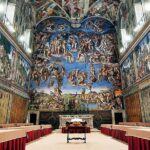
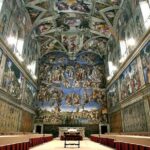
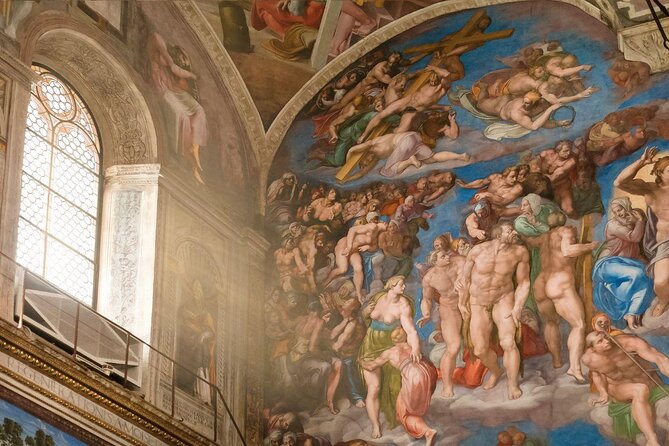
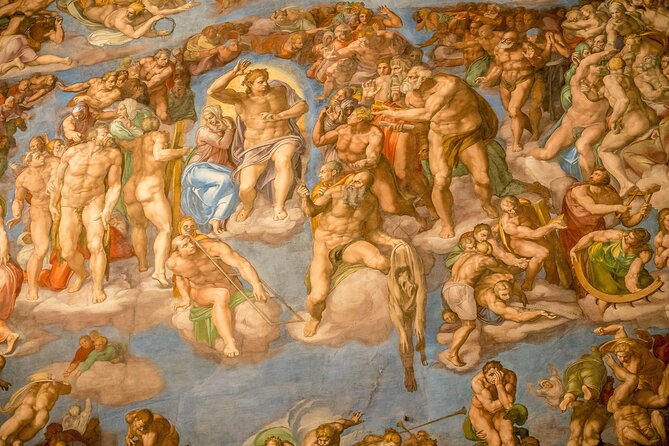
After the Maps Corridor, you arrive at the Sistine Chapel—the reason most people wake up early and brave the chaos. The vault and the back wall are covered with Michelangelo’s work, including the famous Last Judgment.
Here’s why a guide matters: you don’t just look at paintings. You look at compositions—how the scenes are arranged, how they connect, and what the chapel’s role has been historically. Even if you know the big names, a clear explanation helps you notice the details you’d normally miss while everyone is staring upward.
Also, the Sistine Chapel is used for official ceremonies, including conclaves and other papal events. That context adds weight. It’s not just a museum room. It’s a living religious space, even when you’re visiting as a visitor.
One more practical point: this is a place where you need patience and posture. The crowd flow can limit long pauses. If you’re the type who likes to soak in art without moving, you may feel rushed.
A note on guide quality: the best guide examples I’ve seen mentioned names like Natalia and Sofia for keeping groups organized and telling the story in a way that makes the ceiling feel less distant. Other experiences described guides with harder-to-follow explanations, which is why headsets and pacing matter so much.
Direct passage into St. Peter’s Basilica: your on-your-own time starts fast
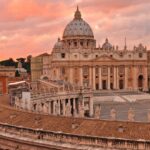
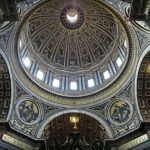
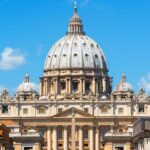
When you finish the guided portion at the Sistine Chapel, you get direct passage into St. Peter’s Basilica. The tour includes access when the Basilica is open.
Then you have free time to explore at your own pace. This part is where you can adjust the day to your taste: architecture lovers might slow down for details. Faith-focused visitors might want quiet time. Photo seekers will find angles, but remember that the interior is also a place where people come to pray—so keep your behavior respectful and don’t block passages.
If you want a strategy, use the time like this:
- First, take your bearings from key interior views.
- Then decide what deserves repeat attention.
- Finally, come back for any photos you missed while moving with the crowd.
Guides in great groups often set you up with tips before you step in, which can save you from wandering aimlessly in the first minutes.
Guides, group size, and why the experience can vary
This tour runs with a maximum group size of 16, which should help with crowd control. A small group also makes the guide’s job easier—so you can hear stories and follow directions without constantly playing catch-up.
In the best-case scenario, guides like Pietro, Vincenzo, and Thomas have been singled out for efficiency and for sharing lots of history in a way that sticks. You also see praise for guides who actively keep track of everyone and keep movement smooth through crowded points.
In the less-great scenario, you may encounter a guide who doesn’t introduce themself, has trouble keeping the group together, or uses a delivery style that’s harder to follow. Another issue that comes up sometimes is pacing: even with skip-the-line entry, the overall time is set, so you may not get long stops where you want them.
My advice: pick the time slot that matches your energy. Earlier hours can help because the Vatican Museums get tighter as the day goes on, and crowded flow makes everyone feel rushed.
What to pack: comfort beats heroics
This tour includes radio headphone sets and has toilet access at the meeting point. It also includes free Wi‑Fi at the meeting point, which is handy if you need to check maps or download offline info before heading in.
But the tour does not include snacks or food and drinks. So if you’re planning a full morning, don’t assume you’ll be able to grab something comfortably mid-tour. Bring your own plan for hydration and energy, especially during hot months.
Other comfort basics:
- Wear shoes you can stand and walk in for a few hours.
- Use sunscreen and a hat if you’re sensitive to heat before entry.
- Keep your phone charged enough for photos in St. Peter’s Basilica, where time can feel short once you’re inside.
And yes—use the toilets before you meet up at the start. It’s the simplest move you can make to avoid scrambling during the thick of the day.
Who this tour is best for (and who should choose something else)
This tour fits best if you want:
- a guided route through the Vatican’s major highlights without spending hours planning,
- small-group coordination with headset commentary,
- and the convenience of direct access into St. Peter’s Basilica.
It’s also a strong choice for first-timers who feel overwhelmed by the Vatican Museums’ scale. The stopping pattern hits big-name zones that most people want to see.
If you prefer long unhurried looking—like you want to stand quietly in one room for 30 minutes at a time—you might feel pressured by the overall pace. In that case, consider whether you’d rather book a different format with more independent time. Also, if walking distance is a major issue for you, build in extra thought for getting to the museum area from the meeting point.
Should you book this tour?
I’d book it if you’re doing Rome with limited time and you want a smart, guided hit list: Pine Cone courtyard, Pio-Clementino sculptures, the Maps Corridor, the Sistine Chapel, then Basilica time on your own. The skip-the-line access, headsets, and small group size make the price feel easier to justify.
Don’t book it blindly if your top priority is slow looking or if heat and walking are major concerns. For many people, the experience is great because the guide keeps things moving and the route is well sequenced—but the day can feel tight.
Best move: book early if you can, since the Vatican Museums are heavily visited and entry flows can be restricted even for tour groups.
FAQ
Where does the tour start?
The meeting point is Piazza Pio XII, 5, 00193 Roma RM, Vatican City.
How long is the guided visit?
The duration is about 2 hours 30 minutes.
What group size should I expect?
The group is limited to a maximum of 16 persons.
Is this tour really skip-the-line?
Yes. It includes skip-the-line entrance. You may still have to wait in the controlled entrance flow, but you should generally avoid the longest general queues.
Does it include the Sistine Chapel?
Yes. The tour includes the Sistine Chapel.
Do I get access to St. Peter’s Basilica?
Yes, when St. Peter’s Basilica is open. You’ll have direct passage from the Sistine Chapel and then time to explore at your own pace.
Are headphones and toilets included?
Yes. You get radio headphone sets, and there is use of toilets at the meeting point.
What is not included in the ticket price?
Snacks, food, and drinks are not included.
How does cancellation work?
You can cancel up to 24 hours in advance for a full refund. If you cancel less than 24 hours before the start time, the amount paid is not refunded.