REVIEW · ROME
Rome: Vatican Museums, Sistine Chapel & Basilica Tour
Book on GetYourGuide →Operated by Crown Tours · Bookable on GetYourGuide
Skip the chaos, meet the Vatican’s art on cue. I like how this tour pairs skip-the-line entry with expert storytelling, so the Vatican Museums feel less like a maze and more like a guided path. Two standout moments are the Gallery of Maps and standing under Michelangelo in the Sistine Chapel; the scale hits harder than any photo. One catch: the route moves with crowd flow, so if you fall behind, you can lose the audio headset connection.
Pick the right option and you get a clear arc: museums first, then the Sistine Chapel, then (if you choose it) St. Peter’s Basilica and Dome views. It is timed entry with a focused route, not an all-day free roam, which I think is exactly what makes it good value when you have limited time in Rome.
In This Review
- Key takeaways before you go
- Why this Vatican tour works: fast entry, a route you can actually follow
- Vatican Museums highlights: Gallery of Maps, Tapestries, and Pio-Clementino
- From museum halls to the Sistine Chapel: why the guide’s setup matters
- Sistine Chapel rules and timing you should plan around
- St. Peter’s Basilica upgrade: Bernini’s Royal Staircase and the big-name art
- Dome views with elevator access and a final climb option
- How long you’re really in motion (and what to wear)
- Which guide style fits you best: big stories, big energy
- Who should book this (and who should skip it)
- Should you book this Vatican Museums, Sistine Chapel & Basilica tour?
- FAQ
- What does the tour include?
- How long is the tour?
- Do I get to visit St. Peter’s Basilica and the Dome?
- Is the skip-the-line entrance the same as skipping security?
- What should I wear or bring?
- Is the tour wheelchair accessible?
Key takeaways before you go
- Skip-the-line entry through the Vatican Museums and Sistine Chapel, plus select skip-the-security for St. Peter’s Basilica
- A planned route through the best museum stops, including Gallery of Maps, Gallery of Tapestries, and Pio-Clementino
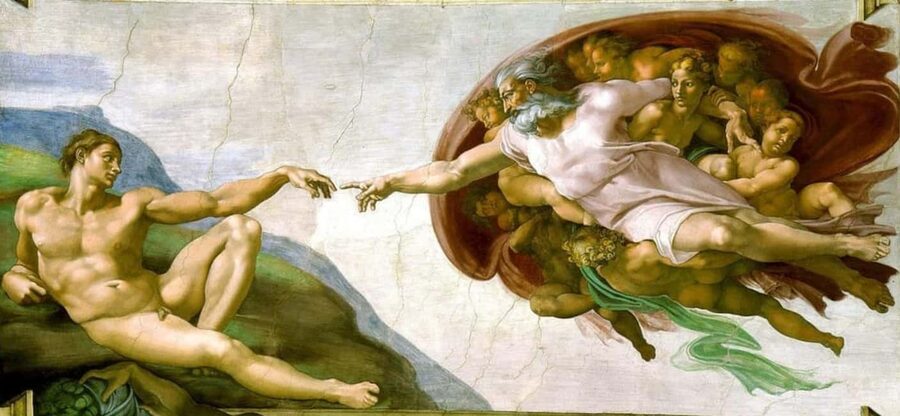
- Sistine Chapel arrives with context, so Michelangelo’s Creation of Adam and Last Judgment land with more meaning
- Direct access to St. Peter’s Basilica via Bernini’s Royal Staircase on the all-3-sites option
- Optional Dome views with elevator access, and a choice for a final climb for the best panoramas
- Headsets help a lot, but try not to wander away—some guides use the group to keep audio synced
Why this Vatican tour works: fast entry, a route you can actually follow
The Vatican is a world-class sight with a world-class queue problem. This tour tackles that head-on with skip-the-ticket-line entry for the Vatican Museums and Sistine Chapel, and with skip-the-security-line entry to St. Peter’s Basilica on select options. You still go through security, but the time you save is real—especially in high season.
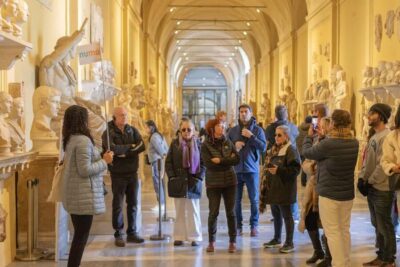
The other big reason this tour feels smoother is the structure. Instead of wandering gallery to gallery, you get a curated flow with an expert guide and audio headsets so you can hear the story without craning your neck. I also like the small-group setup. It is still the Vatican—there are crowds—but small groups make it easier to keep moving without getting swallowed by the masses.
Meeting-wise, the starting point can vary by option, and you check in at the Crown Tours office near the Vatican walls. I find that helpful because it cuts down on the usual stress of trying to match signs, crowds, and vague directions.
You can also read our reviews of more museum experiences in Rome
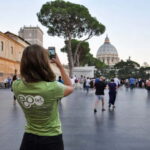
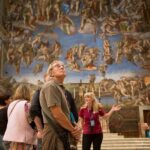
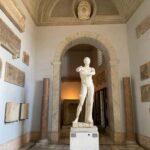
Vatican Museums highlights: Gallery of Maps, Tapestries, and Pio-Clementino
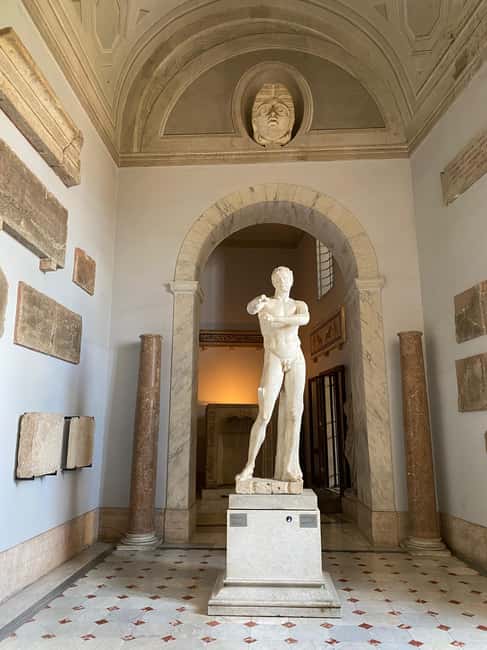
The Vatican Museums are huge, which is part of the problem: you can spend hours and still feel like you saw a blur. Here’s what I like about this tour’s museum approach—you hit specific “I can’t believe this is real” rooms, not just random highlights.
You start with major stops that help you understand what you’re looking at. You’ll move through key collections and notable spaces such as the Cortile del Belvedere area, and galleries like the Gallery of Candelabra and Gallery of Tapestries. The tapestries are big and theatrical—textile art that reads like history made visible.
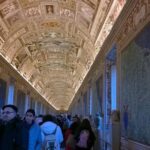
Then comes one of the most memorable moments in the entire museum route: the Gallery of Maps. The ceiling-to-wall sweep across the room is one of those setups where the guide’s commentary matters. Without it, you might just admire the craftsmanship. With it, you start seeing how the Vatican presented geography, power, and imagination in a single display.
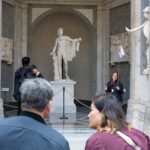
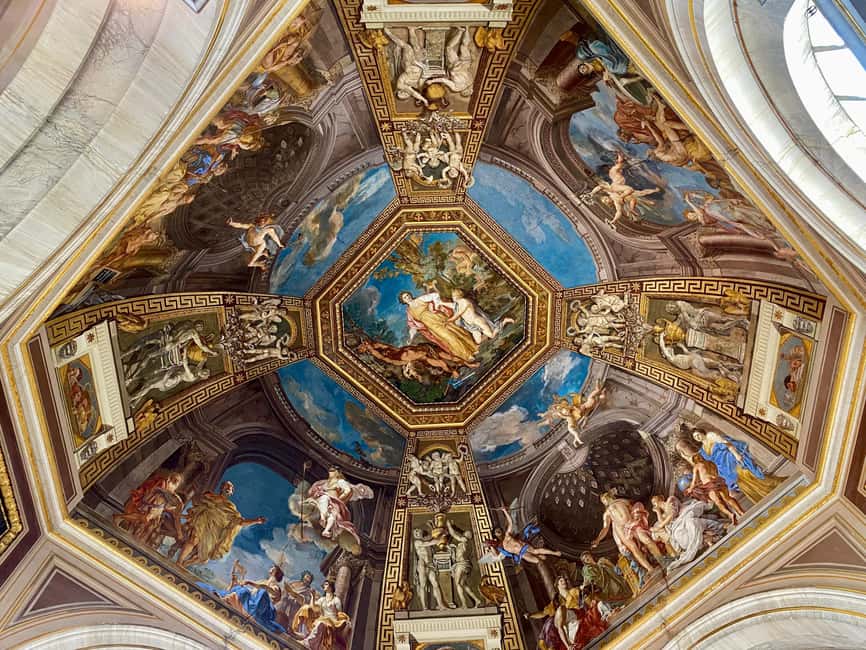
Another museum highlight is the Museo Pio Clementino, home to classical masterpieces. One name that will come up is the Apollo Belvedere. Even if you’ve seen photos before, being close to the scale and finish makes you understand why these works shaped taste for centuries.
A useful takeaway: the museum portion is not trying to teach you every detail. It is teaching you where to look so you do not miss the big things, even when you’re short on time.
From museum halls to the Sistine Chapel: why the guide’s setup matters
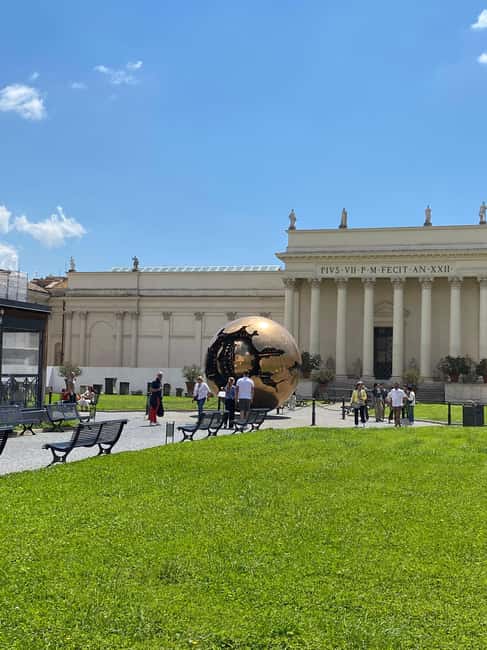
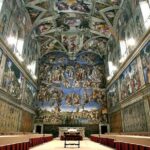
The Sistine Chapel is one of those places where your brain knows the famous images, but your body still reacts like you’ve never seen them before. The difference with a guided route is that you arrive with a frame for what you’re seeing, not just a checklist.
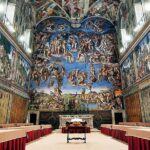
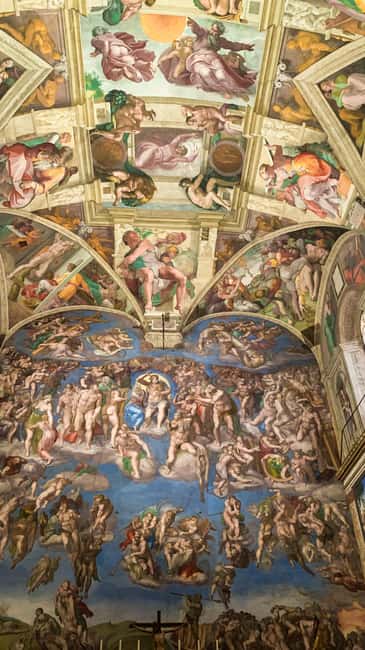
This tour brings you from the museum collections into the chapel experience with commentary focused on what matters most. Once you’re inside the Sistine Chapel, you’ll look up at Michelangelo’s Creation of Adam and The Last Judgment, and the moment lands differently when the guide has already explained themes, symbolism, and placement.
One practical point: the chapel interior is quiet and rules are strict. That makes it easy to feel rushed if your group isn’t steady. Small-group pacing helps, and the headsets keep you in sync with what the guide is pointing out.
If you want a tip that actually changes your experience: go slowly during the key ceiling views. Let your eyes adjust. That is when the details start to click—the way figures are arranged, the emotional intensity, and the sheer ambition of the compositions.
Sistine Chapel rules and timing you should plan around
This is not the place to show up casually dressed or late. The Vatican enforces a dress code: shoulders and knees need to be covered. That means no shorts, no short skirts, and no sleeveless shirts. If you’re traveling with a lightweight outfit plan, bring a layer you can wear instantly.
You also need photo ID (passport or ID card) and the names/ages on the ticket must match. The entry is timed, and late arrival can mean refusal with no refund. I also recommend building a buffer into your morning so you’re not sprinting across Rome just to stand in Vatican security lines.
Another thing I’ve learned the hard way in big museums: when you’re far from the group, audio can get spotty. Some visitors noted that when they drifted behind by about 50 minutes’ worth of distance due to crowding, they temporarily lost audio connection. So stay close enough to hear clearly and to keep the group rhythm.
St. Peter’s Basilica upgrade: Bernini’s Royal Staircase and the big-name art
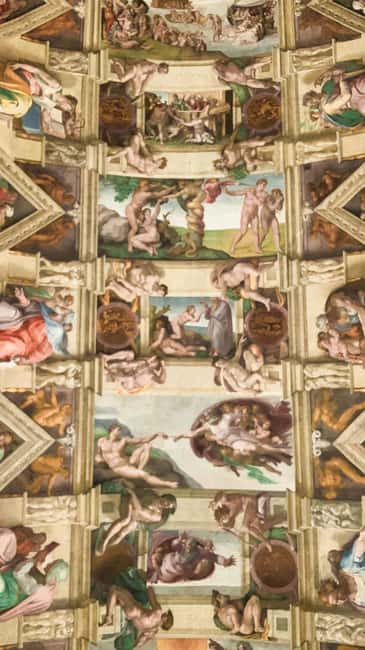
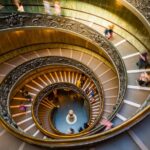
If you only do two sites, you miss the best “ending scene” in the Vatican story. The all-3-sites option adds St. Peter’s Basilica with direct access from the Sistine Chapel through Bernini’s Royal Staircase—a dramatic route that was historically reserved for popes and royalty.
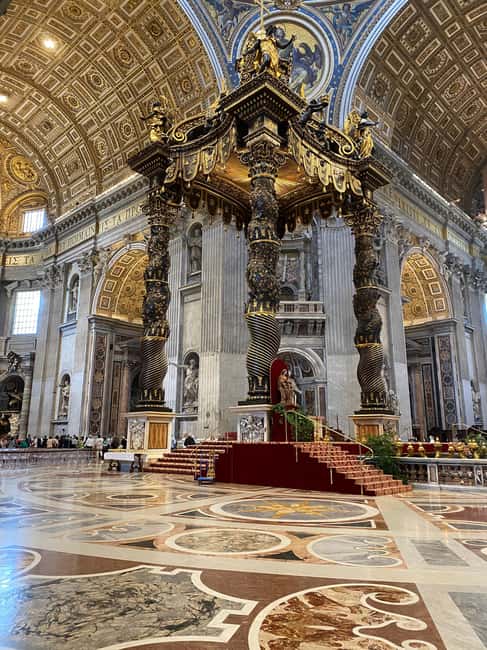
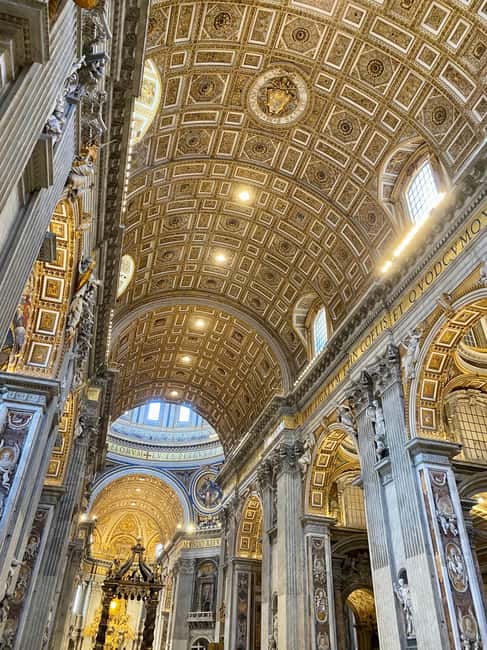
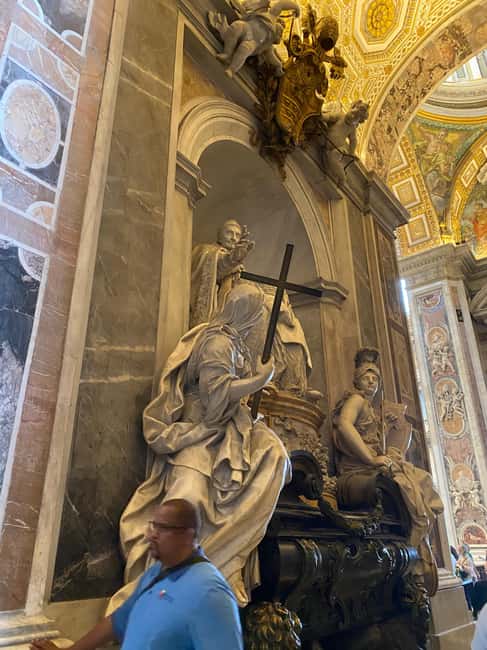
Inside the basilica, the scale is the first shock. Then the details get you. You’ll see signature works including Michelangelo’s Pietà and Bernini’s Baldachin. These are exactly the pieces you’d point to if you were trying to explain why the Renaissance and Baroque mattered to the Vatican’s identity.
One important timing detail: for Basilica tours at 3:00 PM or later, the format changes. Those later departures follow a self-guided Basilica visit with no guide inside. That doesn’t ruin the experience, but it does mean you’ll get less context once you’re inside the church itself.
There’s also skip-the-security-line entry to the basilica on select options. Even with that, expect crowds. St. Peter’s is one of the highest-demand interiors in Europe, so the experience is best when you’re ready to navigate with patience.

Dome views with elevator access and a final climb option
Many people assume the Dome is all about climbing. This option gives you more flexibility.
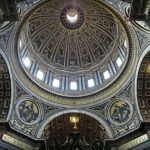
On the Dome-inclusive choice, you get pre-reserved Dome access with an elevator up to the Basilica terrace. That elevator access is a smart compromise: you get major views without turning your day into a cardio event.
If you select the version that includes a Dome climb, you’ll face a 320-step ascent with narrow spirals and long stretches. It’s not an easy stroll. It also comes with clear limits: it is not recommended for children under 6, pregnant travelers, people with reduced mobility, and anyone dealing with heart/respiratory issues, vertigo, claustrophobia, or low fitness.
What you’re aiming for is the view over Vatican City and Rome—the kind of panorama that makes you understand the Vatican as a whole complex, not just an art museum inside a church.
My practical advice: if you want the view but you’re even slightly unsure about comfort, go for the elevator terrace version. The payoff is still huge.
How long you’re really in motion (and what to wear)
The duration depends on your option, ranging from about 2 hours to 4 hours depending on whether you add Basilica and Dome. Even at the shorter end, you are moving through crowded spaces and spending time looking up and around, not just walking from point to point.
The tour also involves a lot of indoor time in compact areas. That means comfort matters more than you’d think:
- Wear comfortable shoes with real grip.
- Bring small bags only because there’s no cloakroom.
- Dress for rules: cover up to avoid last-minute stress.
The Vatican day can turn on a single detail—like what you wore to your shoes. Also, plan for the fact that closures can happen. The Sistine Chapel, St. Peter’s Basilica, or parts of the Museums can close or restrict access for events, security, or restoration, and the route adjusts.
Which guide style fits you best: big stories, big energy
A lot of what makes this tour shine is the guide. The difference between seeing art and understanding it is usually one person explaining why something is arranged that way, painted that way, or placed there for a reason.
You’ll notice the guide spotlight in the real-world experience. Names like Sonia (with an archaeology background), Claudia, Claudia/Roberto, Zara, Elena, Eugene, Henri, Henry, and Damiano come up again and again for being engaging, organized, and able to answer questions without rushing you out of the moment.
If you like humor and personality in your sightseeing, keep an eye out for guides who bring that energy—Roberto, for example, is remembered for mixing warmth, Vatican history, and jokes. If you’re traveling with teens, a guide who can hold attention matters; Zara is specifically praised for keeping teenagers engaged.
One caution: headsets are included, but audio quality can vary. A couple of visitors noted that the voice quality wasn’t great. If you’re sensitive to audio issues, sit where you can clearly hear the guide and don’t fall too far behind the group.
Who should book this (and who should skip it)
This is a strong fit if:
- You are a first-timer and want the main masterpieces without wasting half a day in lines.
- You like having context while you look, especially for Michelangelo.
- You want a day plan that works even when you’re short on time in Rome.
It may not be the best fit if:
- You need a very slow, independent pace. The experience is designed around a guided route and crowd flow.
- You want full wheelchair accessibility; the tour is listed as not suitable for wheelchair users.
- You’re tempted by the Dome climb but you fall into a risk category like claustrophobia, vertigo, or heart/respiratory concerns.
For families, the age rule to know is that children 6 and under cannot use audio receivers. If you’re traveling with younger kids, plan for that.
Should you book this Vatican Museums, Sistine Chapel & Basilica tour?
I’d book it if you want your Vatican visit to feel purposeful. The skip-the-line setup matters, but what really improves your odds is the route: Gallery of Maps, Tapestries, Pio-Clementino, then Sistine Chapel, then (if you choose) St. Peter’s Basilica through Bernini’s Royal Staircase, and finally a Dome view.
Choose the all-3-sites option plus Dome if you want the full arc—museum context, chapel impact, church scale, and then that sweeping city perspective at the end. Choose the 2-site version if you’re tired, short on time, or you’d rather save energy for later in Rome.
Before you say yes, do two things:
1) Make sure you can meet the dress code and bring photo ID.
2) Be ready to stay close to the group so you don’t lose audio and you don’t end up fighting crowd chaos.
If you’re the type who wants to walk into the Sistine Chapel with meaning in your head instead of just images in your phone, this is one of the most practical ways to do it in a single morning or afternoon.
FAQ
What does the tour include?
It includes licensed professional tour guiding, skip-the-ticket-line entry for the Vatican Museums and Sistine Chapel, and audio headsets. Some options also include skip-the-security-line entry for St. Peter’s Basilica and pre-reserved Dome access with elevator to the terrace.
How long is the tour?
Options range from about 2 hours for the Vatican Museums and Sistine Chapel (2 sites) up to about 3 hours for St. Peter’s Basilica (and then possibly a self-guided Dome visit afterward). Exact duration depends on the option you choose.
Do I get to visit St. Peter’s Basilica and the Dome?
You get St. Peter’s Basilica only if you choose the all-3-sites option. For the Dome, it’s available in select options, with elevator access to the terrace; some options also include a Dome climb afterward.
Is the skip-the-line entrance the same as skipping security?
No. Skip-the-line bypasses the ticket line, but all visitors still go through security.
What should I wear or bring?
Wear comfortable shoes and bring photo ID (passport or ID card; a copy is accepted). You must follow the dress code with shoulders and knees covered. No shorts, short skirts, or sleeveless shirts.
Is the tour wheelchair accessible?
The tour is listed as not suitable for wheelchair users.