REVIEW · LONDON
London: British Museum Guided Tour
Book on GetYourGuide →Operated by Z-Ocean Tours LLC · Bookable on GetYourGuide
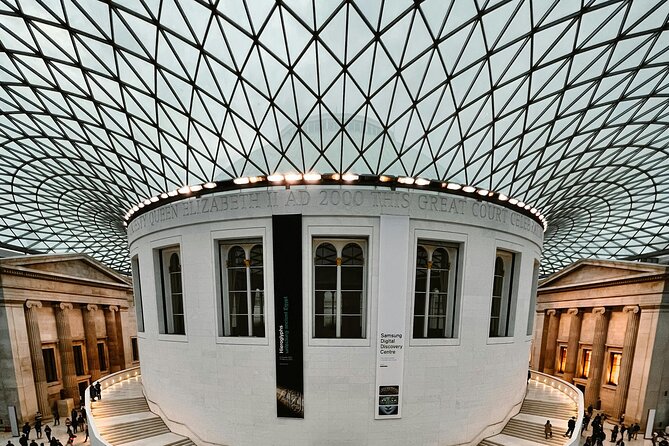
The British Museum can feel like chaos. This British Museum guided tour turns the big collections into a logical story, with expert-led focus on Mesopotamia and other standout artifacts. You get a guided route inside a museum that’s easy to outgrow on your own.
I especially liked how the guide work makes the visit feel manageable, not like you’re racing through rooms. In one small-group experience, Wesley tailored the tour to what my group wanted to see, and Diana stayed flexible about where to spend time. I also liked the discussion time, since you’re encouraged to ask questions instead of just watching the guide talk.
One possible drawback: the museum isn’t always fully available. One guide-led visit had parts of the museum closed, which can affect how much ground you cover in a short, 2-hour window.
In This Review
- Key highlights to look forward to
- Why a 2-Hour British Museum Tour Works in London
- Meeting at Starbucks Across from the Museum Entry
- Mesopotamia First: Building Your View of the Ancient World
- Major gallery moments: Rosetta Stone, Elgin Marbles, and temple details
- How expert-led discussion makes the museum feel smaller
- Small group size: up to 10 people and real flexibility
- What the $90 price covers (and where you get real value)
- Practical planning tips so the 2 hours don’t slip away
- Who should book this British Museum guided tour
- Should you book it
- FAQ
- Where does the tour meet?
- How long is the British Museum guided tour?
- Is the tour in English?
- How many people are in the group?
- What’s included in the price?
- Are pets allowed?
Key highlights to look forward to
- Small group size (up to 10 people) keeps the pace human and the Q&A real
- Mesopotamia-focused storytelling gives you a foundation for later periods across the museum
- Expert guides with customization can shift the emphasis to your interests (you’ll notice it quickly)
- Big-name artifacts get real context, not just dates and names
- Sometimes it can be very small; one booking ended up being just two people with the guide
- English-only tour means you’ll hear clear explanations and prompts for questions
Why a 2-Hour British Museum Tour Works in London
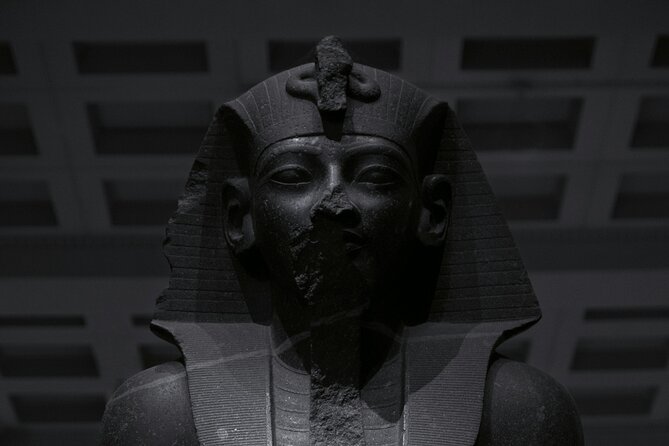
The British Museum is enormous, and even a motivated visit can turn into a random walk. I like this format because it’s short enough to stay focused, but long enough for meaning to land. After two hours, you should feel like you understand what you just saw and why it matters.
You’re not just getting a list of highlights. You’re getting a story framework that helps you connect Mesopotamia, ancient Egypt, Greece, and more. That’s the difference between seeing famous objects and actually reading them.
And with a small group cap of 10, the guide can adjust on the fly. If you’re curious about writing systems, beliefs, trade, or art style, you can steer the conversation without derailing the tour.
You can also read our reviews of more guided tours in London

Meeting at Starbucks Across from the Museum Entry
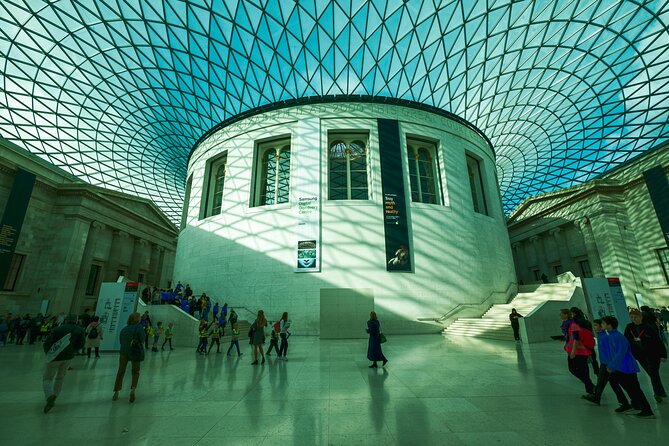
Your guide meets you in front of Starbucks, just across the museum entry. That’s a helpful detail because the British Museum area can be busy and confusing when you’re trying to find a specific tour group.
Plan to arrive a bit early and get eyes on the entrance area so you can connect with the guide quickly. If you’re traveling with someone else, stand together and confirm who you’re meeting with before you head inside.
The tour is run by Z-Ocean Tours LLC, and it’s conducted in English with a live guide. So once you link up, you should be able to understand what’s next without guessing.
Mesopotamia First: Building Your View of the Ancient World
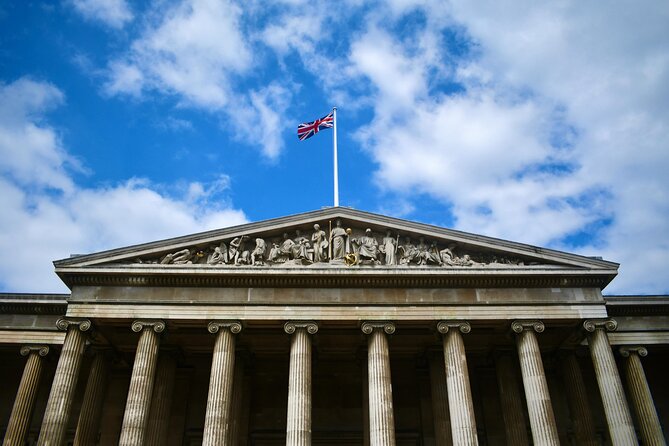
This tour’s anchor is Mesopotamia, often described as part of the cradle of civilization, and the guide uses artifacts to put that idea into concrete perspective. What I like here is that Mesopotamia isn’t treated as a separate topic you either know or don’t know. It becomes a starting point you can use to interpret later civilizations you might see inside the museum.
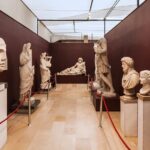
In practical terms, you’ll be walking through galleries while the guide ties object features to bigger themes: how people organized society, what mattered in daily life, and what ancient cultures recorded and valued. That context changes your eye. You stop looking at artifacts as isolated museum pieces and start noticing patterns.
If you’re a first-timer, this sequence is a big win. If you’ve been before, it still helps because you’re revisiting familiar material with a clearer lens.
Major gallery moments: Rosetta Stone, Elgin Marbles, and temple details
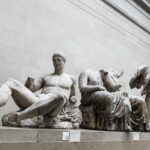
The British Museum’s best-known objects can be intimidating if you’ve only heard name-level facts. This tour helps by pairing recognition with explanation. The guide provides context and anecdotes around major highlights such as the Rosetta Stone and the Elgin Marbles, plus intricate details from the Rosalila Temple.
Even if you’ve seen these names online, you’ll get more out of them when someone connects the object to the human story around it. The Rosetta Stone isn’t just a famous stone; it’s a key to how languages and knowledge systems meet. The Elgin Marbles are more than a display of sculptures; they point you toward how Greek art carried meaning, politics, and religious life.
The Rosalila Temple details bring another layer: the way architecture and decoration express belief and identity. You’ll likely spend time looking at specific features rather than glancing and moving on. That slow attention is where the tour earns its value.
One more thing: guides can adapt. Diana was flexible about what you should visit and how the time gets used, and that makes a difference when you’re trying to see the right mix of famous and meaningful items within two hours.
How expert-led discussion makes the museum feel smaller
A strong museum guide does more than recite facts. The best guides here use conversation to make the material stick. You’re not just a spectator. You can ask questions and get answers in real time, and the guide can adjust explanations based on what you seem most interested in.
I like that the tour actively invites dialogue. It turns the visit into something like a guided class, but without the rigid, lecture-only feel. If you’re the type who learns best by asking, this format matches your brain.
The quality of the guide shows up in the details of how explanations are delivered. One booking praised Vincent, describing his expertise very directly, and another highlighted Wesley’s ability to tailor the tour to interest. Those aren’t small compliments. They signal that the guide is listening and reshaping the tour, not running a scripted script every time.
You can also read our reviews of more museum experiences in London




Small group size: up to 10 people and real flexibility
A cap of 10 participants changes the experience. With a bigger crowd, you often get stuck with whatever the guide can say at walking speed. With a smaller group, the guide can pause, check understanding, and answer follow-ups.
This is especially helpful at the British Museum, where the room-to-room transitions can make it hard to keep track. A smaller group keeps momentum without turning the tour into a sprint.
It can also get very small. One booking ended up being just the partner and I with a lovely guide who communicated in advance. That matters because you get more interaction, and you can ask more targeted questions without feeling like you’re holding everyone up.
If you want a guided experience but still like the idea of personal attention, this small group size is a sweet spot.
What the $90 price covers (and where you get real value)
At $90 per person for a 2-hour guided visit, you’re paying for three things: museum entry, the guide, and the ability to focus your time. Museum tickets alone are just part of the cost picture. The real value is how the guide turns a huge museum into a story you can follow.
This tour includes museum entry and a tour guide. It does not include food and drinks, and it does not include hotel pickup and drop-off. That’s normal for a central London museum experience, but it affects planning: you’ll want to eat before or after on your own schedule.
So the value equation looks like this:
- If you want a guided route that reduces decision fatigue, this is a strong use of your time.
- If you’re happy wandering and reading labels for hours, you might decide you don’t need paid guidance.
- If you want expert explanations around major artifacts, the guide component is where the money goes.
In my view, the best-case scenario is when you already have curiosity but no solid framework yet. That’s when the guided storytelling plus small-group interaction makes the price feel fair.
Practical planning tips so the 2 hours don’t slip away
Because the tour is only two hours, you’ll get the most if you treat it like a focused museum workout. You’ll be walking and listening, not stopping to read every plaque.
A few practical points that fit what you’re given:
- Meeting point is front of Starbucks across from the museum entry, so know that spot before you arrive.
- The tour is English, so if you’re bringing someone who needs another language, double-check options before you book.
- Pets are not allowed, so plan accordingly if you’re traveling with an animal companion.
If parts of the museum are closed, the guide may have to adjust what you can see. One experience had sections closed, and that lowered the rating even though the guide was still described as incredibly good. That’s the main realism check: the museum can change day to day.
Also keep in mind that there’s no food included. If you’re prone to getting hungry mid-museum, decide where you’ll eat after, so you don’t spend the tour mentally negotiating snacks.
Who should book this British Museum guided tour
This is ideal if you want:
- A less overwhelming visit to one of London’s biggest museums
- Expert help connecting Mesopotamia to later cultures
- A Q&A style tour where you can ask questions
- A small group experience rather than a crowd herding situation
You’ll likely enjoy it even more if you’re the kind of person who likes seeing big artifacts with context, especially around items like the Rosetta Stone and Elgin Marbles.
It may not be the best fit if:
- You want a completely self-paced museum day with lots of independent wandering
- You’re looking for hotel pickup (not included here)
- You’re traveling with pets (not allowed)
Should you book it
Book this tour if you want to walk into the British Museum with a plan and leave with clearer understanding. For first-timers, it prevents that common feeling of seeing everything and remembering almost nothing. For repeat visitors, it adds fresh framing, especially through the Mesopotamia starting point and the way major artifacts get explained.
The main reason to pause is the two-hour limit plus the possibility of closed areas on a given day. If you’re the type who needs to see every room and every gallery, a guided highlights approach may feel too tight.
If you’re choosing between self-guided wandering and paid guidance, I’d lean guided. This one is built for interaction, small-group attention, and context that helps you read the collection with your brain turned on.
FAQ
Where does the tour meet?
The guide meets you in front of Starbucks, just across the museum entry.
How long is the British Museum guided tour?
It lasts 2 hours.
Is the tour in English?
Yes. The live tour guide speaks English.
How many people are in the group?
It’s a small group limited to 10 participants.
What’s included in the price?
Museum entry and a tour guide are included.
Are pets allowed?
No, pets are not allowed on this tour.