
REVIEW · ATHENS
Athens: Acropolis & Acropolis Museum Ticket with Audio Guide
Book on GetYourGuide →Operated by Clio Muse Tours - Greece · Bookable on GetYourGuide
Your phone becomes a guide on the Acropolis. This ticket combo pairs pre-booked e-tickets for Acropolis Hill and the Acropolis Museum with offline audio guides you can listen to at your pace. It’s a great way to see the big names—Parthenon, Erechtheion, Propylaea—without being stuck to a group’s timing.
One practical catch: device compatibility matters. The audio guide app isn’t compatible with Windows phones, and older Apple devices (like iPhone 5/5C or older) won’t be supported, so check your phone before you go.
In This Review
- Key things to know before you buy
- What You Actually Get: E-Tickets Plus Three Offline Audio Guides
- Choosing Your Acropolis Hill Time Slot Without Losing the Day
- Acropolis Hill Walk: Propylaea, Temple of Nike, Erechtheion, Parthenon
- How the Audio Guides Work on Your Phone (and Why Offline Maps Help)
- Acropolis Museum: Where Athens Becomes Personal
- Crowds, Staff, and Ticket Validity: Small Issues to Watch
- Practicalities: Getting There, What to Bring, and What Not to Pack
- Languages, Timing, and Pacing Your 1.5 to 6 Hours
- Value Check: Is $78 Per Person Worth It?
- Who This Fits Best (and Who Might Want Something Else)
- Should You Book This Acropolis Ticket + Audio Guide?
- FAQ
- How do I choose my Acropolis Hill entry time slot?
- Do I need to use the audio guide only when I’m connected to the internet?
- What languages are available for the audio guide?
- What do I need to bring for the visit?
- How do I get to the Acropolis from the metro?
- Is this experience suitable for wheelchair users?
Key things to know before you buy

- Two e-tickets in one package: You get Acropolis Hill and the Acropolis Museum entry as electronic passes.
- A chosen Acropolis Hill time slot: Your entry starts with a selected slot, not random waiting.
- Three self-guided smartphone audio tours: You’ll have more than one way to understand what you’re seeing.
- Offline content with interactive maps: You can download and keep it on your phone during your visit.
- Museum + hill, in the right order: Start at Acropolis Hill, then go to the museum during operating hours.
- Audio in multiple languages: English, Greek, French, German, Spanish, and Italian are included.
What You Actually Get: E-Tickets Plus Three Offline Audio Guides

This experience is built around two simple moves: get you into the sites with electronic entry, then give you audio storytelling that keeps you learning as you walk. You’re not paying for a live guide here; you’re buying freedom plus structure, so you can pause, look up close, and come back to details when you want.
The package includes:
- Pre-booked Acropolis of Athens electronic entry ticket
- Pre-booked Acropolis Museum electronic entry ticket
- An Acropolis Hill time slot
- 3 smartphone audio guides (as an option you can select)
- Offline content with 2 offline interactive maps if you choose the audio guide option
That offline part is more important than it sounds. On Athens days, cell service can be hit-or-miss in pockets, and you don’t want your audio to stall when you’re standing in front of the Parthenon. Offline maps also help you keep your bearings instead of constantly checking your phone screen.
A few more Athens tours and experiences worth a look



Choosing Your Acropolis Hill Time Slot Without Losing the Day
You’ll pick your preferred Acropolis Hill entry time using the separate email you receive from the provider. The email includes a BookingPage URL, and you’re asked to make your binding selection there for smooth entry.
Why the time slot matters:
- Acropolis Hill has stairs, slopes, and viewpoints that feel different at different times of day.
- Museum entry happens after, and museum opening hours can shape your whole plan.
- A timed start helps you avoid the worst waiting and lets you get into the experience faster.
A good strategy is to treat Acropolis Hill as the headliner you do first. Do it when you have the energy to climb and walk, then shift to the calmer museum afterward. One more tip: if you’re someone who hates being rushed, selecting a time slot that gives you a buffer for wandering (not just getting in) makes the day feel easier.
Acropolis Hill Walk: Propylaea, Temple of Nike, Erechtheion, Parthenon

Acropolis Hill is where Athens turns into something you can see, not just read about. You’ll move through the monuments in a route that naturally builds excitement: monumental gates, temples, and then the big visual payoff at the Parthenon.
Here’s what you should expect to notice as the audio guides talk you through the sights:
- Propylaea: Start with the gateway energy. The audio helps you understand why these spaces were designed to feel like a ceremonial arrival.
- Temple of Nike: Even if you only glance at it briefly, it’s the kind of detail that becomes meaningful when you hear what it symbolized.
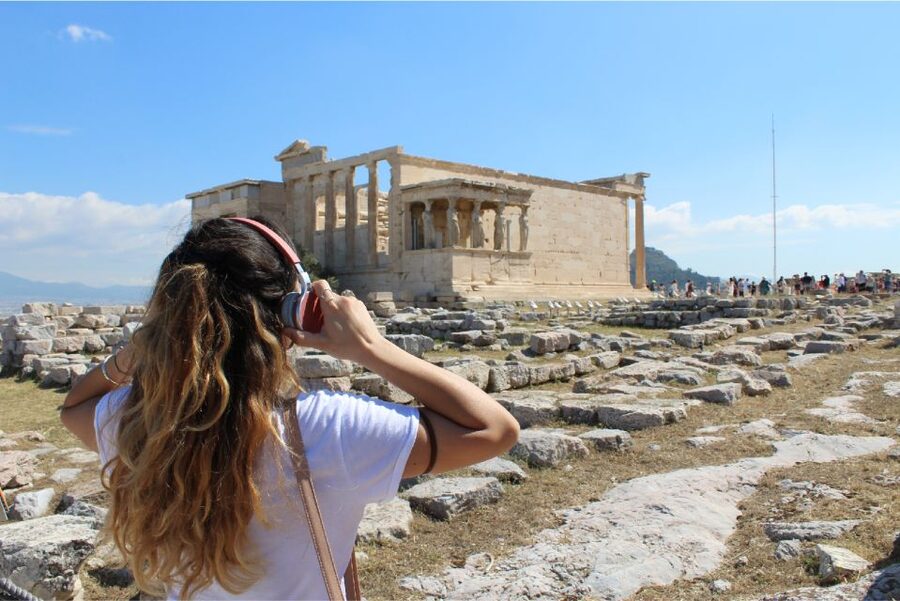
- Erechtheion: This is where the story turns from “building” to “place,” connected to worship and myth tied to Athens.
- Parthenon: When you finally stand before it, the audio context makes the viewpoint feel less like a photo stop and more like a historical moment.
The experience is self-paced, so you control how long you linger at each point. If you like repeating scenes, the format works well: you can return to what you missed by replaying parts. If you dislike long pauses, stick to the audio order and use the maps to keep moving.
One thing to keep in mind: this area is not designed for wheelchair users. If mobility access is a concern, plan around the fact that the site includes slopes and stairs.
How the Audio Guides Work on Your Phone (and Why Offline Maps Help)
The audio guides are smartphone-based and designed for you to download and use on-site. You’ll receive instructions to download the tickets and the audio app, then start listening once you’re there.
What I like about this setup for you:
- You can listen in your own rhythm. If a viewpoint grabs your attention, you won’t be forced to move on before you’re ready.
- You can rewind and replay sections when something clicks.
- The structure keeps you from staring at stone and wondering what you’re looking at.
Practical notes that can make or break the day:
- Bring headphones. You’ll be in windy outdoor spaces and you’ll want clear audio.
- Bring a charged smartphone. If your battery dies, your history tour stops.
- The audio guide has compatibility limits on older devices (and it’s not compatible with Windows phones). Make sure your phone model fits before you leave home.
The audio is available in multiple languages, so English speakers aren’t stuck, and if you’re traveling with mixed-language partners, it’s easier to keep everyone on the same schedule.
Acropolis Museum: Where Athens Becomes Personal

After Acropolis Hill, you’ll head to the Acropolis Museum during its operating hours. This is where the day shifts from big outdoor monuments to artifacts and explanations that make the city’s past feel human.
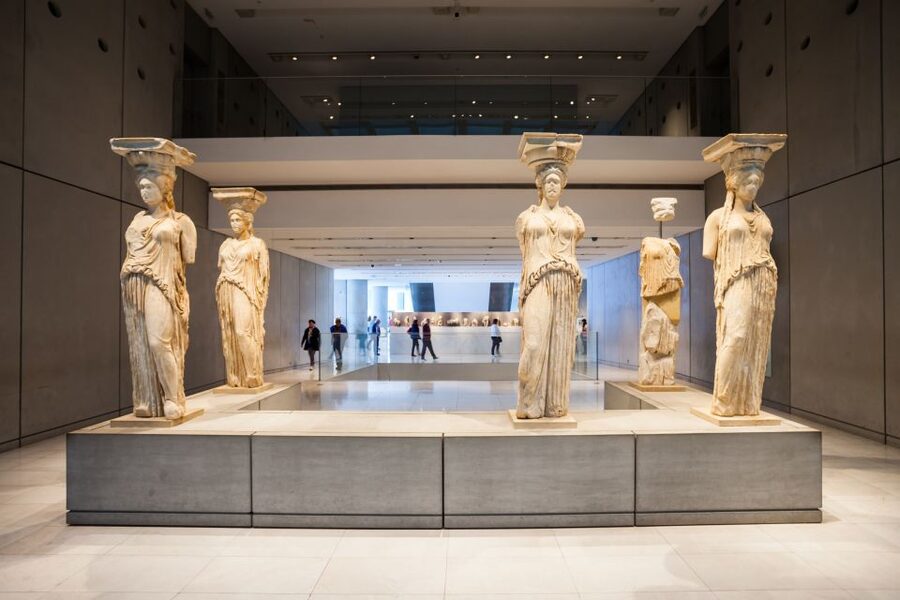
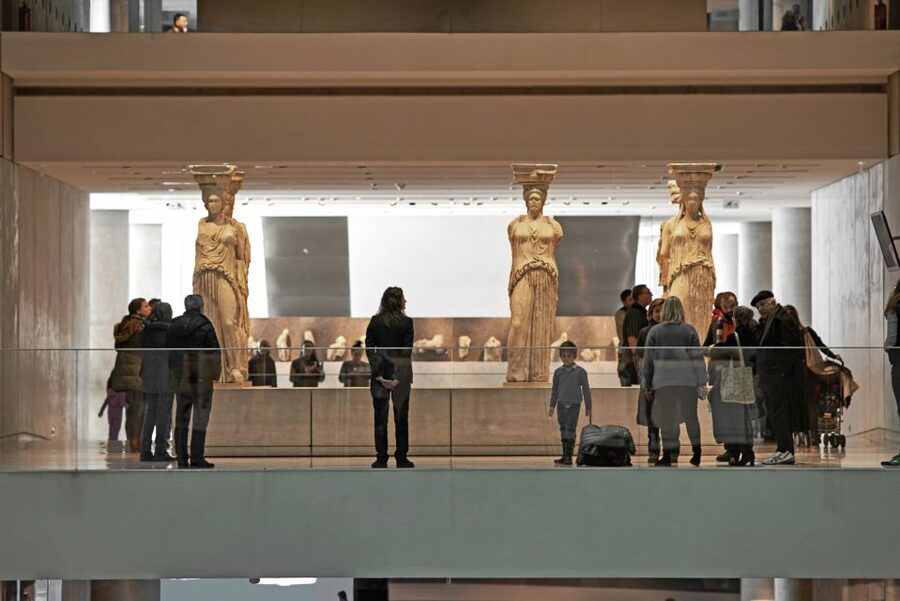
The museum audio portion focuses on how ancient Greek art evolved, and it’s narrated by professional voice actors. You’ll also get insights into daily life and rituals of ancient Athenians—exactly the kind of context that makes the hill feel less like background scenery.
A smart way to use the museum:
- Don’t try to see everything fast.
- Use the audio as your filter. Let it point you toward objects that match the story you heard outside.
- If something catches your eye, stay with it and follow the audio thread instead of hopping randomly between rooms.
This is also a place where having your own pace pays off. If you want to slow down and read labels, you can. If you’re more into visuals and listening, you can keep the audio running and let it do the heavy lifting.
You can also read our reviews of more guided tours in Athens





Crowds, Staff, and Ticket Validity: Small Issues to Watch

Pre-booked e-tickets are supposed to reduce friction, and that usually means easier entry. Still, be aware: the day can be affected by real-world human factors—how busy it is, and how staff handle questions at the entrance.
Here’s the balanced takeaway I’d give you:
- Expect that having your electronic tickets ready helps with getting through the main steps faster.
- If a staff member questions your ticket validity, stay calm and ask for confirmation at an information point.
One traveler experience also flagged that a few staff members can be unfriendly, especially at the museum entrance. If that happens, don’t let it derail your visit. Get what you need, then shift your focus back to the audio and the objects in front of you.
Practicalities: Getting There, What to Bring, and What Not to Pack

You’ll reach the Acropolis by exiting Acropolis metro station (Line 2), then walking along Dionysiou Areopagitou Street. The Theatre of Dionysus will be on your right, and that helps you orient yourself on the approach.
What to bring:
- Comfortable shoes (you’ll be on uneven stone and slopes)
- Headphones
- Charged smartphone
What isn’t allowed:
- Pets
- Baby strollers
- Luggage or large bags
If you’re visiting with kids, note that admission rules can be different by age and citizenship, and you may need to show ID or a passport at the line. EU citizens aged 0–25 get free admission but must wait in line to show documentation. Non-EU visitors aged 6–25 can receive a 50% discount (April 1 to Oct 31), again with a passport. For children, there are also specific rules for free or reduced admission, but the common pattern is the same: expect ID checks at the entrance.
Languages, Timing, and Pacing Your 1.5 to 6 Hours
The total duration is listed as 1.5 to 6 hours, depending on your pace and how long you spend at each site. That wide range is a feature, not a bug. If you want a quick, well-structured overview, you can move faster. If you like to read, stop often, and linger at views, you can stretch it.
A practical way to pace your visit:
- Spend enough time on Acropolis Hill to really absorb the main monuments in order.
- Save a relaxed block for the museum so you’re not sprinting between exhibits.
Also, audio choice is key. You’ll be listening through three smartphone audio guides, and each one helps you connect what you see outside with what you’ll understand inside. If you skip ahead too much, you lose some of that “aha” effect.
Value Check: Is $78 Per Person Worth It?

At $78 per person, you’re not just paying for entry. You’re paying for three forms of value working together:
- Two electronic entry tickets to major sites.
- A chosen Acropolis Hill time slot, which helps reduce wasted waiting.
- Three self-guided audio experiences, including offline maps, so you get context without paying for a live guide.
For solo travelers, this can be a very good deal because it replaces the cost of hiring a guide while still giving you direction. For couples or small groups, it’s also worth it because everyone can go at their own speed while still following the same story framework.
The main reason it might not be worth it is if you already plan to spend hours reading every label and you won’t use audio at all. But if you want to learn while walking—especially if you’re not sure what you’re looking at—this package tends to pay off.
Who This Fits Best (and Who Might Want Something Else)
This experience is ideal if you:
- Want self-guided freedom with built-in structure
- Like history, but prefer explanations that match what you’re actually seeing
- Travel with a group and want flexibility (no waiting for the slowest person to catch up)
- Want offline support so your phone isn’t a gamble
It’s less ideal if:
- You’re a wheelchair user, since it’s not suitable for wheelchair access
- Your device won’t support the audio app version you’re bringing
- You expect a live guide to answer spontaneous questions
For families, it can work well because it gives children (and adults) an organized way to look around without getting stuck in a tour rhythm. Just plan around the fact that strollers and luggage restrictions apply.
Should You Book This Acropolis Ticket + Audio Guide?
I think you should book this if you want a smart, independent way to see Athens’ top sites with real context. The e-tickets remove a lot of day-to-day friction, and the three offline audio guides turn the monuments and museum into a story you can follow at your own pace.
Skip it if you’re the type who only wants guided talking, or if you’re worried about your phone compatibility and don’t have time to troubleshoot downloads before you arrive. In that case, the audio features are the heart of the value, and without them, you’d be paying mostly for tickets.
If you do book, do two things before you go: charge your phone fully, and confirm your device supports the audio app. Then you’ll be free to focus on the best part—standing in front of the Propylaea and the Parthenon with a clear sense of why they mattered.
FAQ
How do I choose my Acropolis Hill entry time slot?
You’ll receive a separate email with a BookingPage URL. Use it on your My Booking Page to pick your preferred Acropolis Hill time slot, which is important for smooth entry.
Do I need to use the audio guide only when I’m connected to the internet?
No. The audio guide option includes offline content, including offline interactive maps, so you can download and use the materials during your visit.
What languages are available for the audio guide?
The audio guide is offered in English, Greek, French, German, Spanish, and Italian.
What do I need to bring for the visit?
Bring comfortable shoes, headphones, and a charged smartphone.
How do I get to the Acropolis from the metro?
Exit Acropolis metro station (Line 2) and head toward Dionysiou Areopagitou Street. Walk along it; the Theatre of Dionysus will be on your right.
Is this experience suitable for wheelchair users?
No. It’s listed as not suitable for wheelchair users.