REVIEW · ATHENS
Athens: Acropolis Museum and Acropolis Tour in the Afternoon
Book on GetYourGuide →Operated by ATHENS WALKING TOURS · Bookable on GetYourGuide
Afternoons are the secret to the Acropolis. This 4-hour tour pairs the Acropolis Museum with a guided walk up Acropolis Hill, so the monuments make sense fast. I especially like the skip-the-ticket-line setup and the museum-first flow that turns the Parthenon from a sight into a story. The one thing to plan for: you still have to deal with heat and security checks once you reach the hill, so come prepared with water and patience.
The best part is the pacing. You start later to avoid the harsh morning crush, you get headsets to hear your guide clearly, and you finish with that close, awe-inspiring Parthenon view.
In This Review
- Key Things I’d Plan Around
- How the Afternoon Timing Changes the Acropolis Visit
- Where You Meet and How the Tour Starts Smoothly
- Acropolis Museum: The Part That Makes the Parthenon Click
- The Short Café Break: Small Pause, Big Impact
- Entering Acropolis Hill from the South Slope
- Theatre of Dionysus: Where Stories Became Performances
- Odeon of Herodes Atticus: A Small Stop With a Big Sound Story
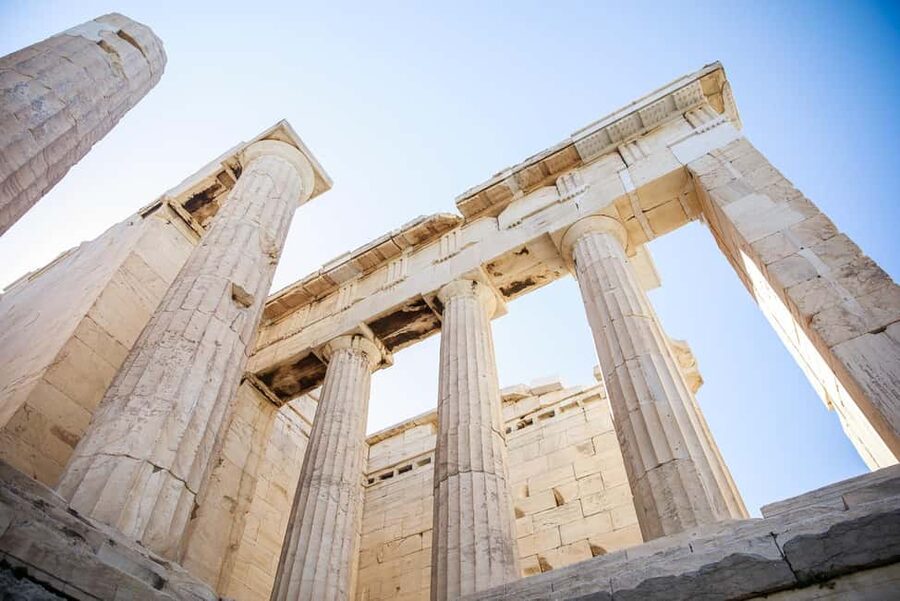
- Propylaea and Erechtheion: Gateways and Sacred Complications
- The Parthenon Finish: Seeing It Like a Local
- Temple of Athena Nike: The Details You Can Miss Without a Guide
- How Guides Like Vassilika, Apollo, Yiannis, and Margarita Affect Your Experience
- Comfort, Clothing, and Small Rules That Matter
- Value Check: Is $55 Worth It for the Acropolis Museum Plus Parthenon?
- Who Should Book This Afternoon Acropolis Tour (and Who Shouldn’t)
- Should You Book This Athens Acropolis Museum and Afternoon Parthenon Tour?
- FAQ
- Where do I meet the guide for this tour?
- How long is the tour, and when do we reach the Acropolis?
- Is skip-the-ticket-line included?
- Do I need to buy tickets in advance?
- What’s included in the price?
- What should I bring for an afternoon Acropolis visit?
- Are strollers, backpacks, or outside food allowed?
- Is the tour wheelchair friendly?
- What’s the cancellation policy?
Key Things I’d Plan Around
- Museum first for instant context: you get the artifacts and myths before you walk the hill.
- Skip-the-ticket-line + headsets: smoother entry and clearer explanations.
- A south-slope entry route: the guide leads you through the story of the monuments in order.
- Targeted stops you can actually name: Dionysus Theater, Herodes Atticus Odeon, Propylaea, Erechtheion, Temple of Athena Nike, and more.
- Parthenon finish: your last moments are focused on the structure itself, not a random end point.
How the Afternoon Timing Changes the Acropolis Visit

If you’ve only ever seen the Acropolis in early morning photos, this tour gives you a different (and often more comfortable) angle. You’re starting from the Acropolis Museum, then moving to the archaeological site about 90 minutes after the tour begins. That means you’re not fighting the earliest crowd peaks, and you can pick a late-afternoon style slot that feels more human.
I like that the tour is built around timing and understanding, not just checking boxes. The guide helps you connect what you see in the museum—statues, pottery, architectural pieces, and the famous Parthenon Marbles—to what you’ll recognize on the hill. And when you reach the Parthenon, you’re not staring at it with blank eyes; you’re looking at it with context.
One practical caution: afternoon can still mean sun and waiting. The tour runs rain or shine, and the Acropolis area includes airport-style security checks, with possible waits of 30+ minutes during peak season. You’ll want to treat this like a real outdoor site visit, not a casual stroll.
You can also read our reviews of more museum experiences in Athens


Where You Meet and How the Tour Starts Smoothly

You meet at Dionyssiou Areopagitou 3, looking for the orange sign that says Athens Walking Tours. It’s at the start of the pedestrian walkway that leads up toward the Acropolis from Hadrian’s Arch, near Adrian’s Arch/Syngrou (also written as Siggrou or Syngrou).
This matters because the tour involves time-sensitive entry. Acropolis access has strict entry times, and there’s no waiting for latecomers. If you’re even a little behind, you can lose your spot. So I’d plan to arrive early, not at the edge.
Also, the Acropolis visit depends on whether you selected the option that includes pre-booked entry tickets. If you did not select that option, you must buy tickets yourself from the official sites. The good news is the tour makes clear what you need and when you need it.
Acropolis Museum: The Part That Makes the Parthenon Click
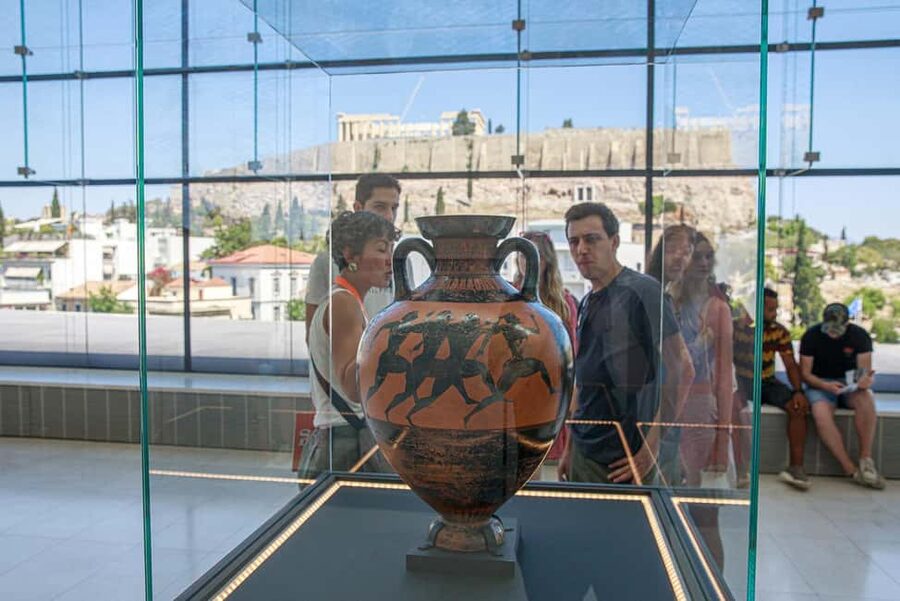
The tour begins at the Acropolis Museum, a modern building positioned so you can look directly toward the archaeological site. Expect a guided museum walkthrough (about 75 minutes) that covers multiple eras: Archaic, Classical, Hellenistic, and Roman. You also get mythology woven into the explanations, so the stories behind the statues and structures feel less like trivia and more like the reason these monuments mattered.
Here’s what I’d pay attention to in the museum, even if you normally rush through museums. The highlight is the Parthenon Marbles, plus architectural remnants, statues, pottery, and other artifacts that show how the Acropolis was designed and used over time. Standing in the museum first helps you spot themes on the hill later: power, religion, civic pride, and the way art and architecture were meant to communicate all of that.
You’ll also likely hear how Greek myths tie into the monuments’ meaning. And yes, you’re looking at real objects here, not just reconstructions. That makes the later outdoor stops more satisfying.
Possible drawback: the museum time is structured. One customer noted they wanted more wandering time inside and didn’t get it. So if you’re the type who likes to linger for an hour over one display, this may feel a bit scheduled. Still, for most people, the payoff is that the hill visit won’t feel like random sightseeing.
The Short Café Break: Small Pause, Big Impact
After the museum, you get about 10 minutes at a local café. There’s no food or drink included, so this is a quick reset rather than a meal. I’d use it for water, a snack if you brought cash, and a bathroom stop if you need one.
This micro-break is useful because you’re about to shift from a mostly indoor pace to outdoor walking on stone steps. A little hydration and planning makes the next section feel easier.
Also, keep your bag situation in mind. Backpacks aren’t allowed, and you’ll want comfortable shoes—this is not the time for fashion sneakers that kill your feet.
Entering Acropolis Hill from the South Slope
Once you’re ready for the hill (starting about 90 minutes after the tour begins), you enter through the south slope. This is where the guide really earns their pay: the route is planned so you hear the history and mythology in sequence, rather than you jumping around and hoping it all sticks.
You’ll pass several major points along the way, with short guided stops and walking between them. The total time on the Acropolis portion is broken into focused segments (roughly 75 minutes across stops on the itinerary), so you’ll see a lot without spending half the day wandering.
What I like about this approach is that it protects your attention. The hill is busy and loud in peak season, and it’s easy to get overwhelmed. With headsets, your guide’s voice stays clear, and you can follow the story instead of getting lost in the crowd.





Theatre of Dionysus: Where Stories Became Performances
One of the first big monuments on the route is the Theatre of Dionysus. Expect a guided look (about 15 minutes) with explanations that go beyond architecture.
This is also where the tour highlights one of the most interesting themes: the origins of theater. If you’ve ever wondered why Greek tragedies feel so structured, this is the kind of stop where the background helps. You’ll also hear about divine power plays—there’s a story element tied to how gods were connected to the protection of Athens.
If you love myth but find it hard to picture, this stop helps you attach names and legends to actual stone spaces. It’s not just mythology as text; it’s mythology as built environment.
Odeon of Herodes Atticus: A Small Stop With a Big Sound Story

Next is the Odeon of Herodes Atticus (guided time about 5 minutes). It’s a shorter visit, but it’s a key monument because it connects to the idea of performance in ancient Athens.
Even in a brief stop, you can usually spot the relationship between venue design and audience experience: how seating, angles, and the open-air setting would shape what people heard and felt. Your guide’s job is to tie those observations to the bigger cultural story.
And yes, you’ll probably end up looking around more than you expected, because once you understand what the space was for, it starts to feel alive.
Propylaea and Erechtheion: Gateways and Sacred Complications
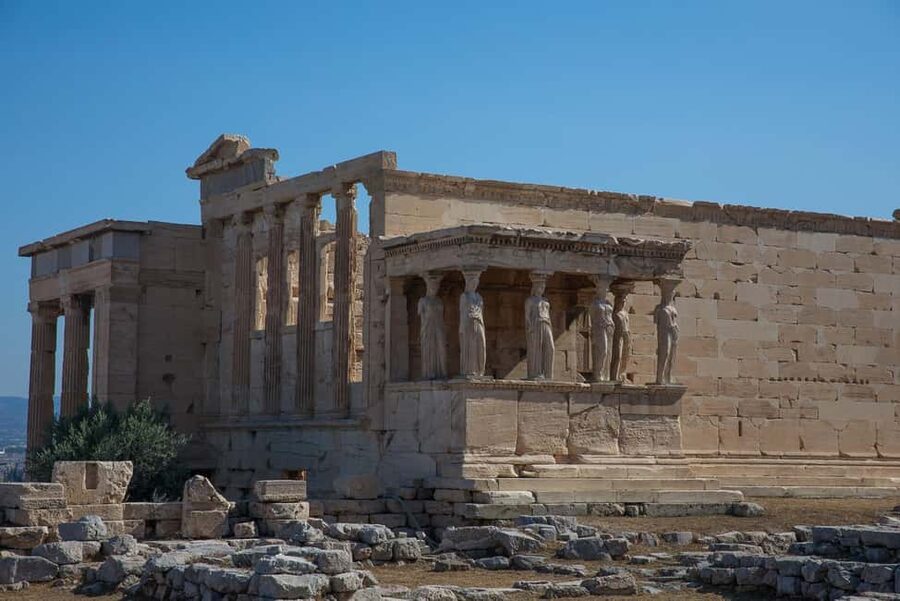
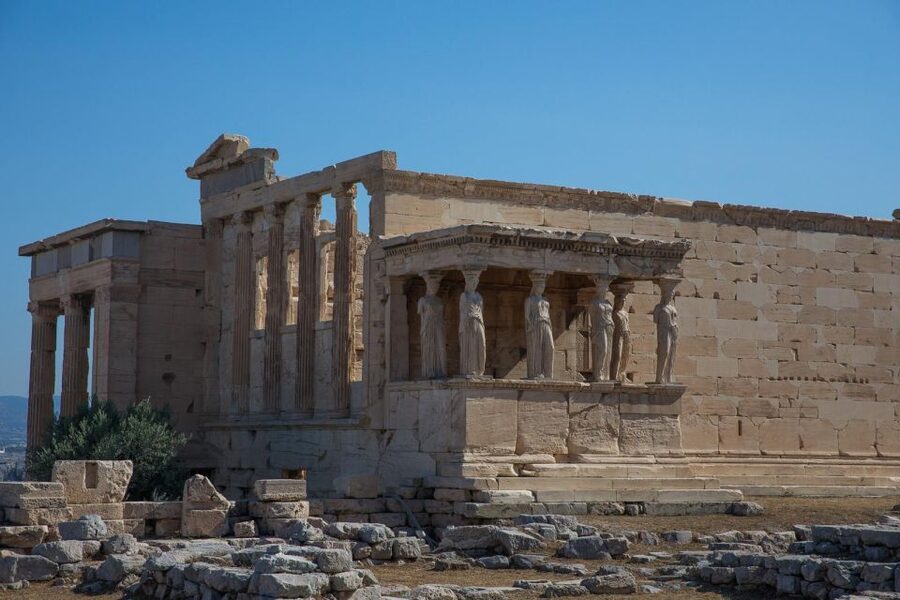
The route continues to Propylaea (about 5 minutes) and then Erechtheion (about 10 minutes). These stops help you understand that the Acropolis wasn’t one single temple-like object—it was a complex sacred area with multiple purposes and identities.
Propylaea works like a formal threshold, and Erechtheion is where you get a more intricate feel for the religious landscape. You’ll hear the mythology tied to different sanctuaries and why specific spots mattered.
A practical note: crowds can make it hard to get your own rhythm here. One visitor noted it could be challenging to keep pace in busier areas, so if you’re someone who moves slowly, plan to keep your group pace and don’t count on lingering at every detail.
The Parthenon Finish: Seeing It Like a Local
The tour ends at the Parthenon with a guided segment and time to walk around and take it in (about 20 minutes). This is the payoff moment: you’re meant to get those close, focused views of the structure and feel why it’s so central to the story of ancient Athens.
If the museum helped you build context, the Parthenon should now feel specific. The guide ties details to what you saw earlier—decorative elements, architectural logic, and the myth connections that explain why this space was so important. You’re not just photographing; you’re interpreting.
I’d also pay attention to your timing on the hill itself. Acropolis entry is strict, security checks can be slow, and the later you arrive, the more likely you’ll be squeezed by the clock. When it’s done right, that Parthenon finish feels calm and meaningful.
Temple of Athena Nike: The Details You Can Miss Without a Guide
Near the end of the route, you’ll stop at the Temple of Athena Nike (about 5 minutes). This is the kind of site where the structure’s meaning is hard to catch quickly if you’re on your own.
Even with limited time, a good guide helps you look at the right elements and connect them to Athena as a city protector. This is where mythology and civic identity overlap, and you start to see Athens as a place where religion, art, and politics all shared the same walls.
How Guides Like Vassilika, Apollo, Yiannis, and Margarita Affect Your Experience
The guide can make or break a tour like this. Several guides on this route—like Vassilika, Apollo, Yiannis (John), Ellenica, Margarita, and Jordan—are praised for going beyond just naming monuments.
What you’re hoping for is exactly what these guides are described for: clear storytelling that links Greek mythology and the monuments to everyday Athens, not just dates and terms. One solo traveler also noted a guide was helpful about taking photos, which is a real practical benefit when you’re traveling alone.
You can’t choose your guide here, but you can choose your expectation: treat the tour as guided interpretation, not a lecture. If you ask questions and keep pace, you’ll get more out of every stop.
Comfort, Clothing, and Small Rules That Matter
This is an outdoor-walk-with-museum day, so comfort is not optional. Bring comfortable shoes, hat, sunscreen, camera, and water. Weather-appropriate clothing matters because you’re moving between indoor museum space and exposed stone paths.
Also note what’s not allowed: baby strollers, food and drinks, and backpacks. If you tend to travel light with just a small day bag, you’ll likely be fine. If you like carrying a big bag, rethink it.
Headsets are included, which is a huge help when crowds press in. You won’t have to play guess-the-words with a guide across a busy walkway.
Value Check: Is $55 Worth It for the Acropolis Museum Plus Parthenon?
At $55 per person for a 4-hour guided experience, the value depends on what you’d otherwise do.
If you’re visiting solo or with limited time, this tour often feels like a smart shortcut because you get:
- a tour guide to connect artifacts and monuments
- skip-the-ticket-line service
- headsets
- an Athens map and a guidebook with recommendations
- and (if you selected it) pre-booked entry tickets
Where you should be careful: if you didn’t select the ticket-inclusive option, you’ll still need to buy official entry tickets yourself. Also, the tour fee is non-refundable, and missing the ticket requirement means you can’t join.
For me, the biggest value is the order: museum first, hill second. That structure turns the outdoor climb into a guided “read,” where each monument has a reason. If you go DIY without that, you can still see everything—but you’ll miss the connections that make the Parthenon land emotionally.
Who Should Book This Afternoon Acropolis Tour (and Who Shouldn’t)
This tour fits you best if:
- you want to beat morning crowds and still see the major Acropolis sights
- you care about meaning, not just photos
- you prefer a guided pace with headsets and clear stops
- you can walk stairs and uneven surfaces for the duration
It may not suit you if you have mobility limitations. This experience is listed as not suitable for people with mobility impairments or wheelchair users.
And if you’re the type who wants long solo museum wandering time, know that the museum portion is guided and timed. You’ll get context, but not full free-roam.
Should You Book This Athens Acropolis Museum and Afternoon Parthenon Tour?
Yes—if your goal is to understand the Acropolis fast and enjoy it without the worst crowd crush. The museum-first plan, the skip-the-ticket-line service, and the guided sequence through the hill are a strong combination for $55.
Book it especially if you like mythology and architecture and want your questions answered in the moment. Just go in prepared for the real-world logistics: security checks, strict entry times, and outdoor walking with heat.
If you want a totally DIY experience where you roam at your own pace for hours, this might feel a bit structured. But if you want a guided, efficient, and meaningful afternoon, this is a very practical way to do Athens at a human speed.
FAQ
Where do I meet the guide for this tour?
You meet at Dionyssiou Areopagitou 3. Look for the orange sign displaying Athens Walking Tours at the start of the pedestrian walkway leading toward the Acropolis from Hadrian’s Arch (near Syngrou/Siggrou).
How long is the tour, and when do we reach the Acropolis?
The tour lasts 4 hours. The Acropolis is accessed about 90 minutes after the tour starts.
Is skip-the-ticket-line included?
Yes. The tour includes skip-the-ticket-line service.
Do I need to buy tickets in advance?
If you selected the option with tickets, you’re covered. If not, you must purchase admission tickets yourself from official sites for the correct date, time, and category. Buy tickets before booking the tour since the tour fee is non-refundable.
What’s included in the price?
Included: the tour guide, skip-the-ticket-line service, headsets, an Athens guidebook with recommendations, an Athens map, and (if you chose that option) pre-booked entry tickets.
What should I bring for an afternoon Acropolis visit?
Bring comfortable shoes, a hat, camera, sunscreen, and water, plus weather-appropriate clothing.
Are strollers, backpacks, or outside food allowed?
No. Baby strollers and backpacks aren’t allowed, and food and drinks aren’t allowed on the tour.
Is the tour wheelchair friendly?
No. It’s not suitable for people with mobility impairments or wheelchair users.
What’s the cancellation policy?
Free cancellation is available up to 24 hours in advance for a full refund.