REVIEW · ATHENS
Acropolis monuments & Parthenon Walking Tour with Optional Acropolis Museum
Book on Viator →Operated by Athens Walks Tour Company · Bookable on Viator
The Acropolis hits you fast. This 4-hour Acropolis & Parthenon walking tour turns a pile of stones into clear stories, with small groups (under 20) and skip-the-line help. If you like learning how the buildings worked—plus seeing the Parthenon from the right angles—this format is built for you.
One thing to weigh: it involves standing and steep climbs on the hill, so you’ll want moderate fitness and comfy shoes.
In This Review
- Key details worth clocking
- Meeting at Porinou 5: How this tour stays manageable
- Theatre of Dionysus and Herod’s Odeon: The Acropolis isn’t just temples
- Propylaea and Temple of Athena Nike: The details you’ll miss alone
- Parthenon time: What the “icon” looks like when it’s explained
- Erechtheion and the caryatids: Small figures with big presence
- Acropolis entry and ticket reality: The tour price vs. the real cost
- Optional Acropolis Museum: When the stories finally click
- What the small-group format actually changes
- Timing, weather, and your comfort plan
- Who should book this Acropolis & Parthenon tour (and who might pass)
- Should you book this tour?
- FAQ
- How long is the Acropolis and Parthenon walking tour?
- Where does the tour start and where does it end?
- Is the tour offered in English?
- Is the group size limited?
- Do I need to buy entrance tickets separately?
- How much are the entrance fees?
- Are there age discounts for tickets?
- What happens if the weather is bad?
Key details worth clocking
- Under-20 group size keeps questions from getting lost in the noise
- Skip-the-line is available via ticketed options
- Whisper-guide system/headphones makes it easier to hear on the move
- Parthenon + Athena Nike + Erechtheion get real, step-by-step context
- Optional Acropolis Museum helps you understand what you’re looking at on the hill
- Tour times vary so you can match your day in Athens
Meeting at Porinou 5: How this tour stays manageable

This tour starts near the Acropolis at Porinou 5, Athina 117 42. The early meeting matters here: the hill can get crowded, and starting smart helps you see more without rushing. You’ll also have a practical check-in setup close to the area, and there’s WiFi near the meeting point, which is handy if you’re syncing plans.
Group size is capped at 20 travelers, and the guides use a whisper tour system for bigger groups (and microphones/headphones when needed). That’s a big deal at the Acropolis, where wind, footsteps, and constant movement can make “self-guided listening” frustrating.
If you’re the type who gets overwhelmed by too many sites at once, the pacing is a plus. It’s not a sprint through the highlights; it’s a focused walk that keeps you moving while still giving you time to actually look.
You can also read our reviews of more walking tours in Athens

Theatre of Dionysus and Herod’s Odeon: The Acropolis isn’t just temples

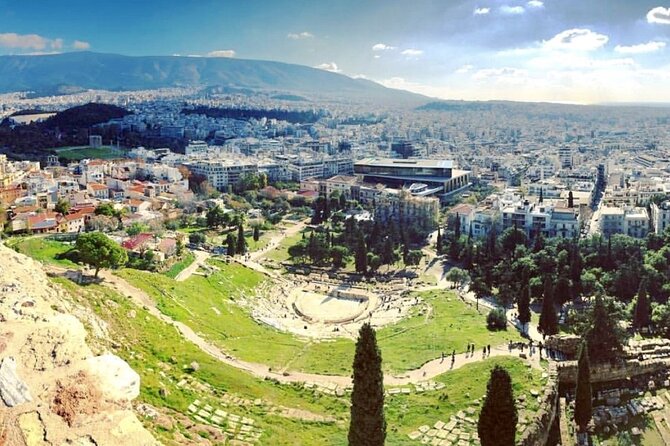
The first stops keep you from thinking the Acropolis is only about the Parthenon. You start with the Theatre of Dionysus Eleuthereus, which sits on the south slope and was tied to the City Dionysia. Even if theatre isn’t your main interest, it’s a great way to understand how Greek culture mixed art, religion, and civic life.
Next comes the Herod Atticus Odeon, a Roman stone theatre completed in 161 AD and renovated in 1950. This stop helps you see the Acropolis as layered history, not a single time capsule. One minute you’re on a Greek stage tradition; the next, you’re looking at later reuse of the same dramatic hilltop setting.
These early areas also act like a warm-up. It’s less exhausting than jumping straight to the most famous views, and it builds momentum for the bigger climbs ahead.
Propylaea and Temple of Athena Nike: The details you’ll miss alone
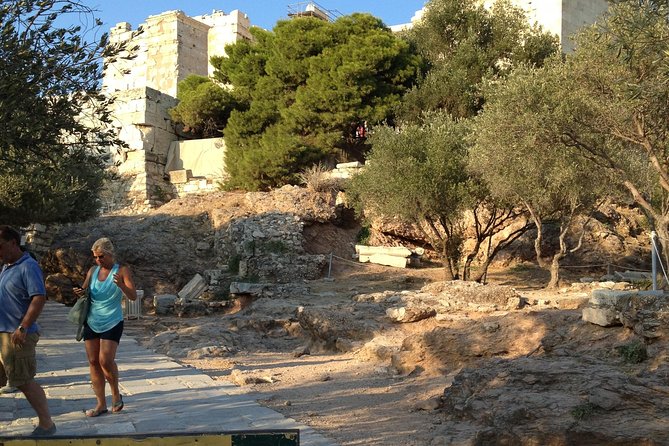
As you move into the main entry zone, the Propylaea (the grand gateway) becomes your first real “oh wow” moment. It’s basically the architectural way of saying you’ve entered a special world. With a guide, you’re not just walking under impressive arches—you’re learning what the layout signals and why it’s designed the way it is.
Then you hit the Temple of Athena Nike, often described as the Temple of Victory. This one is famous for being the earliest fully Ionic temple on the Acropolis, and the setting helps you appreciate the style. The Ionic look is subtle until someone points out what makes it different, and then it suddenly becomes visible instead of just decorative.
A practical note: these stops can include more standing than you expect, and there’s not much “sit down and relax” time. If you know you get cranky in heat or wind, plan to pace yourself and take short photo breaks.
Parthenon time: What the “icon” looks like when it’s explained

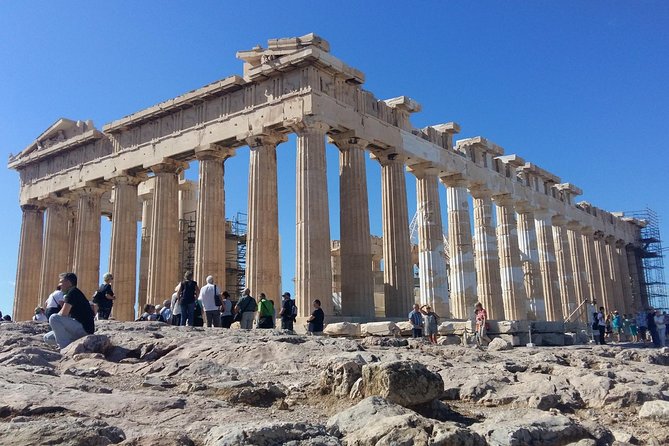
The big centerpiece is the Parthenon, dedicated to Athena. Even if you’ve seen it a hundred times on screens, the scale hits differently on the hilltop. The guide angle is what makes the visit work: instead of “look at columns,” you’re getting a clearer picture of what you’re seeing and how the ruins relate to one another.
The Parthenon stop is where many first-time visitors realize the value of a guide. You don’t need a lecture marathon—just the right framing. A good guide helps you notice why specific parts mattered, what survived, and what changes over centuries can do to the way the site reads.
This is also one of the most photo-friendly parts of the day. You’ll want to keep your timing flexible—stand where the guide directs for the best “whole monument” view, then do your own shots once the context lands.
Erechtheion and the caryatids: Small figures with big presence

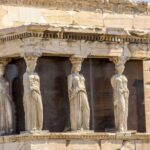
Next is the Erechtheion, famous for its caryatid statues. These aren’t just pretty ornaments; they’re a key reason this building feels human even though everything around you screams stone and empire.
This stop is short, but that can be a good thing. The Erechtheion is visually dense in a compact space, so if you’ve only got limited time, having someone guide you to the features that matter saves you from wandering in circles.
If you love sculpture, detail, or symbolism, this is one of the more rewarding stops on the whole hill. And if you don’t care about Greek myth, the guide stories still help you see why people would stand here and feel something.
You can also read our reviews of more museum experiences in Athens





Acropolis entry and ticket reality: The tour price vs. the real cost
The tour is listed at $42.33 per person for the walking experience, about 4 hours total. But here’s the practical truth: the Acropolis has an entrance fee unless you choose the option that includes tickets. The data shows Acropolis entry runs €30 per adult from April 2025 and €10 per adult from November to March. For the Acropolis Museum, €20 per adult from April 2025 is listed.
If you don’t select the ticketed upgrade, you’ll need to purchase tickets online in advance through the official website. That’s a small step, but it matters because you don’t want your day stuck at the gate. The good news: the tour format supports you with skip-the-line when tickets are included.
Age and discount notes are also worth reading closely. EU citizens under 25 have free entrance; non-EU under 25 get a 50% discount. For anyone under 25, you’ll need ID or a passport to verify your birth date at the entrance gates. And for under 18, bring ID or a passport to help reduce ticket pricing.
Value check: if you plan to visit the Parthenon area anyway and you don’t want to guess your way through it, adding the guide plus the right ticket option is often the simplest way to get your money’s worth.
Optional Acropolis Museum: When the stories finally click
If you choose the upgrade with the Acropolis Museum, the tour continues after the hill. The museum time is about 1 hour, focused on the pieces that connect directly to what you saw above.
This matters because the museum doesn’t just repeat what’s outside. It helps you understand the “why” behind the art—especially sculptural elements that can be hard to interpret once you’re standing far from the original surfaces. One of the strongest reasons people love the museum option is that it turns architecture into something more legible: materials, design choices, and cultural meaning all become clearer.
There’s also a practical benefit: many people find it easier to slow down indoors after time on the hill. You still move through galleries, but you’re not fighting steep steps and glare at every turn.
What the small-group format actually changes

This tour caps at 20 and uses audio support so you can hear the guide without craning your neck. That affects more than comfort—it changes your learning. With a smaller group, your guide can keep you oriented and answer questions instead of racing to cover everything.
In real terms, you get a smoother experience when timing gets tight. The tour also offers multiple convenient start times, so you can pick one that fits your energy level and weather.
Guides on this kind of tour can vary a bit, but the best experiences tend to share the same traits: clear explanations, good humor, and a way of connecting ruins to real human stories. Names that have stood out in this tour’s history include Lisa, Anna, Aidli, John D, Dorina, Afroditi Gianni, Dionysus, and Helen. That variety is a good sign—this isn’t a one-note script.
Timing, weather, and your comfort plan
The tour requires good weather. If conditions are poor and the tour is canceled, you’ll be offered a different date or a full refund.
The schedule is also about walking pace and stops. Even when the guide keeps things moving, you should expect a lot of standing. The hill has steep sections, and the route includes climbs and uneven stone paths. You don’t need to be an athlete, but you do need to be comfortable with moderate effort.
What to bring is simple and non-negotiable: comfortable shoes, hat, and sun cream. If you’re sensitive to wind, consider sunglasses too—Acropolis light can be harsh, and the hill catches air.
Who should book this Acropolis & Parthenon tour (and who might pass)
Book it if you’re a first-time Athens visitor who wants the Acropolis experience done right without playing “archaeology detective” all day. It’s also a great fit if you care about how architecture works, enjoy Greek mythology as storytelling (not just names), or want that guided context so the site makes sense fast.
You might consider skipping (or at least thinking hard about your timing) if you hate steep climbs, need lots of seating, or prefer total freedom over structured stops. This tour is built for movement and listening, so if that’s not your style, you’ll want a lighter day—or choose a museum-focused option instead.
Should you book this tour?
Yes, if your goal is to make the Acropolis meaningful in a short time. The combo of a professional licensed guide, small groups, and a route that connects Propylaea, Athena Nike, the Parthenon, and the Erechtheion is the main reason this works.
And if you’re even slightly curious about what the hill’s sculptures and artifacts look like up close, the Acropolis Museum upgrade is the smart add-on. It’s where many people finish the day feeling like they finally understand what they were seeing.
FAQ
How long is the Acropolis and Parthenon walking tour?
It runs about 4 hours in total.
Where does the tour start and where does it end?
The meeting point is Porinou 5, Athina 117 42, Greece. The tour ends at the Acropolis Museum if you book the museum option; otherwise it ends at the Acropolis monuments.
Is the tour offered in English?
Yes, it is offered in English.
Is the group size limited?
Yes. The tour has a maximum of 20 travelers per guide.
Do I need to buy entrance tickets separately?
It depends on the option you select. If you book with entrance tickets, they’re included. If you book without them, you need to purchase tickets online in advance (Acropolis and/or Acropolis Museum, depending on your choice).
How much are the entrance fees?
For the Acropolis, the listed fees are €30 per adult from April 2025 and €10 per adult from November to March. For the Acropolis Museum, the listed fee is €20 per adult from April 2025.
Are there age discounts for tickets?
Yes. EU citizens under 25 have free entrance. Others under 25 have a 50% discount. You’ll need to bring ID or a passport for verification at the entrance gates.
What happens if the weather is bad?
This experience requires good weather. If it’s canceled due to poor weather, you’ll be offered a different date or a full refund.