REVIEW · ATHENS
Athens All Included: Acropolis and Museum Guided Tour with Ticket
Book on Viator →Operated by Walks In Europe · Bookable on Viator
A hilltop of myths, and real-world timing. This small-group tour pairs skip-the-line entry with a guided route that actually helps you understand what you’re looking at. I especially liked the way the guide kept the pace tight (so you don’t lose the day to crowds) and the Acropolis Museum portion, with its guided highlights and then time to roam. One watch-out: you’ll have limited unscripted time on the Acropolis itself, so plan to take your photos with intent, not hope.
Guides here can make the big stones feel personal. I’ve seen guides like Eva and Antigone described as passionate story-tellers who answer questions without steamrolling the group. Still, if you’re the type who wants long stretches of silent wandering on your own, you may find the guided info level a bit much.
In This Review
- Key Points at a Glance
- Skip the Lines, Then Understand What You’re Seeing
- Meeting at the Acropolis Metro: Timing Controls Everything
- The Acropolis Walk: Parthenon, Propylaea, and the Big-Name Stops
- The South Exit Route: Views, Theater, and the Sense of Procession
- North Side Temples and the Break That Keeps You Fresh
- Acropolis Museum: Glass Floors and the Elgin Marbles Thread
- Price and Value: What You’re Really Buying
- The Human Factor: Why the Guide Makes or Breaks It
- Who This Tour Suits Best
- Should You Book This Acropolis + Museum Tour?
- FAQ
- FAQ
- How long is the tour?
- What’s included in the price?
- Do I need to arrange transportation to the sites?
- Where do we meet?
- Is this tour offered in English?
- Is skipping the line possible with this tour?
- How big is the group?
- Are strollers allowed?
- Are young children allowed?
- What should I know about timing and late arrival?
- Can I cancel for a refund?
Key Points at a Glance

- Skip-the-line, timed admission for the Acropolis and the museum, which helps you beat the worst of the queues
- Small group (max 20) with headsets so you can actually hear the guide while walking and climbing
- A smart pacing plan that includes time for photos and a short break before the museum
- Route variety: you’ll cover major monuments plus sights on the south and north sides that many people miss
- Museum highlights that connect directly to what you just saw above, including the Elgin Marbles story
- Limited free time on the Acropolis, so bring your photo plan with you
Skip the Lines, Then Understand What You’re Seeing
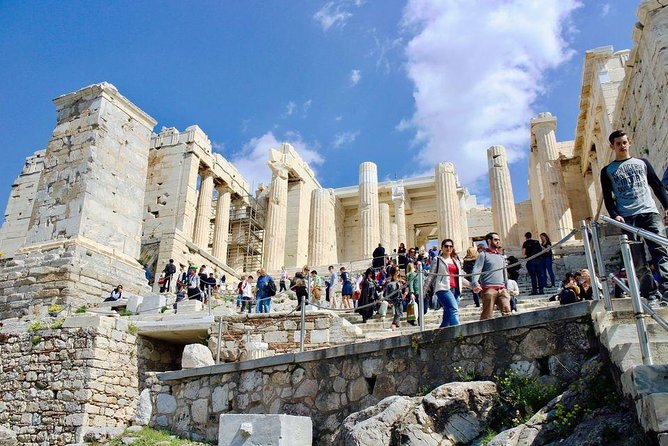
The Acropolis is crowded in a way that’s hard to explain until you’re standing at the foot of it. This tour helps you avoid the worst of that chaos with pre-reserved admission and a guided flow that keeps you moving. Instead of watching people jostle for position, you get a structured walk up with explanations that turn monuments into stories you can repeat later.
The second big win is the museum follow-up. Many Acropolis trips stop at the hilltop and call it a day. Here you continue into the Acropolis Museum, where you can see original works and architectural elements in context. That’s where the visit starts to click: you stop thinking of the Parthenon as a single famous building and start seeing a whole system of worship, politics, and art.
The tour is also built for real listening. You’re given headsets, which matters because the Acropolis is noisy and the group moves. It’s a small feature, but it makes the difference between hearing the guide clearly and constantly squinting at faces and guessing what was said.
A few more Athens tours and experiences worth a look



Meeting at the Acropolis Metro: Timing Controls Everything
You meet as a small group near the Acropolis area (the tour instructions point you to the Acropolis metro station meeting point), and you start with a quick orientation. One practical detail you should treat seriously: the tour departs sharp on time because entry slots are reserved.
Here’s why that matters for your day:
- Your Acropolis and museum tickets are timed and you need to use them within a short window after the tour begins.
- You’re asked to arrive about 10 minutes early, and there’s only a small grace period.
- If you’re late, you can miss your entry window, and then the whole day gets messy.
If you’re coming from the port, factor in extra transit time. Metro is the safest bet for getting there without last-minute stress. Wear proper walking shoes too. This area has uneven stone and you’ll be climbing steps.
The Acropolis Walk: Parthenon, Propylaea, and the Big-Name Stops
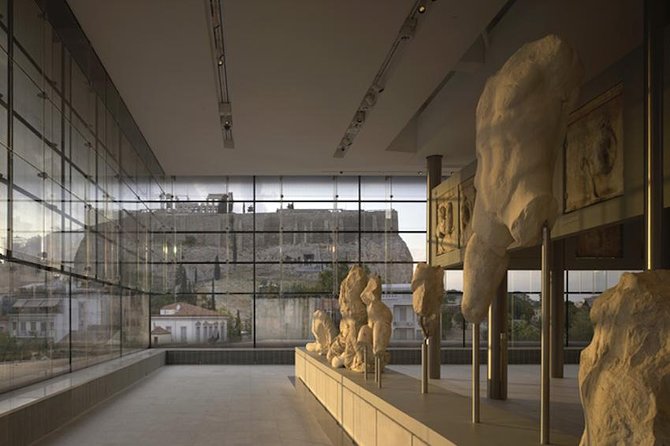
The heart of the tour is your guided walk across the Acropolis for roughly two hours, with headsets for easy listening. The guide is there to help you connect the view in front of you to the ancient Athens that created it.
You’ll pass the Propylaea, the monumental gateway that set the tone when people entered the sacred precinct. It’s easy to walk through it and think it’s just an impressive entrance. With the guide’s explanation, it becomes part of the ceremony: a kind of architectural “welcome” for processions and festivals.
Then comes the center of the stage: the Parthenon. The tour doesn’t just point at it and move on. You get a guided look at how it was designed, built, and used, plus why it became a symbol long after ancient Athens. If you’ve ever wondered how the Parthenon went from temple to global icon, this part is where that question gets answered in plain language.
You’ll also work your way through other key structures such as:
- Erechtheion, tied to the myth and worship layers that define the Acropolis
- Temple of Athena Nike, which helps show how Athena was honored in different ways across time
- Theatre of Dionysus (seen as part of the route on the south exit), which connects the Acropolis to the origins of theatre and drama
A lot of the value here is sequencing. Going in the right order makes the site feel like a designed story instead of random ruins.
The South Exit Route: Views, Theater, and the Sense of Procession
You don’t just get the top highlights from one angle. The tour description includes a route toward the south exit, which means you get additional context and viewpoints on the way down.
One of the most practical treats is the scenery. From the right spots, you get sweeping views over Athens and out toward the Aegean Sea. That’s not just a photo moment. The altitude and sightlines help you understand why this place mattered. Ancient Athenians didn’t build here for shade. They built here because visibility, symbolism, and power all came together at the top.
You’ll also see the Altar of Asclepius and the Theatre of Dionysus on this side. Most visitors focus only on the Parthenon zone. Getting theatre thrown into the mix makes the Acropolis feel less like a museum of temples and more like the hub of civic life. It’s a good reminder that Athens wasn’t only about religion and rulers. It was about public culture too.
North Side Temples and the Break That Keeps You Fresh
Another strong feature is the route variety that includes temples on the north side, including earlier cult areas and spaces associated with the Olympian gods. These are exactly the places many first-time visitors miss because they get funneled toward the same few monuments.
In practical terms, this is where a guide earns their fee. The Acropolis is huge. Without interpretation, you’ll likely walk past structures thinking they look similar. With the guide’s explanations, each cluster becomes a clue to how worship shifted and how the city presented itself over time.
After the walking phase, there’s a short break before you head into the museum. I like this approach because it prevents the tour from turning into one long endurance event. Three hours on uneven stone is doable, but the break keeps it from feeling like punishment.
You can also read our reviews of more guided tours in Athens





Acropolis Museum: Glass Floors and the Elgin Marbles Thread
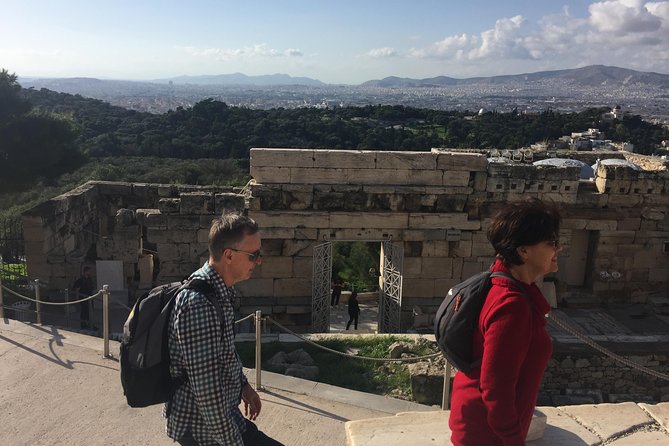
Your second act is the Acropolis Museum, designed to complement the hilltop visit. Instead of repeating what you just saw, the museum gives you the “how do we know” layer and the material details.
You’ll walk across striking glass floors with archaeological excavations visible beneath you. That physical connection between the building and the artifacts helps the museum feel more grounded. You’re not just reading plaques. You’re seeing how the site relates to what was found.
The guided portion focuses on the works you’ll most want to understand:
- Original sculptures and architectural elements from the Acropolis temples, explained with the right historical context
- The Parthenon Gallery, including the Elgin Marbles story and why they matter in the larger conversation about art and heritage
- The Archaic Gallery, where the tour concludes with statues that predate the Acropolis monuments
After the guided segment ends, you can stay on your own. This is where you can slow down. If you want more time with a specific sculpture or you’d rather take a second lap through the galleries without listening to explanations, you can do that. The museum also has a café, which is handy if you want a sit-down pause after climbing.
Price and Value: What You’re Really Buying
At $165.67 per person for about three hours, this isn’t a bargain-basement ticket. But it is a time-saver and a comprehension booster, and those can be worth real money in Athens.
Here’s how the value stacks up:
- You’re paying for two pre-reserved admission tickets (Acropolis plus museum) bundled into one timed plan.
- You’re paying for a guide who helps you interpret what you’re seeing, using headsets to keep you on track.
- You’re paying for small-group pacing (max 20), which usually means less waiting and fewer crowd-control headaches.
If you’re the type who likes to wander and read your own way, you could potentially do this independently for less. But you’d still need to handle timed entry, crowd flow, and sorting out which monuments matter and why. This tour reduces that mental load for you.
One more practical value point: the tour is timed so you’re less likely to show up at peak crush times without a plan. In high season, even pre-reserved tickets can mean a short wait in the pre-reserved ticket holder queue. Still, having a guide and a slot tends to keep things calmer than a solo scramble.
The Human Factor: Why the Guide Makes or Breaks It

The reviews attached to this experience lean hard on one theme: the guide’s ability to keep it moving and make it understandable. Names that show up repeatedly include Eva, Antigone, and Lisa. People specifically call out guides who:
- Answer questions clearly
- Adjust pacing for a mixed group
- Help with photo stops and good viewpoints
- Keep the energy high without losing the schedule
That said, one criticism is worth respecting. Some visitors wanted more unstructured time on the Acropolis, since the guided format doesn’t leave much room for free wandering up there. Another comment notes the information felt a bit too in-depth for their taste. So if you’re craving lots of solo time for selfies and photo angles, go in with eyes open.
Who This Tour Suits Best
I’d book this if you want:
- A guided route so the Acropolis makes sense fast
- A museum follow-up that connects directly to the monuments above
- A small group that doesn’t feel like a cattle line
- Better audio with headsets, especially in busy areas
I’d think twice if you:
- Strongly prefer long stretches of solo exploration on the hilltop
- Get overwhelmed when you’re hearing a lot of history while walking
- Need a highly mobility-friendly route (the tour involves climbing steps and walking on uneven ground, and it’s not presented as ideal for mobility limitations)
The good news: the museum time after the guided portion gives you a chance to take your own pace.
Should You Book This Acropolis + Museum Tour?
If your priority is to see the big monuments and actually understand them, this tour is a strong pick. The combination of skip-the-line tickets, small-group pacing, and a guided museum visit is the formula that turns Athens from a list of sites into a real story you can carry home.
My recommendation comes with one condition: decide how you feel about guidance. This is not a slow, mostly silent scenic walk. It’s an organized walkthrough with a clear plan and limited time to roam on the Acropolis itself. If that style fits you, you’ll likely feel like you used your hours well.
FAQ
FAQ
How long is the tour?
The tour runs about 3 hours.
What’s included in the price?
The price includes pre-reserved tickets for the Acropolis and the Acropolis Museum, a small-group guided tour, an expert local guide, and headsets.
Do I need to arrange transportation to the sites?
Transportation to and from the attractions is not included.
Where do we meet?
You meet at the Acropolis metro station area, and the start location is listed as Makrigianni 7, Athina 117 42, Greece. The tour ends at the Acropolis Museum at Dionysiou Areopagitou 15, Athina 117 42, Greece.
Is this tour offered in English?
Yes, it’s offered in English.
Is skipping the line possible with this tour?
Yes. You receive pre-reserved tickets for the Acropolis that help you bypass long queues.
How big is the group?
The tour has a maximum of 20 travelers.
Are strollers allowed?
No, strollers of any kind are not allowed.
Are young children allowed?
Kids under 6 are not permitted on this tour.
What should I know about timing and late arrival?
You should arrive about 10 minutes early, tours depart sharp with only a small grace period, and timed tickets expire within about 5 to 10 minutes. It’s not possible to join after the tour starts.
Can I cancel for a refund?
Yes. You can cancel up to 24 hours in advance for a full refund.