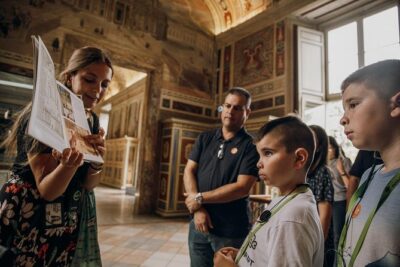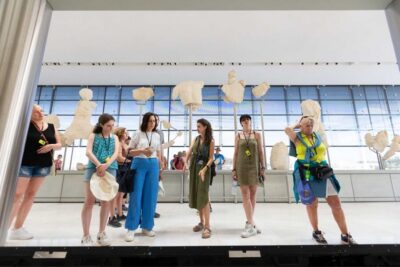
One ticket, three icons, and zero time wasted in lines. On a private format led by guides like Francisco, Sara, and Romina, you get a fast, guided path through the Vatican Museums, the Sistine Chapel, and St. Peter’s Basilica, with enough context to actually understand what you’re seeing. I also love the built-in highlight route that aims at the big visual payoffs, like the bronze pinecone courtyard and the Michelangelo moments in the chapel.
The main consideration is timing risk: due to papal events, parts of the Vatican can close last minute, and the tour may shift to an alternative plan focused inside the museums.
In This Review
- Key things to know before you go
- Skip-the-line Private: What you’re really paying for
- Vatican Museums Route: From the spiral staircase to maps and tapistries
- Sistine Chapel in 15 minutes: how to make the most of a short stop
- St. Peter’s Basilica: side chapels, Pietà, Bernini, and the dome story
- St. Peter’s Square: a cinematic wrap-up
- Price and value: is $429.49 worth it?
- Dress code, morning strategy, and how not to lose time
- So… should you book this private Vatican tour?
- FAQ
- What’s included in the tour?
- How long does the experience take?
- What dress code do I need for the Vatican sites?
- What happens if the Sistine Chapel or St. Peter’s Basilica closes last minute?
- Where does the tour start and end?
- Is the tour group private?
Key things to know before you go
- Skip-the-line entry to the Vatican Museums, Sistine Chapel, and St. Peter’s Basilica
- A focused museums route with stops that help you connect scenes and styles
- Sistine Chapel highlights centered on Michelangelo’s Creation of Adam and Last Judgment
- Basilica storytelling around works like Michelangelo’s Pietà and the dome overview
- Last-minute closure backup that keeps the experience moving even if the chapel or basilica are off-limits
- Dress code required: no shorts or sleeveless tops; knees and shoulders must be covered
Skip-the-line Private: What you’re really paying for
This tour is designed for one big problem in the Vatican: crowds and lines that can eat your whole day. With guaranteed skip-the-line admission, you start moving toward the art and architecture instead of waiting at rope lines. That matters because the Vatican is huge, and without guidance it’s easy to drift for hours and still miss the meaning behind what you rushed past.
The private part is the other reason this works. You’re not just buying access; you’re buying a guide who can pace you and steer you through the right rooms in the right order. Guides shared on this experience include people like Claudia, Francesco, and Tommaso, and the common thread is that they talk you through what you’re looking at in plain language, not art-history buzzwords.
A quick heads-up: this is about three hours. If you want a slow, lingering, photo-every-corner day, you’ll likely want a longer Vatican plan later. But if you want the essentials done well, with guidance and saved time, this format is strong.
You can also read our reviews of more tours and experiences in Vatican City.

Vatican Museums Route: From the spiral staircase to maps and tapistries
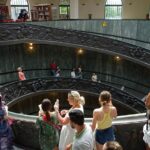
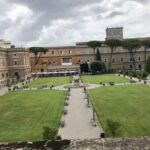
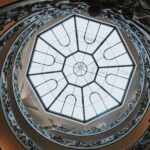
The tour begins at Viale Vaticano, and it’s built to get you into the Vatican Museums with minimal stress. After skipping the line, you’ll head from Momo’s spiral staircase toward the Belvedere courtyard, where the bronze pinecone sits in a dramatic setting. That pinecone is more than a cute photo stop: it’s a good “orientation moment,” showing you the Vatican’s love of scale, symbolism, and theatrical space.
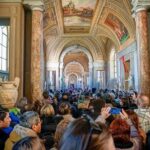
From there, the itinerary follows a classic highlight flow through the museums. You’ll spend time in the Gallery of Ancient Roman Sculptures, then move through rooms like the Room of Muses, the Room of Animals, and the Rotunda. Even if you don’t know the Roman world well, these stops help your brain separate what’s “museum presentation” from what’s “real visual impact.” That matters because the Vatican can otherwise feel like one long corridor of masterpieces.
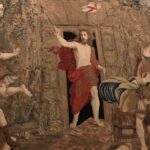
The later museum stops shift from sculpture toward visual “systems” of art and information: you’ll see the Gallery of Geographic Maps, then continue through the Gallery of Tapestries and Sobiesky Hall. The map gallery is especially useful if you like seeing how Renaissance and early modern artists thought about the world. The tapestries help you understand how craft, design, and storytelling worked before modern media.
One practical drawback: museums are big, and you only have about two hours here. The advantage is that you get the right selection. The trade-off is you won’t have time for every optional favorite, and some smaller route variations may happen depending on crowd flow and any closures.
Sistine Chapel in 15 minutes: how to make the most of a short stop
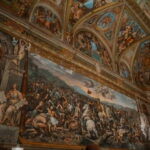
The Sistine Chapel is the obvious headline, but the tour’s setup is what makes it work. You’ll move through key rooms first, including those associated with Raphael works, then you’ll enter the Sistine Chapel for about 15 minutes.
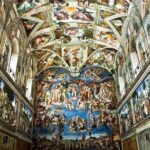
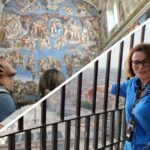
In that short window, the guide’s job is crucial: they point you to what to look for in Michelangelo’s most famous scenes—the Creation of Adam and the Last Judgment. Without guidance, many people leave feeling like they saw ceiling art, but they didn’t fully connect the symbolism to the message.
Plan for the chapel rules. Inside, you’ll be expected to keep quiet, and the pacing is slower than the museums. So even though the time looks short on paper, it doesn’t feel like a typical “walk through and go” stop. You’ll also want to be mentally ready: the ceiling artwork is not the kind of thing you’ll understand fully with one glance, but in 15 minutes, a good guide helps you register the most important details so you actually remember what you saw later.
Timing tip: if you can choose morning over afternoon, pick morning. You’ll typically face fewer chaotic lines outside and around the complex, which makes the whole day feel calmer. The Vatican crowd rhythm is real.
St. Peter’s Basilica: side chapels, Pietà, Bernini, and the dome story
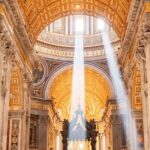
After the chapel, you move to St. Peter’s Basilica for about 30 minutes. This is where the tour becomes less about one iconic view and more about inside-the-building meaning.
You’ll explore side chapels and their crypt areas, then focus on works like Michelangelo’s Pietà. The guide will explain why it’s notable—specifically that it’s the only work by Michelangelo that he signed. That kind of detail is worth having a human guide for, because it turns a famous sculpture into a story instead of just a landmark.
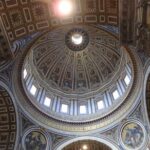
The basilica portion also includes explanation of the artistic competition and legacy behind what you see. You’ll learn about the mastery of Bernini’s altarpiece and how Michelangelo triumphed over his contemporaries for the honor to paint St. Peter’s magnificent dome. (Even if dome painting is not what most people expect to hear, that’s part of why guided time here is valuable.)
One consideration: the basilica is enormous, and 30 minutes is enough for a meaningful highlights route, not enough to “master” the whole building. Still, the guided approach keeps the time efficient. You get the key works and the why-behind-them, instead of losing yourself in the scale.
And watch for closures. Due to papal schedule and mass events, the Sistine Chapel and/or the Basilica of Saint Peter might close last minute. If that happens, the guide provides a valuable alternative that keeps the tour focused inside the Vatican Museums.
St. Peter’s Square: a cinematic wrap-up
The last stop is St. Peter’s Square for about 15 minutes. This is a nice way to finish because it shifts you from indoor art and religious spaces to the grand exterior composition.
Even if you’ve seen photos, seeing the square in person helps you understand how the Vatican designs for ceremony and crowds. It’s also a practical “breather” after the basilica, where your brain is working hard to track scenes, symbolism, and names.
Your tour ends at Piazza San Pietro, with the tour conclusion right in the square area. That makes it easier to connect to the rest of your day without needing to retrace your steps across the Vatican complex.
You can also read our reviews of more museum experiences in Vatican City


Price and value: is $429.49 worth it?
At $429.49 per person for about 3 hours, this isn’t a budget tour. But you’re not just paying for a guide—you’re paying for three things that are genuinely expensive in time and stress:
First, you’re paying for guaranteed skip-the-line admission across major sites. In the Vatican, lines can be the difference between seeing highlights and missing them entirely.
Second, you’re paying for professional guidance on art and architecture that’s hard to interpret on your own. The basilica and Sistine Chapel are especially tough without context because the visuals are dense and the rules limit how you can move and ask questions.
Third, you’re paying for the private experience: only your group participates, so you can ask follow-ups and adjust pacing. In a three-hour format, that personal control matters.
Where value might not feel as strong is if your group already has deep familiarity and you mainly want a self-directed photo spree. If that’s you, a longer or different type of tour could make more sense. But for first-timers, mixed-interest groups, or anyone who hates queue marathons, this price starts to look reasonable fast.
One more practical note: this tour includes a mobile ticket and local taxes, and the itinerary includes admission tickets for the museums and chapel and basilica. That reduces the “surprise costs” factor.
Dress code, morning strategy, and how not to lose time
This is where many people stumble, so don’t guess. For places of worship and selected museums, a dress code is required: no shorts and no sleeveless tops. Knees and shoulders must be covered for both men and women. If you fail to comply, you can risk refused entry.
For footwear, think practical. You’ll do a lot of walking inside a complex that can feel warmer than you expect, especially in busy seasons. Comfortable shoes aren’t glamorous, but they prevent the tired, cranky version of you from ruining the last 10 minutes of the chapel.
Timing helps too. One consistent theme with this kind of tour format is that doing it earlier generally reduces stress. Lines later can become outrageous, and even with skip-the-line entry, the surrounding crowd pressure still affects how smoothly you move from one site to the next.
Also, double-check the meeting point details on your side before you go. The tour starts at Viale Vaticano and ends in St. Peter’s Square. If your directions ever feel vague, use the map app early and plan to arrive a bit before your start time so you’re not stressing in the sun.
So… should you book this private Vatican tour?
Book it if you want the Vatican’s top hits—Vatican Museums, Sistine Chapel, and St. Peter’s Basilica—done in a smart order, with saved time and a real guide explaining what matters. It’s especially good for first-timers, families with different interests, and anyone who wants the day to feel organized instead of chaotic. Guides like Francisco, Sara, Romina, and Claudia are repeatedly associated with memorable explanations and smooth pacing.
Skip it or consider another option if you need a longer museum day, you want to linger for deep reading everywhere, or your schedule makes it hard to handle last-minute closure changes. The Vatican can shut down sections due to the pope’s activity, and while this tour has an alternative plan inside the museums, it’s still a variable you should accept.
If you want a high-impact first visit without sacrificing hours to queues, this is a very solid choice.
FAQ
What’s included in the tour?
The tour includes a professional art historian guide, local taxes, guaranteed skip-the-line admission, and it’s private. Admission tickets are included for the Vatican Museums, the Sistine Chapel, and St. Peter’s Basilica.
How long does the experience take?
It’s listed at about 3 hours.
What dress code do I need for the Vatican sites?
You must cover your knees and shoulders. That means no shorts or sleeveless tops for both men and women. You may be refused entry if you don’t follow the dress code.
What happens if the Sistine Chapel or St. Peter’s Basilica closes last minute?
Because of papal schedule and mass events, those areas might close without prior notice. If that happens, the guide provides a valuable alternative that focuses the tour inside the Vatican Museums.
Where does the tour start and end?
It starts at Viale Vaticano, Roma RM, Italy and ends at St. Peter’s Square (Piazza San Pietro, 00120).
Is the tour group private?
Yes. It’s a private tour/activity, and only your group participates. The tour is offered in English.