REVIEW · VATICAN CITY
Rome: Vatican Museum and Sistine Chapel Reserved Entry
Book on Viator →Bookable on Viator
If you like art with gravity, this is it. This Vatican Museums and Sistine Chapel reserved-entry combo is built for speed and certainty—timed entry that helps you avoid the worst queues while still seeing the highlights like the Gallery of Maps and Michelangelo’s ceiling.
Two things I really like: the skip-the-line tickets (you waste less time in the entry chaos), and the route logic (you see the big visual “wow” points in a manageable loop).
One drawback to consider: this is not a full guided tour. Some people expecting a deep guide-led walkthrough end up feeling rushed or on their own, especially in peak crowd levels.
In This Review
- Key highlights at a glance
- What reserved entry actually changes at the Vatican
- Price and logistics: where people get confused
- Vatican Museums: the fast route through the big sights
- Gallery of Maps and the art-science mix
- Gallery of Tapestries and classical sculpture moments
- Sfera con Sfera: a modern punch inside the classics
- The Pinecone Courtyard and the Pigna photo moment
- Gallery of Maps and the courtyard: the best place to slow down (a bit)
- Sistine Chapel: how to get value from a short timed slot
- Michelangelo’s ceiling: the Creation of Adam
- The Last Judgement on the altar wall
- Noise and etiquette reality check
- Crowds, pace, and why some people feel rushed
- Assistance without a live guide: pros and cons
- What assistance does well
- What it doesn’t do
- Who this tour is best for
- Should you book this Vatican Museums and Sistine Chapel reserved entry?
- FAQ
- What is included with the Vatican Museums and Sistine Chapel reserved entry?
- How long does the visit take?
- Is transport included?
- How many people are in the group?
- Is the Sistine Chapel entry included?
- What should I wear or bring?
- What if I need to cancel?
Key highlights at a glance
- Skip-the-line reserved entry that saves time at the Vatican Museums and Sistine Chapel
- Gallery of Maps (16th-century cartographic frescoes) plus the Cortile della Pigna photo moment
- Michelangelo’s ceiling and The Last Judgement in a tight, timed Sistine Chapel slot
- Sfera con Sfera by Arnaldo Pomodoro, a modern bronze counterpoint inside the museum complex
- Small group size (max 20), which helps keep the flow under control
- Assistance included, with hosts who may message you and escort you to the gate
What reserved entry actually changes at the Vatican
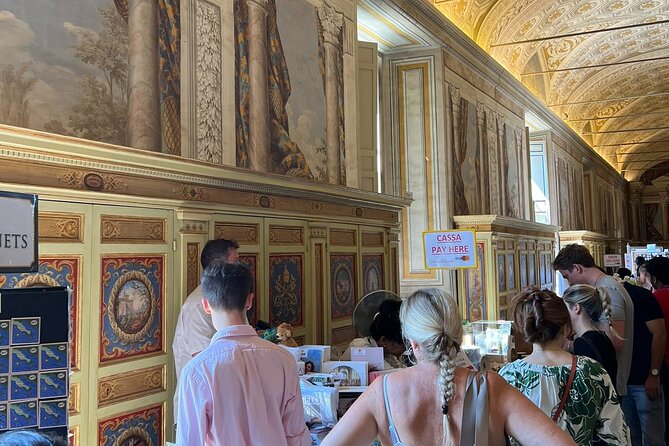
The Vatican can be a two-part experience: first, you wrestle with lines and timed entry; then, you finally get to stand in front of the art. This ticket-and-assistance setup is designed to cut down the first part.
You’re paying $45.53 per person for reserved entry coverage—specifically skip-the-line tickets for the Vatican Museums and entry tickets for the Sistine Chapel. There’s no live guide included, and that matters. The value here is not in a lecture. It’s in buying yourself less waiting so you can spend your limited time looking.
The duration is about 2 hours 30 minutes, with timed stops. In practice, that means you’ll move along a fixed route with little wiggle room. If you like to read every label and linger in every gallery, this may feel like a sprint. If you’re more focused on the must-sees and want certainty, it’s a strong fit.
You can also read our reviews of more museum experiences in Vatican City

Price and logistics: where people get confused
The biggest reason some people are unhappy is misunderstanding what’s included. The essentials are entry and assistance. Not a full guided tour with a talk in every room, and not transport.
A few key details that help you avoid stress:
- Assistance is included, and hosts sometimes coordinate messaging and help you find the right entrance path. In one account, a host named Farhad repeatedly checked in and escorted the group to the gate. Another review mentions Mr Shuvo doing the same kind of help.
- You may need to pick up passes at a different location than where you meet. One review specifically flags that the pass pickup spot can be separate, and that you should plan for it.
- The Vatican runs on timed slots, so arriving late can push you to the next entry time window. One operator explanation notes the Vatican schedules slots in half-hour increments, so missing your exact entry time can shift you.
Here’s my simple rule: show up early and treat the ticket pickup phase like part of the tour. Bring your patience, not just your phone. Also, if you’re relying on instructions from a message, take a screenshot when you book—contact details and directions are useless if you’re staring at a dead battery while the shop closes.
Vatican Museums: the fast route through the big sights
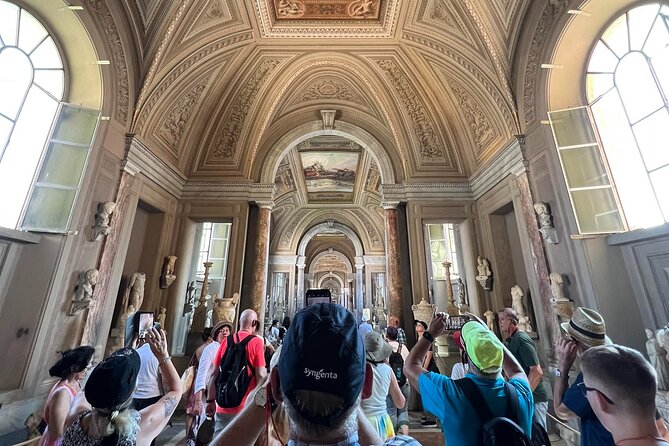
The Vatican Museums stop is where this experience earns its name. You get a timed entry window into a complex that can swallow hours. Your route is built around sections that deliver maximum visual payoff quickly.
Gallery of Maps and the art-science mix
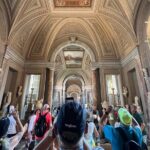
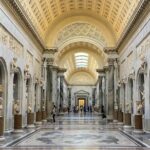
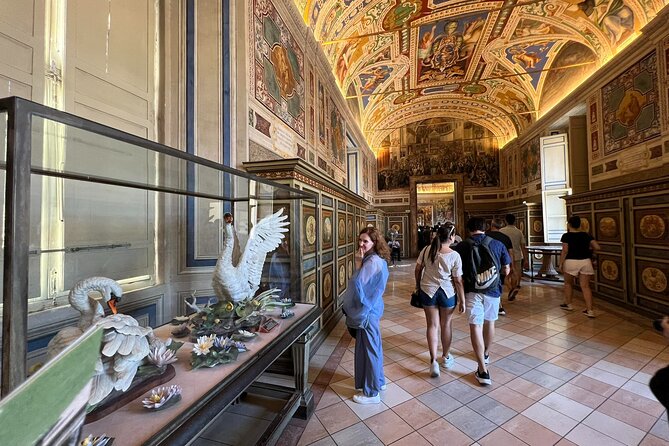
You’ll hit the Gallery of Maps, a room where cartography becomes theater. The frescoes present Italy’s geography as understood in the 16th century, painted with enough detail that you can actually see it as a worldview, not just decoration.
Even if you’re not a history buff, this is a nice change of pace. It breaks the “endless marble” feeling by showing how people used art to label, measure, and project power. It’s also one of the easier rooms to photograph because the composition is made for viewing.
Practical note: it can be crowded, so try to position yourself where you can look across the room, not just at whatever is closest to your group.
Gallery of Tapestries and classical sculpture moments
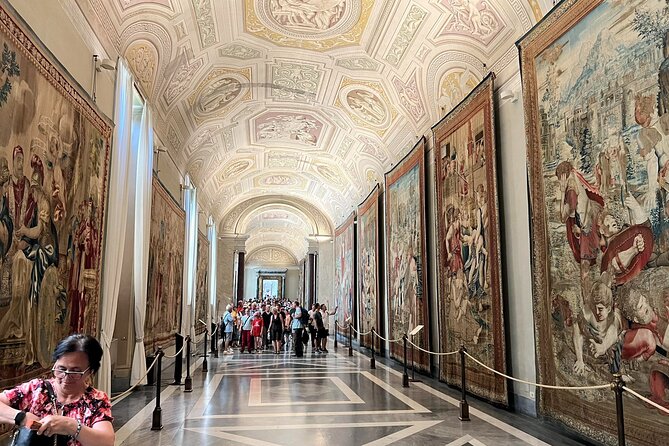
Your museum time includes stops like the Gallery of Tapestries and classic sculpture areas such as the Gallery of the Candelabra. The tapestries give you texture and scale—vivid surfaces that look almost alive compared with stone rooms.
Then the sculptures bring you back to the visual language of antiquity. These sections are famous for a reason: they’re designed to make you feel how art was displayed before museums became modernized and quiet.
But here’s the tradeoff: with a timed itinerary, you may not get long, slow absorption. Plan to enjoy at least a couple of rooms deeply, and accept that others will be more scan-and-savor.

Sfera con Sfera: a modern punch inside the classics
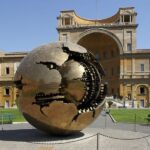
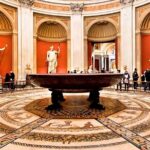
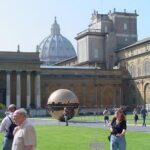
One of the smartest inclusions in this route is Sfera con Sfera (Sphere within a Sphere) by Arnaldo Pomodoro. It’s located in the Cortile della Pigna area of the Vatican Museums. This bronze sculpture is all fracture and tension—two interlocking spheres that look like mechanical thought turned into metal.
It works as a mental reset. After centuries of Renaissance and classical imagery, Pomodoro’s industrial mood reminds you that the Vatican isn’t frozen in time. It’s still a cultural stage where contemporary artists can interrupt the “only ancient” expectations.
If you like modern art, this stop can be a highlight even for people who came only for Michelangelo.
The Pinecone Courtyard and the Pigna photo moment
The Cortile della Pigna is your breather between rooms: classical architecture plus a garden-like feel, with the Pigna statue as the focal point. The Pigna statue is a bronze landmark you’ll see referenced in photos for a reason—its placement makes it a natural meeting point and a good final camera target before the Sistine Chapel rush.
Even if you don’t care about courtyard aesthetics, the timing helps. You need a moment to reset your eyes and feet before you step into one of the strictest, most crowded interiors in Rome.
Gallery of Maps and the courtyard: the best place to slow down (a bit)
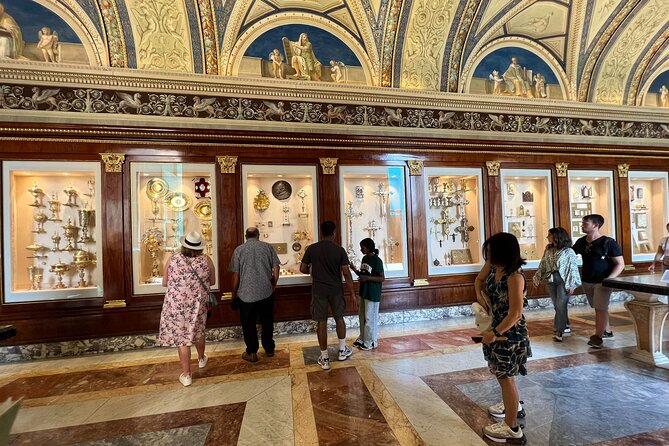
If you only have energy for one “take your time” moment during the museum portion, make it Gallery of Maps or the Pigna courtyard. Both are visually structured so your brain can settle.
In the Maps room, you can pick a region, find it on the frescoes, and treat it like a guided visual exercise even without a guide. The courtyards give you a chance to look outward, not just upward at ceilings and walls—helpful when you’re walking fast and your senses feel overloaded.
Also: this is where I’d prioritize water and a quick hat check. One review recommends bringing water and a hat, and that advice is practical. The Vatican Museums can be hot, crowded, and slow-moving at choke points. Planning for comfort keeps the experience from turning into misery math.
Sistine Chapel: how to get value from a short timed slot
The Sistine Chapel portion is about 30 minutes. That’s short, but you’re not going to miss the point if you go in knowing what you want to see.
Michelangelo’s ceiling: the Creation of Adam
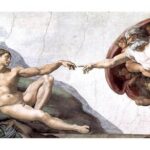
The headline is Michelangelo’s ceiling, especially The Creation of Adam. You’ll be looking up while everyone around you does the same. This is not the place to worry about getting a perfect angle. Your goal is to absorb the scale and the moment.
A smart trick: before you enter, decide on two or three ceiling zones you want to register. If you try to take in every panel, you’ll end up staring at everything and getting nothing meaningful.
The Last Judgement on the altar wall
On the altar side, The Last Judgement is the other required stop. It’s dramatic and powerful in person. From a distance it reads like a powerful composition; up close it becomes a tangle of faces, gestures, and bodies.
With limited time, I suggest you aim for a first pass from where you can see the whole scene, then a second glance at details if crowd movement gives you space.
Noise and etiquette reality check
People mention this chapel like it’s a concert, but it’s actually a strict quiet experience. You’re not here for conversation. In a short slot, calm behavior also helps you see better. The less you fight the crowd, the more you’ll actually notice.
And yes: the Sistine Chapel can feel over packed. Some visitors note that crowds make it hard to study artwork. That’s not your fault. It’s the physics of the building and the flow of timed entry. Go early if you can, and treat this like a first encounter, not a museum seminar.
Crowds, pace, and why some people feel rushed

Your time is controlled. The itinerary is timed. The Vatican is crowded by default. Put those together and you get what several reviews describe: great access, but a tight pace that can feel like not enough time to study every masterpiece.
Here’s how to manage that reality:
- Focus on “big recognition moments” rather than trying to master the entire museum in one go.
- Wear comfortable shoes. At least one review points out the walking volume—this is a long indoor maze even when you’re moving quickly.
- If you hate crowding, pick the earliest slot you can. One comment specifically recommends going as early as possible to reduce overcrowding stress.
- Accept that in a reserved-entry loop, you’ll be moving in a group rhythm. If you try to break away constantly, you risk missing your checkpoint time.
Small groups (max 20) help. A bigger group would make the bottlenecks worse. Still, the Vatican Museums are the Vatican Museums. You’ll see more people than you want, especially in the chapel entry corridor and the main gallery chokepoints.
Assistance without a live guide: pros and cons
This is where expectations matter most.
What assistance does well
Assistance included can make a huge difference at places where ticketing and entrance paths are confusing. Several reviews praise fast ticket pickup and clear help reaching the correct gate. Some even mention hosts being communicative and patient, with help like escorting to the entrance.
If you’re someone who gets anxious when check-in instructions are vague, you’ll likely appreciate this part. It reduces the chance you end up wandering the Vatican perimeter with a screenshot and hope.
What it doesn’t do
Because a live guide is not included, you won’t get a planned commentary through the galleries. Some reviews explicitly complain that it becomes mostly self-guided once you’re inside.
So the best way to use this ticket type is with prep:
- Before you go, decide what you want to see in broad strokes (Maps room, key sculptures, ceiling highlights, Last Judgement).
- Bring a rough mental checklist so you don’t rely on someone else to guide your attention.
If you want a lecture-style experience, this might feel like paying to enter, not paying for learning.
Who this tour is best for
This reserved-entry format is a strong match if you:
- Have limited time in Rome and want the major Vatican hits without the biggest lines
- Prefer to self-guide your looking and don’t need a live narration
- Appreciate modern add-ons like Sfera con Sfera mixed into the classic route
- Want a small-group day plan (max 20)
It’s less ideal if you:
- Want a fully guided, interpretive walkthrough with a live speaker
- Need lots of quiet time to study art panel-by-panel
- Get stressed by crowd flow and moving with a schedule
Price-wise, $45.53 is reasonable if what you’re buying is access certainty. If you’re paying that amount hoping for deep guided instruction, you’ll likely feel shortchanged. If you’re using it to reduce waiting and hit the essentials efficiently, it can feel like good value.
Should you book this Vatican Museums and Sistine Chapel reserved entry?
I’d book it if you’re planning a one-day Vatican visit and you want the main highlights without starting your morning by standing in line. The reserved entry angle is the point, and the route includes smart stops like Gallery of Maps, Sfera con Sfera, and the Pigna courtyard photo moment—plus the must-see Sistine Chapel works.
I’d think twice if you’re the type who needs a guide to connect the dots, or if you’re expecting a slow, study-friendly museum day. In that case, you might prefer an option that explicitly includes a live guide and more time.
Bottom line: book this when your priority is speed + access to the big moments.
FAQ
What is included with the Vatican Museums and Sistine Chapel reserved entry?
The experience includes skip-the-line Vatican Museum tickets, skip-the-line tickets to the Sistine Chapel, and assistance. A live guide is not included.
How long does the visit take?
The total duration is about 2 hours 30 minutes.
Is transport included?
No, transport is not included.
How many people are in the group?
The group size is capped at a maximum of 20 travelers.
Is the Sistine Chapel entry included?
Yes. The Sistine Chapel tickets are included as part of the reserved entry, and the admission ticket is listed as free.
What should I wear or bring?
Wear comfortable shoes. Some reviews also recommend bringing water and a hat.
What if I need to cancel?
You can cancel for a full refund if you cancel up to 24 hours in advance. If you cancel less than 24 hours before, it’s not refunded.