REVIEW · PARIS
Guided tour of the Louvre Museum with tickets included
Book on Viator →Operated by Matteo Allavena · Bookable on Viator
The Louvre stops being chaos with a good guide. This 2-hour English tour uses skip-the-line entry and keeps you moving through smart, thematic stops, so you see the Mona Lisa, major Greek sculpture, and key French painting areas without wasting your day. I love the art-history context Matteo Allavena brings, tying works across time rather than just pointing and moving on. The only drawback: it’s built as a highlights sprint, so you won’t have time to camp in your favorite room.
You meet at Le Café Marly on Rue de Rivoli, and with a maximum of 6 travelers, the pace stays human. The guide can answer questions without turning it into a crowded, head-bobbing group herd. You end back at the same meeting point, which makes it easier to continue on your own after the tour.
Everything important is included up front: the entrance fee (28 euros) plus the skip-the-line benefit. That means you can focus on the art, not the ticket desks. For this price, you’re really buying time, structure, and a guide who knows what to prioritize.
In This Review
- Key highlights worth your attention
- The Louvre in Two Hours: A Highlights Route You Can Actually Finish
- Finding the Group at Le Café Marly on Rue de Rivoli
- Skip the Line and Get Inside the Real Louvre Faster
- From 13th-Century Walls to a 4,000-Year-Old Sphinx
- Greek Sculpture Stars: Athena, Venus de Milo, and Victory of Samothrace
- Galerie Apollon and the Mona Lisa Without Getting Lost
- Giotto to Napoleon to Delacroix: How the Tour Threads Time
- Price and Value: What $114.93 Covers in Real Life
- Practical Tips for Enjoying the Rest of Your Visit
- Who This Tour Fits Best
- Should You Book This Guided Louvre Tour?
- FAQ
- How long is the guided Louvre tour?
- Is the tour offered in English?
- Does the price include museum admission and skip-the-line entry?
- Where does the tour start and where does it end?
- What is the group size?
- What key areas and artworks are included?
- Is free admission available for some visitors?
Key highlights worth your attention

- Small group of up to 6 keeps the route flexible for questions
- Skip-the-line entry helps you avoid the worst standing time in busy periods
- Medieval Louvre walls gives you context for how the museum actually grew
- Greek sculpture stop includes Athena of Velletrie, Venus de Milo, and Victory of Samothrace
- Galerie Apollon route bundles big-name works with the architectural story
- A time-walk through art moves from Giotto to classicism to Romanticism
The Louvre in Two Hours: A Highlights Route You Can Actually Finish
The Louvre is famous for a reason. It’s also famous for how easy it is to feel lost. This tour tackles that head-on with a tight, organized plan built around major works and clear themes.
You’ll start with the Louvre as a building and a place that changed over centuries. Then you shift into sculpture, painting, and the famous rooms where style periods start to make sense. The pacing is short-breath, not slow stroll, so it works best when you want to see the right things and move on with confidence.
A few more Paris tours and experiences worth a look



Finding the Group at Le Café Marly on Rue de Rivoli
Your meeting point is Le Café Marly at 93 Rue de Rivoli (75001 Paris). That location is central and easy to pair with other sightseeing in the same area after your tour.
The only practical thing I’d watch: crowds can make meeting up feel harder than it should. When you arrive, give yourself a little buffer so you’re not hunting. If you’re traveling with kids, it’s also smart to get everyone settled before you start, since the first stops set the tone for how the guide will structure the visit.
Skip the Line and Get Inside the Real Louvre Faster
The Louvre line can eat your whole morning. This tour includes skip-the-line entry, which is one of the biggest value boosts on the product page for a reason.
When you bypass the queue, you get to spend your time looking instead of waiting. And with only about 2 hours on the clock, that difference matters. You’re essentially buying back time you’d otherwise lose in the heat and noise.
You’ll also be guided with a speaker setup, which helps in the big halls where acoustics can be awkward. It’s not a whisper tour; you should be able to follow along without craning your neck.
From 13th-Century Walls to a 4,000-Year-Old Sphinx
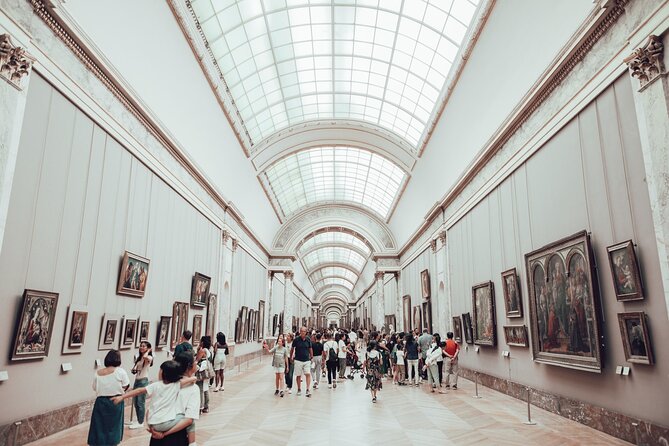
A lot of Louvre visits start at the most famous floors and skip the building’s backstory. This one begins with the Louvre’s medieval side: the 13th-century walls.
That opening is a smart trick. It reminds you that the Louvre wasn’t designed as a single museum masterplan. It evolved, and that evolution is part of what you’re walking through. Once you see the museum as layers of time, the rest of the visit clicks faster.
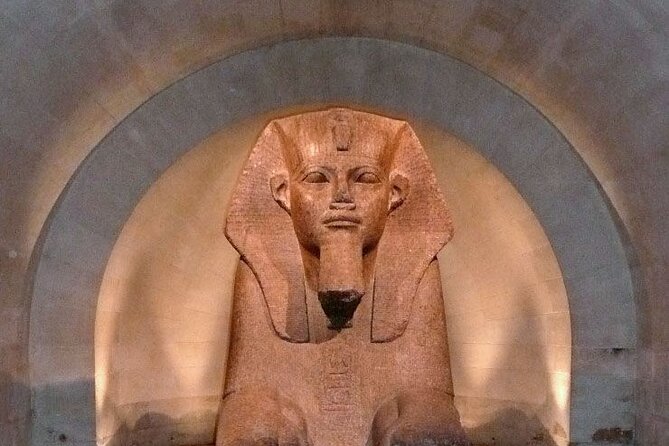
Then comes the Tanis Sphinx, a 4,000-year-old piece. Even if you’ve seen photos, seeing it in person lands differently. A guide helps you read it as an object with history, not just a statue in a room.
Greek Sculpture Stars: Athena, Venus de Milo, and Victory of Samothrace
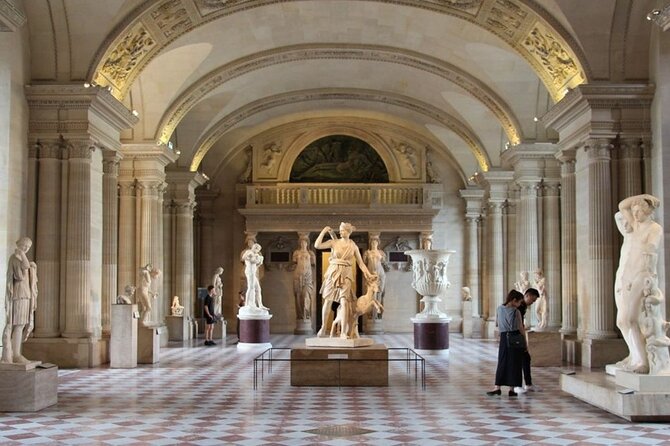
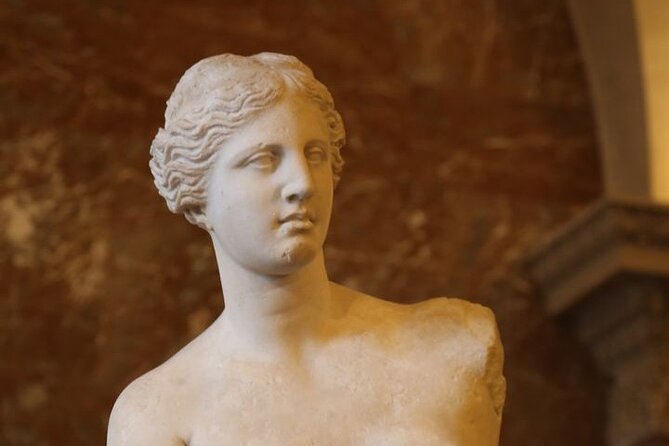
Next you move into the Greek department, where the Louvre’s sculpture can feel like an art history exam—unless someone explains what to look for. Here, the stop list is very specific: Athena of Velletrie, Venus de Milo, and the Victory of Samothrace.
I like this approach because it avoids the usual problem of modern visitors staring at one masterpiece and missing the reason it matters. Athena of Velletrie gives you a sense of classical ideals. Venus de Milo is the instant photo hit, but the guide framing helps you see beyond the silhouette everyone knows. Victory of Samothrace is the one where you can understand why people call this era dramatic, even before you get the details.
The benefit of having a route here is simple: you don’t waste time hunting for the big works, and you don’t get stuck in one spot for so long that the rest of the museum becomes a blur.
You can also read our reviews of more guided tours in Paris





Galerie Apollon and the Mona Lisa Without Getting Lost
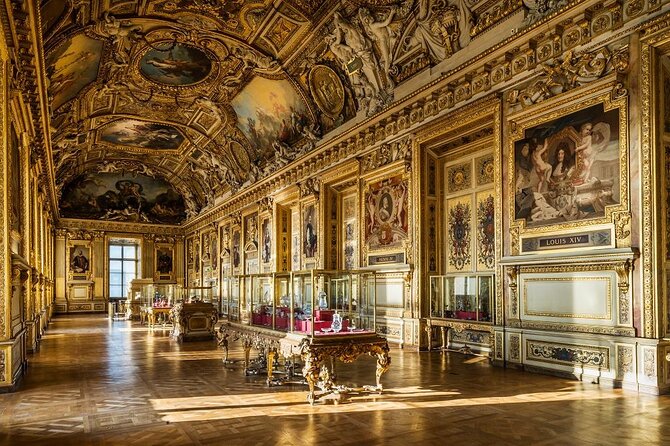
Then you hit the Galerie Apollon. This long, impressive space is described as inspiring Versailles, and the tour uses that connection as a way to explain why the room looks the way it does.
From there, the plan channels you toward some of the Louvre’s loudest names: Guirlandao’s L’enfant et l’ancien, Veronese’s Les noces de Cana, and Leonardo da Vinci’s Mona Lisa. The Louvre’s biggest paintings can feel like a zoo if you arrive without a plan. With this route, you’re positioned to see them as part of a bigger story.
Here’s what I think makes this part work for real humans: the guide doesn’t treat the Mona Lisa as a one-minute selfie stop. You get context for what you’re looking at and why it became such an icon. That turns a crowded moment into something more meaningful than a picture taken from shoulder height.
Giotto to Napoleon to Delacroix: How the Tour Threads Time
One of the strongest advantages of this tour is how it moves through art history like it’s telling a story. You’re not just collecting famous works. You’re learning how different eras look at power, faith, bodies, and politics.
You’ll see the Italian painting of the Middle Ages stop: Saint Francis receiving the stigmata by Giotto. This is a great pivot point because it connects religious imagery to how artists built emotion and symbolism.
After that, the tour shifts into classicism with the Coronation of Napoleon and Leonidas at Thermopylae by Jacques-Louis David. These works help you understand how classic ideals got used for modern power. It’s a useful reminder that style periods weren’t just aesthetics. They were messages.
Finally, you head into Romanticism with Géricault’s Raft of the Medusa and Delacroix’s Liberty Guiding the People. This is where the Louvre can feel less formal. The themes turn toward crisis, movement, and political urgency. If you’ve ever thought museum labels are too cold, this stop list usually fixes that feeling fast.
Price and Value: What $114.93 Covers in Real Life

At $114.93 per person, this isn’t a budget tour. But for the Louvre, it’s priced like what it is: time-saving plus expert guidance.
Here’s the value math that matters: the entrance ticket is included (28 euros). So part of what you pay is already doing something concrete—getting you into the museum without extra ticket hunting. The rest of the price is for the guide’s route planning and the skip-the-line benefit, which is hard to replace on your own.
Two hours also makes a difference. If you go solo and try to cover highlights, you often spend that time in queues and indecision. A guided route forces decisions for you. That can feel like a luxury when the alternative is wandering through the museum’s size.
The price makes the most sense if you want a top-tier primer and a structured way to come back later for deeper exploring.
Practical Tips for Enjoying the Rest of Your Visit
After the tour, you’ll likely want to keep going on your own. That’s the ideal setup: use the guided portion to learn the map, then walk the museum with clearer eyes.
If you’re short on time, use your own notes as a trigger. For example, when you see Greek sculpture again, you’ll start noticing what the guide emphasized. When you reach classicism and Romanticism rooms on your own, you’ll have a reference point for what changed and why.
Wear comfortable shoes. This is a lot of floor space in a short window. Also, plan your breaks before you get tired. Food and drinks aren’t included, so if you want a coffee, factor it into your schedule outside the tour time.
Who This Tour Fits Best
This tour fits best if you want structure and context more than a slow museum marathon.
It’s a strong pick for first-timers who feel overwhelmed by the Louvre’s scale. It’s also a good match for families who need their kids to stay engaged without turning it into a bedtime lecture. The small group size helps with that.
If you’re the type who wants to stare at one painting for 40 minutes, you might feel boxed in by the highlight approach. In that case, you’d probably do better with a longer, more flexible plan.
And if you need an easier entry day, the skip-the-line piece can be the deciding factor. The meeting point is central and the tour ends where it starts, so you’re not stuck navigating afterward.
Should You Book This Guided Louvre Tour?
I’d book this tour if you want the Louvre’s biggest moments plus the story behind them, in about 2 hours. The skip-the-line entry and the focused route make it a practical way to stop the museum from swallowing your day.
I would skip it only if you know you don’t like paced itineraries, or if you’re only interested in one niche topic and want serious time in that one area. Otherwise, this is a smart first pass: you’ll leave with names, context, and a clearer sense of how the Louvre connects medieval walls to modern icons.
FAQ
How long is the guided Louvre tour?
The tour is approximately 2 hours.
Is the tour offered in English?
Yes, it is offered in English.
Does the price include museum admission and skip-the-line entry?
Yes. It includes the entrance fee (28 euros entrance tickets) and skip the line.
Where does the tour start and where does it end?
It starts at Le Café Marly, 93 Rue de Rivoli, 75001 Paris, France and ends back at the meeting point.
What is the group size?
The tour has a maximum of 6 travelers.
What key areas and artworks are included?
The tour covers the Medieval Louvre (13th-century walls), the Tanis Sphinx, the Greek department highlights (Athena of Velletrie, Venus de Milo, Victory of Samothrace), Galerie Apollon with major works including the Mona Lisa, Italian painting (Giotto), and classicism and Romanticism rooms including works by Jacques-Louis David, Géricault, and Delacroix.
Is free admission available for some visitors?
Yes. Free admission applies to visitors under 18 and EEA residents under 26 with valid ID and proof of residency.