REVIEW · VENICE
Venice: Leonardo Da Vinci Museum Entrance Ticket
Book on GetYourGuide →Operated by Leonardo da Vinci Museum - Venice · Bookable on GetYourGuide
Leonardo turns into something you can touch. At the Interactive Da Vinci Museum, you work your way through his ideas for Earth, Water, Fire, and Air using faithful, working-style reproductions. It’s a surprisingly fun break from the streets, with lots of things to try rather than just stand and read.
Two things I really like: the hands-on invention rooms (many are operational, not just displays) and the way the museum mixes science with creativity through Leonardo’s art and anatomy studies. The main thing to consider is that it’s a small museum, so you may wrap it up in 30–60 minutes if you move fast (or closer to 1.5 hours if you like every puzzle and photo moment).
In This Review
- Key Highlights at a Glance
- Why the Leonardo Museum Feels Different Than a Regular Venice Museum Stop
- Ticket Price and Value: Is $10 Worth It in Venice?
- Where to Go: CAMPO SAN ROCCO Meeting Point Made Simple
- Earth, Water, Fire, Air: How the Exhibition Moves You Through Leonardo
- Working Models and Puzzles: The Hands-On Stuff That Actually Teaches
- Leonardo the Anatomist and the Artist: Paintings and Human Study Displays
- Mirrors, QR Audio, and the Kind of Extras That Save Your Time
- Photos, Shop Discounts, and Family-Friendly Details That Matter
- No Guided Tour Means You Control the Pace
- Who Should Book This Ticket, and Who Might Skip It
- Should You Book the Leonardo Da Vinci Museum Ticket in Venice?
Key Highlights at a Glance
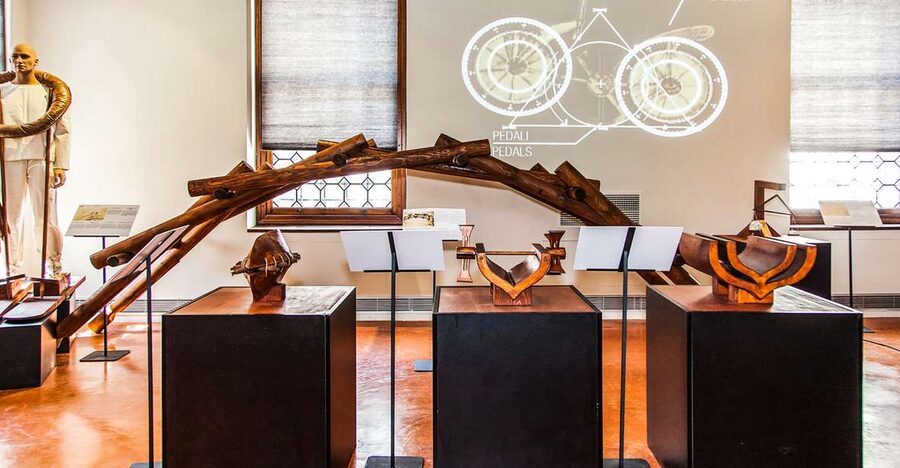
- Earth/Water/Air/Fire sections that organize Leonardo’s concepts into clear, themed areas
- Working models and interactive puzzles built from his designs, so you can see the mechanics
- Human anatomy + painting replicas to connect his medical studies with his art
- 360-degree mirror room and hands-on activities that keep kids and adults engaged
- Multilingual descriptions in multiple languages plus multimedia support
- 10% off in the shop if you want a Leonardo-themed souvenir
Why the Leonardo Museum Feels Different Than a Regular Venice Museum Stop
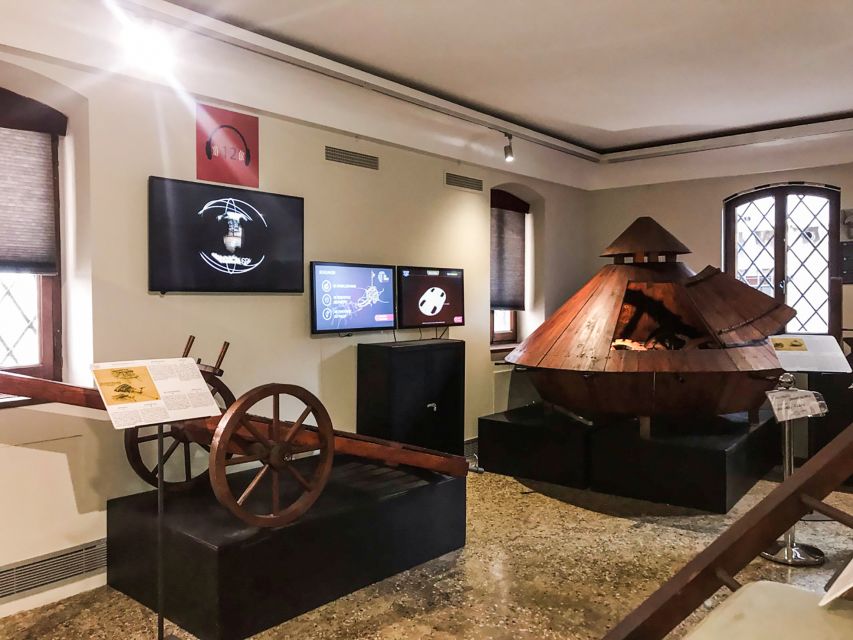
Venice can be great, but it can also feel like nonstop stone, water, and crowds. This ticket gives you a calmer pocket where Leonardo da Vinci is the point, not the paperwork.
What makes the experience click is that it treats Leonardo like a problem-solver. You move through themed sections and then you get to try machines that show how his thinking translates into real-world movement and function. It’s not only about seeing ideas; it’s about testing them, even if you only get part of the puzzle right.
The museum also blends two sides of Leonardo that many people separate in their minds: the inventor and the artist. You’re not just learning facts. You’re seeing how the same curiosity shows up in engines and sketches, in engineering logic and in human anatomy.
One practical upside: because the museum is compact, it works well when you’re fitting culture into a day packed with canals, churches, and gelato lines.
A few more Venice tours and experiences worth a look



Ticket Price and Value: Is $10 Worth It in Venice?
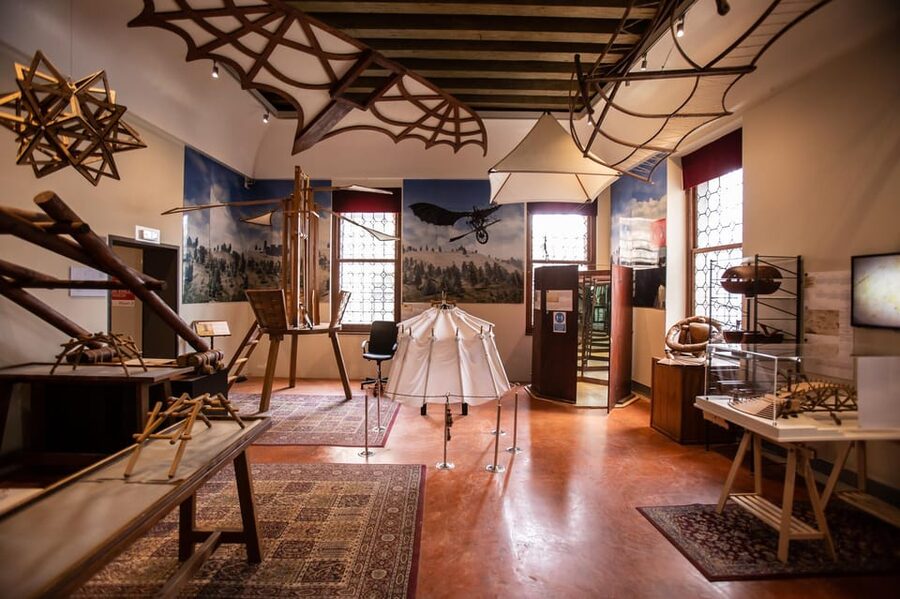
At $10 per person, this is priced like a smart add-on, not a big-money centerpiece. The value comes from what you get for that price: entry to a hands-on exhibition where you can spend enough time to feel you did something, but not so much time that it ruins your Venice plans.
If you’re the type who likes browsing, you could probably do it faster. If you like trying every interactive piece, you’ll likely stretch it out to something like 1 to 1.5 hours. Either way, the ticket feels fair because the museum is designed to keep you moving room to room and experiment-to-experiment.
Also, the museum is family-friendly. If you’re traveling with kids, that matters. A hands-on exhibit can replace multiple small stops that would otherwise eat your time.
Where to Go: CAMPO SAN ROCCO Meeting Point Made Simple
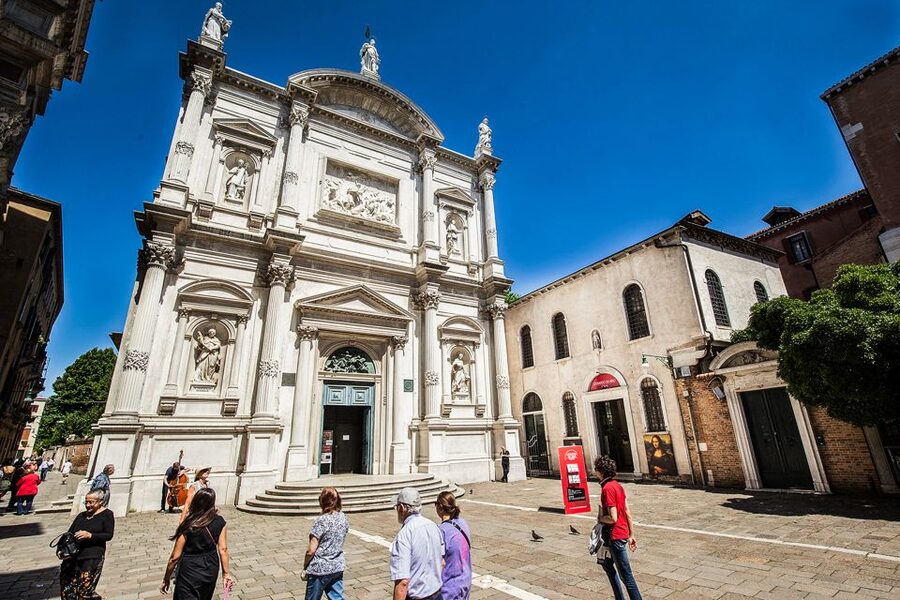
Your destination is the Leonardo da Vinci Interactive Museum at CAMPO SAN ROCCO, 3052 Venezia, in the building called Edificio SCOLETTA DI SAN ROCCO, located in front of Scuola Grande di San Rocco and behind the Chiesa dei Frari.
Here’s the easy logic: you arrive at the museum itself, present your ticket to the staff, and you go in. No wandering to a separate office or hunting for a guide in some other square.
If you’re doing this between other sights, it’s helpful that the museum sits in a part of Venice where you can get your bearings and step away from the most chaotic routes.
Earth, Water, Fire, Air: How the Exhibition Moves You Through Leonardo
The layout is built around four big themes: Earth, Water, Air, and Fire. Think of these as Leonardo’s interests grouped into understandable categories so you can follow the logic without needing a PhD.
You’ll start by working through the sections and their associated machines. The idea is simple: each area connects a natural element to mechanical thinking—how forces might work, how design can shape motion, and how structure can solve a problem.
A key detail that matters if you’re the kind of person who cares about authenticity: many machines are rebuilt according to Leonardo’s original designs, with changes only when adjustments were necessary for original proportions. So you’re seeing something faithful in spirit and form, even if it had to be sized or adapted to function in the museum setting.
Working Models and Puzzles: The Hands-On Stuff That Actually Teaches
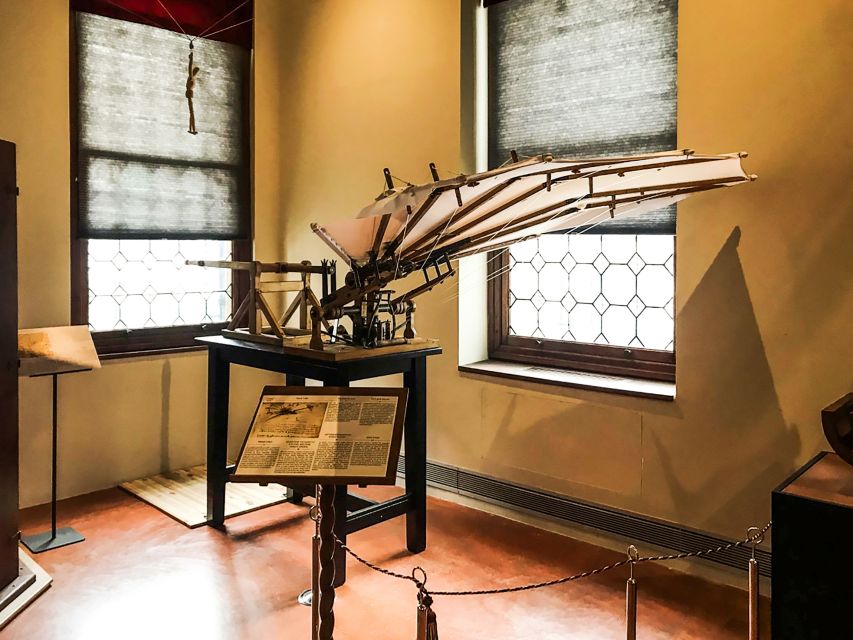
This museum’s strongest feature is that it’s interactive in the real sense. You’ll encounter operating models and activities where your hands do the learning.
One standout example is a puzzle activity on the second floor involving a wood bridge. If you tackle it solo, you might still figure it out, but it’s the kind of challenge that goes faster with a second person to help coordinate pieces or instructions.
There are also other hands-on touches that make the visit feel less like reading labels and more like tinkering. A lot of the fun is in the cause-and-effect. You move something, a mechanism responds, and you start understanding why Leonardo approached problems the way he did.
This is also where the museum works for adults who do not normally care about interactive exhibits. If you’ve ever wanted to learn how engineering ideas connect to daily life, this is the format that makes it feel practical.
You can also read our reviews of more museum experiences in Venice




Leonardo the Anatomist and the Artist: Paintings and Human Study Displays
After the machines, the museum shifts toward Leonardo as an observer of the human body and as a painter.
You’ll see material connected to his studies of human anatomy. The point isn’t just to name parts of the body. It’s to show that Leonardo’s medical curiosity and his artistic eye come from the same drive: understand structure, then use that understanding to create.
Alongside that, there are high-resolution backlit replicas of major paintings. This part helps you remember that Leonardo wasn’t one thing. He was both a scientist-minded thinker and a visual artist with extraordinary observational skill.
If you like museums that explain the person behind the work, this section can be especially satisfying because it connects the dots between different kinds of creativity.
Mirrors, QR Audio, and the Kind of Extras That Save Your Time
Some museums waste your energy with a lot of noise. This one adds a few targeted extras that make the experience smoother.
A favorite is a 360-degree mirror room (often called a mirror box). It’s the kind of installation that feels playful but also makes you slow down and look. It also helps break up the “read and move” rhythm.
Audio support is another practical touch. You may notice that the museum experience includes an audio guide accessed via a QR scan in the shop. If you want the audio, it’s smart to do that early so you don’t have to circle back later.
Also, there’s multimedia support throughout. Descriptions are offered in several languages—Italian, English, French, German, Spanish, and Russian—and you’ll find multimedia displays that add context to Leonardo’s life and works.
One more practical note: this is one of those indoor stops that can give you relief from Venice heat. Some visitors specifically call out the presence of air conditioning, which can be a major quality-of-life factor in summer.
Photos, Shop Discounts, and Family-Friendly Details That Matter
Good news: your ticket includes an opportunity to take photos inside. That means you can capture the working models and the installations without feeling like you have to choose between learning and documenting.
The museum also includes a book shop with Leonardo-themed gifts and souvenirs. There’s a 10% discount on bookshop purchases with your visit. If you’re the type who likes a small, related souvenir instead of a generic postcard, this is a nice perk.
For families, the museum clearly expects kids to participate. There are interactive activities suitable for a wide range of ages, and there are even iPads that let children draw like Da Vinci.
There are also age rules you should know:
- Children under 3 enter for free.
- Children under 15 can only enter if accompanied by an adult.
So if you’re bringing grandparents or a mixed-age group, plan the adult presence accordingly.
Finally, if you’re arriving from a day of wandering with bags, ask staff. Some visitors note that the team can help with storing suitcases while you explore. That’s the kind of small service that makes the visit feel easier.
No Guided Tour Means You Control the Pace
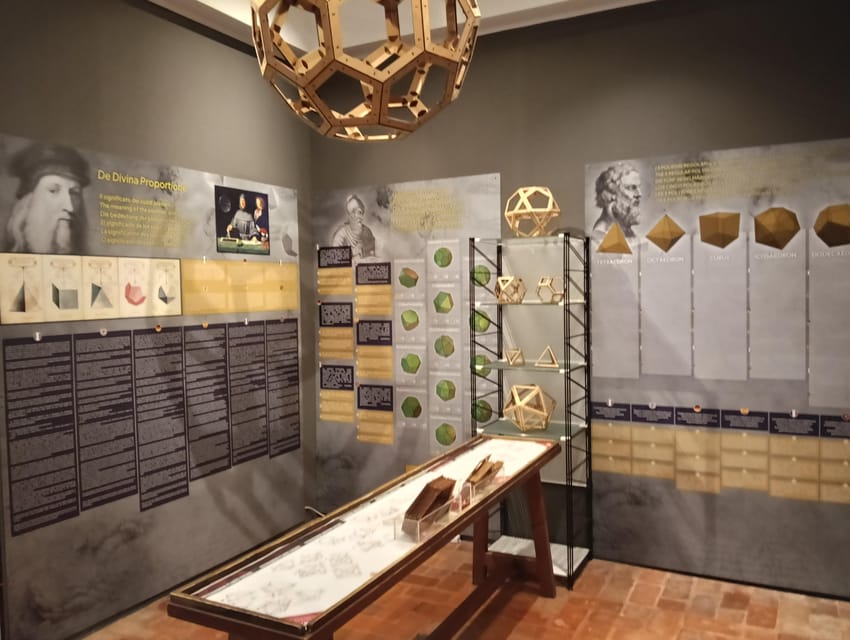
This ticket is entry only. There’s no guided tour included.
That’s not a negative if you like to move at your own speed. It’s actually part of the museum’s charm: you can spend extra time on the machines that catch your eye and skip the parts that don’t.
If you do want more structure, your best approach is to set yourself a simple plan before you enter. For example: machines first, then art/anatomy displays, then any puzzles or mirror room you want to repeat. Because the museum is manageable, you can adjust without feeling stuck.
If you hate timed entries or rigid schedules, this setup tends to suit you better than big-group tours.
Who Should Book This Ticket, and Who Might Skip It
You’ll likely love this ticket if:
- You enjoy interactive exhibits where you can try things, not just read panels.
- You’re traveling with kids and want one indoor activity that actually keeps them busy.
- You like Leonardo as a whole person, not only the artist side or only the engineering side.
You might not love it if:
- You’re expecting a massive art museum with original masterpieces everywhere. This is an interactive museum experience with reproductions and themed learning spaces.
- You want a long, slow, detailed museum day. Since it can be completed in 30–60 minutes for quick visitors, you may want a second plan for the rest of the afternoon.
It’s also a strong choice as a mid-day break. After hours in the open air, this gives you a different pace and a different kind of Venice memory.
Should You Book the Leonardo Da Vinci Museum Ticket in Venice?
Yes—if you want a smart value indoor stop that mixes science, art, and hands-on activities. At $10, the ticket gives you real interaction, multiple themed sections, multilingual explanations, and enough to keep you occupied without taking over your whole day.
If you’re short on time, schedule it so you can enjoy the machines and the mirror room without rushing. If you’re traveling with family, it’s one of the best types of ticket to choose because kids get activities that feel like play while still teaching.
If you’re the kind of traveler who likes to understand how things work, this is a surprisingly satisfying use of an hour in Venice.