REVIEW · VENICE
Da Vinci Interactive Museum Venice Scuola di San Rocco
Book on Viator →Operated by Leonardo da Vinci Museum · Bookable on Viator
Leonardo fans, this one is practical. You step into the Leonardo da Vinci Museum in Venice and see hands-on, working replicas of his fantastical machines. It’s built for curiosity, not museum formality, and it moves at a good pace for a half-day break.
I especially like the way the exhibit mixes hands-on engineering with Leonardo’s own thinking. The museum is organized into four big themes—Earth, water, air and fire—so you don’t get lost in a generic “greatest hits” setup.
My main heads-up: this is a small museum, and it can feel over fast if you’re expecting a huge, original-art gallery. Many displays are educational copies and models, and the visit often lands around the ticket’s 45-minute window.
In This Review
- Key highlights worth your time
- Leonardo da Vinci Museum in Venice: small space, big ideas
- Timing and planning for a 45-minute stop
- The main route: Earth, water, air and fire
- Backlit paintings and anatomy studies: art meets science
- What language you’ll get (and how audio fits in)
- Tickets, value, and how to get the most from it
- How to pair it with the San Rocco area in one Venice day
- Should you book the Da Vinci Interactive Museum Venice Scuola di San Rocco?
- FAQ
- How long does the visit take?
- Is a professional guide included?
- What languages are available in the museum?
- Are audio guides available?
- Can I use a mobile ticket?
- What are the opening hours and last entrance time?
- Is food allowed inside the exhibit areas?
Key highlights worth your time
- Working replicas you can actually use as you go through Leonardo’s ideas
- Earth, water, air, fire layout that keeps the story easy to follow
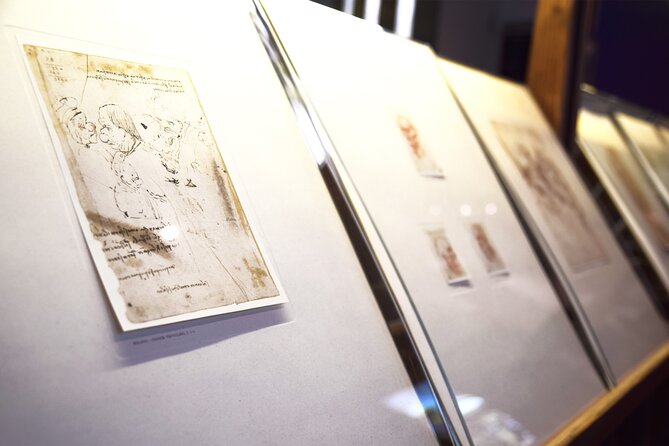
- Backlit, high-resolution copies of paintings designed for close viewing
- Anatomy studies plus machine designs so you see Leonardo as an all-around scientist
- Multiple languages on site, supported by multimedia displays
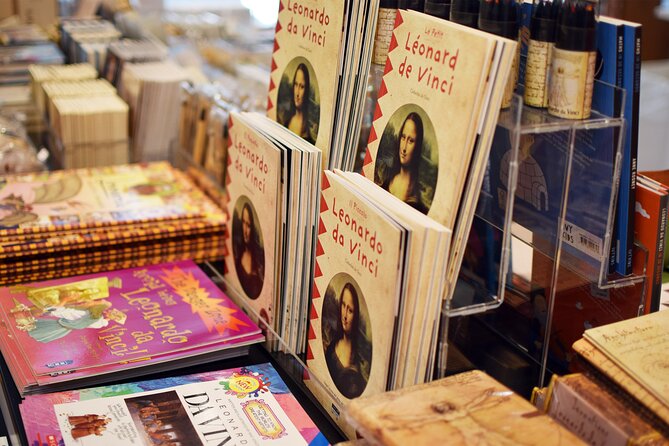
- Bookshop and supporting exhibits if you want to take the learning home
Leonardo da Vinci Museum in Venice: small space, big ideas
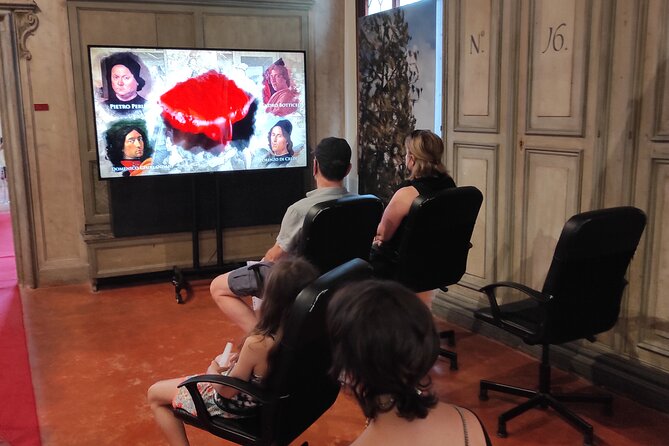
This museum is all about making sense of Leonardo da Vinci—engineer, inventor, artist, and curious observer. The setting is the Scuola di San Rocco area, which already puts you in a more “real Venice” environment than a modern, padded attraction.
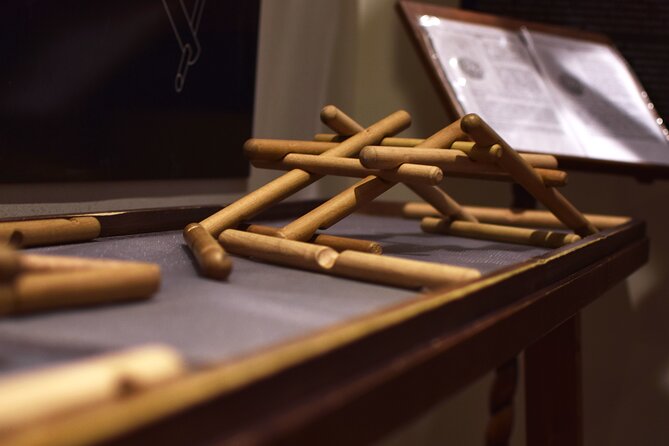
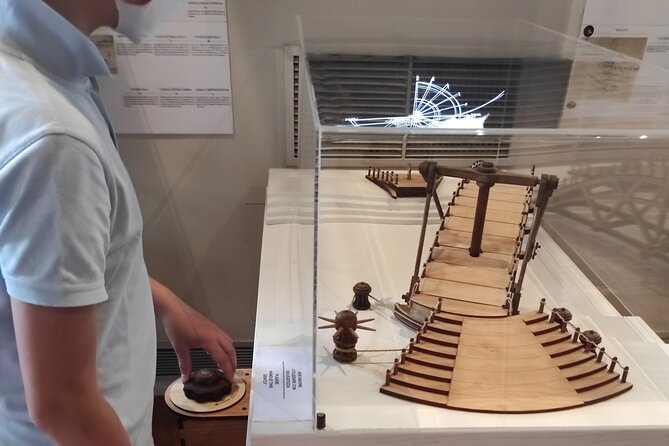
If you like demonstrations, you’ll probably enjoy the format. The exhibit is built around the idea that Leonardo’s concepts become clearer when you can see how they might work. That’s why the star items are the interactive models and the machine replicas.
And yes, it’s family friendly. Kids tend to get it instantly because so much of the museum is hands-on. Adults usually do too, once the “how would this work?” switch clicks in their heads.
You can also read our reviews of more museum experiences in Venice

Timing and planning for a 45-minute stop
Plan on roughly 45 minutes. That matches how the rooms are arranged and how the interactive stations are distributed. With the short attention spans of both kids and grownups, the pacing works.
Opening hours run daily, 10:30 AM to 4:30 PM, with the last entrance at 4:00 PM. If you’re visiting in the afternoon, I’d aim to arrive with enough time to go calmly through the rooms—not just “hit the highlights.”
One practical note: the museum has more than one level. Some visitors note steps, so if you’re traveling with kids in carriers, older parents, or mobility challenges, plan your energy accordingly.
The main route: Earth, water, air and fire
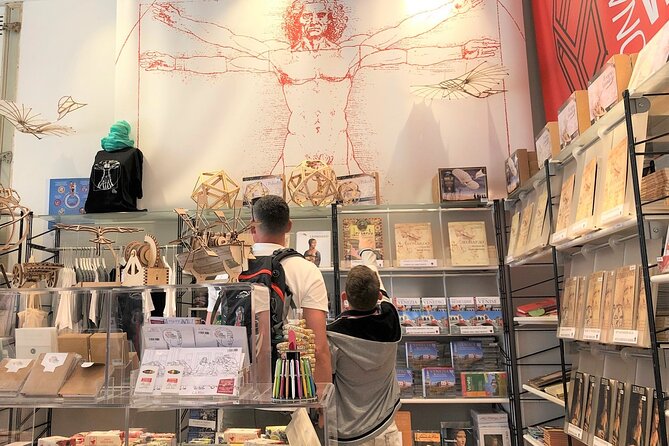
The heart of the visit is the exhibition organized into four sections: Earth, water, air and fire. Think of these as Leonardo’s topics—how he studied motion, nature, forces, and mechanics—then turned those observations into designs.
Here’s what you can expect as you move through the sections:
Interactive machines and working replicas
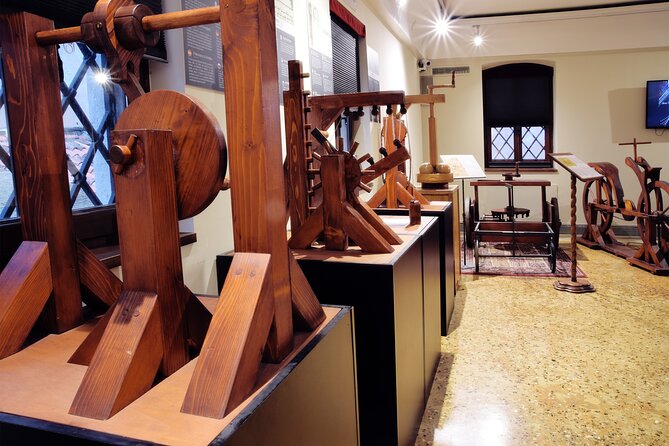
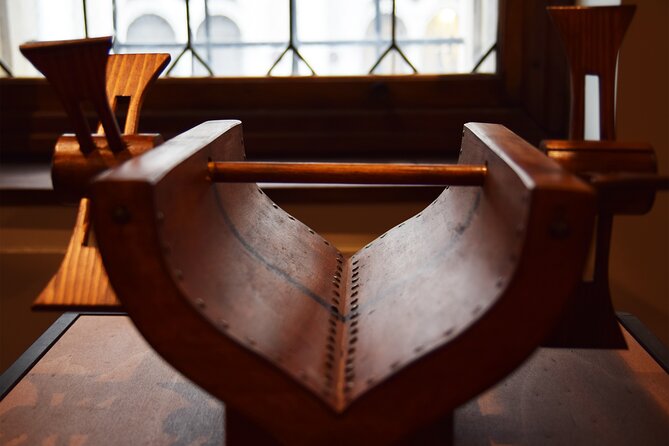
The museum’s machines are built according to Leonardo’s designs, using original proportions whenever possible. When changes are needed, they’re made to fit reality—materials, size, and safe operation. That matters because it turns old sketches into something you can understand with your own eyes.
Family-friendly learning style
The setup is designed so adults and kids can enjoy it at the same time. You’ll get explanations through text and multimedia, but you’re also free to slow down at stations that spark questions. If you’ve ever watched children line up to push buttons, this is the same energy—but about science and art.
Supporting displays that connect the dots
Alongside the machines, you’ll find drawings and context that help you understand what Leonardo was trying to figure out. That’s a big deal in a compact museum, because it prevents the interactive part from feeling random.
Downside to consider: because it’s compact, you won’t get everything Leonardo ever imagined. The visit works best if you go in ready to explore a few themes deeply rather than trying to “see the whole man” in one stop.
Backlit paintings and anatomy studies: art meets science
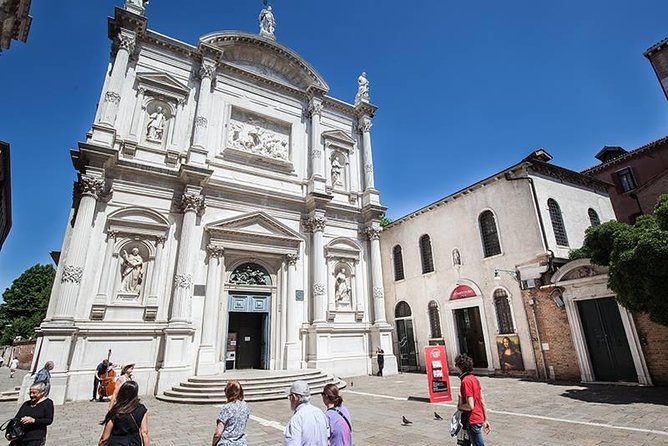
This museum doesn’t treat Leonardo as only an engineer or only an artist. It gives you both, and the art portion is built for close viewing.
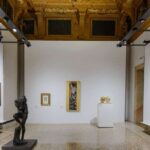
High-resolution, backlit copies of his paintings
You can explore detailed reproductions that are lit in a way meant to improve visibility. This is especially useful if you’re used to looking at art images through tiny brochures or dim phone screens. Here, the lighting is part of the design.
Anatomy and medical studies
You’ll also encounter examples of Leonardo’s major studies of anatomy. This is where the museum helps you see Leonardo as an observer of the human body, not just an inventor of machines. If you’re curious about how art and science feed each other, this portion makes the connection feel real.
Multimedia life-and-work displays plus a short film
The museum includes multimedia presentations about Leonardo’s life and work. Several visitors also mention a film introduction that gives quick context before you start working through the machines and displays.
What language you’ll get (and how audio fits in)
The text descriptions are available in Italian, English, French, German, Spanish, and Russian. Multimedia displays also support the experience, so you’re not limited to reading alone.
Audio is an extra perk. You may not see it automatically with your online ticket, but audio guides are available free of charge upon request at the entrance. If you’re the type who likes a guided narrative while you walk, ask right when you arrive.
Also pay attention to house rules: food, chewing gum, and beverages are prohibited in exhibit areas. It’s a small museum, and people are moving around at stations—so keeping the space clean is part of why the visit stays pleasant.



Tickets, value, and how to get the most from it
At $10.21 per person and about 45 minutes, this is priced like an efficient, hands-on activity. It’s not competing with major museum institutions that spend a fortune on conservation and original works. Instead, it leans into the “Leonardo ideas explained through models” approach.
Here’s where you’ll get strong value:
- You want interactive science during a Venice break
- You like inventor stories where the concepts are shown visually and physically
- You’re traveling with kids who learn by touching and trying
- You want an art-meets-engineering museum stop without a long time commitment
Where the value can feel weaker:
- If you’re expecting lots of original artworks, you may feel the art is more about reproductions and explanations
- If you need a full, guided museum tour with a professional guide, this experience is not built around one
One more practical tip: if you like to solve things slowly, give yourself extra time. Some visitors say they spend longer if they’re working through puzzles and interactive elements instead of rushing.
How to pair it with the San Rocco area in one Venice day
This stop works well because it’s in the San Rocco neighborhood. One of the smartest moves in Venice is building a mini route: museum first, then keep exploring nearby landmarks.
If you’re doing the Scuola Grande di San Rocco area, you can turn your day into a “Venice is celebrating Leonardo” theme without wasting time hopping across town. The museum also fits nicely as a calm, indoor reset when Venice weather gets hot or rainy.
And yes, the logistics are simple: after the visit, you can walk and grab lunch or a gelato nearby and keep moving. The museum doesn’t demand a whole afternoon, which makes it easier to build a flexible day.
Should you book the Da Vinci Interactive Museum Venice Scuola di San Rocco?
Book it if you want a hands-on Leonardo experience that’s easy to fit into your schedule. It’s a strong match for families, for people who like trying devices that turn diagrams into action, and for anyone who wants to see Leonardo as both an artist and a thinker.
Skip it or be cautious if you’re expecting a huge museum full of originals and long-form gallery wandering. This one is smaller, and much of the charm comes from the machines, explanations, and backlit reproductions, not from rare masterworks.
If you’re torn, here’s the simplest decision rule: if your ideal Venice day includes interactive stations and you don’t mind a compact stop, you’ll likely enjoy it a lot. If you need big-scale museum time and original-art focus, you’ll want to look elsewhere first.
FAQ
How long does the visit take?
The experience lasts about 45 minutes (approx.).
Is a professional guide included?
No. A professional guide is not included.
What languages are available in the museum?
Descriptions are available in Italian, English, French, German, Spanish, and Russian.
Are audio guides available?
Yes. Audio guides are available free of charge upon request at the entrance.
Can I use a mobile ticket?
Yes. The experience uses a mobile ticket.
What are the opening hours and last entrance time?
It runs Monday through Sunday from 10:30 AM to 4:30 PM, with the last entrance at 4:00 PM.
Is food allowed inside the exhibit areas?
No. Food, chewing gum, and beverages are prohibited in exhibit areas.